While having your students physically present offers the best means to gauge their comprehension of a subject and identify the necessity for tailored instruction, circumstances may arise where this isn’t feasible. Increasingly, students equipped with laptops and various devices are transforming traditional “free” snow days into E-Learning days. This shift aims to prevent extending the school year by leveraging technology for remote learning when in-person classes are impractical.
Periodic closures of schools due to natural disasters have been evident in various regions. For instance, in Nebraska, schools grappled with flooding issues both, in the spring and fall, resulting in chaotic interruptions to regular schedules. Additionally, student absences can range from short-term illnesses to prolonged health issues, leading to extended periods away from the classroom.
Furthermore, homeschooling communities often utilize e-learning within their cooperative groups or classes. The diverse array of reasons preventing direct in-person interaction with students underscores the significance of technology. It enables educators to virtually engage with their students during such challenging times, bridging the physical gap through digital platforms.
In my role as a curriculum writer, I prioritize flexibility by integrating numerous choices and options into my educational materials. Having been a teacher myself, I understand the constant influx of various challenges and unforeseen circumstances that a standard textbook isn’t equipped to handle. My educational philosophy revolves around the idea that a student ideally engages with the material using all their senses, transforming learning into solid knowledge. Therefore, all my resources feature a hands-on component—printable and tactile—encouraging collaborative engagement between students and teachers.
Recognizing the limitations of this ideal scenario, I’ve supplemented almost all my products with a Google Drive format, providing educators with alternative options. The Google Drive version encompasses the same content areas but allows for a paperless approach, utilizing Google Drive tools like Slides and Forms.
My portfolio predominantly includes a blend of printable and Google format materials, ranging from novel studies, social studies, to financial literacy resources. Additionally, I offer ELA and Math centers that are interactive on Google Drive while still being available in printable formats. Each download includes complete printable content and instructions on accessing and integrating the Google format files into your Google Drive, facilitating ease of use for educators.
After clicking on the provided link, your file will be visible in your Google Drive account under the name “Copy of File Name.” You can conveniently modify this title to your preference by clicking on the name box. Subsequently, you can assign these files to your students through Google Classroom.
How to use Novel Studies in an E-Learning Format?
In utilizing novel studies, your students will require a copy of the novel to accompany either the printable or Google Drive format provided. With the book in hand, they can seamlessly navigate through the study, engaging with comprehension questions, vocabulary activities, and extended writing tasks on Google Slides, mirroring the functionality available in the printable version. Teachers can track their progress through Google Classroom and I recommend conducting check-ins with small groups via platforms like Google Talk (or Google Hangouts/Google Chat) or Zoom. These sessions allow for discussions about the material read, ensuring comprehension and encouraging deeper exploration of the novel. It’s akin to the class discussions held in person, bridging the gap using technology.
All my novel studies feature assessments that can be completed through Google Forms. The multiple-choice assessments for comprehension and vocabulary are self-grading, significantly reducing grading time for teachers. However, the writing assessments, being more open-ended, cannot be self-graded. Typically consisting of one to two questions per assessment, these tasks can be submitted via Google Classroom for review and grading by the teacher.
How to use Social Studies and Financial Literacy Activities in an E-Learning Format?
My social studies and financial literacy resources are structured similarly to the novel studies in Google format, but they don’t require any specific books or textbooks. These materials feature Webquest links that offer learning content and include slideshow presentations in all social studies resources to facilitate students’ understanding and completion of activities.
Just like with the novel studies, Google Slides serve as the platform for both the presentations and activity completion. Additionally, in certain financial literacy activities such as the Escape Room exercises, Google Forms are integrated to delve deeper into the content alongside the use of Google Slides.
How to use ELA and Math Centers in an E-Learning Format?
The interactive ELA and Math Centers are designed to be completed using Google Slides. Students engage with the components to practice various skills, and teachers can oversee their progress through Google Classroom.
What can I do if my student doesn’t have access to equipment or the internet?
Many of us assume ready access to computers, laptops, and internet connectivity at home, yet some students lack this accessibility. In public schools, it’s our responsibility to ensure equity among our students. If your school lacks one-to-one capability or if a student doesn’t have home internet access, all my materials are provided in printable formats within the same product download. These activities are identical, just presented on paper rather than on a computer. You can distribute these packets to students for home use. To stay connected, consider communicating via phone calls, Facetime, or Skype for those with access via a parent’s cell phone. The content remains the same, only the format differs.
Technology offers various avenues to engage with students. While I advocate for a multisensory approach to learning—incorporating reading, writing, manipulation, and discussion—I recognize that there are instances where this isn’t feasible. In such cases, I hope my materials offer diverse options for utilization during e-learning scenarios.
Explore these free samples offered in my store, featuring both printable and Google Drive™ formats. They provide an opportunity for you to familiarize yourself with the functionalities of these resources.
Sample from my Wonder Novel Study
Sample Social Studies Activity
In this post titled “Tips for Using Google Drive in Your Classroom,” you’ll discover helpful suggestions on customizing Google Drive products to suit your specific requirements more effortlessly.
There are many intellectual property considerations when entering into contracts or selling your products online. I’ve got some tips for fellow sellers that prove handy in contract negotiations and promoting your merchandise. First things first, safeguard your copyrights and ensure your capacity to defend them by officially registering them with the US Copyright Office! Head over to copyright.gov where, for a $65 fee, you can swiftly complete the application process online.
Within your Products:
Ensure each of your works includes a copyright disclaimer. In all my creations, including those offered for free, I insert the following on page 2, right after the cover page: :
Copying any part of this product and placing it on the Internet in any form (even a personal/classroom website) is strictly forbidden and is a violation of the Digital Millennium Copyright Act (DMCA). These items can be picked up in a Google search and then shared worldwide for free.
*You may use this for your own personal use, but you are not allowed to use this in any commercial courses you sell to other sellers.
Additionally, I’ve included the FBI Piracy seal in my Terms of Use (TOU) page. You can find detailed information about the seal’s use, requirements, and the TOU here: FBI Piracy Seal Information.
Alongside my Terms of Use (TOU) page, I’ve integrated the following identifier onto every single page of my products, including the free ones:
Incorporating these identifiers across your products eliminates doubt about ownership and creates a barrier against replication.
After Publication:
Regularly conduct Google searches using your name, store name, and product names. You’ll be surprised to find instances where, despite these notices on your products, people still upload them to various websites. Most infringers aren’t malicious—they often don’t realize that posting a unit on their personal or school website exposes it globally through Google. The only secure online location for a file is on a password-protected site.
Once you identify the website, individual, or school district, seek out their email address and send a DMCA letter requesting the removal of the content. You can access a template letter that I’ve used successfully on Tools for Teachers by Laurah J. Many individuals, once informed, comply and apologize promptly as they might not have been aware of their mistake.
Aside from notifying the infringing site, it’s advisable to inform Google for the removal of the content from their search function. You can take this action here: Google DMCA Complaint.
No strategy guarantees 100% protection from copyright infringement. There will always be individuals or entities willing to disregard the law despite the consequences. However, these measures can make it more challenging and dissuade those who aren’t prepared to invest the effort. They might also serve as a means to educate those who genuinely lack awareness of the law and have no intent to cause harm.
While working in your classroom, striving to support your students with limited resources, you might wonder about the boundaries when using available materials to aid their understanding. As educators, we often have flexibility within copyright guidelines, yet it’s crucial to discern when our actions might breach legal boundaries. Our responsibility is to set a positive ethical example for our students. Just as we discourage plagiarism and cheating, we must uphold the same standards ourselves.
How can teachers safeguard themselves while ensuring compliance and making the most of available resources?
In educational settings, teachers often benefit from the “fair use” principles outlined in copyright law. This doctrine allows the use of copyrighted materials without a license in specific situations to encourage freedom of expression.
According to the copyright.gov site, “Section 107 of the Copyright Act provides the statutory framework for determining whether something is a fair use and identifies certain types of uses—such as criticism, comment, news reporting, teaching, scholarship, and research—as examples of activities that may qualify as fair use.”
While teaching a class, you typically have considerable freedom in choosing educational materials to aid learning, such as books, lyrics, or videos. However, it’s crucial to ensure that the materials you use don’t infringe on copyrights. Avoid benefiting from stolen work by using original sources. For instance, utilize a legally purchased movie clip rather than a pirated one from a website. Similarly, use purchased educational resources like TpT products rather than improperly shared versions.
At what point might a teacher overstep the bounds of fair use?
The Digital Millennium Copyright Act (DMCA) explicitly prohibits the posting of copyrighted material on the Internet where it could be accessed through a general search. While using such content within your classroom is permissible, sharing it online ventures into a legally ambiguous space that could result in significant financial penalties.
Any material uploaded online must be on a password-protected platform. Creating an open webpage for your class and placing resources like textbook excerpts, TpT purchases, novels, or song lyrics for students to access at home is prohibited unless it’s protected by a password. Unprotected content, even if not linked anywhere, can be indexed in general searches, inadvertently making it available worldwide. This shifts a teacher’s well-intentioned act into the realm of internet piracy.
Most textbook publishers and teacher authors have a Terms of Use (TOU) section within their resources, outlining sharing guidelines. It’s crucial to read and adhere to these guidelines, both to demonstrate ethical standards to students and to safeguard against potential legal repercussions.
The vast majority of teachers sharing materials online may not realize they’re making them accessible to a wider audience beyond their students and parents. Teachers are generally generous and honest, aiming to facilitate easy access for their students and families. Hopefully, this information helps in navigating compliance and sets a standard of best practices. In an environment where teachers often face unwarranted criticism, preserving honesty and integrity within the profession is essential.
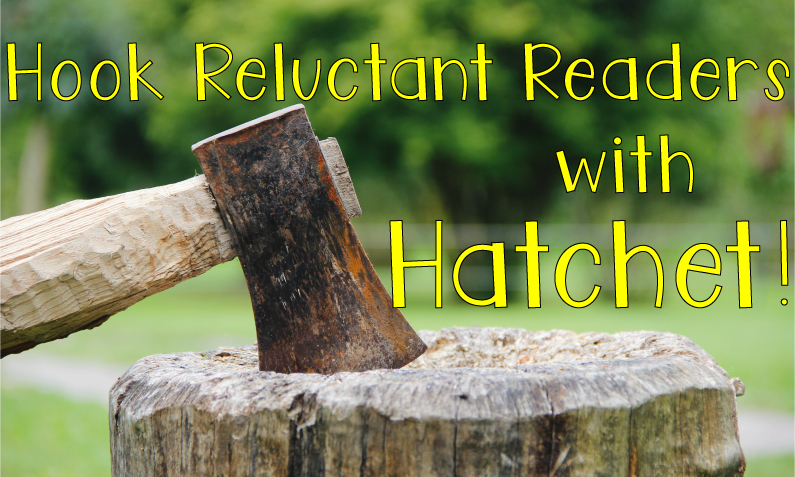
Looking for an engaging novel that will get your students excited about reading? A Hatchet novel study may be exactly what you need.
Gary Paulsen’s Hatchet has been a classroom favorite for years—and for good reason. This gripping survival story gives students an exciting reason to keep turning the pages while providing teachers with countless opportunities to teach reading comprehension, vocabulary, critical thinking, character development, writing, and literary analysis.
And sometimes, the best way to get a reluctant reader interested in books is to give them a story they simply can’t put down.
We earn a commission if you make a purchase, at no additional cost to you.
How Hatchet Hooked a Reluctant Reader
One of my biggest frustrations as a parent was watching my oldest son struggle to find enjoyment in reading.
He could read. He did well in school. But reading for pleasure? That was another story.
When he was assigned Hatchet by Gary Paulsen, something completely changed.
He came home from school talking about the book.
He wanted to know what was going to happen next.
He was disappointed when he had to stop reading for the day.
And, most surprising of all, he actually wanted to keep reading.
Every day, he would come home and tell me about the latest chapter. He wasn’t simply completing a reading assignment—he was genuinely invested in Brian’s story.
That experience reminded me of something important:
The right book can completely change a student’s attitude toward reading.
That’s one reason Hatchet is such a powerful choice for an upper-elementary or middle school novel study.
Why Teach Hatchet in the Classroom?
Hatchet follows Brian Robeson, a young boy who finds himself alone in the Canadian wilderness after a plane crash. With nothing but a hatchet, Brian must figure out how to survive.
The survival premise immediately gives students something to think about:
What would you do if you were completely on your own?
As Brian faces one challenge after another, students have opportunities to examine much more than survival.
1. Hatchet Encourages Critical Thinking and Problem-Solving
Brian doesn’t have an adult telling him what to do.
He has to observe his surroundings, make decisions, try different strategies, learn from mistakes, and figure out how to solve problems.
That makes Hatchet an excellent book for teaching critical thinking and problem-solving skills.
Students can discuss questions such as:
What choices did Brian make?
Which decisions helped him survive?
Which decisions made his situation more difficult?
What could Brian have done differently?
How does Brian respond when his first plan fails?
These types of questions move students beyond simply recalling what happened in the story and encourage them to think deeply about the text.
2. Hatchet Is Perfect for Teaching Perseverance
One of the most valuable themes in Hatchet is perseverance.
Brian experiences fear, loneliness, hunger, frustration, and failure. Yet he continues trying.
When something doesn’t work, he learns from the experience and tries again.
That creates natural opportunities to discuss resilience, determination, perseverance, and overcoming obstacles.
Students can connect Brian’s experiences to challenges in their own lives, making the novel much more meaningful than a simple survival story.
3. Hatchet Builds Reading Comprehension
Because Brian’s survival depends on his ability to observe, remember, and make decisions, Hatchet provides excellent opportunities for reading comprehension instruction.
Students can analyze:
Character
Setting
Plot
Conflict
Cause and effect
Character development
Theme
Problem and solution
Point of view
Text evidence
Chapter-by-chapter Hatchet comprehension questions can help students slow down and think about what they are reading rather than rushing through the novel simply to finish it.
This is especially useful when teaching students how to support their answers with evidence from the text.
4. Hatchet Provides Rich Vocabulary Opportunities
Gary Paulsen’s descriptive writing gives students plenty of opportunities to encounter meaningful vocabulary in context.
A Hatchet novel study can turn those unfamiliar words into an opportunity to build vocabulary rather than allowing students to simply skip over them.
Students can examine words in context, determine meaning, and use new vocabulary in their own writing.
Vocabulary instruction is even more effective when students encounter the words repeatedly while reading the novel.
5. Hatchet Makes Writing More Meaningful
One of the advantages of using a novel for ELA instruction is that students have a shared experience to write about.
Instead of assigning disconnected writing prompts, teachers can ask students to respond to situations, characters, conflicts, and themes they already understand.
Hatchet naturally lends itself to:
Personal response writing
Character analysis
Opinion writing
Text-based responses
Critical-thinking questions
Creative writing
Theme analysis
Problem-and-solution writing
The survival setting also makes it easy to create engaging writing prompts that students actually want to answer.
6. Hatchet Can Hook Reluctant Readers
This may be my favorite reason to teach Hatchet.
A student who doesn’t consider himself or herself a “reader” may be much more willing to pick up a book when the premise immediately grabs their attention.
A plane crash.
A wilderness.
A young boy alone.
A hatchet.
Survival.
That’s a pretty compelling setup.
And once students become invested in Brian’s survival, reading comprehension activities and ELA skills become much less of a chore.
The story becomes the vehicle for learning.
Make Teaching Hatchet Easier with a Complete Novel Study
Of course, finding a great novel is only the beginning.
Teachers still have to figure out:
What am I going to teach with this book?
What comprehension questions should I ask?
What vocabulary should I focus on?
How will I assess whether my students understand the novel?
Instead of spending hours creating worksheets, comprehension questions, vocabulary activities, writing assignments, assessments, and lesson plans, you can have an entire unit ready to use.
What’s Included in the Hatchet Novel Study?
The complete unit includes resources for both teachers and students.
Teacher Resources
The teacher packet includes:
Detailed daily lesson plans
Pacing and standards guide
Vocabulary word wall cards
Answer keys
Parent letter
Student Activities
Students receive:
Vocabulary and grammar activities for 60 vocabulary words
Activities that encourage deeper thinking about the novel
The extended writing activities are only included in the complete novel study, making the full unit an especially valuable option.
Assessments
The assessment packet includes quizzes covering both sections of the novel:
Part 1: Chapters 1–9 Part 2: Chapter 10 through the end of the novel
The assessments include vocabulary, reading comprehension, and essay questions, along with answer keys.
Additional ELA Activities
The unit also includes:
End-of-the-book activities
Story Elements Interactive Notebook activities
Common Core State Standards alignment for Grades 5–8
The unit is designed for approximately a 5th–8th grade reading level and can be adapted for whole-class instruction, small groups, one-on-one instruction, independent study, or homeschool use.
The complete Hatchet Novel Study is available in both printable and Google Drive™ formats, making it flexible enough for traditional classrooms, Google Classroom, distance learning, and homeschool environments. The digital version also includes self-grading Google Drive quizzes in multiple-choice format.
Prefer paper?
A printable-only version is also available.
Try the FREE Hatchet Novel Study Sample
Not sure whether this Hatchet book study will work for your students?
Try it before you buy it!
A free sample is available so you can see exactly what the novel study looks like and try the activities with your students. The sample includes one day of activities from the complete unit.
Ready to Turn Hatchet into an Engaging ELA Unit?
Hatchet is much more than a story about a boy trying to survive in the wilderness.
It’s a book about perseverance, problem-solving, resilience, courage, decision-making, and personal growth.
It gives students something exciting to read while giving teachers a natural way to teach important ELA skills.
And when a book can make a reluctant reader come home excited to tell you what happened in the latest chapter?
That’s a book worth teaching.
Connect with Fellow Educators!
Are you teaching Hatchet this school year?
Join our free community, Book Talk with The Teaching Bank, to share ideas, grab freebies, and connect with 3rd–8th grade teachers using novels in the classroom!
*The Teaching Bank participates in the Amazon Associate Program and earns a fee from qualifying purchases made on the Amazon.com site.
Revisiting my first year of teaching, which dates back to the 1995-96 school year, requires delving deep into my memory. Despite the challenges, it’s always nostalgic to reflect on those times. For every new teacher out there, these struggles are familiar. Remember, you’re not alone, and you will conquer them! I assure you!
After graduating from Iowa State University in May 1995, I was accepted into the CADRE Project at the University of Nebraska-Omaha for the 1995-96 school year. This program placed me as a full-time teacher in a classroom within one of the surrounding public school districts while pursuing a Master’s Degree simultaneously. As part of the program, I had a “Master Teacher Mentor” who periodically visited my classroom, offering guidance and advice to navigate through the initial year. I was assigned as a 4th-grade teacher in the Omaha Public Schools.
My classroom was situated in a building constructed in 1912, maintaining its antique charm with wooden floors, towering ceilings, tall windows, an old radiator for heat, and an absence of air conditioning! Interestingly, the K-4 building had more classrooms outside in portables than in the actual structure. Fortunately, I was allocated space within the main building. Just outside my classroom door was the “office,” consisting of a large counter in the hallway for the secretary and a small back office for the principal. A security guard stationed at a small table sat right outside my classroom.
I started my teaching journey with very minimal supplies as my class was added late in the summer. The room had math and reading textbooks and a set of old metal desks. There was access to large rolls of colored paper, writing paper, and pencils in a school-wide storage room. But anything beyond basic office supplies like pens and staples required a supply order, and it took several months to get a working pencil sharpener!
Such conditions pushed me to create my own teaching materials, which turned out to be a hidden blessing. It sparked my passion for curriculum development and equipped me with skills for my career beyond teaching!
The greatest challenge in that first year was adapting to such a diverse population, both racially and socioeconomically. My teacher training hadn’t prepared me for this. Coming from Sioux Falls, SD, where my high school had minimal racial diversity and mostly middle-class students, the contrast was stark.
My classroom consisted of about 50% black students from a high-poverty neighborhood and 50% mainly white students bussed in from an even lower-income area with a homeless shelter. The transient nature of the shelter caused significant student turnover—I’d have about 18 students on average in my class, but by year’s end, I’d have had around 40-50 different kids pass through.
Around the same time I started teaching, a police officer, Jimmy Wilson Jr., was shot and killed by gang members, causing unrest in the city, particularly in the area where my school was located. One hot Friday afternoon, lacking air conditioning, I took the class outside under a big tree for our reading time. Instead of reading, a discussion about the shooting unfolded among the students. It was eye-opening; their perspectives differed vastly from mine as a white woman from a middle-class area. I learned a great deal about their lives and experiences that day, realizing how much innocence these young 9-10-year-olds had lost due to their mature exposure to life’s struggles. It was a profound and educational moment for me, fostering a more empathetic attitude toward their life experiences. The discussion offered me a deep insight into their lives and shaped a more compassionate approach to understanding their challenges.
The most significant challenge also turned out to be the most rewarding aspect. It expanded my openness and ability to collaborate within a diverse community. I ended up learning as much from those kids that year as I taught them.
Among the students, there was one in particular whose growth I felt deeply connected to. I’m immensely proud of how I was able to bolster his confidence that year. Moreover, I helped change the perspectives of others in the district who had dismissed him, viewing him solely as a troublemaker with limited potential. I proved them wrong and unveiled the remarkable potential he truly possessed.
At times, it might feel like you’re at a standstill, but you’ll overcome it. Each year following that initial one, you’ll build upon your knowledge. You’ll discover the significance of organization, the value of approaching each child with fresh eyes (avoid reading past files before meeting them), and recognize that a classroom doesn’t have to achieve a “perfect” look. Instead, investing in instructional materials outweighs the need for overly decorative bulletin boards! You don’t require a “Pinterest Pretty Classroom” to excel as a teacher!
You’ll come to realize that you can’t solve every issue, but you can certainly give your best effort. It’s crucial to safeguard your own well-being—don’t let the challenges in your classroom consume your entire life. Allocate time for your mental health to prevent burning out too quickly. Embrace your mistakes as valuable learning opportunities instead of letting them stress you out. Remember, we all make mistakes, and you’ll make your fair share too!
To all teachers, especially those starting their first year, I wish you the best of luck and many happy days ahead! Take a deep breath; things will fall into place eventually, and you’ll excel! There’s nothing quite as invigorating and infectious as the enthusiasm of a first-year teacher!


 Sample from my Wonder Novel Study
 Sample Social Studies Activity






 Connect with Fellow Educators!


