Are you looking for an engaging novel study for upper elementary or middle school ELA? Hoot by Carl Hiaasen is an excellent choice for students in grades 5–8. With humor, mystery, friendship, environmental issues, and plenty of opportunities for discussion and critical thinking, Hoot gives students much more to think about than simply what happens in the story.
We earn a commission if you make a purchase, at no additional cost to you.
If you’re planning to teach Hoot in your classroom, a Hoot novel study can make your unit much easier to plan and give students meaningful opportunities to practice reading comprehension, vocabulary, writing, and critical-thinking skills.
Why Teach Hoot by Carl Hiaasen?
Hoot tells the story of Roy, a boy who becomes involved with a group of young environmental activists who are trying to protect a colony of endangered burrowing owls from a construction project.
The story combines humor and adventure with real-world issues, making it a high-interest choice for middle-grade readers.
Because the novel includes so many different themes and discussion opportunities, it works especially well as a whole-class novel, literature circle, small-group reading unit, or independent reading study.
1. Hoot Encourages Environmental Awareness
One of the strongest reasons to teach Hoot is its focus on the environment.
Students encounter the endangered burrowing owls at the center of the story and see how human decisions can affect wildlife and the natural world.
This creates a natural opportunity to discuss:
Environmental conservation
Endangered animals
Human impact on ecosystems
Protecting natural habitats
The relationship between people and nature
Environmental activism
The environmental themes can also provide opportunities for cross-curricular connections with science and social studies.
2. Hoot Provides Opportunities for Critical Thinking
Hoot isn’t simply an entertaining story. It gives students plenty to discuss and debate.
Students can explore questions such as:
What should people do when they believe a law or decision is wrong?
Is it ever acceptable to break a rule to protect something important?
What responsibilities do businesses have to the environment?
How can young people make a difference?
What does it mean to stand up for what you believe?
How do our choices affect other people and the natural world?
These types of questions make Hoot an excellent book for critical thinking, classroom discussion, argumentative writing, and text-based responses.
3. Hoot Is Engaging and Funny
While the novel addresses serious topics, Carl Hiaasen also uses humor throughout the story.
That combination of humor, adventure, mystery, and meaningful themes can help keep students engaged as they read.
The characters, conflicts, and unexpected events give students plenty to discuss while also providing opportunities to analyze character development, plot, conflict, and theme.
4. Hoot Has Strong Themes for Literary Analysis
There are numerous themes students can explore throughout the novel, including:
Friendship
Teamwork
Courage
Integrity
Responsibility
Standing up for what you believe
Environmentalism
Activism
Growing up
Making difficult choices
These themes make Hoot especially useful for teaching students how to support their thinking with text evidence.
Make Teaching Hoot Easier with a Complete Novel Study
If you’re teaching Hoot, you probably don’t want to spend hours creating chapter questions, vocabulary activities, grammar practice, assessments, and extension activities.
That’s where a ready-to-use Hoot novel study can save you valuable planning time.
I created a complete Hoot Novel Study for grades 5–8 that provides the resources you need to guide students through the entire novel.
The unit is designed to be no-prep and easy to use, with both printable and digital options.
What’s Included in the Hoot Novel Study?
This comprehensive Hoot book unit includes materials for approximately one month of instruction.
Teacher Resources
Hoot Reading Comprehension Questions
Hoot Vocabulary Activities
Grammar Activities
Writing and Extension Activities
Hoot Novel Study Assessments
Additional Hoot Activities
Printable AND Digital Hoot Novel Study Formats
Who Is This Hoot Novel Study For?
This Hoot book unit is designed for teachers working with students in grades 5–8.
It can be a great fit for:
5th grade ELA
6th grade ELA
7th grade ELA
8th grade ELA
Upper elementary reading
Middle school ELA
Reading comprehension
Literature circles
Novel units
Homeschool instruction
Small-group reading
Independent reading
The unit can also be adapted to fit your own pacing and teaching style.
Connect Hoot to Science and Environmental Studies
One of the biggest advantages of teaching Hoot is the opportunity to connect ELA instruction to real-world environmental topics.
After reading about the burrowing owls in the novel, students can research questions such as:
What is an endangered species?
Why do animals become endangered?
What happens when an animal loses its habitat?
How can people protect endangered animals?
What can individuals do to help protect the environment?
These questions can lead to research projects, informational writing, class discussions, and additional reading.
You can even pair the novel with nonfiction texts about burrowing owls, endangered species, habitats, and environmental conservation to help students compare information from fiction and nonfiction sources.
Use Hoot to Build More Than Reading Skills
A strong novel study should do more than make sure students remember what happened in the book.
Hoot allows you to help students practice:
Reading comprehension
Vocabulary
Grammar
Writing
Critical thinking
Text evidence
Character analysis
Theme
Plot analysis
Discussion skills
Environmental awareness
The combination of an engaging story and meaningful real-world issues makes Hoot a particularly useful novel for an upper elementary or middle school ELA novel unit.
Not sure if this Hoot book study is right for your classroom?
You can download a free sample and see the types of activities included before purchasing the complete unit.
It’s a great way to preview the resource and see how it can fit into your Hoot reading unit.
Ready to Teach Hoot?
If Hoot is on your upcoming reading list, make your planning easier with this complete, no-prep Hoot novel study.
It’s designed to help you guide students through Carl Hiaasen’s novel while giving them meaningful opportunities to practice reading comprehension, vocabulary, grammar, writing, critical thinking, and literary analysis.
Connect with Fellow Educators!
Are you teaching Hoot this school year?
Join our free community, Book Talk with The Teaching Bank, to share ideas, grab freebies, and connect with 3rd–8th grade teachers using novels in the classroom!
*The Teaching Bank participates in the Amazon Associate Program and earns a fee from qualifying purchases made on the Amazon.com site.
In today’s classrooms, fostering empathy, promoting inclusivity, and celebrating differences are more vital than ever. Literature has always been our most effective tool to build these connections—and few books do it as masterfully as Cece Bell’s Newbery Honor-winning graphic novel, El Deafo.
Whether you are looking to engage reluctant readers, deepen your Social-Emotional Learning (SEL) curriculum, or build genuine disability awareness, El Deafo provides an unforgettable lens into the real-world experiences of growing up with hearing loss.
We earn a commission if you make a purchase, at no additional cost to you.
A Personal Perspective: Why El Deafo Touches My Heart
As someone who has lived with hearing loss for over 25 years, I know firsthand the daily friction of trying to communicate in a world built for the hearing. Hearing loss has affected almost every area of my life—it even led to the end of my classroom teaching career.
A while back, I participated in an online discussion with fellow educators about the factuality of the novel Wonder by R.J. Palacio. While I love Wonder and believe it holds a valuable spot in the classroom, I’ve always been concerned about how it portrays hearing loss and hearing aids. (In fact, when I created my Wonder Novel Study, I included a non-fiction article to help students understand the real-world science behind hearing loss so they could spot the story’s inaccuracies.)
During that discussion, an educator asked me:
“Shelley, have you read El Deafo by Cece Bell? How realistic is it to someone who actually walks in those shoes?”
I immediately ordered a copy. From the moment I opened it, I was nodding my head in complete agreement.
Cece Bell’s autobiographical journey captured feelings I’ve carried for decades—isolation, self-consciousness, social fatigue, and the exhaustion of putting up with awkward interactions out of fear or embarrassment.
Most importantly, the book highlights a critical truth the hearing world often overlooks: Volume does not equal clarity.
Shouting, talking unnaturally slow, or exaggerating mouth movements does not help someone with hearing loss. In fact, it ruins lip-reading and makes communication much harder! Cece’s story shows how she took these everyday struggles and transformed them into her superhero alter ego, “El Deafo.”
You don’t need to have hearing loss to fall in love with Cece’s journey—but reading it will make anyone a more compassionate, understanding human being.
6 Key Benefits of Teaching El Deafo in Grades 4–6
1. 🤟 Promotes Real Disability Awareness & Deaf Culture
El Deafo offers an authentic, first-hand look at what it’s like to navigate school and friendships with a hearing impairment. It strips away misconceptions and gives students an accurate understanding of assistive technology and accessibility.
2. ❤️ Builds Deep Social-Emotional Learning (SEL) & Empathy
By following Cece’s internal monologues and social triumphs, students learn to recognize the feelings of others, reflect on their own behaviors, and navigate complex friendship dynamics with kindness.
Cece’s creation of “El Deafo” teaches young readers that the things that make us different aren’t weaknesses—they can become our greatest strengths. It encourages students to embrace their unique traits with confidence.
4. 📖 Hooks Reluctant & Visual Readers
As a graphic novel, El Deafo pairs rich visual context with accessible text. It is an extraordinary format for striving readers, ESL/ELL students, and visual learners to practice high-level literary analysis without feeling overwhelmed.
5. 🗣️ Sparks Meaningful Classroom Discussions
Cece’s story naturally opens the door for class discussions on tough topics: standing up to bullies, overcoming social anxiety, effective communication strategies, and true inclusion.
6. 🌐 Blends Fiction with Non-Fiction Learning
Pairing Cece’s memoir with non-fiction research on audiology, ear anatomy, and famous figures with hearing loss allows teachers to connect ELA standards directly with Science and Health topics.
Take Your El Deafo Unit Further (Zero Prep Required!)
Teaching a graphic novel comes with unique opportunities—and unique challenges! To help you deliver a comprehensive, standards-aligned unit without spending your weekends planning, I created the El Deafo Complete Novel Study.
Designed specifically for Grades 4–6, this 147+ page resource combines deep ELA reading comprehension with interactive non-fiction research.
🌟 What’s Included in the Unit?
3-Week Pacing & Daily Lesson Plans: Structured, step-by-step teacher guides aligned to Common Core Standards.
Chapter-by-Chapter Comprehension: Short-answer questions that analyze both textual content and visual graphic panel cues.
6 Non-Fiction WebQuest Foldables: Interactive research activities covering ear anatomy, audiology, assistive technology, communication strategies, and deaf history.
End-of-Book Assessment Packet: Comprehensive final test available in printable format and self-grading Google Forms™.
Printable PDF & Google Drive™ Formats: Ready for traditional paper workbooks or paperless 1:1 Chromebook classrooms.
Give your students a reading unit they will talk about for the rest of the school year while saving yourself hours of prep time!
You can purchase this novel study at the following locations:
💬 Join the Conversation!
Have you taught graphic novels in your upper elementary or middle school classroom? How do your students react to Cece’s journey in El Deafo?
Come share your ideas, lesson tips, and book recommendations with hundreds of passionate educators in our free Facebook community: Book Talk with The Teaching Bank!
*The Teaching Bank participates in the Amazon Associate Program and earns a fee from qualifying purchases made on the Amazon.com site.
Some of my most vivid childhood memories of school were the novel studies I read for various subjects. It was my favorite way to learn skills, history, and any topic! I love books, and being allowed to read an entire book from cover to cover as a school assignment put me in heaven! I am sure this is a major reason why, as a teacher, my passion is to create and teach novel studies! I love introducing new books to my class, and as a community, being immersed in the book together. I love it when a student pulls us off the schedule with a question or comment from something they read and leads the class into a lively discussion. That’s where the real memorable learning takes place, after all!
I create novel studies more than any other product line simply because I like to focus on what I love. I want to work with my passion! I often get questions from readers asking how I would set up novel studies in my classroom. I decided to write a small series explaining my methods. For the most part, my novel studies include comprehension questions, vocabulary/grammar skill work, extension activities, and assessments.
Today’s post, Part 4, deals with the extras added to the novel studies, from writing activities to non-fiction research activities. You can read Part 1, Part 2, and Part 3 here.
Novel Studies Part 4: The Extras!
Of course, when using novel studies in the classroom, you must hit the basics of comprehension and vocabulary. One of the wonderful bonuses of using novel studies is the opportunity to pull other areas of the curriculum into a larger thematic unit. The various topics of the different books can lead to a plethora of inquiry and learning.
As I create a novel study, I open my mind to all the places the story is taking me. Some books are easier to explore outside the reading domain than others. Some take me down the rabbit hole of investigation with a deep-thought question that allows for longer writing passages that can lead to some really inspiring class debates!
With The One and Only Ivan Novel Study, students can research gorillas and elephants. They can learn about and compare life for these animals in the wild vs. captivity. The most interesting to me was the true story of the Shopping Mall Gorilla that inspired the story!
A book like Mrs. Frisby and the Rats of NIMH leads to some deep-thought questions regarding animal testing that can be debated and discussed in-depth in the classroom.
All of my novel studies offer a Google Drive™ format, in addition to the printable format, shown above, to use with your students. This allows you to use novel studies in a 1:1 classroom, save paper, and easily engage students who are absent. The “extras” of the novel study are included in the Google Drive™ format as well. Here’s an example page from the Google Drive™ format of my The Lightning Thief Novel Study.
I love how you can combine the theme from a full novel throughout different curriculum areas in a way that you just can’t do with short passage reading instruction. This allows for even deeper learning by using novel studies!
Join me for the conclusion of my series to learn how I handle the assessments to end my novel studies.
Are you interested in reading about and sharing ideas with other educators on using children’s literature in your classroom? My goal is to bring together teachers and homeschoolers who teach grades 3-8 and use novels with their students. I’d love for you to join me to learn, share, and grow together!
Looking for a high-interest novel that will engage your 5th–8th grade readers while giving you plenty to teach?Ghost by Jason Reynolds is an excellent choice for an upper elementary or middle school ELA novel study.
This fast-paced, relatable novel gives students opportunities to explore character development, theme, perseverance, identity, family, friendship, decision-making, and personal growth while strengthening essential reading comprehension and critical-thinking skills.
Even better, Ghost has the potential to hook students who don’t always consider themselves “readers.”
We earn a commission if you make a purchase, at no additional cost to you.
📚 Why Teach Ghost by Jason Reynolds?
Choosing the right novel for a whole-class or small-group novel study can make a huge difference in student engagement. Students need characters and situations they can connect with—and Ghost delivers.
The story follows Castle Cranshaw, nicknamed Ghost, a talented young athlete who is dealing with difficult circumstances while discovering that his choices can have lasting consequences.
That combination of sports, family, friendship, conflict, humor, and personal growth gives teachers countless opportunities for meaningful classroom conversations.
Here are just a few reasons Ghost works so well as a classroom novel.
⭐ 1. Students Can Connect With the Characters
One of the greatest strengths of Ghost is its relatable main character.
Castle isn’t perfect. He makes mistakes, struggles with his emotions, and sometimes makes impulsive decisions. At the same time, he is talented, determined, funny, and capable of tremendous growth.
These characteristics make Castle an excellent character for teaching students how to:
Analyze character traits
Identify internal and external conflicts
Examine character motivation
Track character development
Make inferences
Support ideas with text evidence
Analyze how experiences influence a character’s choices
Students can also consider an important question throughout the novel:
How do our experiences shape the people we become?
🏃 2. Ghost Explores Perseverance and Personal Growth
Perseverance is a powerful theme throughout Ghost.
Castle has experienced difficult circumstances, but he doesn’t allow those experiences to completely define him. His journey gives students an opportunity to examine what it means to keep moving forward even when life isn’t easy.
The novel can lead to meaningful discussions about:
Overcoming obstacles
Making better choices
Taking responsibility
Learning from mistakes
Setting goals
Handling disappointment
Building confidence
Persevering through challenges
These are conversations that extend far beyond the pages of the book.
👥 3. Explore Friendship, Family, and Relationships
Ghost also provides rich opportunities to examine relationships.
Students can analyze the influence that family members, coaches, friends, and other adults have on Castle’s development.
Ask students questions such as:
Who has the greatest influence on Castle?
How do the adults in Castle’s life respond to his mistakes?
What makes someone a good friend or mentor?
How can the people around us influence our choices?
These questions naturally encourage students to support their opinions with text evidence.
💭 4. Encourage Critical Thinking and Meaningful Discussion
A strong novel study shouldn’t be just a series of comprehension questions.
Ghost gives students opportunities to think beyond “What happened?” and move toward “Why did it happen?” and “What does it mean?”
Students can analyze:
Character motivation
Cause and effect
Conflict
Theme
Point of view
Author’s craft
Important events
Character relationships
Choices and consequences
The novel’s accessible writing style makes it an especially useful text for helping students develop these deeper reading skills.
✏️ 5. Strengthen Reading and Writing Skills
Using Ghost as part of a structured novel study allows you to combine reading and writing instruction.
Students can practice:
Reading comprehension
Making inferences
Finding text evidence
Determining theme
Character analysis
Summarizing
Vocabulary
Grammar
Written responses
Critical thinking
Extended writing
Literary analysis
Instead of teaching these skills in isolation, you can teach and practice them within a story students are already invested in.
📖 Ghost Can Hook Reluctant Readers
Finding books that appeal to reluctant readers can be challenging.
The sports connection is an obvious draw for many students, but students don’t have to be athletes to connect with Castle’s story.
The novel’s fast-paced plot, relatable characters, humor, conflict, and emotional depth give students plenty of reasons to keep reading.
And once students become invested in Castle’s story, you’ve created an opportunity to help them discover that reading can be enjoyable—not just another assignment.
🎯 Looking for a Ghost Novel Study?
If you’re planning to teach Ghost by Jason Reynolds, you don’t have to spend hours creating your own lesson plans, comprehension questions, vocabulary activities, writing assignments, and assessments.
I’ve created a complete Ghost Novel Study for grades 5–8 with both printable and digital resources.
What’s Included in the Ghost Novel Study?
The resource includes ready-to-use materials for:
Reading comprehension
Vocabulary
Spelling
Grammar
Writing
Critical thinking
Literary analysis
Nonfiction connections
Assessments
Story elements
Interactive notebook activities
Common Core ELA standards
You’ll also receive teacher lesson plans, student activities, answer keys, assessments, and digital Google Drive™ resources.
🖨️ Printable + 💻 Digital Options
Whether you prefer paper-based instruction or digital learning, this Ghost book unit gives you both options.
Use the printable materials for:
Whole-class instruction
Small groups
Reading intervention
Literature circles
Independent reading
Traditional classroom instruction
Or use the digital resources for:
Paperless classrooms
Digital assignments
Distance learning
Independent student work
Google Classroom™ activities
That means less time creating materials and more time teaching.
🎁 Try the FREE Sample
You can check out the FREE sample before purchasing to see the types of activities included in the complete resource.
🛒 Get the Complete Ghost Novel Study
Ready to make teaching Ghost by Jason Reynolds easier?
The complete Ghost Novel Study | No-Prep Printable & Digital Book Unit for Grades 5–8 is available in my store.
Give your students a compelling story to read—and give yourself a ready-to-teach ELA unit that saves hours of preparation.
❤️ Final Thoughts
Ghost by Jason Reynolds is much more than a story about running.
It’s a story about choices, challenges, relationships, perseverance, and discovering who you want to become.
Those themes make it an excellent choice for a 5th–8th grade novel study, particularly when you want a book that can generate authentic discussion while strengthening students’ reading and writing skills.
If you’re looking for a high-interest middle school novel with meaningful themes and plenty of opportunities for ELA instruction, Ghost is a book worth adding to your classroom library and curriculum.
💬 Connect with Fellow Educators!
Are you teaching Ghost this school year? How do you celebrate kindness in your classroom?
Join our free community, Book Talk with The Teaching Bank, to share ideas, grab freebies, and connect with 3rd–8th grade teachers using novels in the classroom!
*The Teaching Bank participates in the Amazon Associate Program and earns a fee from qualifying purchases made on the Amazon.com site.
Looking for an engaging novel study for upper elementary students? Charlie and the Chocolate Factory by Roald Dahl is a fantastic choice for bringing reading comprehension, vocabulary, critical thinking, and meaningful discussion together in one unforgettable story.
With its imaginative setting, memorable characters, outrageous situations, and plenty of opportunities for discussion, Charlie and the Chocolate Factory can quickly become a favorite 3rd, 4th, or 5th grade novel.
But the real magic happens when you turn students’ enjoyment of the story into deeper learning.
We earn a commission if you make a purchase, at no additional cost to you.
Why Teach Charlie and the Chocolate Factory?
Charlie and the Chocolate Factory follows Charlie Bucket, a kind and impoverished boy who wins one of five Golden Tickets to visit Willy Wonka’s mysterious chocolate factory. As Charlie and the other children explore the factory, students encounter larger-than-life characters, fantastical inventions, and plenty of surprises.
The story is entertaining enough to keep students turning the pages while providing plenty of opportunities to develop important ELA skills.
1. Build Reading Comprehension Skills
A chapter-by-chapter Charlie and the Chocolate Factory novel study gives students opportunities to practice comprehension while reading an engaging, familiar story.
Students can examine important events, make predictions, identify key details, and think about how characters’ choices affect the story.
Instead of simply asking, “What happened?” students can dig deeper into why events happened and what they reveal about the characters.
2. Explore Character Traits and Choices
The characters in Charlie and the Chocolate Factory provide endless opportunities for discussing character traits, motivation, behavior, and consequences.
Charlie, Grandpa Joe, Willy Wonka, and the other children all make very different choices throughout the story.
Why does Charlie behave differently from the other children? What motivates the other characters? What can readers learn from the consequences of their choices?
These questions can lead to meaningful classroom conversations about kindness, honesty, greed, selfishness, perseverance, and personal responsibility.
3. Expand Vocabulary
Roald Dahl’s imaginative writing makes Charlie and the Chocolate Factory an excellent book for vocabulary instruction.
A novel study allows students to encounter vocabulary in context rather than learning isolated words from a list. Students can explore unfamiliar words, consider their meanings, and use context clues to strengthen their understanding.
This makes vocabulary instruction feel like a natural part of reading rather than a separate activity.
4. Encourage Critical Thinking
Willy Wonka’s chocolate factory is full of unusual situations that encourage students to think beyond the literal events of the story.
Students can analyze characters’ decisions, consider cause and effect, make predictions, compare characters, and support their ideas with evidence from the text.
These activities help turn an entertaining children’s book into a meaningful critical-thinking and reading-comprehension experience.
5. Encourage a Love of Reading
Perhaps the best reason to teach Charlie and the Chocolate Factory is simple: it’s fun!
The fantastical chocolate factory, quirky characters, humor, and suspense make this a highly engaging choice for elementary readers.
For reluctant readers especially, a book that makes students eager to find out what happens next can be a powerful way to build confidence and enthusiasm for reading.
Make Teaching Charlie and the Chocolate Factory Easier
An engaging novel is wonderful—but finding the time to create comprehension questions, vocabulary activities, assessments, and extension activities can make teaching a novel feel like a lot of work.
I created a complete novel study to accompany Roald Dahl’s Charlie and the Chocolate Factory, giving you ready-to-use resources for guiding students through the book without having to create everything yourself.
What’s Included?
This Charlie and the Chocolate Factory novel unit includes:
Chapter-by-chapter comprehension activities
Vocabulary activities
Writing and extension activities
Assessments and answer keys
Teacher resources and lesson plans
Printable PDF materials
Google Drive™ resources for digital learning
The flexible format makes this resource useful for whole-class instruction, small groups, literature circles, independent reading, or homeschool.
Try the free sample to preview the activities and see how the resource can fit into your classroom.
Get the Charlie and the Chocolate Factory Novel Study
If you’re planning a Charlie and the Chocolate Factory unit for 3rd, 4th, or 5th grade, this ready-to-use novel study can save you valuable planning time while giving students meaningful opportunities to practice reading, vocabulary, writing, and critical-thinking skills.
Create a Chocolate-Themed Novel Unit
Want to take the fun even further?
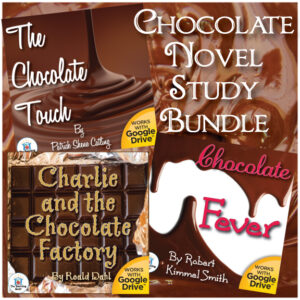
Pair Charlie and the Chocolate Factory with other chocolate-themed children’s novels such as Chocolate Fever and The Chocolate Touch.
Reading multiple books around a common theme gives students opportunities to compare characters, settings, plots, themes, and authors’ approaches while keeping the reading experience engaging.
You can also save when you purchase all three chocolate-themed novel studies together as a bundle.
Whether you’re planning a complete novel unit or simply looking for an engaging book to add to your elementary ELA curriculum, Charlie and the Chocolate Factory offers a delicious combination of reading enjoyment and meaningful learning.
Are you teaching Charlie and the Chocolate Factory this school year?
Join our free community, Book Talk with The Teaching Bank, to share ideas, grab freebies, and connect with 3rd–8th grade teachers using novels in the classroom!
*The Teaching Bank participates in the Amazon Associate Program and earns a fee from qualifying purchases made on the Amazon.com site.








 Connect with Fellow Educators!


 Novel Studies Part 4: The Extras!


 All of my novel studies offer a Google Drive™ format, in addition to the printable format, shown above, to use with your students. This allows you to use novel studies in a 1:1 classroom, save paper, and easily engage students who are absent. The “extras” of the novel study are included in the Google Drive™ format as well. Here’s an example page from the Google Drive™ format of my