Charlie and the Chocolate Factory by Roald Dahl is a classic children’s novel that has captured the imagination of readers of all ages since its publication in 1964. It tells the story of an impoverished boy named Charlie Bucket who wins a golden ticket to visit Willy Wonka’s chocolate factory, where he embarks on a fantastical adventure with four other children. This beloved tale has been adapted into several films and stage productions, and it’s an excellent addition to any classroom.
We earn a commission if you make a purchase, at no additional cost to you.
Benefits of Using Charlie and the Chocolate Factory in Your Classroom:
Engaging and Fun for Students:Charlie and the Chocolate Factory is a timeless classic that has been loved by children for generations. The novel is known for its whimsical plot and quirky characters, making it an engaging and fun read for students of all ages. Using this novel in your classroom can help cultivate a love for reading in your students, as they will be excited to discover what happens next in the story.
Teaches Important Lessons: Charlie and the Chocolate Factory is an excellent source of life lessons for children. The story teaches children the importance of honesty, hard work, and perseverance. Additionally, it highlights the dangers of greed, gluttony, and selfishness. By using this book in your classroom, you can spark important discussions about these topics and help your students understand their significance in everyday life.
Enhances Critical Thinking Skills: One of the most significant benefits of using Charlie and the Chocolate Factory in your classroom is that it encourages critical thinking and problem-solving skills. Throughout the book, the characters face various challenges, and they must use their wits and creativity to overcome them. By analyzing these situations, students can learn how to apply critical thinking and problem-solving skills to real-world situations.
Increases Vocabulary and Reading Comprehension:Charlie and the Chocolate Factory in your classroom can also help improve your student’s vocabulary and reading comprehension. The novel uses a variety of descriptive language and literary devices, which can help students expand their vocabulary and develop a deeper understanding of the text. Charlie and the Chocolate Factory is an engaging and entertaining book that can improve reading comprehension in children. The book’s characters, plot, and dialogue are easy to follow and understand, which can help struggling readers build their confidence and comprehension skills. Additionally, the book’s vivid descriptions and imagery can help students visualize and connect with the story on a deeper level.
Encourages a love of reading: Charlie and the Chocolate Factory is an enjoyable and entertaining book that can instill a love of reading in children. By introducing children to a book that is both fun and educational, you can help them develop a lifelong love of reading. Additionally, the book’s popularity and familiarity can make it an accessible and engaging choice for reluctant readers.
Charlie and the Chocolate Factory is a fantastic addition to any classroom. It promotes critical thinking and problem-solving skills, teaches valuable lessons, improves reading comprehension, inspires creativity, and encourages a love of reading. By using this book in your classroom, you can engage and inspire your students, and help them develop important skills and values that they can carry with them throughout their lives.
I offer a complete novel study to accompany Charlie and the Chocolate Factory for use in the classroom or homeschool. The unit includes both a printable format and a Google Drive™ format for use in a paperless classroom or with Google Classroom.
Try a free sample of the novel study for Charlie and the Chocolate Factory
You can purchase this novel study at the following locations:
Try a chocolate theme by incorporating reading Charlie and the Chocolate Factory along with Chocolate Fever and The Chocolate Touch!
Are you interested in reading about and sharing ideas with other educators on using children’s literature in your classroom? My goal is to bring together teachers and homeschoolers who teach grades 3-8 and use novels with their students. I’d love for you to join me to learn, share, and grow together!
Some of my most vivid childhood memories of school were the novel studies I read for various subjects. It was my favorite way to learn skills, history, and any topic! I love books, and being allowed to read an entire book from cover to cover as a school assignment put me in heaven! I am sure this is a major reason why, as a teacher, my passion is to create and teach novel studies! I love introducing new books to my class, and as a community, being immersed in the book together. I love it when a student pulls us off the schedule with a question or comment from something they read and leads the class into a lively discussion. That’s where the real memorable learning takes place, after all!
I create novel studies more than any other product line simply because I like to focus on what I love. I want to work with my passion! I often get questions from readers asking how I would set up novel studies in my classroom. I decided to write a small series explaining my methods. For the most part, my novel studies include comprehension questions, vocabulary/grammar skill work, extension activities, and assessments.
Today’s post, part 3, deals with pacing the novel study. You can read part 1 and part 2 here.
Novel Studies Part 3: Pacing
One of the challenges of using novel studies in the classroom is finding the time. It’s a balance between not moving too fast and not letting the unit drag on for too long because we all know you have a million other things to squeeze into your curriculum!
Each of my complete novel studies includes detailed daily teacher lesson plans that include the objective and directions for the day. You can see how this is designed fo my Freak the Mighty Novel Study.
I also create a pacing guide for each novel study that helps you map out your long-range plan. You can see an example here from my Crenshaw Novel Study.
It’s a delicate balance to set the pacing. I generally try to aim for approximately 20 pages to read per day. This will be altered based on the chapter sizes. I don’t schedule split chapters as I feel this disrupts the reader. I know I hate to stop reading mid-chapter. That’s just mean!
All of my novel studies offer a Google Drive™ format, in addition to the printable format, shown above, to use with your students. This allows you to use novel studies in a 1:1 classroom, save paper, and easily engage students that are absent. Here’s an example page from the Google Drive™ format of my Wishtree Novel Study. The same pacing would apply for the Google™ version as you would use for the printable version.
This pacing is a suggestion as it has worked for me, but it is very adaptable, so you can work to fit it into the schedule that you are working with. The planning pages are written for a whole class novel study, but can be easily adapted to fit small book groups or individual novel studies. How much teacher interaction you want to have during the course of the study is up to you and can be worked in with the suggested pacing.
Join me for part 4 of my series to learn how I add extra experiences to my novel studies for deeper learning and growth.
Are you interested in reading about and sharing ideas with other educators on using children’s literature in your classroom? My goal is to bring together teachers and homeschoolers who teach grades 3-8 and use novels with their students. I’d love for you to join me to learn, share, and grow together!
Utilizing technology in classrooms today comes with numerous benefits, yet it’s not without its downsides like glitches and user frustrations. To support educators in leveraging available technology without the hassle of creating their own files, I offer my novel studies and social studies resources in both printable and Google Drive formats.
Given the novelty of these formats, I frequently receive technical queries from buyers. To address these common questions and offer guidance on customizing the files to suit specific requirements, I’ve crafted this blog post featuring answers to these inquiries and a tutorial on file manipulation.
How do I get the file into my Google Drive?
While each of my products includes an instruction guide, occasional issues may still arise. One common oversight is when teachers aren’t logged into their intended Google Drive account to store the purchased file. Clicking the link without being logged in often prompts a request for access, which shouldn’t be necessary after the purchase. Neither you nor your students should need to request access if the instructions have been followed correctly.
The solution typically involves ensuring proper login to your Google Drive before clicking the file link. Once logged in, you can seamlessly share the file via Google Classroom without any access requests needed.
To proceed, ensure you’re logged into your Google Drive and then click the link provided within your resource, resembling this:
A new tab will open with the force copy prompt.
The file will now be visible in your Google Drive account under the name “Copy of File Name.” You can conveniently modify this name to your preference by clicking directly into the name box and making the desired changes.
How can I assign individual chapters or activities to students instead of the whole file?
I aim to streamline and share this content as efficiently as possible. Each Google file I create has a unique link. To prevent confusion, I usually keep unit materials consolidated into a single file link or a few links for larger files divided into sections. This consolidation avoids overwhelming teachers with numerous individual links for chapters or activities.
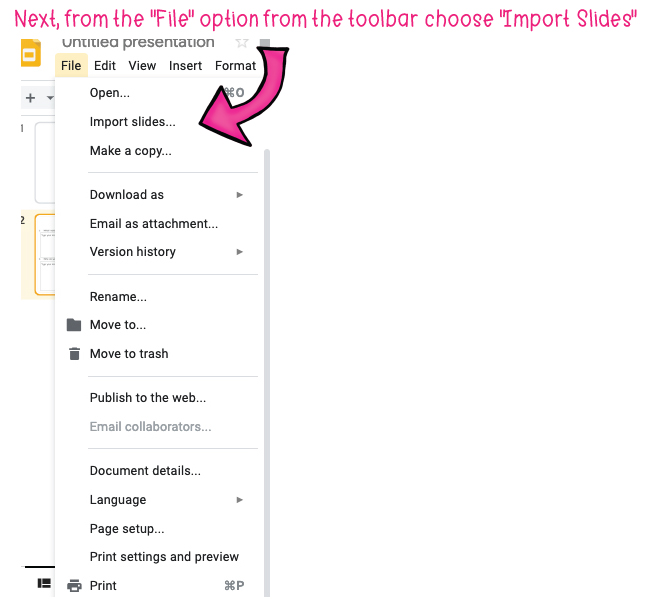
Understanding the need for flexibility in tailoring materials to suit classroom requirements, I often receive inquiries about sharing specific sections—like a single chapter—with students. To assist in creating customized assignments from your master file, I’ve outlined straightforward steps below for quick customization to meet your specific needs.
Once your master file is in your Google Drive, follow these steps:
The dimensions mentioned earlier apply to all my novel study products. However, for social studies materials, sizes can vary, often set at 12×12. To ensure your file matches the right dimensions and avoids distortion, check the page setup of your master file.
I trust these details and suggestions will assist you in tailoring your files to suit your students’ and classroom’s specific needs. Should you have further queries or need clarification, please don’t hesitate to reach out—I’m more than happy to provide tips and clear up any confusion. You can find my email address on the initial page of every file downloaded from my store.
Would you like to engage in discussions and exchange ideas with fellow educators about incorporating children’s literature into your classroom? I’m assembling a community of teachers and homeschoolers who work with students in grades 3-8 and utilize novels in their teaching. I invite you to join us for an opportunity to learn, collaborate, and progress together!
Click hereor on the image below to become a part of my Facebook group, Book Talk with The Teaching Bank!
Therapy animals are increasingly recognized for their immense contribution to healing and learning across all age groups. Click here to explore recent news stories showcasing the remarkable impact these animals bring into our lives.
I adore animals and have had several pets over time. When my son turned three, we started worrying about his speech development. He wasn’t very vocal, but he had a knack for communicating his needs through other means. His non-verbal cues reminded me of the rabbit in the Frosty the Snowman special—he found different ways to express himself and didn’t feel the urge to speak. Around that period, we introduced a new golden retriever puppy named Katy. To Katy, Sam seemed like another playful puppy. As Katy grew, she could get a bit rowdy with Sam, occasionally causing him to tumble over.
Naturally, we dedicated time to training Katy, and she became a certified graduate of the Canine Good Citizenship program. However, a crucial aspect was teaching Sam to assertively use commands like sit, off, and down. Sam swiftly grasped that vocalizing served a significant purpose, and he began using his voice more frequently—not just with Katy but with everyone around. Many mornings, I’d wake up to find Sam beside Katy’s bed, engaged in animated conversations, sharing his adventures, hopes, and dreams. It was truly heartwarming to witness.
Katy was incredibly patient and adored everyone she met! We believed she had the perfect temperament to become a therapy dog, so we started training her with that goal in mind. Sadly, the program we were involved in discontinued their classes. Later on, Katy faced a series of knee surgeries to address joint problems in both legs and battled osteosarcoma, ultimately leading to the amputation of one of her front legs. As a result, her dream of becoming a therapy dog never came to fruition.
At home, Katy offered us endless unconditional love and her own form of “therapy.” One of her greatest joys was curling up with us and listening to stories! She patiently listened through the entire Harry Potter series not just once, but twice!
The impact of a pet’s love and care on the mental well-being of those around them is truly remarkable. They work wonders! I’m a strong advocate for expanding the presence of reading dogs in schools.
Within my Wonder Novel Study, I developed an informational reading activity centered around therapy dogs. I provide it as a free download in my store, separate from the novel study. It’s a fantastic resource to delve into the significance and advantages of therapy animals. This activity serves as a wonderful tribute to all the animal heroes in our lives, especially fitting for National Therapy Animal Day!
Sadly, Katy’s osteosarcoma resurfaced, spreading to her lungs and spine. Regrettably, we had to say goodbye to relieve her from pain. Katy held a special place in our family, becoming an integral part of my children’s childhood. Her absence leaves a profound void, and she will always be cherished and dearly missed.
Katy 1/24/08-2/5/19
In honor of Katy, and all the wonderful therapy animals out there, Happy National Therapy Animal Day!









 Novel Studies Part 3: Pacing

 All of my novel studies offer a Google Drive™ format, in addition to the printable format, shown above, to use with your students. This allows you to use novel studies in a 1:1 classroom, save paper, and easily engage students that are absent. Here’s an example page from the Google Drive™ format of my









 Naturally, we dedicated time to training Katy, and she became a certified graduate of the Canine Good Citizenship program. However, a crucial aspect was teaching Sam to assertively use commands like sit, off, and down. Sam swiftly grasped that vocalizing served a significant purpose, and he began using his voice more frequently—not just with Katy but with everyone around. Many mornings, I’d wake up to find Sam beside Katy’s bed, engaged in animated conversations, sharing his adventures, hopes, and dreams. It was truly heartwarming to witness.
 At home, Katy offered us endless unconditional love and her own form of “therapy.” One of her greatest joys was curling up with us and listening to stories! She patiently listened through the entire Harry Potter series not just once, but twice!


