Genesis Begins Again by Alicia D. Williams, quite deservedly, is the winner of the 2020 Newbery Honor and the 2020 Coretta Scott King/John Steptoe Award for New Talent. This modern novel stands out for its powerful themes and relatable narrative.
We earn a commission if you make a purchase, at no additional cost to you.
Published in 2019, it is written in a modern language that middle schoolers will relate to. It is written by a Black author with a Black female protagonist and is a great way to bring diverse voices into your classroom, not just for representation, but for all students to learn from and relate to. Genesis has been dealt a hard hand in life and with her issues and those of her friends, just about every student will find something to relate to.
Benefits of Using Genesis Begins Again in Your Classroom:
Explores Diversity and Identity: Genesis Begins Again offers a poignant exploration of identity and self-acceptance, making it a valuable tool for promoting diversity and inclusion in the classroom. Through the protagonist Genesis’s journey of grappling with her skin tone and family dynamics, students are exposed to discussions on race, identity, and the impact of societal standards on self-worth.
Fosters Empathy and Understanding: The novel’s narrative intricately weaves themes of empathy and understanding, encouraging students to walk in someone else’s shoes and develop a deeper sense of compassion. By empathizing with Genesis’s challenges and triumphs, students gain valuable insights into the complexities of human emotions and experiences.
Addresses Relevant Social Issues: Genesis Begins Again tackles important social issues such as bullying, colorism, and family dynamics, providing a platform for meaningful classroom discussions on these topics. Through these discussions, students not only enhance their critical thinking skills but also gain a broader perspective on societal issues affecting diverse communities.
Promotes Resilience and Self-Discovery: Genesis’s resilience in the face of adversity serves as an inspiring example for students, encouraging them to navigate their own challenges with courage and determination. The novel’s emphasis on self-discovery and embracing one’s uniqueness empowers students to embrace their individuality and build confidence in their abilities.
Enhances Literacy and Language Skills: Genesis Begins Again is rich in literary elements and language nuances, offering ample opportunities for students to enhance their literacy skills through close reading and analysis. Engaging with the novel’s vivid imagery, symbolism, and character development enables students to sharpen their comprehension, interpretation, and communication skills.
It is vital to use literature in your classroom that is diverse and represents all voices. Students should see themselves in the literature they read, and it’s also a way for other students to learn from and understand people who are different from them. Learning from different cultures enhances our empathy as humans to open minds and hearts.
Genesis Begins Again tackles issues of poverty, being evicted and having to move homes and schools frequently, having an alcoholic and untrustworthy parent, and at the root of Genesis’s hurt is the colorism that she faces from her peers, her father, her grandmother, and most of all herself. The novel shines a light on how our American culture and media have a set image of what “beauty” is and how, all too often, most of us don’t fit that mold. Genesis Begins Again is a relatable tale of how Genesis learns to trust others and love herself for who she is instead of striving for some unattainable image that could never be. This book is worthy of all the accolades that it has received and is a valuable novel for middle school students to use in their classrooms.
I offer a complete novel study to accompany Genesis Begins Again for use in the classroom or homeschool. The unit includes printable and Google Drive™ formats for use in a paperless classroom or with Google Classroom.
Try a free sample of the novel study for Genesis Begins Again
You can purchase this novel study at the following locations:
Are you interested in reading about and sharing ideas with other educators on using children’s literature in your classroom? My goal is to bring together teachers and homeschoolers who teach grades 3-8 and use novels with their students. I’d love for you to join me to learn, share, and grow together!
If you’re looking for a funny, engaging novel to read with your elementary students, Wayside School Beneath the Cloud of Doom by Louis Sachar is a fantastic choice.
After more than forty years, Louis Sachar returned to the wonderfully wacky world of Wayside School—and this newest adventure delivers the same absurd humor, unexpected situations, and laugh-out-loud moments that have made the Wayside School books classroom favorites for generations.
For teachers who love using children’s literature and novel studies to build reading skills, Wayside School Beneath the Cloud of Doom offers plenty of opportunities for reading comprehension, vocabulary development, critical thinking, creativity, discussion, and writing.
And if you’re looking for a Wayside School Beneath the Cloud of Doom novel study to make teaching the book easier, I’ve created a complete, no-prep unit to accompany the novel.
We earn a commission if you make a purchase, at no additional cost to you.
📚 Why Teach Wayside School Beneath the Cloud of Doom?
One of the best things about Louis Sachar’s Wayside School books is how quickly they capture students’ attention.
The world of Wayside School is anything but ordinary. Strange things happen. Characters behave in unexpected ways. Problems don’t always have predictable solutions. And just when students think they understand what’s happening, the story can take another hilarious turn.
That makes Wayside School Beneath the Cloud of Doom an excellent book for getting students excited about reading while also developing important ELA skills.
Here are some of the ways this novel can support learning in your classroom.
😂 1. Encourage a Love of Reading
Let’s face it: getting students excited about reading matters.
When students genuinely enjoy a book, they’re more likely to want to keep reading, participate in discussions, and explore other books.
Wayside School Beneath the Cloud of Doom is filled with humor, unusual characters, and unexpected situations that can keep reluctant readers engaged.
The humor also makes the book especially enjoyable as a class read-aloud.
If you’ve ever read a Wayside School book aloud to a class, you probably already know what happens next: students start laughing, anticipating what might happen, and sharing their reactions with one another.
Those moments can help create something every teacher wants—a classroom community built around books and reading.
💡 2. Spark Creativity and Imagination
The world of Wayside School is wonderfully unpredictable.
Students encounter situations that encourage them to think beyond the ordinary and imagine possibilities that don’t always follow the rules of the real world.
That makes this novel a natural starting point for creative writing and imaginative activities.
After reading, students can:
Create their own unusual Wayside School classroom
Invent a new character
Write a silly story set at Wayside School
Design an unexpected solution to a problem
Predict what might happen next
Compare their ideas with those of their classmates
These types of activities allow students to practice writing and communication skills without making writing feel like a chore.
🧠 3. Build Critical Thinking Skills
Funny doesn’t mean simple.
Wayside School Beneath the Cloud of Doom provides plenty of opportunities for students to think critically about characters, events, problems, and solutions.
As students read, encourage them to make predictions, look for clues, analyze characters, and explain their thinking.
You can ask questions such as:
What do you think will happen next?
Why did the character make that choice?
What clues helped you make that prediction?
How would you have handled the situation?
What makes this situation unusual?
What can we learn from the characters’ actions?
These discussions turn an entertaining story into a valuable reading comprehension and critical-thinking experience.
📖 4. Strengthen Reading Comprehension
A high-interest novel is an excellent vehicle for teaching comprehension skills.
With Wayside School Beneath the Cloud of Doom, students can practice:
Making inferences
Citing evidence from the text
Summarizing
Making predictions
Analyzing characters
Understanding cause and effect
Identifying important details
Making connections
Explaining their thinking
Instead of teaching these skills in isolation, you can teach and practice them using a story students actually want to read.
✏️ 5. Expand Vocabulary and Language Skills
Louis Sachar’s writing also provides opportunities to explore vocabulary and language.
A novel study can help students encounter unfamiliar words in context and practice determining meaning using clues from the surrounding text.
You can also use the novel as a springboard for:
Vocabulary activities
Context-clue practice
Word discussions
Character descriptions
Writing activities
Sentence development
Literary discussions
This allows vocabulary instruction to become part of the reading experience rather than a separate worksheet students complete without context.
🤝 6. Encourage Discussion and Collaboration
A great novel gives students something to talk about.
The unusual situations in Wayside School Beneath the Cloud of Doom make it particularly well suited for partner discussions, small-group conversations, literature circles, and whole-class discussions.
Students can compare their predictions, debate character choices, discuss solutions to problems, and share their reactions to the story.
These conversations give students practice with important communication skills while helping them learn from one another.
❤️ 7. Create Opportunities for Social-Emotional Learning
Although humor is one of the biggest draws of the Wayside School books, the characters and situations can also open the door to meaningful conversations.
Teachers can use the novel to discuss topics such as:
Friendship
Empathy
Problem-solving
Resilience
Cooperation
Communication
Understanding different perspectives
The humor creates an approachable way for students to discuss how characters respond to challenges and interact with one another.
📚 A Complete Wayside School Beneath the Cloud of Doom Novel Study
Want to teach Wayside School Beneath the Cloud of Doom without spending hours creating comprehension questions, vocabulary activities, assessments, and lesson plans?
The no-prep novel study includes both printable and digital resources, so you can use it in a traditional classroom, paperless classroom, Google Classroom, small group, or homeschool setting.
What’s Included?
The Wayside School novel study includes:
Daily lesson plans
Pacing and standards guide
Vocabulary activities
Vocabulary Word Wall Cards
Chapter-by-chapter comprehension questions
Reading comprehension activities
Book-specific extension activities
Spelling list
End-of-book assessment
Vocabulary assessment
Essay question
Digital Google Drive™ assessment
End-of-the-book activity packet
Story Elements Interactive Notebook Activity Packet
Complete answer keys
Common Core Standards alignment for grades 3-5
The resource includes 130+ PDF pages, giving you a complete set of materials for your novel unit.
🖨️ Printable + Digital Formats
You don’t have to choose between paper and digital.
This Wayside School Beneath the Cloud of Doom book study includes both a printable PDF version and a Google Drive™ version.
Use the printable activities for traditional instruction or use the digital resources for a paperless novel study or Google Classroom.
Not sure if this Wayside School Beneath the Cloud of Doom novel study is right for your students?
Download the free preview and take a look at the included activities before you purchase.
It’s an easy way to see exactly what you’ll receive.
⭐ Make Your Wayside School Novel Unit Easier
Wayside School Beneath the Cloud of Doom is the kind of book that can make students laugh, think, discuss, and want to keep reading.
Whether you’re using it as a whole-class read-aloud, literature circle book, small-group novel, or independent reading selection, this Louis Sachar classic can provide a wonderful foundation for meaningful ELA instruction.
And with a ready-to-use Wayside School novel study, you don’t have to spend your evenings creating materials to go along with it.
Save your planning time and spend more time enjoying the book with your students.
👉 Get the Wayside School Beneath the Cloud of Doom Novel Study here.
More Wayside School Resources
If your students love Wayside School Beneath the Cloud of Doom, you can also explore the other books in the Wayside School series and use the Wayside School novel studies to create an engaging series-based reading experience.
💬 Connect with Fellow Educators!
Are you teaching Wayside School this school year? How do you celebrate kindness in your classroom?
Join our free community, Book Talk with The Teaching Bank, to share ideas, grab freebies, and connect with 3rd–8th grade teachers using novels in the classroom!
*The Teaching Bank participates in the Amazon Associate Program and earns a fee from qualifying purchases made on the Amazon.com site.
The reality of educational research is this: if you look hard enough, you can find support for almost any teaching strategy. Rarely is there a clear-cut answer about what works best. In most cases, effective teaching comes down to a teacher’s professional judgment, their students’ needs, and the flexibility they are given in the classroom.
Unfortunately, in today’s test-driven educational climate, teachers are often given less freedom than ever before. Rigid curriculum guidelines and scripted programs can make it difficult to adapt instruction, leaving little room for meaningful engagement or enrichment.
My Experience Using Novel Studies in the Classroom
I experienced this challenge firsthand while teaching 4th grade in a high-poverty, low-performing school. Many of my students entered my classroom reading at a 1st–2nd grade level, and very few were on grade level.
The biggest obstacle wasn’t just skill; it was motivation.
Our district relied heavily on a basal reading program that felt unrelatable and uninspiring to students. The stories lacked emotional connection, and students saw reading as a chore rather than something enjoyable or rewarding.
I knew something had to change.
How Read-Alouds Spark a Love of Reading
I started small by implementing a daily read-aloud time. My goal wasn’t rigorous analysis; I simply wanted students to enjoy a story.
This shift made a huge difference.
Upper elementary students are often overlooked when it comes to being read to, yet they benefit tremendously from it. By choosing high-interest, often humorous books, I was able to create a positive reading experience. Soon, read-aloud became one of the most anticipated parts of our day.
Why Novel Studies Work Better Than Basal Readers
Once I saw the impact of read-alouds, I began incorporating novel studies alongside our required curriculum.
Instead of limiting students to short excerpts, I introduced full novels connected to the themes in our basal program. The results were immediate and powerful:
Students reading below grade level began attempting more challenging texts
Engagement and participation increased dramatically
Discussions became deeper and more meaningful
Students started choosing to read independently
It became clear that reading an entire book provides a richer, more rewarding experience than isolated passages.
Improved Critical Thinking Through Deeper Reading
One of the biggest advantages of novel studies is the ability to promote higher-order thinking.
With a full-length text, students can:
Analyze character development
Explore complex themes
Make predictions and connections
Engage in meaningful discussions
Using Bloom’s Taxonomy becomes far more natural when students are immersed in a complete story rather than a short excerpt.
Building Real-World Connections and Empathy
Perhaps the most powerful benefit of novel studies is their ability to build empathy and awareness.
Through literature, students can explore real-world issues in a meaningful and age-appropriate way. For example:
These stories stay with students far longer than any worksheet ever could.
Do Novel Studies Improve Test Scores?
While I didn’t conduct formal research, I can confidently say this: My students’ test scores did not decline, and their love of reading increased significantly.
And that matters.
Because when students enjoy reading, they read more. And when they read more, their skills naturally improve.
Key Benefits of Using Novel Studies in the Classroom
Incorporating novel studies into your curriculum offers numerous advantages:
Improved Reading Skills: Students build comprehension, vocabulary, and fluency through sustained reading.
Increased Student Engagement: Novels capture interest and create emotional investment in learning.
Stronger Critical Thinking Skills: Students analyze, infer, and evaluate as they explore complex texts.
Enhanced Writing and Communication: Discussions and written responses deepen understanding and expression.
Greater Cultural Awareness: Literature exposes students to diverse perspectives and experiences.
Development of Empathy: Students connect with characters and better understand others’ experiences.
Encouragement of Independent Reading: Engaged students are more likely to read on their own.
Final Thoughts: Why Novel Studies Matter
Using novel studies in the classroom is one of the most effective ways to transform reading instruction.
While standardized programs may check boxes, novels create meaningful learning experiences. They engage students, deepen understanding, and foster a lifelong love of reading.
And ultimately, that’s what great teaching is all about.
Are you interested in reading about and sharing ideas with other educators on using children’s literature in your classroom? My goal is to bring together teachers and homeschoolers who teach grades 3-8 and use novels with their students. I’d love for you to join me to learn, share, and grow together!
Are your high school students prepared to manage money when they leave school?
Many teenagers know how to use a debit card, order something online, or receive a paycheck—but do they understand how checking and savings accounts work, what taxes are taken from a paycheck, how credit cards can lead to debt, or how their credit score can affect their future?
These are essential financial literacy skills for teens, yet they aren’t always taught in a way that allows students to practice applying them to real-life situations.
When my children were teenagers, I made a point of teaching them as much as I could about personal finance and money management before they left high school.
One day, I was helping my daughter complete the paperwork for a new job. As we worked through her W-4, she looked at me and essentially said, Why don’t they teach us this stuff in school?
She had a point.
Students spend years learning academic subjects, but many graduate from high school without knowing how to read a pay stub, understand a W-2, file a tax return, compare bank accounts, or use a credit card responsibly.
That experience made me realize just how important financial education for teenagers really is.
Why Financial Literacy Matters for Teens
Financial literacy isn’t simply about knowing how to save money.
It’s about giving students the knowledge and confidence to make smart financial decisions as they begin adulthood.
A financially literate teenager should understand concepts such as:
Earning and managing income
Checking and savings accounts
Direct deposit
Budgeting and saving
Debit and credit cards
Credit card interest
Credit scores
Taxes and tax forms
Paychecks and pay stubs
W-4 and W-2 forms
Making responsible financial decisions
Understanding the long-term consequences of borrowing money
Teaching these concepts before students graduate allows them to practice financial decision-making before they’re making those decisions on their own.
1. Teach Teens About Savings Accounts
One of the easiest places to begin teaching financial literacy is with a savings account.
Whether students are saving money from an allowance, gifts, a part-time job, or another source of income, they should understand why saving is important and how a savings account works.
Students can learn to compare different accounts and consider factors such as:
Interest rates
Minimum balances
Fees
Accessibility
Account features
How interest can help money grow
These may seem like simple concepts, but learning them early helps students develop good money-management habits.
2. Teach Teens How Checking Accounts Work
Once students get their first job, they’ll likely need a checking account.
Many employers use direct deposit, so understanding how a checking account works is an important part of preparing for employment.
Students should know how to:
Deposit and access money
Use a debit card
Read an account statement
Understand account balances
Recognize banking fees
Use direct deposit
Track spending
Avoid overdrawing an account
A classroom lesson on checking accounts can give students a chance to practice these skills before they’re responsible for managing their own money.
3. Help Students Understand Their First Paycheck
Getting that first paycheck is exciting—until students realize that their gross pay isn’t the amount that actually lands in their bank account!
This is a perfect opportunity to teach students about gross pay, net pay, deductions, Social Security, Medicare, and federal income tax.
Students should also understand the paperwork that comes with starting a new job.
That includes learning about:
W-4 forms
Direct deposit forms
Pay stubs
Gross income
Net income
Tax withholding
W-2 forms
These are real-world financial skills that students will use almost immediately after entering the workforce.
4. Teach Teens About Taxes
Taxes can be confusing for adults—so imagine how overwhelming they can be for a teenager filing a tax return for the first time!
Students should understand that earning money generally means dealing with taxes.
They can learn how to read a W-2 and understand the basic information reported on it. They can also learn how a Form 1040 is used to file a federal income tax return.
Even if a student doesn’t earn enough to owe federal income tax, they may still need to file a return to receive a refund of money that was withheld from their paycheck.
Allowing students to practice completing a tax return in high school can make the process much less intimidating when they eventually have to do it themselves.
5. Explain the Difference Between Debit and Credit Cards
Teenagers are surrounded by opportunities to spend money.
Online shopping, food delivery, subscriptions, entertainment, and social media all make spending incredibly easy.
That’s why students need to understand the difference between debit cards and credit cards.
With a debit card, money generally comes directly from the student’s bank account.
With a credit card, the student is borrowing money and agreeing to repay it.
That distinction is critical.
Students also need to understand what happens when they don’t pay a credit card balance in full.
6. Show Students How Credit Card Debt Can Grow
One of the most valuable financial literacy activities you can do with teenagers is demonstrate how credit card interest works.
A purchase that seems affordable can become much more expensive when interest is added, and the balance isn’t paid off.
Rather than simply telling students that credit card debt is dangerous, let them see the numbers for themselves.
Students can calculate how long it could take to pay off a balance while making minimum payments and how much interest they could ultimately pay.
This turns an abstract financial concept into a real-world lesson students are much more likely to remember.
7. Teach Students About Credit Scores
A credit score may seem like something that only matters when students are older, but the financial choices they make as young adults can have long-term consequences.
Students should understand:
What a credit score is
Why credit scores matter
What can affect a credit score
How responsible credit use can help establish good credit
How missed payments and excessive debt can hurt credit
Why a poor credit score can make borrowing money more expensive
A strong credit history can affect future financial decisions involving things such as cars, housing, loans, and credit cards.
The earlier students understand this connection, the better prepared they are to make responsible choices.
Make Financial Literacy Relevant to Teenagers
The best financial literacy lessons aren’t simply lists of vocabulary words or worksheets defining financial terms.
Students need opportunities to use financial information to solve realistic problems and make decisions.
For example, instead of asking students to define “credit score,” give them a scenario involving two people with different credit scores and ask them to compare the cost of borrowing money.
Instead of simply defining “net pay,” give students a sample paycheck and have them determine how much money they actually take home.
Instead of telling students that taxes are withheld from their paychecks, let them examine a pay stub and identify the deductions.
Looking for Financial Literacy Activities for High School?
If you’re looking for ready-to-use financial literacy activities for teens, I’ve created a collection of resources designed to make these concepts practical and engaging for high school students.
The activities cover essential topics including:
Savings accounts
Checking accounts
Credit and debit cards
Credit scores
Jobs and taxes
W-4 and W-2 forms
Federal Form 1040
Real-world money management
Students aren’t just reading about financial concepts. They research, calculate, problem-solve, and apply what they’re learning.
Several of the units also include interactive escape room activities, giving students a more engaging way to review and apply financial literacy concepts.
Financial literacy becomes much more meaningful when students can see how it applies to their own lives.
Financial Literacy Bundle
If you want to teach multiple financial literacy topics, you can save by getting all five units together in the Financial Literacy Bundle.
The bundle includes financial literacy activities covering checking accounts, savings accounts, credit and debit cards, credit scores, and jobs and taxes.
It’s designed for high school personal finance, financial literacy, economics, consumer math, career readiness, and life skills classes.
Give Teens the Financial Skills They Need for Adulthood
We can’t assume that students will automatically learn how to manage money once they graduate.
They need opportunities to learn—and practice—these skills while they’re still in school.
Teaching teenagers about saving, banking, credit, taxes, income, and responsible money management can give them a stronger foundation as they enter college, the workforce, and adulthood.
Because knowing how to manage money isn’t just a nice skill to have.
Are you interested in reading about and sharing ideas with other educators on using children’s literature in your classroom? My goal is to bring together teachers and homeschoolers who teach grades 3-8 and use novels with their students. I’d love for you to join me to learn, share, and grow together!
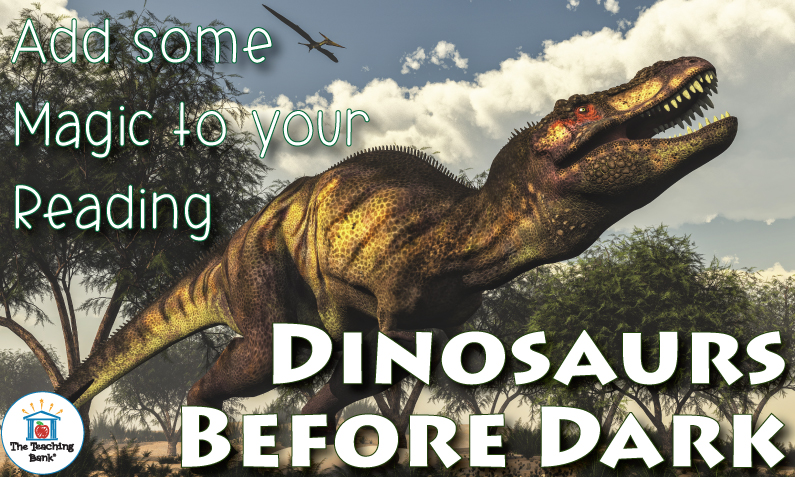
Introducing novels to young readers requires selecting a book that not only captures students’ imagination but also sparks their interest in reading. One such captivating novel is Dinosaurs Before Dark, the first book in the beloved Magic Tree House series by Mary Pope Osborne.
The Magic Treehouse series is one of the best-selling chapter book series of all time for a reason. The books are a wonderful entry into the chapter book genre and there is a book for nearly every topic of interest. Dinosaurs Before Dark is the first book in the series and introduces the reader to the Magic Treehouse and the adventure of the lives of Jack and Annie. It is a great book to use in your classroom or homeschool for a whole class novel study, small book groups, or individual book studies.
We earn a commission if you make a purchase, at no additional cost to you.
Why teachers should consider Dinosaurs Before Dark as a gateway to the world of novels:
Captivating Storyline: Dinosaurs Before Dark takes young readers on an extraordinary journey as siblings Jack and Annie stumble upon a mysterious tree house filled with books that transport them to different time periods. In this installment, they are whisked away to the Mesozoic Era, where they encounter dinosaurs and experience the wonders of this prehistoric world. The thrilling and imaginative storyline instantly grabs the attention of students, encouraging them to delve deeper into the novel.
Engaging and Accessible Language: Mary Pope Osborne’s writing style in the Magic Tree House series is both engaging and accessible for young readers. The vocabulary is carefully chosen to suit the target age group, allowing students to comprehend the story without feeling overwhelmed. As they navigate the pages of Dinosaurs Before Dark, students will discover the joy of reading independently, building their confidence as they progress through the chapters.
Blends Fiction and Non-fiction: Dinosaurs Before Dark seamlessly blends elements of fiction and non-fiction, providing an excellent opportunity for interdisciplinary learning. The novel sparks students’ curiosity about dinosaurs, encouraging them to explore more about these fascinating creatures. Teachers can capitalize on this interest by incorporating science lessons that delve into paleontology, the study of dinosaurs, and the prehistoric era, enriching students’ knowledge across multiple subjects.
Introduction to Historical Fiction: Historical fiction allows young readers to experience different time periods, cultures, and places through the lens of compelling narratives. Dinosaurs Before Dark serves as an excellent introduction to this genre by transporting students to a time long gone. By engaging with historical fiction early on, students develop an appreciation for history and recognize the impact it has on the present. Teachers can further expand on this concept by exploring other historical periods through additional novels.
Promotes Imagination and Creativity: The Magic Tree House series, including Dinosaurs Before Dark, sparks the imagination of young readers. As Jack and Annie embark on their adventures, students are encouraged to envision themselves in their shoes, fostering creativity and a sense of wonder. The novel’s vivid descriptions of the prehistoric world inspire students to create their own stories, drawings, or even theatrical performances related to the Mesozoic Era.
Encourages Critical Thinking and Problem-Solving Skills: Throughout the novel, Jack and Annie encounter numerous obstacles, requiring them to think critically and problem-solve their way through. Teachers can use these challenges as opportunities to engage students in discussions about decision-making, ethics, and the consequences of actions. These life lessons can empower students to face their own challenges with confidence and resilience.
Cultivates a Love for Series Reading: The Magic Tree House series, with over 60 books and counting, offers an exciting prospect for students to continue their reading journey beyond Dinosaurs Before Dark. By introducing this novel as the first in a series, teachers can create a sense of anticipation and eagerness to read more about Jack and Annie’s adventures. This approach cultivates a habit of series reading, encouraging students to explore other genres and authors in the future.
Embraces Diversity and Inclusivity: Mary Pope Osborne thoughtfully weaves themes of diversity and inclusivity throughout the Magic Tree House series. By incorporating characters from various backgrounds, the books encourage empathy and understanding among students. The diverse representation in Dinosaurs Before Dark opens up discussions about cultural differences and the importance of respecting others, promoting a sense of unity in the classroom.
The introduction of novels sets the foundation for a lifelong journey of reading, cultivating a love for books, and nurturing critical thinking skills. Your students will be drawn into the nail-biting adventure with Jack and Annie. The novel’s perfect blend of fantasy and history, endearing characters, and exciting adventures captivate young minds, fostering critical thinking, curiosity, and empathy. By taking students on a magical journey through time, Dinosaurs Before Dark leaves an indelible mark, setting the stage for a lifelong appreciation of literature and exploration.
I offer a complete novel study to accompany Dinosaurs Before Dark for use in the classroom or homeschool. The unit includes both a printable format and a Google Drive™ format for use in a paperless classroom or with Google Classroom.
Try a free sample of the novel study for Dinosaurs Before Dark
You can purchase this novel study at the following locations:
Are you interested in reading about and sharing ideas with other educators on using children’s literature in your classroom? My goal is to bring together teachers and homeschoolers who teach grades 3-8 and use novels with their students. I’d love for you to join me to learn, share, and grow together!