While having your students physically present offers the best means to gauge their comprehension of a subject and identify the necessity for tailored instruction, circumstances may arise where this isn’t feasible. Increasingly, students equipped with laptops and various devices are transforming traditional “free” snow days into E-Learning days. This shift aims to prevent extending the school year by leveraging technology for remote learning when in-person classes are impractical.
Periodic closures of schools due to natural disasters have been evident in various regions. For instance, in Nebraska, schools grappled with flooding issues both, in the spring and fall, resulting in chaotic interruptions to regular schedules. Additionally, student absences can range from short-term illnesses to prolonged health issues, leading to extended periods away from the classroom.
Furthermore, homeschooling communities often utilize e-learning within their cooperative groups or classes. The diverse array of reasons preventing direct in-person interaction with students underscores the significance of technology. It enables educators to virtually engage with their students during such challenging times, bridging the physical gap through digital platforms.
In my role as a curriculum writer, I prioritize flexibility by integrating numerous choices and options into my educational materials. Having been a teacher myself, I understand the constant influx of various challenges and unforeseen circumstances that a standard textbook isn’t equipped to handle. My educational philosophy revolves around the idea that a student ideally engages with the material using all their senses, transforming learning into solid knowledge. Therefore, all my resources feature a hands-on component—printable and tactile—encouraging collaborative engagement between students and teachers.
Recognizing the limitations of this ideal scenario, I’ve supplemented almost all my products with a Google Drive format, providing educators with alternative options. The Google Drive version encompasses the same content areas but allows for a paperless approach, utilizing Google Drive tools like Slides and Forms.
My portfolio predominantly includes a blend of printable and Google format materials, ranging from novel studies, social studies, to financial literacy resources. Additionally, I offer ELA and Math centers that are interactive on Google Drive while still being available in printable formats. Each download includes complete printable content and instructions on accessing and integrating the Google format files into your Google Drive, facilitating ease of use for educators.
After clicking on the provided link, your file will be visible in your Google Drive account under the name “Copy of File Name.” You can conveniently modify this title to your preference by clicking on the name box. Subsequently, you can assign these files to your students through Google Classroom.
How to use Novel Studies in an E-Learning Format?
In utilizing novel studies, your students will require a copy of the novel to accompany either the printable or Google Drive format provided. With the book in hand, they can seamlessly navigate through the study, engaging with comprehension questions, vocabulary activities, and extended writing tasks on Google Slides, mirroring the functionality available in the printable version. Teachers can track their progress through Google Classroom and I recommend conducting check-ins with small groups via platforms like Google Talk (or Google Hangouts/Google Chat) or Zoom. These sessions allow for discussions about the material read, ensuring comprehension and encouraging deeper exploration of the novel. It’s akin to the class discussions held in person, bridging the gap using technology.
All my novel studies feature assessments that can be completed through Google Forms. The multiple-choice assessments for comprehension and vocabulary are self-grading, significantly reducing grading time for teachers. However, the writing assessments, being more open-ended, cannot be self-graded. Typically consisting of one to two questions per assessment, these tasks can be submitted via Google Classroom for review and grading by the teacher.
How to use Social Studies and Financial Literacy Activities in an E-Learning Format?
My social studies and financial literacy resources are structured similarly to the novel studies in Google format, but they don’t require any specific books or textbooks. These materials feature Webquest links that offer learning content and include slideshow presentations in all social studies resources to facilitate students’ understanding and completion of activities.
Just like with the novel studies, Google Slides serve as the platform for both the presentations and activity completion. Additionally, in certain financial literacy activities such as the Escape Room exercises, Google Forms are integrated to delve deeper into the content alongside the use of Google Slides.
How to use ELA and Math Centers in an E-Learning Format?
The interactive ELA and Math Centers are designed to be completed using Google Slides. Students engage with the components to practice various skills, and teachers can oversee their progress through Google Classroom.
What can I do if my student doesn’t have access to equipment or the internet?
Many of us assume ready access to computers, laptops, and internet connectivity at home, yet some students lack this accessibility. In public schools, it’s our responsibility to ensure equity among our students. If your school lacks one-to-one capability or if a student doesn’t have home internet access, all my materials are provided in printable formats within the same product download. These activities are identical, just presented on paper rather than on a computer. You can distribute these packets to students for home use. To stay connected, consider communicating via phone calls, Facetime, or Skype for those with access via a parent’s cell phone. The content remains the same, only the format differs.
Technology offers various avenues to engage with students. While I advocate for a multisensory approach to learning—incorporating reading, writing, manipulation, and discussion—I recognize that there are instances where this isn’t feasible. In such cases, I hope my materials offer diverse options for utilization during e-learning scenarios.
Explore these free samples offered in my store, featuring both printable and Google Drive™ formats. They provide an opportunity for you to familiarize yourself with the functionalities of these resources.
Sample from my Wonder Novel Study
Sample Social Studies Activity
In this post titled “Tips for Using Google Drive in Your Classroom,” you’ll discover helpful suggestions on customizing Google Drive products to suit your specific requirements more effortlessly.
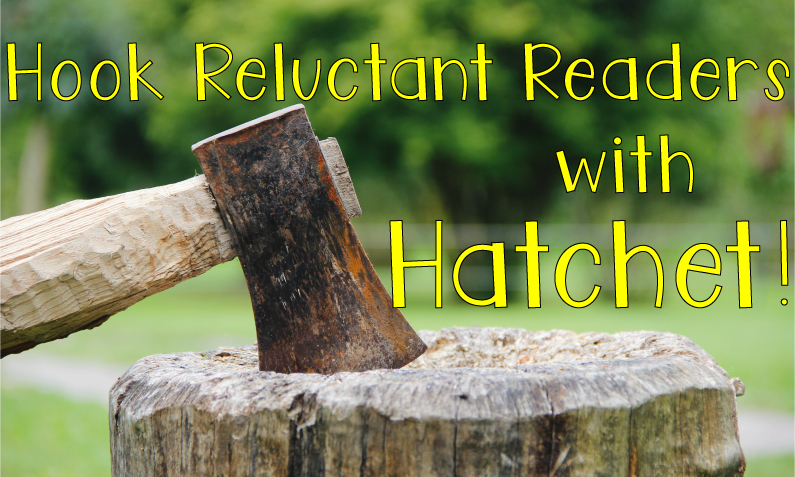
Looking for an engaging novel that will get your students excited about reading? A Hatchet novel study may be exactly what you need.
Gary Paulsen’s Hatchet has been a classroom favorite for years—and for good reason. This gripping survival story gives students an exciting reason to keep turning the pages while providing teachers with countless opportunities to teach reading comprehension, vocabulary, critical thinking, character development, writing, and literary analysis.
And sometimes, the best way to get a reluctant reader interested in books is to give them a story they simply can’t put down.
We earn a commission if you make a purchase, at no additional cost to you.
How Hatchet Hooked a Reluctant Reader
One of my biggest frustrations as a parent was watching my oldest son struggle to find enjoyment in reading.
He could read. He did well in school. But reading for pleasure? That was another story.
When he was assigned Hatchet by Gary Paulsen, something completely changed.
He came home from school talking about the book.
He wanted to know what was going to happen next.
He was disappointed when he had to stop reading for the day.
And, most surprising of all, he actually wanted to keep reading.
Every day, he would come home and tell me about the latest chapter. He wasn’t simply completing a reading assignment—he was genuinely invested in Brian’s story.
That experience reminded me of something important:
The right book can completely change a student’s attitude toward reading.
That’s one reason Hatchet is such a powerful choice for an upper-elementary or middle school novel study.
Why Teach Hatchet in the Classroom?
Hatchet follows Brian Robeson, a young boy who finds himself alone in the Canadian wilderness after a plane crash. With nothing but a hatchet, Brian must figure out how to survive.
The survival premise immediately gives students something to think about:
What would you do if you were completely on your own?
As Brian faces one challenge after another, students have opportunities to examine much more than survival.
1. Hatchet Encourages Critical Thinking and Problem-Solving
Brian doesn’t have an adult telling him what to do.
He has to observe his surroundings, make decisions, try different strategies, learn from mistakes, and figure out how to solve problems.
That makes Hatchet an excellent book for teaching critical thinking and problem-solving skills.
Students can discuss questions such as:
What choices did Brian make?
Which decisions helped him survive?
Which decisions made his situation more difficult?
What could Brian have done differently?
How does Brian respond when his first plan fails?
These types of questions move students beyond simply recalling what happened in the story and encourage them to think deeply about the text.
2. Hatchet Is Perfect for Teaching Perseverance
One of the most valuable themes in Hatchet is perseverance.
Brian experiences fear, loneliness, hunger, frustration, and failure. Yet he continues trying.
When something doesn’t work, he learns from the experience and tries again.
That creates natural opportunities to discuss resilience, determination, perseverance, and overcoming obstacles.
Students can connect Brian’s experiences to challenges in their own lives, making the novel much more meaningful than a simple survival story.
3. Hatchet Builds Reading Comprehension
Because Brian’s survival depends on his ability to observe, remember, and make decisions, Hatchet provides excellent opportunities for reading comprehension instruction.
Students can analyze:
Character
Setting
Plot
Conflict
Cause and effect
Character development
Theme
Problem and solution
Point of view
Text evidence
Chapter-by-chapter Hatchet comprehension questions can help students slow down and think about what they are reading rather than rushing through the novel simply to finish it.
This is especially useful when teaching students how to support their answers with evidence from the text.
4. Hatchet Provides Rich Vocabulary Opportunities
Gary Paulsen’s descriptive writing gives students plenty of opportunities to encounter meaningful vocabulary in context.
A Hatchet novel study can turn those unfamiliar words into an opportunity to build vocabulary rather than allowing students to simply skip over them.
Students can examine words in context, determine meaning, and use new vocabulary in their own writing.
Vocabulary instruction is even more effective when students encounter the words repeatedly while reading the novel.
5. Hatchet Makes Writing More Meaningful
One of the advantages of using a novel for ELA instruction is that students have a shared experience to write about.
Instead of assigning disconnected writing prompts, teachers can ask students to respond to situations, characters, conflicts, and themes they already understand.
Hatchet naturally lends itself to:
Personal response writing
Character analysis
Opinion writing
Text-based responses
Critical-thinking questions
Creative writing
Theme analysis
Problem-and-solution writing
The survival setting also makes it easy to create engaging writing prompts that students actually want to answer.
6. Hatchet Can Hook Reluctant Readers
This may be my favorite reason to teach Hatchet.
A student who doesn’t consider himself or herself a “reader” may be much more willing to pick up a book when the premise immediately grabs their attention.
A plane crash.
A wilderness.
A young boy alone.
A hatchet.
Survival.
That’s a pretty compelling setup.
And once students become invested in Brian’s survival, reading comprehension activities and ELA skills become much less of a chore.
The story becomes the vehicle for learning.
Make Teaching Hatchet Easier with a Complete Novel Study
Of course, finding a great novel is only the beginning.
Teachers still have to figure out:
What am I going to teach with this book?
What comprehension questions should I ask?
What vocabulary should I focus on?
How will I assess whether my students understand the novel?
Instead of spending hours creating worksheets, comprehension questions, vocabulary activities, writing assignments, assessments, and lesson plans, you can have an entire unit ready to use.
What’s Included in the Hatchet Novel Study?
The complete unit includes resources for both teachers and students.
Teacher Resources
The teacher packet includes:
Detailed daily lesson plans
Pacing and standards guide
Vocabulary word wall cards
Answer keys
Parent letter
Student Activities
Students receive:
Vocabulary and grammar activities for 60 vocabulary words
Activities that encourage deeper thinking about the novel
The extended writing activities are only included in the complete novel study, making the full unit an especially valuable option.
Assessments
The assessment packet includes quizzes covering both sections of the novel:
Part 1: Chapters 1–9 Part 2: Chapter 10 through the end of the novel
The assessments include vocabulary, reading comprehension, and essay questions, along with answer keys.
Additional ELA Activities
The unit also includes:
End-of-the-book activities
Story Elements Interactive Notebook activities
Common Core State Standards alignment for Grades 5–8
The unit is designed for approximately a 5th–8th grade reading level and can be adapted for whole-class instruction, small groups, one-on-one instruction, independent study, or homeschool use.
The complete Hatchet Novel Study is available in both printable and Google Drive™ formats, making it flexible enough for traditional classrooms, Google Classroom, distance learning, and homeschool environments. The digital version also includes self-grading Google Drive quizzes in multiple-choice format.
Prefer paper?
A printable-only version is also available.
Try the FREE Hatchet Novel Study Sample
Not sure whether this Hatchet book study will work for your students?
Try it before you buy it!
A free sample is available so you can see exactly what the novel study looks like and try the activities with your students. The sample includes one day of activities from the complete unit.
Ready to Turn Hatchet into an Engaging ELA Unit?
Hatchet is much more than a story about a boy trying to survive in the wilderness.
It’s a book about perseverance, problem-solving, resilience, courage, decision-making, and personal growth.
It gives students something exciting to read while giving teachers a natural way to teach important ELA skills.
And when a book can make a reluctant reader come home excited to tell you what happened in the latest chapter?
That’s a book worth teaching.
Connect with Fellow Educators!
Are you teaching Hatchet this school year?
Join our free community, Book Talk with The Teaching Bank, to share ideas, grab freebies, and connect with 3rd–8th grade teachers using novels in the classroom!
*The Teaching Bank participates in the Amazon Associate Program and earns a fee from qualifying purchases made on the Amazon.com site.
One of my favorite (and my students’) themes to explore every year was the Chocolate Theme. We would read The Chocolate Touch by Patrick Skene Catling:
We earn a commission if you make a purchase, at no additional cost to you.
Throughout the theme unit, we incorporated geography by mapping the different countries where the different ingredients of candy bars originate. We worked on letter writing by writing to different chocolate and candy companies with questions. This activity was particularly exciting because many of the companies would respond back to the students with offerings of trial samples or coupons to get free candy! Students learned the power they had as a consumer who shares feedback!
I always started the unit out with The Chocolate Touch written by Patrick Skene Catling which was first published in 1952. The story of loving chocolate never ages! John Midas loves chocolate and sweets more than anything and a wish turns his wildest dreams into a reality. Like King Midas before him, his touch is magic! This book leads to some great comparison activities with the King Midas story. Like King Midas, John soon learns that having too much of a great thing might not be as wonderful as he thought it would be!
I offer a complete novel study to accompany The Chocolate Touch for use in the classroom or homeschool. The unit includes both a printable format and a Google Drive™ format for use in a paperless classroom or with Google Classroom.
Try a free sample of the novel study for The Chocolate Touch
You can purchase this novel study at the following locations:
Chocolate Fever written by Richard Kimmel Smith in 1972, is a more humorous and adventurous tale of young Henry Green whose dream of eating nothing but chocolate comes true. Henry soon discovers that his new ability can be dangerous so he escapes and goes on the run!
I offer a complete novel study to accompany Chocolate Fever for use in the classroom or homeschool. The unit includes both a printable format and a Google Drive™ format for use in a paperless classroom or with Google Classroom.
Try a free sample of the novel study for Chocolate Fever
You can purchase this novel study at the following locations:
In my opinion, the best is saved for last, Roald Dahl’s 1964 classic, Charlie and the Chocolate Factory. This story has everything; a character to empathize with, several characters to learn from, humor, and imagination, it really has it all. Singing the Oompa Loompa songs together is always a fun time that ends in fits of giggles!
I offer a complete novel study to accompany Charlie and the Chocolate Factory for use in the classroom or homeschool. The unit includes both a printable format and a Google Drive™ format for use in a paperless classroom or with Google Classroom.
Try a free sample of the novel study for Charlie and the Chocolate Factory
You can purchase this novel study at the following locations:
Tying different areas of the curriculum together, and enjoying three wonderful novels together, the Chocolate Theme is a fun learning experience for all. It was truly one of the most favorite times I had with my students and it was something past students brought up as a favorite of their 4th-grade year with me. I encourage you to give it a try!
Are you interested in reading about and sharing ideas with other educators on using children’s literature in your classroom? My goal is to bring together teachers and homeschoolers who teach grades 3-8 and use novels with their students. I’d love for you to join me to learn, share, and grow together!
Beverly Cleary is a legend in children’s literature. Two of my favorite books are Dear Mr. Henshaw and the sequel, Strider, which take you on the journey of young Leigh Botts in his acceptance of his parent’s divorce and the road to acceptance of himself. They are great books to use in your classroom or homeschool for a whole class novel study, small book groups, or individual book studies.
We earn a commission if you make a purchase, at no additional cost to you.
Beverly Cleary has always strived to write books “about kids like us”. Her books are beloved because they are so relatable to her readers. Leigh struggles with his parent’s separation and his father’s absence due to his job as a truck driver. In Dear Mr. Henshaw Leigh connects with a favorite author and develops a pen pal relationship that helps him work through his feelings and anxieties.
From the Book Jacket for Dear Mr. Henshaw:
Beverly Cleary’s timeless Newbery Medal-winning book explores difficult topics like divorce, insecurity, and bullying through the thoughts and emotions of a sixth-grade boy as he writes to his favorite author, Boyd Henshaw.
After his parents separate, Leigh Botts moves to a new town with his mother. Struggling to make friends and deal with his anger toward his absent father, Leigh loses himself in a class assignment in which he must write to his favorite author. When Mr. Henshaw responds, the two form an unexpected friendship that will change Leigh’s life forever.
From the beloved author of the Henry Huggins, Ramona Quimby, and Ralph S. Mouse series comes an epistolary novel about how to navigate and heal from life’s growing pains.
Leigh’s story of growth and acceptance continues in Strider when he takes in a stray dog (Strider) that helps him accept his place in the world, introduces him to a love for running, and gives him hope for the future.
From the Book Jacket for Strider:
Strider has a new habit. Whenever we stop, he places his paw on my foot. It isn’t an accident because he always does it. I like to think he doesn’t want to leave me.
Can a stray dog change the life of a teenage boy? It looks as if Strider can. He’s a dog that loves to run; because of Strider, Leigh Botts finds himself running — well enough to join the school track team. Strider changes Leigh on the inside, too, as he finally begins to accept his parents’ divorce and gets to know a redheaded girl he’s been admiring. With Strider’s help, Leigh finds that the future he once hated to be asked about now holds something he never expected: hope.
Try a free sample of the novel study for Dear Mr. Henshaw
Beverly Cleary does a masterful job of showing Leigh’s growth through her portrayal of his letter writing and narration which makes a wonderful example for point of view instruction. Many kids can relate to Leigh’s feelings of loneliness, insecurity, sadness over a divorce, missing a parent, trying to find their way and/or talent, and having a beloved pet that gives them unconditional love. The universal relatability is what makes Dear Mr. Henshaw and Strider such wonderful novels to use in your classroom.
I offer complete novel studies to accompany Dear Mr. Henshaw and Strider for use in the classroom or homeschool. Each unit includes both a printable format and a Google Drive™ format for use in a paperless classroom or with Google Classroom.
You can purchase these novel studies at the following locations:
Or buy them bundled together at a 20% discount!
Are you interested in reading about and sharing ideas with other educators on using children’s literature in your classroom? My goal is to bring together teachers and homeschoolers who teach grades 3-8 and use novels with their students. I’d love for you to join me to learn, share, and grow together!


 Sample from my Wonder Novel Study
 Sample Social Studies Activity




 Connect with Fellow Educators!