Looking for an engaging novel study for middle school ELA that will get your students excited about reading? Harry Potter and the Order of the Phoenix can provide a powerful opportunity to combine student engagement with meaningful instruction in reading comprehension, vocabulary, critical thinking, writing, literary analysis, and social-emotional learning.
J.K. Rowling’s Harry Potter and the Order of the Phoenix is much more than a story about magic. Beneath the spells, magical creatures, and adventures are important themes involving friendship, courage, authority, resilience, grief, prejudice, responsibility, and standing up for what you believe is right.
That makes this popular novel an excellent choice for a Harry Potter novel study in grades 5–8.
We earn a commission if you make a purchase, at no additional cost to you.
Why Teach Harry Potter and the Order of the Phoenix?
Getting students interested in a novel is sometimes half the battle.
Fortunately, many students already recognize Harry Potter and have some familiarity with the characters and wizarding world. That familiarity can provide an immediate hook for reluctant readers and create enthusiasm for classroom discussions.
But engagement alone isn’t enough. The best literature units use an engaging story to help students develop the skills they need as readers, writers, and thinkers.
Harry Potter and the Order of the Phoenix offers plenty of opportunities to do exactly that.
1. Build Reading Comprehension Skills
A lengthy novel can be challenging for students, particularly when there are dozens of characters, multiple storylines, and important details to remember.
A structured Harry Potter novel study can help students slow down and think carefully about what they are reading.
Chapter-by-chapter comprehension questions can encourage students to:
Recall important details
Identify key events
Make inferences
Determine cause and effect
Analyze character motivations
Make predictions
Support answers with evidence from the text
Connect events and themes throughout the novel
Instead of simply asking students, “What happened?”, meaningful comprehension questions encourage them to think about why events happened and what those events reveal about the characters and story.
2. Encourage Critical Thinking and Literary Analysis
One of the biggest advantages of using a complex novel in the classroom is the opportunity to move students beyond basic comprehension.
Harry Potter and the Order of the Phoenix contains numerous topics that lend themselves to critical thinking and literary analysis.
Students can examine questions such as:
How does Harry change throughout the novel?
How do Harry’s experiences influence his decisions?
How does authority affect the characters?
Why is friendship so important during difficult situations?
How do characters respond differently to fear?
What motivates characters to stand up for what they believe?
How do the novel’s conflicts develop its larger themes?
How does Rowling use symbolism and characterization to communicate ideas?
These kinds of questions encourage students to look beneath the surface of the story and develop stronger analytical reading skills.
3. Explore Important Themes Through Literature
Great literature gives students something to talk about—and Harry Potter and the Order of the Phoenix provides plenty of opportunities for meaningful classroom discussion.
Some of the themes teachers can explore include:
Courage
Courage doesn’t always mean being fearless. Students can examine how characters make difficult choices even when they are afraid of the consequences.
Friendship
Harry, Ron, Hermione, and their friends demonstrate the importance of loyalty and support. Students can consider how relationships influence the characters’ decisions.
Resilience
The characters experience setbacks, disappointment, grief, fear, and conflict. These experiences provide opportunities to discuss perseverance and resilience.
Authority and Responsibility
The novel raises interesting questions about rules, authority, power, and when individuals should challenge decisions they believe are wrong.
Standing Up for What You Believe
Students can explore what it means to stand up for others and remain committed to their beliefs even when doing so is difficult.
These discussions can help students connect the events of the novel to situations and challenges they may encounter in their own lives.
4. Strengthen Vocabulary and Language Skills
A novel study shouldn’t be limited to reading comprehension.
Students can also use Harry Potter and the Order of the Phoenix as a springboard for vocabulary development and language study.
The novel contains rich vocabulary that can help students:
Determine word meaning from context
Examine how word choice affects meaning
Expand their academic vocabulary
Practice using new words in context
Explore grammar and language skills
Teaching vocabulary in the context of a novel gives students a meaningful reason to learn and use new words rather than memorizing disconnected vocabulary lists.
5. Encourage Writing and Deeper Responses
Reading and writing naturally complement one another.
After reading a chapter or section of the novel, students can respond through short-answer questions, analytical writing, journal responses, essays, and creative activities.
Writing prompts can encourage students to explain their thinking, support ideas with evidence, analyze characters, and explore the novel’s themes.
This makes Harry Potter and the Order of the Phoenix an especially useful text for integrating reading and writing instruction into one cohesive unit.
6. Foster Creativity and Imagination
The magical world of Harry Potter provides endless opportunities for creative thinking.
Students can use the novel as inspiration for activities such as:
Designing their own magical creatures
Creating spells
Writing from a character’s perspective
Developing their own wizarding-world scenarios
Creating alternative endings
Designing visual representations of story elements
Comparing the magical world with their own world
Creative activities can give students another way to demonstrate their understanding of the novel while encouraging imagination and engagement.
7. Connect Literature to Social-Emotional Learning
Literature provides a natural way to discuss emotions and difficult experiences.
Throughout Harry Potter and the Order of the Phoenix, characters deal with anger, fear, grief, isolation, friendship, conflict, and uncertainty.
Teachers can use these situations to encourage students to think about:
How people respond to difficult emotions
The importance of supportive friendships
How people cope with adversity
Why empathy matters
How our choices affect other people
What it means to persevere when things become difficult
These conversations can make the novel feel more relevant while helping students develop empathy and self-awareness.
A Complete Harry Potter and the Order of the Phoenix Novel Study
If you want to teach this novel without spending hours creating materials yourself, I’ve created a complete Harry Potter and the Order of the Phoenix novel study for grades 5–8.
This ready-to-use unit combines reading comprehension, vocabulary, grammar, critical thinking, writing, literary analysis, assessments, and extension activities into one comprehensive resource.
This Harry Potter novel study is designed for 5th, 6th, 7th, and 8th grade students and can be adapted for a variety of classroom settings.
Use it for:
Whole-class novel instruction
Small-group reading
Literature circles
Independent reading
Homeschool instruction
Reading intervention
Middle school ELA
Upper elementary ELA
The combination of printable and digital materials also gives teachers flexibility when planning instruction for traditional, blended, or paperless classrooms.
Make Harry Potter Part of Your ELA Curriculum
If your students are already excited about Harry Potter, take advantage of that enthusiasm and turn it into meaningful learning.
Harry Potter and the Order of the Phoenix provides a rich literary experience that can help students develop reading comprehension, vocabulary, critical thinking, writing, analytical skills, and social-emotional awareness while exploring a story they are excited to read.
And because the novel is substantial, having a structured Harry Potter novel study can make it much easier to keep students focused and moving through the book.
Try a free sample of the novel study for Harry Potter and the Order of the Phoenix
🧙♀️ Ready to Start Your Harry Potter Novel Unit?
Make teaching Harry Potter and the Order of the Phoenix easier with a complete, no-prep novel study designed for grades 5–8.
You’ll have the instructional materials you need to guide students through the novel while giving them meaningful opportunities to read, think, write, discuss, and analyze.
Are you teaching Harry Potter and the Order of Phoenix this school year?
Join our free community, Book Talk with The Teaching Bank, to share ideas, grab freebies, and connect with 3rd–8th grade teachers using novels in the classroom!
*The Teaching Bank participates in the Amazon Associate Program and earns a fee from qualifying purchases made on the Amazon.com site.
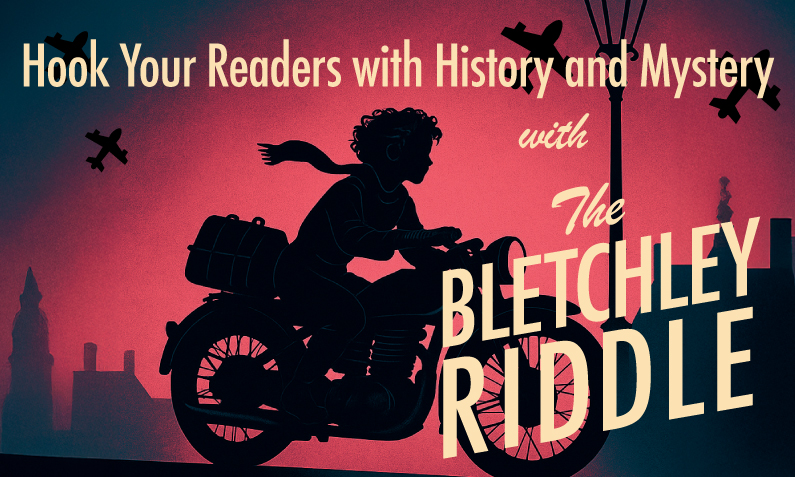
Looking for a historical fiction novel that will grab your students’ attention while giving you plenty of opportunities to teach reading skills and history?
The Bletchley Riddle by Ruta Sepetys and Steve Sheinkin is an excellent choice for a middle school or upper elementary novel study. With mystery, secret codes, World War II history, family secrets, and plenty of suspense, this novel gives students a reason to keep turning the pages.
Even better, The Bletchley Riddle provides natural opportunities to teach reading comprehension, vocabulary, inference, critical thinking, nonfiction reading, writing, and historical connections.
If you’re looking for a book that combines ELA and social studies, this one deserves a place on your reading list!
We earn a commission if you make a purchase, at no additional cost to you.
What Is The Bletchley Riddle About?
The Bletchley Riddle takes readers into the world of Bletchley Park, the top-secret British site where codebreakers worked during World War II to decipher enemy communications.
The story follows siblings Lizzie and Jakob, who become caught up in a mystery involving their family, secrets from the past, and the world of wartime codebreaking.
The combination of historical fiction and mystery makes the novel especially appealing to students who might not automatically reach for a traditional historical novel.
Instead of simply reading about World War II, students get to experience history through a suspenseful story filled with clues, puzzles, secrets, and questions.
And that makes this book particularly useful in the classroom.
Why The Bletchley Riddle Works So Well as a Classroom Novel
1. The Mystery Hooks Readers
One of the biggest challenges when choosing a class novel is finding something that students actually want to read.
The Bletchley Riddle has an advantage right from the beginning: students have questions they want answered.
What is really happening?
Who can be trusted?
What do the clues mean?
How are the characters connected to the secrets of the past?
As students work their way through the story, they are constantly encouraged to make predictions, look for clues, and revise their thinking.
That makes the novel a natural fit for teaching inference, prediction, drawing conclusions, and using textual evidence.
Instead of asking students to read closely simply because the teacher told them to, you can give them a mystery to solve.
2. It Brings World War II History to Life
World War II can sometimes feel distant to young readers.
Dates, battles, political events, and historical figures can be difficult for students to connect with.
The Bletchley Riddle offers a different approach.
Students encounter the secret world of Bletchley Park and the people who worked there to break enemy codes through a fictional story.
This creates opportunities to investigate topics such as:
Bletchley Park
The Enigma code
World War II codebreaking
Alan Turing
The Polish mathematicians who helped lay the groundwork for breaking Enigma
The role of women at Bletchley Park
Intelligence and espionage during WWII
The impact of technology on warfare
These topics can easily become research projects, nonfiction reading lessons, discussion topics, or cross-curricular activities.
Most importantly, students begin to see that history isn’t simply a collection of facts to memorize.
History is made up of real people facing difficult choices and extraordinary circumstances.
3. It’s Perfect for Teaching Inference and Critical Thinking
Mysteries are wonderful vehicles for teaching critical thinking because readers can’t simply wait for someone to explain everything.
They have to figure things out.
As students read The Bletchley Riddle, they can practice:
Making predictions
Drawing inferences
Identifying clues
Using text evidence
Recognizing foreshadowing
Making connections
Drawing conclusions
Analyzing character motivations
Revising predictions when new information is revealed
You can even turn students into codebreakers themselves.
Have students create their own secret messages, investigate simple ciphers, or develop a series of clues for their classmates to solve.
Suddenly, reading comprehension becomes part of a mystery-solving experience.
4. The Historical Connections Create Great Discussion
Another strength of The Bletchley Riddle is the number of topics it can bring into classroom conversations.
Students can explore questions such as:
What does it mean to be brave?
When is it acceptable to break a rule?
Can keeping a secret ever be the right thing to do?
How does the past affect the present?
How much should we trust the information we are given?
What sacrifices were people willing to make during wartime?
These questions encourage students to move beyond simple recall and engage in meaningful discussion about character, choices, courage, loyalty, trust, family, and truth.
5. It Offers Excellent Cross-Curricular Opportunities
Although The Bletchley Riddle works beautifully as an ELA novel study, don’t limit it to reading class.
This novel can connect naturally to several subject areas.
Social Studies
Use the novel as a springboard for studying:
World War II
The British home front
Intelligence operations
Bletchley Park
Women in World War II
The Enigma machine
Codebreaking
STEM and Technology
Students can explore:
Cryptography
Codes and ciphers
Encryption
Early computing
Problem-solving
The development of technology during wartime
Writing
Students can write:
Historical responses
Character analyses
Opinion pieces
Text-based responses
Creative stories
Research reports
Reflections about the novel’s themes
This makes The Bletchley Riddle a great choice for teachers looking for a novel that can support learning across the curriculum.
6. It Can Engage Reluctant Readers
Not every student loves historical fiction.
Some students see a book set during World War II and immediately assume it will be difficult or boring.
The mystery changes that equation.
The combination of adventure, secrets, puzzles, codes, family relationships, and historical events gives students multiple entry points into the story.
Students who enjoy mysteries have the mystery.
Students interested in history have the historical setting.
Students who enjoy puzzles have the codes and clues.
And students who enjoy character-driven stories have the relationships and family connections.
That’s one reason The Bletchley Riddle can work so well with a diverse group of readers.
Make The Bletchley Riddle Easier to Teach
If you’re planning to use The Bletchley Riddle as a class novel, you don’t have to spend hours creating chapter questions, vocabulary activities, writing prompts, nonfiction passages, and assessments.
I’ve created a complete The Bletchley Riddle Novel Study for Grades 5–8 designed to make teaching the novel as easy as possible.
The resource includes 285+ pages of printable materials, along with digital resources for a paperless classroom.
Students can work on:
Chapter-by-chapter reading comprehension
Vocabulary
Grammar
Writing
Critical thinking
Text evidence
Nonfiction reading
Historical connections
End-of-book activities
Story elements
The unit also includes Common Core standards alignment, teacher resources, answer keys, assessments, and digital Google Drive™ materials.
Explore the History Behind the Story
One of my favorite parts of this novel study is the collection of nonfiction reading passages that allow students to dig deeper into the real history behind the novel.
Students learn about:
Black Saturday
The Bletchley Park Code and Cipher School
The Men of Bletchley Park
The Women of Bletchley Park
Tyler Kent
The Polish Codebreakers
These passages give you an easy way to incorporate informational text and historical research into your novel study while helping students understand the real-world events that inspired the story.
A No-Prep Bletchley Riddle Novel Study for Grades 5–8
If you’re ready to bring mystery, history, and codebreaking into your classroom, The Bletchley Riddle is a fantastic novel to consider.
It’s an engaging choice for:
Upper elementary ELA
Middle school ELA
World War II units
Historical fiction units
Literature circles
Whole-class novel studies
Small-group reading
Independent reading
Homeschool
Cross-curricular ELA and social studies instruction
And with a ready-to-use novel study, you can spend less time creating materials and more time helping your students read, question, investigate, and think deeply about the story.
Ready to turn your students into codebreakers?
Try a free sample of the novel study for The Bletchley Riddle
Bring the mystery of Bletchley Park into your classroom and give your students a historical fiction experience they’ll want to keep reading.
You can purchase this novel study at the following locations:
💬 Connect with Fellow Educators!
Are you teaching The Bletchley Riddle this school year? How do you celebrate kindness in your classroom?
Join our free community, Book Talk with The Teaching Bank, to share ideas, grab freebies, and connect with 3rd–8th grade teachers using novels in the classroom!
*The Teaching Bank participates in the Amazon Associate Program and earns a fee from qualifying purchases made on the Amazon.com site.
Looking for a high-interest novel that will engage your 5th–8th grade readers while giving you plenty to teach?Ghost by Jason Reynolds is an excellent choice for an upper elementary or middle school ELA novel study.
This fast-paced, relatable novel gives students opportunities to explore character development, theme, perseverance, identity, family, friendship, decision-making, and personal growth while strengthening essential reading comprehension and critical-thinking skills.
Even better, Ghost has the potential to hook students who don’t always consider themselves “readers.”
We earn a commission if you make a purchase, at no additional cost to you.
📚 Why Teach Ghost by Jason Reynolds?
Choosing the right novel for a whole-class or small-group novel study can make a huge difference in student engagement. Students need characters and situations they can connect with—and Ghost delivers.
The story follows Castle Cranshaw, nicknamed Ghost, a talented young athlete who is dealing with difficult circumstances while discovering that his choices can have lasting consequences.
That combination of sports, family, friendship, conflict, humor, and personal growth gives teachers countless opportunities for meaningful classroom conversations.
Here are just a few reasons Ghost works so well as a classroom novel.
⭐ 1. Students Can Connect With the Characters
One of the greatest strengths of Ghost is its relatable main character.
Castle isn’t perfect. He makes mistakes, struggles with his emotions, and sometimes makes impulsive decisions. At the same time, he is talented, determined, funny, and capable of tremendous growth.
These characteristics make Castle an excellent character for teaching students how to:
Analyze character traits
Identify internal and external conflicts
Examine character motivation
Track character development
Make inferences
Support ideas with text evidence
Analyze how experiences influence a character’s choices
Students can also consider an important question throughout the novel:
How do our experiences shape the people we become?
🏃 2. Ghost Explores Perseverance and Personal Growth
Perseverance is a powerful theme throughout Ghost.
Castle has experienced difficult circumstances, but he doesn’t allow those experiences to completely define him. His journey gives students an opportunity to examine what it means to keep moving forward even when life isn’t easy.
The novel can lead to meaningful discussions about:
Overcoming obstacles
Making better choices
Taking responsibility
Learning from mistakes
Setting goals
Handling disappointment
Building confidence
Persevering through challenges
These are conversations that extend far beyond the pages of the book.
👥 3. Explore Friendship, Family, and Relationships
Ghost also provides rich opportunities to examine relationships.
Students can analyze the influence that family members, coaches, friends, and other adults have on Castle’s development.
Ask students questions such as:
Who has the greatest influence on Castle?
How do the adults in Castle’s life respond to his mistakes?
What makes someone a good friend or mentor?
How can the people around us influence our choices?
These questions naturally encourage students to support their opinions with text evidence.
💭 4. Encourage Critical Thinking and Meaningful Discussion
A strong novel study shouldn’t be just a series of comprehension questions.
Ghost gives students opportunities to think beyond “What happened?” and move toward “Why did it happen?” and “What does it mean?”
Students can analyze:
Character motivation
Cause and effect
Conflict
Theme
Point of view
Author’s craft
Important events
Character relationships
Choices and consequences
The novel’s accessible writing style makes it an especially useful text for helping students develop these deeper reading skills.
✏️ 5. Strengthen Reading and Writing Skills
Using Ghost as part of a structured novel study allows you to combine reading and writing instruction.
Students can practice:
Reading comprehension
Making inferences
Finding text evidence
Determining theme
Character analysis
Summarizing
Vocabulary
Grammar
Written responses
Critical thinking
Extended writing
Literary analysis
Instead of teaching these skills in isolation, you can teach and practice them within a story students are already invested in.
📖 Ghost Can Hook Reluctant Readers
Finding books that appeal to reluctant readers can be challenging.
The sports connection is an obvious draw for many students, but students don’t have to be athletes to connect with Castle’s story.
The novel’s fast-paced plot, relatable characters, humor, conflict, and emotional depth give students plenty of reasons to keep reading.
And once students become invested in Castle’s story, you’ve created an opportunity to help them discover that reading can be enjoyable—not just another assignment.
🎯 Looking for a Ghost Novel Study?
If you’re planning to teach Ghost by Jason Reynolds, you don’t have to spend hours creating your own lesson plans, comprehension questions, vocabulary activities, writing assignments, and assessments.
I’ve created a complete Ghost Novel Study for grades 5–8 with both printable and digital resources.
What’s Included in the Ghost Novel Study?
The resource includes ready-to-use materials for:
Reading comprehension
Vocabulary
Spelling
Grammar
Writing
Critical thinking
Literary analysis
Nonfiction connections
Assessments
Story elements
Interactive notebook activities
Common Core ELA standards
You’ll also receive teacher lesson plans, student activities, answer keys, assessments, and digital Google Drive™ resources.
🖨️ Printable + 💻 Digital Options
Whether you prefer paper-based instruction or digital learning, this Ghost book unit gives you both options.
Use the printable materials for:
Whole-class instruction
Small groups
Reading intervention
Literature circles
Independent reading
Traditional classroom instruction
Or use the digital resources for:
Paperless classrooms
Digital assignments
Distance learning
Independent student work
Google Classroom™ activities
That means less time creating materials and more time teaching.
🎁 Try the FREE Sample
You can check out the FREE sample before purchasing to see the types of activities included in the complete resource.
🛒 Get the Complete Ghost Novel Study
Ready to make teaching Ghost by Jason Reynolds easier?
The complete Ghost Novel Study | No-Prep Printable & Digital Book Unit for Grades 5–8 is available in my store.
Give your students a compelling story to read—and give yourself a ready-to-teach ELA unit that saves hours of preparation.
❤️ Final Thoughts
Ghost by Jason Reynolds is much more than a story about running.
It’s a story about choices, challenges, relationships, perseverance, and discovering who you want to become.
Those themes make it an excellent choice for a 5th–8th grade novel study, particularly when you want a book that can generate authentic discussion while strengthening students’ reading and writing skills.
If you’re looking for a high-interest middle school novel with meaningful themes and plenty of opportunities for ELA instruction, Ghost is a book worth adding to your classroom library and curriculum.
💬 Connect with Fellow Educators!
Are you teaching Ghost this school year? How do you celebrate kindness in your classroom?
Join our free community, Book Talk with The Teaching Bank, to share ideas, grab freebies, and connect with 3rd–8th grade teachers using novels in the classroom!
*The Teaching Bank participates in the Amazon Associate Program and earns a fee from qualifying purchases made on the Amazon.com site.
Utilizing technology in classrooms today comes with numerous benefits, yet it’s not without its downsides like glitches and user frustrations. To support educators in leveraging available technology without the hassle of creating their own files, I offer my novel studies and social studies resources in both printable and Google Drive formats.
Given the novelty of these formats, I frequently receive technical queries from buyers. To address these common questions and offer guidance on customizing the files to suit specific requirements, I’ve crafted this blog post featuring answers to these inquiries and a tutorial on file manipulation.
How do I get the file into my Google Drive?
While each of my products includes an instruction guide, occasional issues may still arise. One common oversight is when teachers aren’t logged into their intended Google Drive account to store the purchased file. Clicking the link without being logged in often prompts a request for access, which shouldn’t be necessary after the purchase. Neither you nor your students should need to request access if the instructions have been followed correctly.
The solution typically involves ensuring proper login to your Google Drive before clicking the file link. Once logged in, you can seamlessly share the file via Google Classroom without any access requests needed.
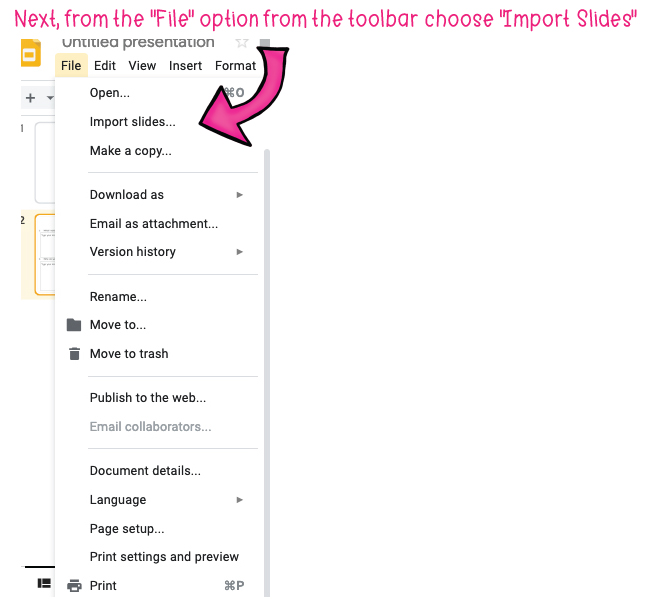
To proceed, ensure you’re logged into your Google Drive and then click the link provided within your resource, resembling this:
A new tab will open with the force copy prompt.
The file will now be visible in your Google Drive account under the name “Copy of File Name.” You can conveniently modify this name to your preference by clicking directly into the name box and making the desired changes.
How can I assign individual chapters or activities to students instead of the whole file?
I aim to streamline and share this content as efficiently as possible. Each Google file I create has a unique link. To prevent confusion, I usually keep unit materials consolidated into a single file link or a few links for larger files divided into sections. This consolidation avoids overwhelming teachers with numerous individual links for chapters or activities.
Understanding the need for flexibility in tailoring materials to suit classroom requirements, I often receive inquiries about sharing specific sections—like a single chapter—with students. To assist in creating customized assignments from your master file, I’ve outlined straightforward steps below for quick customization to meet your specific needs.
Once your master file is in your Google Drive, follow these steps:
The dimensions mentioned earlier apply to all my novel study products. However, for social studies materials, sizes can vary, often set at 12×12. To ensure your file matches the right dimensions and avoids distortion, check the page setup of your master file.
I trust these details and suggestions will assist you in tailoring your files to suit your students’ and classroom’s specific needs. Should you have further queries or need clarification, please don’t hesitate to reach out—I’m more than happy to provide tips and clear up any confusion. You can find my email address on the initial page of every file downloaded from my store.
Looking for a meaningful novel study for upper elementary or middle school students? Out of My Dreams by Sharon M. Draper is an excellent choice for engaging students in conversations about empathy, resilience, disability, independence, perseverance, and the importance of pursuing your dreams.
The third book in Melody’s story, Out of My Dreams, continues the journey that began in Out of My Mind and continued in Out of My Heart. This time, Melody has the opportunity to travel to London, opening the door to new experiences, new challenges, and new opportunities for growth.
For teachers, Out of My Dreams provides much more than an engaging story. It offers rich opportunities for reading comprehension, vocabulary development, literary analysis, writing, critical thinking, social-emotional learning, and meaningful classroom discussion.
We earn a commission if you make a purchase, at no additional cost to you.
Why Teach Out of My Dreams?
Sharon M. Draper’s Out of My Dreams gives students the opportunity to see the world through Melody’s experiences while encouraging them to think more deeply about how we understand ourselves and others.
The novel is especially valuable for classroom discussions about:
Empathy and understanding
Resilience and perseverance
Disability and accessibility
Inclusion and acceptance
Independence and self-advocacy
Friendship and relationships
Family and support systems
Personal growth
Dreams and goals
Overcoming challenges
These themes make Out of My Dreams an excellent addition to an ELA novel study, reading unit, literature circle, or whole-class novel unit.
1. Build Empathy Through Literature
One of the greatest strengths of Out of My Dreams is its ability to encourage students to consider experiences that may be different from their own.
Melody’s cerebral palsy affects how she communicates and interacts with the world, but her disability does not define her thoughts, personality, dreams, or abilities.
Reading about Melody can help students consider important questions:
How do we make assumptions about other people?
What does it mean to truly understand someone else’s experience?
How can we make our classrooms more inclusive?
Why is it important to look beyond what we see on the surface?
How can our words and actions make other people feel included?
These questions can lead to thoughtful classroom discussions about empathy, kindness, accessibility, and inclusion.
2. Explore Resilience and Perseverance
Melody’s journey provides countless opportunities to discuss resilience and overcoming obstacles.
Rather than presenting challenges as something that simply disappears, the novel allows students to explore how people adapt, advocate for themselves, accept support, and continue working toward their goals.
This makes Out of My Dreams a natural fit for discussions about:
Perseverance
Growth
Self-confidence
Overcoming obstacles
Setting goals
Taking risks
Learning from difficult experiences
Ask students to consider:
What does resilience really look like?
Students can compare Melody’s experiences with challenges they have faced themselves, while recognizing that everyone’s circumstances and obstacles are different.
3. Discuss Disability, Accessibility, and Inclusion
Out of My Dreams also creates an authentic opportunity to discuss disability and accessibility in an age-appropriate way.
Students can explore the difference between a person’s abilities and the barriers created by their environment.
Consider questions such as:
What makes a place accessible?
What barriers might someone with a disability encounter?
How can schools and communities become more inclusive?
Why shouldn’t we make assumptions about what someone can or cannot do?
What does true inclusion look like?
These conversations can help students move beyond simply identifying differences and instead think about how communities can remove barriers and create opportunities for everyone.
4. Develop Critical Thinking and Literary Analysis
Out of My Dreams is also a strong choice for teaching core reading comprehension and literary analysis skills.
As students read, they can analyze:
Character development
Setting
Plot
Conflict
Theme
Symbolism
Author’s word choice
Character relationships
Text evidence
Cause and effect
Making inferences
Encourage students to support their thinking with evidence from the text.
For example:
How does Melody change throughout the story?
What experiences contribute to Melody’s growing independence?
How does the setting of London affect Melody’s experiences?
What does the novel suggest about pursuing your dreams?
These types of questions take students beyond simple recall and encourage them to think critically about the author’s message and the development of the story.
5. Use Out of My Dreams for Writing Activities
The novel also provides plenty of inspiration for reading response and creative writing activities.
Students might:
Write about a personal goal or dream.
Describe a time they faced a difficult challenge.
Write a response to an important event in the novel.
Explain how Melody demonstrates resilience.
Analyze an important character.
Write about the importance of accessibility.
Use text evidence to explain a theme.
Write from a character’s perspective.
Create a new scene that fits naturally into the story.
You can also use the novel as a springboard for argumentative and opinion writing, asking students to support their ideas with evidence from the text.
6. Make Cross-Curricular Connections
One of the benefits of choosing a rich novel like Out of My Dreams is that the learning doesn’t have to stop with ELA.
The story provides opportunities for connections to:
Social-Emotional Learning
Discuss empathy, self-awareness, relationships, perseverance, independence, and respecting differences.
Social Studies
Explore London, cultural differences, travel, and how societies approach accessibility and inclusion.
Informational Reading
Have students research topics related to cerebral palsy, accessibility, disability, or London and compare informational texts with what they learn through the novel.
Geography
Use the novel’s London setting as an opportunity to explore maps, landmarks, geography, and cultural traditions.
These connections can turn a novel study into a rich, interdisciplinary learning experience.
Ready-to-Teach Out of My Dreams Novel Study
If you want to teach Out of My Dreams without spending hours creating comprehension questions, vocabulary activities, assessments, and lesson plans, I’ve created a complete Out of My Dreams Novel Study to make your planning easier.
This no-prep novel study for grades 4-6 includes 240+ pages of printable materials along with digital resources for Google Drive™, giving you everything you need to guide students through the novel.
Vocabulary and grammar activities for 62 vocabulary words
Printable vocabulary word wall cards
Answer keys
Parent letter
Informational reading activities about cerebral palsy
Informational reading activities about London
Three reading assessments
Essay questions
Google Forms™ digital assessments
Story Elements activities
Interactive notebook activities
Printable and digital versions
The resource is designed to work for whole-class instruction, small groups, literature circles, independent reading, homeschool, or a paperless classroom.
Save Time on Your Next Novel Unit
A good novel study should allow you to focus on teaching, discussing, and connecting with your students—not spending your evenings creating worksheets.
This Out of My Dreams book unit gives you ready-to-use materials for teaching reading comprehension, vocabulary, literary analysis, writing, and deeper thinking while your students experience Melody’s inspiring journey.
Try a Free Sample
Want to see what’s included before you buy? Download the free sample of the Out of My Dreams novel study and take a look at the activities, lesson materials, and student resources.
Out of My Dreams by Sharon M. Draper is a powerful choice for teachers looking for a novel that combines engaging storytelling with meaningful learning opportunities.
Through Melody’s experiences, students can explore empathy, resilience, independence, accessibility, inclusion, and the courage it takes to pursue a dream.
Whether you’re planning a 4th, 5th, or 6th grade novel study, this book gives you countless opportunities to help students strengthen their reading skills while having important conversations about how we understand and support one another.
If you’re ready to bring Out of My Dreams into your classroom, make your planning easier with this complete, no-prep Out of My Dreams novel study.
You can also buy Out of My Mind, Out of My Heart, and Out of My Dreams bundled together at a discount!
💬 Connect with Fellow Educators!
Are you teaching Out of My Dreams this school year? How do you celebrate kindness in your classroom?
Join our free community, Book Talk with The Teaching Bank, to share ideas, grab freebies, and connect with 3rd–8th grade teachers using novels in the classroom!
*The Teaching Bank participates in the Amazon Associate Program and earns a fee from qualifying purchases made on the Amazon.com site.

 We earn a commission if you make a purchase, at no additional cost to you.



 Connect with Fellow Educators!