Mrs. Frisby and the Rats of NIMH by Robert C. O’Brien is a timeless novel that offers rich opportunities for learning and engagement in the classroom. This classic story, which won the Newbery Medal in 1972, continues to captivate students with its compelling narrative and complex characters.
We earn a commission if you make a purchase, at no additional cost to you.
Benefits of Using Mrs. Frisby and the Rats of NIMH in Your Classroom:
Hooks with an Engaging Storyline: At the heart of Mrs. Frisby and the Rats of NIMH is an exciting and emotional tale that grabs the attention of young readers. The story follows Mrs. Frisby, a widowed field mouse, as she seeks the help of a group of intelligent rats to save her home and family. The suspenseful plot and well-developed characters ensure that students remain engaged from start to finish. Engaged students are more likely to participate in discussions and activities, making the classroom experience more dynamic and effective.
Contains Themes of Courage and Perseverance: One of the novel’s core themes is the courage and perseverance displayed by Mrs. Frisby. Her determination to save her family despite numerous obstacles provides an excellent opportunity for teachers to discuss the importance of these values. Lessons on courage and perseverance are crucial for students’ personal development and can be linked to real-life situations, helping them understand the relevance of these traits in their own lives.
Analyzes Ethical and Moral Dilemmas: Mrs. Frisby and the Rats of NIMH presents numerous ethical and moral dilemmas, making it an ideal text for critical thinking and ethical discussions. The rats, who were once ordinary creatures, gained intelligence through scientific experiments conducted by humans. This aspect of the story raises questions about the ethics of animal testing and the consequences of scientific advancements. Teachers can use these dilemmas to encourage students to think deeply about ethical issues and form their own opinions.
Offers Rich Vocabulary and Literary Devices: Robert C. O’Brien’s novel is replete with rich vocabulary and literary devices, providing a valuable resource for language arts instruction. Teachers can use the text to teach new vocabulary words in context, helping students expand their language skills. Additionally, the novel’s use of literary devices such as foreshadowing, symbolism, and metaphor can be analyzed to enhance students’ understanding of these concepts. This not only improves their reading comprehension but also prepares them for more advanced literary analysis in future studies.
Provides Opportunities for Cross-Curricular Connections: Mrs. Frisby and the Rats of NIMH offers numerous opportunities for cross-curricular connections. The novel’s exploration of scientific experiments and the rats’ advanced society can be tied to lessons in science and social studies. Teachers can discuss the real-life scientific concepts that inspired the story, such as genetics and animal behavior, making the novel a springboard for interdisciplinary learning. This approach helps students see the interconnectedness of different subjects and promotes a more holistic understanding of knowledge.
Encourages Empathy and Compassion: Reading about the struggles of Mrs. Frisby and the rats can foster empathy and compassion in students. By identifying with the characters and their plights, students can develop a greater understanding of and sensitivity to the experiences of others. This emotional engagement is crucial for building a compassionate classroom community where students support and respect one another.
Incorporating Mrs. Frisby and the Rats of NIMH into the classroom offers numerous educational benefits. Its engaging storyline, themes of courage and perseverance, ethical dilemmas, rich vocabulary, cross-curricular connections, and capacity to foster empathy make it a valuable addition to any curriculum. By teaching this novel, educators can provide students with a multifaceted learning experience that extends beyond the pages of the book.
I offer a complete novel study to accompany Mrs. Frisby and the Rats of NIMHfor use in the classroom or homeschool. The unit includes both a printable format and a Google Drive™ format for use in a paperless classroom or with Google Classroom.
Try a free sample of the novel study for Mrs. Frisby and the Rats of NIMH
You can purchase this novel study at the following locations:
Are you interested in reading about and sharing ideas with other educators on using children’s literature in your classroom? My goal is to bring together teachers and homeschoolers who teach grades 3-8 and use novels with their students. I’d love for you to join me to learn, share, and grow together!
The Bad Beginning is the first book in Lemony Snicket’s, A Series of Unfortunate Events. This series is a quirky tale that many students will be drawn to. It is a great book to use in your classroom or homeschool for a whole class novel study, small book groups, or individual book studies.
We earn a commission if you make a purchase, at no additional cost to you.
The Bad Beginning was first published in 1999 and has since been made into a film and a Netflix series. The book is narrated by Lemony Snicket who tells the tale of Violet, Klaus, and Sunny Baudelaire, three orphans who have some really bad luck! Lemony Snicket starts the tale by warning his reader to not read the book:
What better way to make students want to read more than by telling them not to!
Benefits of Using The Bad Beginning in Your Classroom:
Fosters Critical Thinking: The Bad Beginning encourages students to think critically as they navigate the complex and mysterious world crafted by Lemony Snicket. The story is riddled with enigmas and challenges that prompt students to analyze situations, make predictions, and draw connections between events. This fosters a deepened sense of analytical thinking and problem-solving skills.
Enriches Vocabulary: Lemony Snicket’s writing style is both unique and eloquent, introducing students to a diverse range of vocabulary. Integrating this novel into the curriculum provides an opportunity for students to expand their lexicon and develop a love for language. Teachers can leverage the rich vocabulary present in the book to enhance language arts lessons and encourage students to use more sophisticated language in their own writing.
Explores Morality and Ethics: The Bad Beginning delves into themes of morality and ethics, presenting characters faced with difficult choices and moral dilemmas. This allows for meaningful discussions in the classroom about the consequences of one’s actions, the importance of empathy, and the gray areas between right and wrong. Such discussions contribute to the development of students’ moral compass and ethical reasoning.
Opportunities for Multidisciplinary Learning: The novel’s multifaceted narrative opens the door to interdisciplinary learning experiences. Teachers can seamlessly integrate lessons in science, history, and even mathematics, using the storyline as a springboard for exploration. This multidisciplinary approach not only enriches students’ understanding but also makes learning more interconnected and meaningful.
Promotes of Resilience: The series’ protagonists, the Baudelaire orphans, face numerous challenges and setbacks. Their ability to persevere and adapt in the face of adversity serves as an inspirational model for students. The Bad Beginning teaches resilience, emphasizing the importance of tenacity and a positive mindset in overcoming life’s obstacles.
Incorporating Lemony Snicket’s A Series of Unfortunate Events: The Bad Beginning into the classroom offers a multitude of benefits. From fostering critical thinking to enriching vocabulary and promoting resilience, this novel provides a unique and immersive learning experience for students. As educators, it’s essential to recognize the value of unconventional yet impactful literature that can shape young minds and instill a lifelong love for learning.
I offer a complete novel study to accompany The Bad Beginning for use in the classroom or homeschool. The unit includes both a printable format and a Google Drive™ format for use in a paperless classroom or with Google Classroom.
Try a free sample of the novel study for The Bad Beginning
You can purchase this novel study at the following locations:
Are you interested in reading about and sharing ideas with other educators on using children’s literature in your classroom? My goal is to bring together teachers and homeschoolers who teach grades 3-8 and use novels with their students. I’d love for you to join me to learn, share, and grow together!
Would you choose to live forever if you had the option?
That intriguing question is at the heart of Tuck Everlasting by Natalie Babbitt, a thought-provoking novel that gives students far more to discuss than a simple fantasy story about immortality.
For teachers, Tuck Everlasting is an excellent choice for a 5th-8th grade novel study because it provides meaningful opportunities to teach reading comprehension, vocabulary, character development, theme, symbolism, literary analysis, critical thinking, writing, and discussion—all while encouraging students to wrestle with questions that have no easy answers.
If you’re looking for a Tuck Everlasting novel study or complete novel unit that goes beyond chapter questions, this classic children’s novel offers an ideal foundation for deeper ELA instruction.
We earn a commission if you make a purchase, at no additional cost to you.
Why Teach Tuck Everlasting in the Classroom?
Tuck Everlasting follows Winnie Foster, a young girl who discovers the Tuck family and their extraordinary secret: they have become immortal after drinking from a mysterious spring.
But immortality isn’t presented as the simple gift students might initially imagine.
Instead, Babbitt uses the story to explore questions about life, death, time, nature, choice, consequences, and what it means to truly live.
These themes make Tuck Everlasting particularly valuable for classroom discussion because students can approach the story from many different perspectives.
1. Explore the Meaning of Immortality
One of the most obvious—and most engaging—questions raised by the novel is:
Would you want to live forever?
At first, many students may think immortality sounds wonderful. No aging. No death. Unlimited time.
But as students learn more about the Tucks, they begin to see the potential consequences of living forever.
This creates an excellent opportunity for students to consider both sides of an argument and support their thinking with evidence from the text.
You might ask:
Would you want to live forever? Why or why not?
Is immortality a gift or a curse?
What makes a life meaningful?
Would living forever change the way you make decisions?
Is death an important part of life?
These questions naturally encourage critical thinking, text-based discussion, and written responses.
2. Analyze Winnie Foster’s Character Development
Winnie begins the story as a sheltered young girl living under the strict expectations of her family.
Her encounter with the Tucks changes her understanding of the world.
As students follow Winnie’s journey, they can examine how her experiences influence her decisions and how she develops throughout the novel.
Students can analyze:
Winnie’s motivations
Her relationship with her family
Her relationship with the Tuck family
The choices she makes
How she responds to difficult situations
How her perspective changes
The role of independence in her development
Character development activities provide an excellent way to move students beyond simply identifying what a character does and toward analyzing why a character makes particular choices.
3. Examine the Novel’s Major Themes
One of the greatest strengths of Tuck Everlasting is the number of meaningful themes embedded in the story.
Students can explore themes such as:
The circle of life
Mortality and immortality
The importance of change
Choices and consequences
Freedom and responsibility
The relationship between humans and nature
Growing up and independence
What makes life meaningful
These themes are especially useful for teaching students how to identify a theme and then explain how the author develops that theme throughout a text.
Rather than simply asking students to name a theme, challenge them to prove their interpretation using details from the novel.
4. Teach Symbolism and Literary Devices
Natalie Babbitt’s writing provides opportunities for students to examine how authors use literary techniques to communicate ideas.
The spring, for example, can become a powerful symbol for students to analyze.
The novel’s descriptions of nature also provide opportunities to explore imagery, symbolism, figurative language, and the author’s craft.
Ask students questions such as:
Why is the spring so important to the story?
What might the spring symbolize?
How does Babbitt use nature throughout the novel?
How do descriptions of the setting contribute to the story’s themes?
Which literary devices make particular scenes more memorable?
These activities help students recognize that authors make deliberate choices about language and description.
5. Encourage Deeper Reading Comprehension
Tuck Everlasting is a wonderful book for teaching students that reading comprehension is about more than remembering what happened.
Students can practice:
Making predictions
Making inferences
Identifying important details
Analyzing characters
Determining theme
Making connections
Using text evidence
Summarizing
Drawing conclusions
Analyzing cause and effect
Chapter-by-chapter Tuck Everlasting comprehension questions can help teachers monitor understanding while giving students regular opportunities to stop, think, and respond to what they’re reading.
6. Build Vocabulary Through Context
The novel also provides opportunities for meaningful vocabulary instruction.
Instead of treating vocabulary as a separate activity unrelated to reading, teachers can have students examine unfamiliar words in the context of the story.
Students can:
Determine meaning using context clues
Examine word parts
Use new vocabulary in sentences
Identify synonyms and antonyms
Discuss how word choice affects meaning
This approach helps students see vocabulary as part of authentic reading rather than simply another list to memorize.
7. Connect Reading to Writing
One of the best ways to determine whether students truly understand a novel is to have them write about it.
Tuck Everlasting lends itself particularly well to writing because the novel raises so many philosophical and ethical questions.
Students can respond to prompts such as:
Would you drink from the spring if you discovered it? Explain your decision using evidence from the novel.
Or:
Is living forever truly better than living a normal human life?
Or:
What does Tuck Everlasting suggest about the relationship between life and death?
These types of questions require students to formulate an opinion, support their ideas, and use evidence from the text.
8. Compare the Book and Movie
If you use the film adaptation of Tuck Everlasting with your students, the book provides an excellent opportunity for compare-and-contrast analysis.
Students can examine:
Characters
Setting
Plot events
Character relationships
Important scenes
Themes
Details that were added or removed
Differences in how ideas are presented
A book-versus-movie comparison also gives students an authentic opportunity to analyze how the same story can change when it moves from one medium to another.
Make Teaching Tuck Everlasting Easier with a Complete Novel Study
While Tuck Everlasting offers wonderful opportunities for instruction, creating an entire novel unit from scratch can take hours.
You need comprehension questions.
Vocabulary activities.
Writing prompts.
Assessments.
Lesson plans.
Answer keys.
Standards alignment.
And activities that actually encourage students to think about the novel.
That’s why I created a complete Tuck Everlasting Novel Study for teachers and homeschool educators.
The unit is designed for approximately 5th-8th grade and can be used with a whole class, small group, literature circle, or independent learner. It can also work well for homeschooling.
What’s Included in the Tuck Everlasting Novel Study?
This complete Tuck Everlasting novel unit includes everything you need to teach the novel while saving hours of preparation time.
💻 Printable PDF and digital Google Drive™ resources
🎁 Bonus end-of-book and interactive notebook activities
With 225+ pages of ready-to-use materials, you can easily use this resource for whole-class instruction, small groups, literature circles, independent reading, or homeschool ELA.
Teaching looks different from classroom to classroom, so flexibility matters.
This Tuck Everlasting novel study includes both printable materials and Google Drive-compatible resources, making it useful for traditional classrooms as well as paperless or digital learning environments.
Use the resources for:
Whole-class novel studies
Small-group instruction
Guided reading
Literature circles
Independent reading
Homeschool instruction
Homework
Digital learning
Reading intervention or enrichment
A No-Prep Tuck Everlasting Novel Unit
If you’re already juggling lesson planning, grading, classroom management, and everything else that comes with teaching, creating an entire novel unit from scratch isn’t the best use of your time.
This no-prep Tuck Everlasting novel study is designed to help you begin teaching right away.
Instead of spending your evenings creating chapter questions, vocabulary worksheets, writing assignments, and assessments, you can have a complete collection of resources organized and ready to use.
Want to Try It Before You Buy?
You can try a free sample of the Tuck Everlasting novel study before purchasing. The sample includes the activities for Day 1 so you can see how the unit works with your students.
Ready to Teach Tuck Everlasting?
Save planning time with a complete Tuck Everlasting Novel Study and Novel Unit that combines reading comprehension, vocabulary, grammar, writing, literary analysis, assessments, lesson plans, and more.
Get the Tuck Everlasting Novel Study from The Teaching Bank and turn this timeless story into a meaningful, standards-aligned ELA experience for your students.
Turn Tuck Everlasting Into a Deeper ELA Experience
Tuck Everlasting is much more than a story about a family that never grows old.
It’s a novel that asks students to think about what it means to be alive, whether death gives life meaning, how our choices affect others, and whether having unlimited time would really make life better.
Those are big questions—and that’s exactly what makes this novel such a valuable addition to an upper elementary or middle school ELA classroom.
With the right Tuck Everlasting novel study activities, students can move beyond simply reading the story and begin analyzing its characters, themes, symbolism, vocabulary, and deeper meaning.
And perhaps the best part?
There isn’t necessarily one “correct” answer to many of the questions Babbitt raises.
Your students may surprise you with what they think.
Connect with Fellow Educators!
Are you teaching Tuck Everlasting this school year?
Join our free community, Book Talk with The Teaching Bank, to share ideas, grab freebies, and connect with 3rd–8th grade teachers using novels in the classroom!
*The Teaching Bank participates in the Amazon Associate Program and earns a fee from qualifying purchases made on the Amazon.com site.
Chocolate Fever is a children’s book written by Robert Kimmel Smith that tells the story of a young boy named Henry who develops an obsession with chocolate. As he consumes more and more chocolate, Henry finds himself at the center of a wild adventure that teaches him the importance of moderation and self-control.
We earn a commission if you make a purchase, at no additional cost to you.
Chocolate Fever is much more than just a fun story for kids to enjoy. It also has many educational benefits that make it a valuable addition to any classroom.
Why you should consider using the book Chocolate Fever in your classroom:
Engaging Storyline: The first and most obvious reason to use Chocolate Fever in your classroom is that it is an engaging and entertaining story. Children love stories that transport them to new worlds and introduce them to interesting characters, and Chocolate Fever certainly delivers on that front. With its fast-paced plot, colorful cast of characters, and humorous tone, Chocolate Fever is sure to capture the attention of even the most reluctant readers. Additionally, the story’s theme of self-control and the consequences of indulgence is a valuable lesson for children to learn.
Relevance to Health Education: Chocolate Fever provides a unique and engaging way to teach children about the importance of moderation in their eating habits. Through the story of Henry, students can learn about the effects of consuming too much sugar and unhealthy foods, and the potential consequences for their health. This is especially important at a time when childhood obesity and other diet-related illnesses are becoming more common.
Develops Literacy Skills: Of course, reading for pleasure is only one part of the equation. As educators, we also want to ensure that our students are developing the necessary literacy skills to succeed in school and beyond. Chocolate Fever can help with that too. The book is written at a level that is accessible to most elementary school students but still contains enough challenging vocabulary and sentence structures to help them build their reading comprehension and critical thinking skills.
Teaches Important Life Lessons: Perhaps the most valuable aspect of Chocolate Fever is the way it teaches important life lessons to children. The book’s central theme of self-control and moderation is one that is relevant to kids of all ages and is an important concept for them to grasp as they navigate the challenges of growing up. Additionally, the book touches on other important themes such as responsibility, friendship, and teamwork, all of which can help your students develop into well-rounded individuals.
Provides Opportunities for Discussion: Chocolate Fever can provide valuable opportunities for discussion and reflection. After reading the book, you can lead your students in a conversation about the themes and lessons it contains, and encourage them to share their own experiences with self-control and moderation. This type of open dialogue can help create a safe and supportive classroom environment, where students feel comfortable sharing their thoughts and ideas with their peers.
Integration with Other Subjects: Another reason to use Chocolate Fever in your classroom is its potential for integration with other subjects. The book can be used in language arts classes for reading comprehension and analysis, in science classes for discussions about health and nutrition, and in social studies classes for discussions about cultural attitudes toward food.
I offer a complete novel study to accompany Chocolate Fever for use in the classroom or homeschool. The unit includes both a printable format and a Google Drive™ format for use in a paperless classroom or with Google Classroom.
Try a free sample of the novel study for Chocolate Fever
You can purchase this novel study at the following locations:
Chocolate Fever is a fun, engaging, and educational book that has a lot to offer to elementary school students. By incorporating it into your classroom, you can help your students develop their literacy skills, learn important life lessons, and create a positive and supportive learning environment. So why not give it a try? Your students are sure to love it!
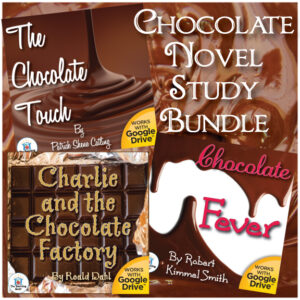
Try a chocolate theme by incorporating reading Chocolate Fever along with The Chocolate Touch and Charlie and the Chocolate Factory!
Are you interested in reading about and sharing ideas with other educators on using children’s literature in your classroom? My goal is to bring together teachers and homeschoolers who teach grades 3-8 and use novels with their students. I’d love for you to join me to learn, share, and grow together!
Loser written by Newbery Award-winning author, Jerry Spinelli is an engaging and impactful novel that can enhance your students’ learning experience. One powerful tool for teachers to use is literature that not only captivates young minds but also imparts valuable life lessons.
We earn a commission if you make a purchase, at no additional cost to you.
Benefits of Using Loser in Your Classroom:
Relevance to Students’ Lives: Loser tackles themes of bullying, self-identity, and resilience – issues that resonate with students of all ages. By addressing real-life challenges, teachers can create a classroom environment that fosters empathy and understanding.
Analyzes Character Development: The protagonist, Donald Zinkoff, undergoes significant character development throughout the novel, providing ample opportunities for students to explore the complexities of human nature. Teachers can guide students in analyzing character traits, motivations, and personal growth.
Provides Literary Techniques and Devices: Spinelli employs a variety of literary techniques and devices, making Loser a valuable tool for teaching literary analysis. Teachers can explore elements such as symbolism, foreshadowing, and point of view, enhancing students’ critical thinking skills.
Incorporates Inclusive Themes: The novel celebrates diversity and inclusivity, encouraging students to embrace differences and appreciate the uniqueness of each individual. Teachers can use Loser as a springboard for discussions on tolerance, acceptance, and the importance of creating a supportive community.
Promotes a Love for Reading: The captivating narrative of Loser captivates students’ attention, making it an excellent choice for promoting a love for reading. Teachers can use the novel to ignite a passion for literature, encouraging students to explore other works by Jerry Spinelli and beyond.
Integrates with Cross-Curricular Activities: Loser can seamlessly integrate with various subjects, allowing teachers to design cross-curricular activities. From creative writing assignments to art projects, the novel provides a versatile platform for interdisciplinary learning.
Encourages Critical Discussions: Loser raises thought-provoking questions about societal norms and expectations. Teachers can facilitate meaningful discussions, prompting students to think critically about the world around them.
Incorporating Loser by Jerry Spinelli into your classroom will foster a rich and comprehensive educational experience. By addressing relevant themes, promoting character development, and encouraging critical thinking, teachers can use this novel as a powerful tool to shape good readers ready to face the complexities of the world. Bring Loser into your classroom, and watch the positive impact it can have on your students’ academic and personal growth.
I offer a complete novel study to accompany Loser for use in the classroom or homeschool. The unit includes both a printable format and a Google Drive™ format for use in a paperless classroom or with Google Classroom.
You can purchase this novel study at the following locations:
Are you interested in reading about and sharing ideas with other educators on using children’s literature in your classroom? My goal is to bring together teachers and homeschoolers who teach grades 3-8 and use novels with their students. I’d love for you to join me to learn, share, and grow together!







 Connect with Fellow Educators!


 Chocolate Fever is much more than just a fun story for kids to enjoy. It also has many educational benefits that make it a valuable addition to any classroom.