

Looking for a fun, engaging novel to add to your 3rd, 4th, or 5th grade ELA curriculum? Chocolate Fever by Robert Kimmel Smith is a quick-moving story that can hook young readers while giving teachers plenty of opportunities to teach reading comprehension, vocabulary, writing, critical thinking, and literary analysis.
If you’re planning a Chocolate Fever novel study, this humorous story about a boy who develops an unusual case of “chocolate fever” can be a great addition to your elementary reading instruction.




Why Teach Chocolate Fever in Your Classroom?
Chocolate Fever follows Henry Green, a boy who loves chocolate so much that he eats it constantly. When Henry develops a mysterious case of chocolate fever, his ordinary life turns into an unexpected adventure.
The story’s humor and fast-paced plot can make it especially appealing to elementary students, including readers who may need a little extra motivation to pick up a book.
But Chocolate Fever isn’t just an entertaining read. It also provides opportunities to teach important ELA skills and encourage meaningful classroom discussions.
1. Build Reading Comprehension Skills
A novel study gives students opportunities to practice reading comprehension throughout an entire book rather than focusing on isolated passages.
As students read Chocolate Fever, they can work on skills such as:
- Identifying important details
- Determining the main idea
- Making inferences
- Summarizing chapters
- Analyzing characters
- Identifying themes
- Supporting answers with evidence from the text
- Making predictions
Chapter-by-chapter comprehension questions can help students slow down, think about what they are reading, and demonstrate their understanding of the story.
2. Expand Vocabulary
Chocolate Fever also provides opportunities for vocabulary instruction.
Rather than teaching vocabulary words in isolation, students can encounter new words in context and then explore their meanings, usage, and relationship to the story.
Vocabulary activities can be a simple way to turn an entertaining read-aloud or independent reading book into a more comprehensive ELA unit.
3. Explore Character and Theme
Henry’s experience gives students plenty to discuss.
What motivates Henry? How does his attitude toward chocolate affect the events of the story? What does he learn from his experience?
Students can explore themes such as self-control, responsibility, consequences, friendship, and making healthy choices while supporting their ideas with evidence from the novel.
These conversations can also lead naturally into writing activities and constructed responses.
4. Encourage Critical Thinking
A good novel study should go beyond asking students to remember what happened.
Use Chocolate Fever to encourage students to think about why characters make certain choices, how those choices affect the plot, and what they might have done differently.
Questions that require students to explain their thinking can turn a simple chapter reading into a valuable critical-thinking and reading-response activity.
5. Connect Reading to Other Subjects
Chocolate Fever can also provide opportunities for cross-curricular connections.
The story can lead to classroom conversations about health, nutrition, moderation, decision-making, and personal responsibility. These connections can help students see how reading and ELA skills apply beyond the language arts classroom.
Chocolate Fever Novel Study for Grades 3–5
If you want to turn Chocolate Fever into a complete reading unit without spending hours creating your own worksheets and assessments, I created a Chocolate Fever Novel Study designed for grades 3–5.
The resource includes both printable and digital Google Drive™ formats, making it flexible for traditional, paperless, or blended classrooms.
What’s Included?
This ready-to-use Chocolate Fever novel study includes:
- Teacher lesson plans and standards
- Vocabulary activities
- Chapter-by-chapter comprehension questions
- Extension and writing activities
- Assessments and answer keys
- Printable and digital resources
It’s designed to give you a complete Chocolate Fever unit with minimal preparation.
Make Chocolate Fever a Complete ELA Unit
Reading a novel with your students is rewarding—but finding comprehension questions, vocabulary activities, writing prompts, lesson plans, and assessments to go along with it can take a lot of time.
A ready-to-use novel study lets you spend less time searching for materials and more time helping your students engage with the book.
Try a free sample of the novel study for Chocolate Fever

Ready to Add Chocolate Fever to Your ELA Plans?
Chocolate Fever by Robert Kimmel Smith is a fun choice for elementary readers, and a structured novel study can help you turn the book into a meaningful reading comprehension and ELA unit for grades 3–5.
Give your students a book they’ll enjoy—and give yourself the ready-to-use resources you need to teach it.


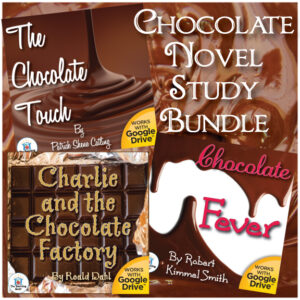
And if you’re planning a chocolate-themed reading unit, consider pairing Chocolate Fever with The Chocolate Touch and Charlie and the Chocolate Factory for a fun collection of chocolate-themed novel studies.
See what people are saying about the chocolate-themed novel studies by The Teaching Bank!


Save when buying all three novel studies together as a bundle!

 Connect with Fellow Educators!
Are you teaching Chocolate Fever this school year?
Join our free community, Book Talk with The Teaching Bank, to share ideas, grab freebies, and connect with 3rd–8th grade teachers using novels in the classroom!

*The Teaching Bank participates in the Amazon Associate Program and earns a fee from qualifying purchases made on the Amazon.com site.
