Are you looking for an engaging novel study for upper elementary or middle school ELA? Hoot by Carl Hiaasen is an excellent choice for students in grades 5–8. With humor, mystery, friendship, environmental issues, and plenty of opportunities for discussion and critical thinking, Hoot gives students much more to think about than simply what happens in the story.
We earn a commission if you make a purchase, at no additional cost to you.
If you’re planning to teach Hoot in your classroom, a Hoot novel study can make your unit much easier to plan and give students meaningful opportunities to practice reading comprehension, vocabulary, writing, and critical-thinking skills.
Why Teach Hoot by Carl Hiaasen?
Hoot tells the story of Roy, a boy who becomes involved with a group of young environmental activists who are trying to protect a colony of endangered burrowing owls from a construction project.
The story combines humor and adventure with real-world issues, making it a high-interest choice for middle-grade readers.
Because the novel includes so many different themes and discussion opportunities, it works especially well as a whole-class novel, literature circle, small-group reading unit, or independent reading study.
1. Hoot Encourages Environmental Awareness
One of the strongest reasons to teach Hoot is its focus on the environment.
Students encounter the endangered burrowing owls at the center of the story and see how human decisions can affect wildlife and the natural world.
This creates a natural opportunity to discuss:
Environmental conservation
Endangered animals
Human impact on ecosystems
Protecting natural habitats
The relationship between people and nature
Environmental activism
The environmental themes can also provide opportunities for cross-curricular connections with science and social studies.
2. Hoot Provides Opportunities for Critical Thinking
Hoot isn’t simply an entertaining story. It gives students plenty to discuss and debate.
Students can explore questions such as:
What should people do when they believe a law or decision is wrong?
Is it ever acceptable to break a rule to protect something important?
What responsibilities do businesses have to the environment?
How can young people make a difference?
What does it mean to stand up for what you believe?
How do our choices affect other people and the natural world?
These types of questions make Hoot an excellent book for critical thinking, classroom discussion, argumentative writing, and text-based responses.
3. Hoot Is Engaging and Funny
While the novel addresses serious topics, Carl Hiaasen also uses humor throughout the story.
That combination of humor, adventure, mystery, and meaningful themes can help keep students engaged as they read.
The characters, conflicts, and unexpected events give students plenty to discuss while also providing opportunities to analyze character development, plot, conflict, and theme.
4. Hoot Has Strong Themes for Literary Analysis
There are numerous themes students can explore throughout the novel, including:
Friendship
Teamwork
Courage
Integrity
Responsibility
Standing up for what you believe
Environmentalism
Activism
Growing up
Making difficult choices
These themes make Hoot especially useful for teaching students how to support their thinking with text evidence.
Make Teaching Hoot Easier with a Complete Novel Study
If you’re teaching Hoot, you probably don’t want to spend hours creating chapter questions, vocabulary activities, grammar practice, assessments, and extension activities.
That’s where a ready-to-use Hoot novel study can save you valuable planning time.
I created a complete Hoot Novel Study for grades 5–8 that provides the resources you need to guide students through the entire novel.
The unit is designed to be no-prep and easy to use, with both printable and digital options.
What’s Included in the Hoot Novel Study?
This comprehensive Hoot book unit includes materials for approximately one month of instruction.
Teacher Resources
Hoot Reading Comprehension Questions
Hoot Vocabulary Activities
Grammar Activities
Writing and Extension Activities
Hoot Novel Study Assessments
Additional Hoot Activities
Printable AND Digital Hoot Novel Study Formats
Who Is This Hoot Novel Study For?
This Hoot book unit is designed for teachers working with students in grades 5–8.
It can be a great fit for:
5th grade ELA
6th grade ELA
7th grade ELA
8th grade ELA
Upper elementary reading
Middle school ELA
Reading comprehension
Literature circles
Novel units
Homeschool instruction
Small-group reading
Independent reading
The unit can also be adapted to fit your own pacing and teaching style.
Connect Hoot to Science and Environmental Studies
One of the biggest advantages of teaching Hoot is the opportunity to connect ELA instruction to real-world environmental topics.
After reading about the burrowing owls in the novel, students can research questions such as:
What is an endangered species?
Why do animals become endangered?
What happens when an animal loses its habitat?
How can people protect endangered animals?
What can individuals do to help protect the environment?
These questions can lead to research projects, informational writing, class discussions, and additional reading.
You can even pair the novel with nonfiction texts about burrowing owls, endangered species, habitats, and environmental conservation to help students compare information from fiction and nonfiction sources.
Use Hoot to Build More Than Reading Skills
A strong novel study should do more than make sure students remember what happened in the book.
Hoot allows you to help students practice:
Reading comprehension
Vocabulary
Grammar
Writing
Critical thinking
Text evidence
Character analysis
Theme
Plot analysis
Discussion skills
Environmental awareness
The combination of an engaging story and meaningful real-world issues makes Hoot a particularly useful novel for an upper elementary or middle school ELA novel unit.
Not sure if this Hoot book study is right for your classroom?
You can download a free sample and see the types of activities included before purchasing the complete unit.
It’s a great way to preview the resource and see how it can fit into your Hoot reading unit.
Ready to Teach Hoot?
If Hoot is on your upcoming reading list, make your planning easier with this complete, no-prep Hoot novel study.
It’s designed to help you guide students through Carl Hiaasen’s novel while giving them meaningful opportunities to practice reading comprehension, vocabulary, grammar, writing, critical thinking, and literary analysis.
Connect with Fellow Educators!
Are you teaching Hoot this school year?
Join our free community, Book Talk with The Teaching Bank, to share ideas, grab freebies, and connect with 3rd–8th grade teachers using novels in the classroom!
*The Teaching Bank participates in the Amazon Associate Program and earns a fee from qualifying purchases made on the Amazon.com site.
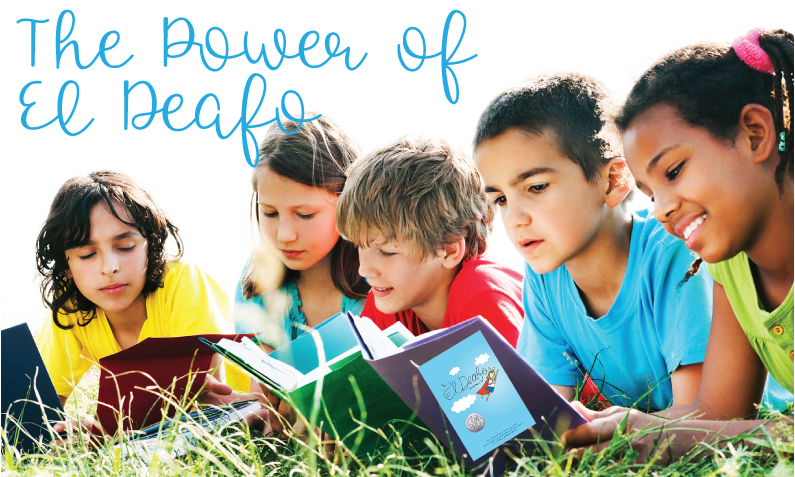
In today’s classrooms, fostering empathy, promoting inclusivity, and celebrating differences are more vital than ever. Literature has always been our most effective tool to build these connections—and few books do it as masterfully as Cece Bell’s Newbery Honor-winning graphic novel, El Deafo.
Whether you are looking to engage reluctant readers, deepen your Social-Emotional Learning (SEL) curriculum, or build genuine disability awareness, El Deafo provides an unforgettable lens into the real-world experiences of growing up with hearing loss.
We earn a commission if you make a purchase, at no additional cost to you.
A Personal Perspective: Why El Deafo Touches My Heart
As someone who has lived with hearing loss for over 25 years, I know firsthand the daily friction of trying to communicate in a world built for the hearing. Hearing loss has affected almost every area of my life—it even led to the end of my classroom teaching career.
A while back, I participated in an online discussion with fellow educators about the factuality of the novel Wonder by R.J. Palacio. While I love Wonder and believe it holds a valuable spot in the classroom, I’ve always been concerned about how it portrays hearing loss and hearing aids. (In fact, when I created my Wonder Novel Study, I included a non-fiction article to help students understand the real-world science behind hearing loss so they could spot the story’s inaccuracies.)
During that discussion, an educator asked me:
“Shelley, have you read El Deafo by Cece Bell? How realistic is it to someone who actually walks in those shoes?”
I immediately ordered a copy. From the moment I opened it, I was nodding my head in complete agreement.
Cece Bell’s autobiographical journey captured feelings I’ve carried for decades—isolation, self-consciousness, social fatigue, and the exhaustion of putting up with awkward interactions out of fear or embarrassment.
Most importantly, the book highlights a critical truth the hearing world often overlooks: Volume does not equal clarity.
Shouting, talking unnaturally slow, or exaggerating mouth movements does not help someone with hearing loss. In fact, it ruins lip-reading and makes communication much harder! Cece’s story shows how she took these everyday struggles and transformed them into her superhero alter ego, “El Deafo.”
You don’t need to have hearing loss to fall in love with Cece’s journey—but reading it will make anyone a more compassionate, understanding human being.
6 Key Benefits of Teaching El Deafo in Grades 4–6
1. 🤟 Promotes Real Disability Awareness & Deaf Culture
El Deafo offers an authentic, first-hand look at what it’s like to navigate school and friendships with a hearing impairment. It strips away misconceptions and gives students an accurate understanding of assistive technology and accessibility.
2. ❤️ Builds Deep Social-Emotional Learning (SEL) & Empathy
By following Cece’s internal monologues and social triumphs, students learn to recognize the feelings of others, reflect on their own behaviors, and navigate complex friendship dynamics with kindness.
Cece’s creation of “El Deafo” teaches young readers that the things that make us different aren’t weaknesses—they can become our greatest strengths. It encourages students to embrace their unique traits with confidence.
4. 📖 Hooks Reluctant & Visual Readers
As a graphic novel, El Deafo pairs rich visual context with accessible text. It is an extraordinary format for striving readers, ESL/ELL students, and visual learners to practice high-level literary analysis without feeling overwhelmed.
5. 🗣️ Sparks Meaningful Classroom Discussions
Cece’s story naturally opens the door for class discussions on tough topics: standing up to bullies, overcoming social anxiety, effective communication strategies, and true inclusion.
6. 🌐 Blends Fiction with Non-Fiction Learning
Pairing Cece’s memoir with non-fiction research on audiology, ear anatomy, and famous figures with hearing loss allows teachers to connect ELA standards directly with Science and Health topics.
Take Your El Deafo Unit Further (Zero Prep Required!)
Teaching a graphic novel comes with unique opportunities—and unique challenges! To help you deliver a comprehensive, standards-aligned unit without spending your weekends planning, I created the El Deafo Complete Novel Study.
Designed specifically for Grades 4–6, this 147+ page resource combines deep ELA reading comprehension with interactive non-fiction research.
🌟 What’s Included in the Unit?
3-Week Pacing & Daily Lesson Plans: Structured, step-by-step teacher guides aligned to Common Core Standards.
Chapter-by-Chapter Comprehension: Short-answer questions that analyze both textual content and visual graphic panel cues.
6 Non-Fiction WebQuest Foldables: Interactive research activities covering ear anatomy, audiology, assistive technology, communication strategies, and deaf history.
End-of-Book Assessment Packet: Comprehensive final test available in printable format and self-grading Google Forms™.
Printable PDF & Google Drive™ Formats: Ready for traditional paper workbooks or paperless 1:1 Chromebook classrooms.
Give your students a reading unit they will talk about for the rest of the school year while saving yourself hours of prep time!
You can purchase this novel study at the following locations:
💬 Join the Conversation!
Have you taught graphic novels in your upper elementary or middle school classroom? How do your students react to Cece’s journey in El Deafo?
Come share your ideas, lesson tips, and book recommendations with hundreds of passionate educators in our free Facebook community: Book Talk with The Teaching Bank!
*The Teaching Bank participates in the Amazon Associate Program and earns a fee from qualifying purchases made on the Amazon.com site.
Looking for a powerful middle school novel that builds empathy, encourages critical thinking, and connects literature to real-world history? Refugee by Alan Gratz is an excellent choice for grades 5-8.
This compelling historical fiction novel follows three young people from three different time periods and countries as they flee dangerous circumstances in search of safety. Through the stories of Josef, Isabel, and Mahmoud, students encounter themes of refugees, immigration, displacement, courage, resilience, family, freedom, and hope.
For teachers, Refugee offers far more than an engaging story. It provides countless opportunities for reading comprehension, character analysis, historical research, writing, discussion, geography, and perspective-taking.
We earn a commission if you make a purchase, at no additional cost to you.
Why Teach Refugee by Alan Gratz?
One of the greatest strengths of Refugee is the way Alan Gratz helps young readers understand an enormous global issue through the experiences of individual children.
Rather than simply learning about refugees from a textbook or article, students follow Josef, Isabel, and Mahmoud as they experience fear, uncertainty, loss, and hope firsthand.
That makes Refugee an especially effective empathy-building novel for middle school students.
1. Refugee Encourages Empathy and Perspective-Taking
The novel allows students to see the world from perspectives that may be very different from their own.
Josef is a Jewish boy fleeing Nazi Germany in 1939. Isabel is a Cuban girl whose family attempts to escape Cuba in 1994. Mahmoud is a Syrian boy forced to flee his home during the Syrian Civil War in 2015.
Although their circumstances are different, the three stories share universal themes of family, fear, courage, survival, and the search for a safe place to call home.
As students read, they can consider questions such as:
How would you feel if you had to leave your home?
What would you be willing to risk to protect your family?
How does fear influence the characters’ decisions?
What does it mean to be brave?
How can our experiences influence the way we understand other people?
These discussions can help students develop empathy while also strengthening their ability to analyze character motivations and perspectives.
2. Refugee Connects ELA and Social Studies
One of the biggest advantages of using Refugee as a classroom novel is its cross-curricular potential.
Each of the three storylines gives students an opportunity to explore a different historical and geographical setting.
Josef – Nazi Germany
Josef’s story introduces students to the persecution of Jewish people during Nazi Germany and provides opportunities to explore topics such as Hitler Youth, the Sturmabteilung (SA), Kristallnacht, and the MS St. Louis.
Isabel – Cuba
Isabel’s story takes place during the Cuban refugee crisis and allows students to learn more about Fidel Castro, Cuba, and the political and economic circumstances that led families to leave the country.
Mahmoud – Syria
Mahmoud’s story introduces students to the Syrian Civil War and the refugee crisis of the 21st century.
These historical connections make Refugee an excellent choice for an ELA and social studies cross-curricular unit.
Students aren’t simply reading a story—they’re examining the historical circumstances that shaped the characters’ lives.
3. Refugee Provides Excellent Reading Comprehension Practice
Because the novel switches between three protagonists and three different time periods, students must pay close attention to the details.
A Refugee novel study can help students practice:
Reading comprehension
Making inferences
Identifying themes
Analyzing character development
Comparing and contrasting characters
Determining cause and effect
Summarizing
Analyzing setting
Examining conflict
Supporting ideas with text evidence
Making connections between historical events and literature
The structure of the novel also gives teachers an opportunity to have students compare the experiences of Josef, Isabel, and Mahmoud and identify the similarities and differences among their journeys.
Few topics generate more thoughtful discussion than questions about what people are willing to do to protect themselves and their families.
As students read Refugee, they can discuss topics such as:
What does it mean to be a refugee?
Why do people leave their homes?
What makes someone courageous?
How do governments and historical events affect individuals?
What responsibilities do countries have toward refugees?
How does perspective affect the way we understand an event?
What similarities exist between the three protagonists?
How does the author use three different stories to communicate a larger message?
These conversations provide natural opportunities for speaking and listening practice, argumentative writing, evidence-based responses, and critical thinking.
5. Refugee Makes History Personal
History can sometimes feel distant to students.
Reading dates, names, and events in a textbook is one thing. Experiencing those events through the eyes of a young person is something entirely different.
Refugee brings history to life by allowing students to experience major historical events through the perspectives of children and families.
Students can connect literature with historical research as they learn about:
Nazi Germany
Kristallnacht
Hitler Youth
The MS St. Louis
Cuba under Fidel Castro
The Cuban refugee experience
The Syrian Civil War
The modern refugee crisis
This makes Refugee an excellent historical fiction novel for middle school ELA and social studies instruction.
6. The Novel Encourages Strong Writing
Refugee also provides numerous opportunities for meaningful writing assignments.
Students can write about:
Character development
Theme
Conflict
Historical context
Personal reactions
Perspective
Courage and resilience
Similarities and differences among the protagonists
The choices characters make throughout the novel
The novel’s complex themes make it particularly useful for moving students beyond simple recall questions and toward text-based analysis and deeper written responses.
Looking for Refugee Novel Study Activities and Lesson Plans?
While Refugee is an incredibly powerful novel, creating an entire unit from scratch can take hours.
That’s why I created a complete Refugee Novel Study for grades 5-8.
This ready-to-use resource provides the materials you need to teach the novel while incorporating reading comprehension, vocabulary, grammar, character analysis, writing, historical research, and assessment.
What’s Included in the Refugee Novel Study?
The complete unit includes:
Detailed lesson plans
Pacing and standards guide
Chapter-by-chapter comprehension questions
Vocabulary and grammar activities
65 vocabulary words
Character analysis activities
Mapping activities for all three stories
Writing activities
End-of-book activities
Story elements activities
Three-part assessments
Answer keys
Common Core alignment for grades 5-8
Historical nonfiction research WebQuests
Printable student materials
Google Drive digital materials
The included WebQuests allow students to dig deeper into the historical background of the novel, including the Sturmabteilung (SA), Kristallnacht, Hitler Youth, the MS St. Louis, Fidel Castro and Cuba, and the Syrian Civil War.
The resource is available in both printable and digital Google Drive formats, making it flexible for traditional classrooms, paperless classrooms, Google Classroom, small groups, or homeschool instruction.
Help Students Read Refugee With Greater Understanding
Refugee by Alan Gratz is more than a compelling middle school novel. It is an opportunity to help students explore history, empathy, resilience, perspective, courage, and the experiences of people forced to leave their homes.
By combining the novel with thoughtful discussion, historical research, reading comprehension activities, and writing assignments, teachers can create a meaningful learning experience that extends far beyond the pages of the book.
If you’re planning a Refugee novel unit for grades 5-8, having your lesson plans, activities, comprehension questions, vocabulary work, assessments, and historical research activities ready to go can save you hours of preparation.
Try a Free Sample
Want to see what’s included before you buy? Download the free sample of the Refugee novel study and take a look at the activities, lesson materials, and student resources.
Are you teaching Refugee this school year? How do you celebrate kindness in your classroom?
Join our free community, Book Talk with The Teaching Bank, to share ideas, grab freebies, and connect with 3rd–8th grade teachers using novels in the classroom!
*The Teaching Bank participates in the Amazon Associate Program and earns a fee from qualifying purchases made on the Amazon.com site.
Number the Stars by Lois Lowry is a powerful historical fiction novel that gives upper-elementary and middle-grade students an opportunity to explore courage, friendship, resistance, empathy, and standing up against injustice.
Set in Denmark during World War II, the novel follows Annemarie Johansen and her family as they help their Jewish friends escape the Nazi occupation. Through Annemarie’s eyes, students encounter a difficult period in history while experiencing a story that is accessible, engaging, and filled with opportunities for meaningful discussion.
If you’re planning a Number the Stars novel study for your 4th, 5th, or 6th grade students, this guide will give you ideas for connecting the novel to reading comprehension, vocabulary, critical thinking, history, and social-emotional learning.
We earn a commission if you make a purchase, at no additional cost to you.
Why Teach Number the Stars?
One of the greatest strengths of Number the Stars is that it allows students to encounter history through the experiences of a child.
Rather than simply reading facts about World War II, students follow Annemarie as she begins to understand what is happening around her. This creates natural opportunities to discuss questions such as:
What does it mean to be courageous?
Why do people sometimes have to make difficult choices?
How can ordinary people respond when others are being treated unfairly?
What makes someone a good friend?
How do fear and courage influence the decisions people make?
Why is it important to learn about difficult moments in history?
These questions can move students beyond simple recall and toward deeper reading comprehension and critical thinking.
Teaching Historical Fiction Through Number the Stars
Number the Stars works particularly well as a historical fiction novel because students can examine both the story and the historical context surrounding it.
As students read, encourage them to distinguish between what is happening in the fictional story and what they can learn about the real historical events that inspired it.
You can explore:
World War II
Nazi-occupied Denmark
The Danish Resistance
The rescue of Danish Jews
The Holocaust
Geography of Denmark and Sweden
Courage and resistance
Friendship and loyalty
Prejudice and discrimination
Human rights
This makes Number the Stars an excellent choice for connecting ELA and social studies.
Number the Stars Reading Comprehension
A novel study shouldn’t turn a great book into a stack of worksheets.
The goal is to help students think more deeply about what they’re reading while still allowing them to become immersed in the story.
When teaching Number the Stars, comprehension questions can focus on:
Character motivations
Making inferences
Cause and effect
Predicting
Making connections
Identifying themes
Using text evidence
Analyzing character development
Understanding historical context
I recommend using a small number of thoughtful questions rather than overwhelming students with questions after every few pages.
The questions should encourage students to explain why they think something happened—not simply identify what happened.
Vocabulary and Grammar in Context
Number the Stars also provides an excellent opportunity to teach vocabulary in context.
Instead of giving students a long list of unrelated vocabulary words, have them encounter words as they appear within the story.
Students can:
Determine meaning from context
Identify parts of speech
Use new words in sentences
Practice spelling
Explore synonyms and related words
Apply vocabulary through writing
This approach allows vocabulary instruction to become part of the reading experience rather than something completely separate from the novel.
The unit can be used with a whole class, small reading group, homeschool student, or independent reader. It includes both printable materials and digital resources for Google Drive.
What’s Included?
The complete Number the Stars Novel Study includes:
Teacher Resources
Detailed daily lesson plans
Pacing and Standards Guide
Chapter/Section Guide
Vocabulary Word Wall Cards
Answer Keys
Parent Letter
Student Resources
Spelling list
Vocabulary activities
Grammar activities
Chapter-by-chapter comprehension questions
Short-answer questions designed to encourage deeper thinking
Book-related extension activities
End-of-book activities
Story Elements Interactive Notebook activities
Assessment Resources
Part 1 assessment covering Chapters 1–6
Part 2 assessment covering Chapters 7–end
Vocabulary questions
Comprehension questions
Essay questions
Digital assessment options
The unit also includes Common Core Standards alignment for grades 4–6.
Print or Digital? You Get Both!
Today’s classrooms aren’t one-size-fits-all, so this novel study includes both printable and Google Drive-compatible formats.
Use the printable version for traditional instruction, or assign the digital activities through your classroom platform.
The digital format can be especially helpful for:
1:1 classrooms
Paperless classrooms
Students working from home
Absent students
Small-group instruction
Independent work
The assessments also include digital options, with multiple-choice Google Forms quizzes available for self-grading.
Save Time With a Ready-to-Teach Novel Unit
Teaching an entire novel is rewarding, but the planning can be time-consuming.
This Number the Stars novel unit was created to give you a complete framework so you don’t have to create every comprehension question, vocabulary activity, lesson plan, and assessment yourself.
It is designed to be low-prep and ready to teach, while still giving you flexibility to adjust the pacing and activities for your students.
You can purchase this novel study at the following locations:
💬 Connect with Fellow Educators!
Are you teaching Number the Stars this school year? How do you celebrate kindness in your classroom?
Join our free community, Book Talk with The Teaching Bank, to share ideas, grab freebies, and connect with 3rd–8th grade teachers using novels in the classroom!
*The Teaching Bank participates in the Amazon Associate Program and earns a fee from qualifying purchases made on the Amazon.com site.
If you’re looking for a funny, engaging novel to read with your elementary students, Wayside School Beneath the Cloud of Doom by Louis Sachar is a fantastic choice.
After more than forty years, Louis Sachar returned to the wonderfully wacky world of Wayside School—and this newest adventure delivers the same absurd humor, unexpected situations, and laugh-out-loud moments that have made the Wayside School books classroom favorites for generations.
For teachers who love using children’s literature and novel studies to build reading skills, Wayside School Beneath the Cloud of Doom offers plenty of opportunities for reading comprehension, vocabulary development, critical thinking, creativity, discussion, and writing.
And if you’re looking for a Wayside School Beneath the Cloud of Doom novel study to make teaching the book easier, I’ve created a complete, no-prep unit to accompany the novel.
We earn a commission if you make a purchase, at no additional cost to you.
📚 Why Teach Wayside School Beneath the Cloud of Doom?
One of the best things about Louis Sachar’s Wayside School books is how quickly they capture students’ attention.
The world of Wayside School is anything but ordinary. Strange things happen. Characters behave in unexpected ways. Problems don’t always have predictable solutions. And just when students think they understand what’s happening, the story can take another hilarious turn.
That makes Wayside School Beneath the Cloud of Doom an excellent book for getting students excited about reading while also developing important ELA skills.
Here are some of the ways this novel can support learning in your classroom.
😂 1. Encourage a Love of Reading
Let’s face it: getting students excited about reading matters.
When students genuinely enjoy a book, they’re more likely to want to keep reading, participate in discussions, and explore other books.
Wayside School Beneath the Cloud of Doom is filled with humor, unusual characters, and unexpected situations that can keep reluctant readers engaged.
The humor also makes the book especially enjoyable as a class read-aloud.
If you’ve ever read a Wayside School book aloud to a class, you probably already know what happens next: students start laughing, anticipating what might happen, and sharing their reactions with one another.
Those moments can help create something every teacher wants—a classroom community built around books and reading.
💡 2. Spark Creativity and Imagination
The world of Wayside School is wonderfully unpredictable.
Students encounter situations that encourage them to think beyond the ordinary and imagine possibilities that don’t always follow the rules of the real world.
That makes this novel a natural starting point for creative writing and imaginative activities.
After reading, students can:
Create their own unusual Wayside School classroom
Invent a new character
Write a silly story set at Wayside School
Design an unexpected solution to a problem
Predict what might happen next
Compare their ideas with those of their classmates
These types of activities allow students to practice writing and communication skills without making writing feel like a chore.
🧠 3. Build Critical Thinking Skills
Funny doesn’t mean simple.
Wayside School Beneath the Cloud of Doom provides plenty of opportunities for students to think critically about characters, events, problems, and solutions.
As students read, encourage them to make predictions, look for clues, analyze characters, and explain their thinking.
You can ask questions such as:
What do you think will happen next?
Why did the character make that choice?
What clues helped you make that prediction?
How would you have handled the situation?
What makes this situation unusual?
What can we learn from the characters’ actions?
These discussions turn an entertaining story into a valuable reading comprehension and critical-thinking experience.
📖 4. Strengthen Reading Comprehension
A high-interest novel is an excellent vehicle for teaching comprehension skills.
With Wayside School Beneath the Cloud of Doom, students can practice:
Making inferences
Citing evidence from the text
Summarizing
Making predictions
Analyzing characters
Understanding cause and effect
Identifying important details
Making connections
Explaining their thinking
Instead of teaching these skills in isolation, you can teach and practice them using a story students actually want to read.
✏️ 5. Expand Vocabulary and Language Skills
Louis Sachar’s writing also provides opportunities to explore vocabulary and language.
A novel study can help students encounter unfamiliar words in context and practice determining meaning using clues from the surrounding text.
You can also use the novel as a springboard for:
Vocabulary activities
Context-clue practice
Word discussions
Character descriptions
Writing activities
Sentence development
Literary discussions
This allows vocabulary instruction to become part of the reading experience rather than a separate worksheet students complete without context.
🤝 6. Encourage Discussion and Collaboration
A great novel gives students something to talk about.
The unusual situations in Wayside School Beneath the Cloud of Doom make it particularly well suited for partner discussions, small-group conversations, literature circles, and whole-class discussions.
Students can compare their predictions, debate character choices, discuss solutions to problems, and share their reactions to the story.
These conversations give students practice with important communication skills while helping them learn from one another.
❤️ 7. Create Opportunities for Social-Emotional Learning
Although humor is one of the biggest draws of the Wayside School books, the characters and situations can also open the door to meaningful conversations.
Teachers can use the novel to discuss topics such as:
Friendship
Empathy
Problem-solving
Resilience
Cooperation
Communication
Understanding different perspectives
The humor creates an approachable way for students to discuss how characters respond to challenges and interact with one another.
📚 A Complete Wayside School Beneath the Cloud of Doom Novel Study
Want to teach Wayside School Beneath the Cloud of Doom without spending hours creating comprehension questions, vocabulary activities, assessments, and lesson plans?
The no-prep novel study includes both printable and digital resources, so you can use it in a traditional classroom, paperless classroom, Google Classroom, small group, or homeschool setting.
What’s Included?
The Wayside School novel study includes:
Daily lesson plans
Pacing and standards guide
Vocabulary activities
Vocabulary Word Wall Cards
Chapter-by-chapter comprehension questions
Reading comprehension activities
Book-specific extension activities
Spelling list
End-of-book assessment
Vocabulary assessment
Essay question
Digital Google Drive™ assessment
End-of-the-book activity packet
Story Elements Interactive Notebook Activity Packet
Complete answer keys
Common Core Standards alignment for grades 3-5
The resource includes 130+ PDF pages, giving you a complete set of materials for your novel unit.
🖨️ Printable + Digital Formats
You don’t have to choose between paper and digital.
This Wayside School Beneath the Cloud of Doom book study includes both a printable PDF version and a Google Drive™ version.
Use the printable activities for traditional instruction or use the digital resources for a paperless novel study or Google Classroom.
Not sure if this Wayside School Beneath the Cloud of Doom novel study is right for your students?
Download the free preview and take a look at the included activities before you purchase.
It’s an easy way to see exactly what you’ll receive.
⭐ Make Your Wayside School Novel Unit Easier
Wayside School Beneath the Cloud of Doom is the kind of book that can make students laugh, think, discuss, and want to keep reading.
Whether you’re using it as a whole-class read-aloud, literature circle book, small-group novel, or independent reading selection, this Louis Sachar classic can provide a wonderful foundation for meaningful ELA instruction.
And with a ready-to-use Wayside School novel study, you don’t have to spend your evenings creating materials to go along with it.
Save your planning time and spend more time enjoying the book with your students.
👉 Get the Wayside School Beneath the Cloud of Doom Novel Study here.
More Wayside School Resources
If your students love Wayside School Beneath the Cloud of Doom, you can also explore the other books in the Wayside School series and use the Wayside School novel studies to create an engaging series-based reading experience.
💬 Connect with Fellow Educators!
Are you teaching Wayside School this school year? How do you celebrate kindness in your classroom?
Join our free community, Book Talk with The Teaching Bank, to share ideas, grab freebies, and connect with 3rd–8th grade teachers using novels in the classroom!
*The Teaching Bank participates in the Amazon Associate Program and earns a fee from qualifying purchases made on the Amazon.com site.






 Connect with Fellow Educators!