Looking for a high-interest novel that encourages reading comprehension, critical thinking, creativity, and meaningful classroom discussion? The Magician’s Nephew by C. S. Lewis is an excellent choice for upper elementary and middle school readers.
Although The Lion, the Witch and the Wardrobe is the best-known book in the Chronicles of Narnia, The Magician’s Nephew offers teachers a wonderful opportunity to introduce students to fantasy literature while exploring complex themes, character development, symbolism, and the consequences of choices.
With its imaginative settings, memorable characters, and thought-provoking themes, this classic novel can become much more than a reading assignment. It can serve as the foundation for a rich ELA novel study that develops important reading and writing skills.
We earn a commission if you make a purchase, at no additional cost to you.
Why Teach The Magician’s Nephew in the Classroom?
1. Introduces Students to Fantasy Literature
Fantasy is a natural way to capture students’ imaginations, and The Magician’s Nephew provides plenty of opportunities to explore the genre.
Students encounter:
Magical worlds
Otherworldly settings
Mythical creatures
Magic and supernatural elements
Larger-than-life characters
Good versus evil
Heroes and villains
Extraordinary events
As students read, they can identify the characteristics of fantasy fiction and compare them with other books they have read.
This makes The Magician’s Nephew an especially useful choice when teaching students how genre influences a story’s setting, characters, conflicts, and plot.
2. Builds Reading Comprehension Skills
A great novel gives students something worth thinking about—and The Magician’s Nephew provides plenty of opportunities for deeper reading.
Rather than simply asking students to recall what happened in each chapter, teachers can use the novel to help students:
Make inferences
Determine important ideas
Summarize chapters
Analyze characters
Identify themes
Examine cause and effect
Make predictions
Support answers with text evidence
Analyze how events affect the plot
Connect ideas across the novel
These skills are essential components of strong reading comprehension instruction.
A structured novel study can make these skills easier to teach because students practice them repeatedly as they move through the book.
3. Encourages Critical Thinking
One of the biggest strengths of The Magician’s Nephew is that it gives students plenty to discuss.
The novel explores ideas about good and evil, temptation, responsibility, friendship, courage, choices, and consequences.
These themes naturally lead to questions that have more than one obvious answer.
For example:
Why do characters make the choices they make?
What happens when characters act without thinking about the consequences?
What makes someone courageous?
How do our choices affect other people?
What can we learn from characters who make mistakes?
How does a character change throughout the story?
Questions like these move students beyond basic comprehension and into analysis, evaluation, and critical thinking.
4. Inspires Creativity and Imagination
Students are naturally drawn to stories that allow them to imagine places and possibilities beyond their everyday experiences.
The Magician’s Nephew provides countless opportunities for creative thinking.
Students can imagine their own magical worlds, create characters, explore alternate outcomes, write from different characters’ perspectives, or develop their own fantasy stories.
These activities can easily become opportunities for creative writing, narrative writing, descriptive writing, and reading-to-writing connections.
5. Provides Opportunities to Discuss Character Development
The characters in The Magician’s Nephew give students plenty to analyze.
Instead of simply identifying the protagonist and antagonist, students can examine:
Character traits
Character motivations
Character relationships
Character choices
Internal and external conflicts
Character growth and change
How characters respond to challenges
Students can support their ideas with evidence from the text, helping them develop the habit of making claims and supporting those claims with evidence.
6. Opens the Door to Meaningful Discussions About Choices and Consequences
One of the most valuable aspects of teaching a classic novel is the opportunity to connect the events of the story to ideas students encounter in their own lives.
The Magician’s Nephew provides many opportunities to discuss decision-making, responsibility, temptation, consequences, friendship, and doing what is right.
These conversations can encourage students to think beyond the literal events of the story and consider the larger messages an author may be communicating.
That makes the novel especially useful for classroom discussions, writing prompts, opinion writing, and text-to-self connections.
Make Teaching The Magician’s Nephew Easier
A great novel is only part of a successful novel unit. The challenge for many teachers is finding the time to create meaningful questions, vocabulary activities, assessments, writing assignments, and extension activities to accompany the book.
My The Magician’s Nephew Novel Study is designed for grades 4–6 and gives teachers a complete collection of materials to guide students through the book.
What’s Included in the Novel Study?
The resource includes:
Daily lesson plans
A pacing and standards guide
Common Core standards alignment
Chapter-by-chapter comprehension questions
Critical-thinking questions
Vocabulary activities
Grammar activities
Spelling activities
Writing activities
Extension activities
Story elements activities
Vocabulary assessment
Comprehension assessments
Writing assessment
Answer keys
Vocabulary word wall cards
Parent letter
End-of-book activities
Interactive notebook activities
Digital Google Drive resources
The resource includes 170+ pages of printable materials, along with digital resources that can be used with students.
Printable AND Digital Resources
Need flexibility in your classroom?
This The Magician’s Nephew novel unit includes both printable PDF resources and digital Google Drive materials.
You can print the activities for traditional classroom use, assign digital activities, or combine the two formats based on your students’ needs.
That makes this novel study useful for whole-class instruction, small groups, literature circles, independent work, homeschool instruction, and blended learning.
Save Time While Teaching a Rich Literary Experience
Teaching a novel shouldn’t require spending hours creating materials before you can begin.
A complete novel study gives you the structure and resources you need to keep students engaged while helping them develop important ELA skills.
Instead of creating chapter questions, vocabulary activities, assessments, writing assignments, and extension activities from scratch, you can focus your time on teaching, discussing, and enjoying the novel with your students.
Try a Free Sample!
Want to see whether this The Magician’s Nephew novel study is a good fit for your students?
Try the free sample before purchasing!
It will give you a look at the format, types of questions, and activities included in the complete resource.
📚 Ready to Teach The Magician’s Nephew?
If you’re looking for a no-prep The Magician’s Nephew novel study for grades 4–6, this resource provides a complete collection of printable and digital materials to help you teach the novel while developing reading comprehension, vocabulary, critical thinking, writing, and literary analysis skills.
Make your next novel unit easier to plan—and give your students a meaningful way to explore the magical world of Narnia!
Are you teaching The Magician’s Nephew this school year?
Join our free community, Book Talk with The Teaching Bank, to share ideas, grab freebies, and connect with 3rd–8th grade teachers using novels in the classroom!
*The Teaching Bank participates in the Amazon Associate Program and earns a fee from qualifying purchases made on the Amazon.com site.
“When given the choice between being right or being kind, choose kind.”
Few books leave a lasting mark on upper elementary students quite like Wonder by R.J.Palacio.
The inspiring story follows August “Auggie” Pullman—a 10-year-old born with facial differences—as he transitions from homeschooling to entering a mainstream private school for fifth grade. Told through multiple perspectives, Auggie’s journey gives students a powerful look into empathy, bullying, perspective-taking, and the true meaning of friendship.
Whether you are teaching Wonder as a whole-class read-aloud, running literature circles, setting up independent reading stations, or in homeschool, this novel is one of the most effective ELA anchors for 4th, 5th, and 6th-grade classrooms.
We earn a commission if you make a purchase, at no additional cost to you.
.
Here is how you can teach Wonder with zero prep time while building critical ELA skills and fostering a culture of kindness in your classroom!
🌟 Why Wonder Is an Essential Read for Upper Elementary
1. Drives Social-Emotional Learning (SEL) & Character Building
Wonder is more than a reading unit—it’s a tool for SEL. By examining the story through the eyes of Auggie, Via, Jack Will, and Summer, students learn to appreciate differences, reflect on their own behavior, and embrace the #ChooseKind mindset.
Palacio’s novel alternates between six distinct narrator voices. This unique structure provides a perfect framework for teaching point of view, character motivation, tone, and author’s craft without overwhelming middle-grade readers.
3. Engages Reluctant & Advanced Readers Alike
With short, fast-paced chapters and deeply relatable themes, even your most hesitant readers will stay hooked from chapter one.
I offer a complete novel study to accompany Wonder for use in the classroom or homeschool. The unit includes both a printable format and a Google Drive™ format for use in a paperless classroom or with Google Classroom.
📦 What’s Included in the Wonder Complete Unit (Print + Google Apps™)
Planning a comprehensive novel study shouldn’t require spending your weekends creating worksheets and grading assessments. This all-in-one unit contains everything you need to teach Wonder from start to finish—available in both printable PDF and interactive Google Drive™ (Google Slides & self-grading Google Forms) formats.
1. Teacher Planning & Management Packet
Detailed Daily Lesson Plans & Pacing Guide: Open, print (or click), and teach with confidence.
Vocabulary Word Wall Cards: Printable cards and digital Google Slides formats to build academic vocabulary.
Proactive Parent Letter:Pre-written communication explaining the themes and educational goals of the unit.
Complete Answer Keys: Stress-free grading for every assignment.
2. Student Practice & Skill Workbooks
Vocabulary & Grammar Activities: Direct instruction covering 126 context words across the book.
Chapter-by-Chapter Comprehension Questions: Short-answer questions designed to push students beyond basic retrieval into deeper critical thinking.
In-Depth Character Studies: Analytical writing prompts for each section of the novel.
4 Exclusive Post-Reading Analysis Tasks: Deep-dive extension tasks available only in the complete unit bundle.
3. Cross-Curricular Nonfiction Connections
Build real-world background knowledge with two complete informational reading activity guides:
👂 Hearing Loss Informational Reading & Activity Guide
🐕 Therapy Dogs Reading & Activity Guide
4. Self-Grading Quizzes & Assessments
4 Section Quizzes (Print & Self-Grading Google Forms™): Easily monitor comprehension after Part 1, Part 2, Part 5, and Part 8.
Bonus Activity Packets: Includes a Story Elements Interactive Notebook Packet and End-of-the-Book Projects usable with any book!
Want to test out the unit before committing? Download a Free Sample that includes all student activities and teacher plans for Day 1 of the unit!
You can purchase this novel study at the following locations:
💬 Connect with Fellow Educators!
Are you teaching Wonder this school year? How do you celebrate kindness in your classroom?
Join our free community, Book Talk with The Teaching Bank, to share ideas, grab freebies, and connect with 3rd–8th grade teachers using novels in the classroom!
*The Teaching Bank participates in the Amazon Associate Program and earns a fee from qualifying purchases made on the Amazon.com site.
Some of my most vivid childhood memories of school were the novel studies I read for various subjects. It was my favorite way to learn skills, history, and any topic! I love books, and being allowed to read an entire book from cover to cover as a school assignment put me in heaven! I am sure this is a major reason why, as a teacher, my passion is to create and teach novel studies! I love introducing new books to my class, and as a community, being immersed in the book together. I love it when a student pulls us off the schedule with a question or comment from something they read and leads the class into a lively discussion. That’s where the real memorable learning takes place, after all!
I create novel studies more than any other product line simply because I like to focus on what I love. I want to work with my passion! I often get questions from readers asking how I would set up novel studies in my classroom. I decided to write a small series explaining my methods. For the most part, my novel studies include comprehension questions, vocabulary/grammar skill work, extension activities, and assessments.
Today’s post, part 5, is the conclusion of the series dealing with the assessment aspect of using novel studies. You can read Part 1, Part 2, Part 3, and Part 4 here.
Novel Studies Part 5: Assessment
Assessment of a novel study can be a tricky thing to handle. My main objective, in addition to hitting skills, is to hook the student on the enjoyment of reading a good book. Too much assessment can kill that joy, but we need some way to assess that the skills are met. It’s a delicate balance.
I often get questions from potential buyers asking if there are assessments after every chapter of my novel studies. I kind of cringe when I get these questions because I can only imagine the dread the students must have if they are tested after every chapter! Testing is not the only way to assess if a student has read and understood. In my experience, class discussions and the writing in the comprehension answers are more than sufficient evidence of learning and understanding by the student. It is imperative when using novel studies not to lose focus and kill the joy of reading for your students! Your goal is for them to voluntarily pick up another book to read when a novel study is over, not run as far as they can from books!
I understand that assessments are helpful and necessary, but they should be appropriate and not overwhelming. For many of my novel studies, I have split the book into logical sections and have an assessment after each section. For example, you’ll find my Wonder,Projekt 1065, and Tuck Everlastingnovel studies in this format.
For some, I only offer assessments after completion of the book for comprehension, vocabulary, and longer paragraph-writing essay questions. The end-of-the-novel comprehension quiz includes both a multiple-choice and a short answer format for differentiation. A multiple-choice quiz for vocabulary and a paragraph-writing assessment is included with each novel study. You can see an example of this from my Turtle in Paradise Novel Study.
All of my novel studies offer a Google Drive™ format, in addition to the printable format, shown above, to use with your students. This allows you to use novel studies in a 1:1 classroom, save paper, and easily engage students who are absent. The assessments are included as multiple-choice questions in a Google Forms™ format so that they are self-grading. Here’s an example page from the Google Drive™ format of my A Wrinkle in Time Novel Study.
The key, in my opinion, is not to overdo the testing. You need to be able to assess the students’ understanding of what they are reading, which can be done in many different ways that aren’t paper and pencil testing. Don’t kill the love the student is developing for the book you are reading!
I hope this series has been helpful to you in planning to use novels in your classroom. I promise you will not be sorry, you may just be the spark that takes your student on a lifetime love of reading!
Are you interested in reading about and sharing ideas with other educators on using children’s literature in your classroom? My goal is to bring together teachers and homeschoolers who teach grades 3-8 and use novels with their students. I’d love for you to join me to learn, share, and grow together!
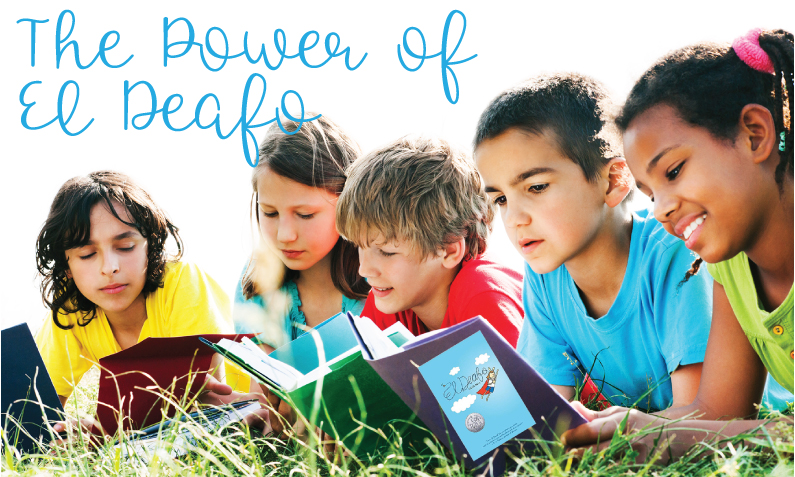
In today’s classrooms, fostering empathy, promoting inclusivity, and celebrating differences are more vital than ever. Literature has always been our most effective tool to build these connections—and few books do it as masterfully as Cece Bell’s Newbery Honor-winning graphic novel, El Deafo.
Whether you are looking to engage reluctant readers, deepen your Social-Emotional Learning (SEL) curriculum, or build genuine disability awareness, El Deafo provides an unforgettable lens into the real-world experiences of growing up with hearing loss.
We earn a commission if you make a purchase, at no additional cost to you.
A Personal Perspective: Why El Deafo Touches My Heart
As someone who has lived with hearing loss for over 25 years, I know firsthand the daily friction of trying to communicate in a world built for the hearing. Hearing loss has affected almost every area of my life—it even led to the end of my classroom teaching career.
A while back, I participated in an online discussion with fellow educators about the factuality of the novel Wonder by R.J. Palacio. While I love Wonder and believe it holds a valuable spot in the classroom, I’ve always been concerned about how it portrays hearing loss and hearing aids. (In fact, when I created my Wonder Novel Study, I included a non-fiction article to help students understand the real-world science behind hearing loss so they could spot the story’s inaccuracies.)
During that discussion, an educator asked me:
“Shelley, have you read El Deafo by Cece Bell? How realistic is it to someone who actually walks in those shoes?”
I immediately ordered a copy. From the moment I opened it, I was nodding my head in complete agreement.
Cece Bell’s autobiographical journey captured feelings I’ve carried for decades—isolation, self-consciousness, social fatigue, and the exhaustion of putting up with awkward interactions out of fear or embarrassment.
Most importantly, the book highlights a critical truth the hearing world often overlooks: Volume does not equal clarity.
Shouting, talking unnaturally slow, or exaggerating mouth movements does not help someone with hearing loss. In fact, it ruins lip-reading and makes communication much harder! Cece’s story shows how she took these everyday struggles and transformed them into her superhero alter ego, “El Deafo.”
You don’t need to have hearing loss to fall in love with Cece’s journey—but reading it will make anyone a more compassionate, understanding human being.
6 Key Benefits of Teaching El Deafo in Grades 4–6
1. 🤟 Promotes Real Disability Awareness & Deaf Culture
El Deafo offers an authentic, first-hand look at what it’s like to navigate school and friendships with a hearing impairment. It strips away misconceptions and gives students an accurate understanding of assistive technology and accessibility.
2. ❤️ Builds Deep Social-Emotional Learning (SEL) & Empathy
By following Cece’s internal monologues and social triumphs, students learn to recognize the feelings of others, reflect on their own behaviors, and navigate complex friendship dynamics with kindness.
Cece’s creation of “El Deafo” teaches young readers that the things that make us different aren’t weaknesses—they can become our greatest strengths. It encourages students to embrace their unique traits with confidence.
4. 📖 Hooks Reluctant & Visual Readers
As a graphic novel, El Deafo pairs rich visual context with accessible text. It is an extraordinary format for striving readers, ESL/ELL students, and visual learners to practice high-level literary analysis without feeling overwhelmed.
5. 🗣️ Sparks Meaningful Classroom Discussions
Cece’s story naturally opens the door for class discussions on tough topics: standing up to bullies, overcoming social anxiety, effective communication strategies, and true inclusion.
6. 🌐 Blends Fiction with Non-Fiction Learning
Pairing Cece’s memoir with non-fiction research on audiology, ear anatomy, and famous figures with hearing loss allows teachers to connect ELA standards directly with Science and Health topics.
Take Your El Deafo Unit Further (Zero Prep Required!)
Teaching a graphic novel comes with unique opportunities—and unique challenges! To help you deliver a comprehensive, standards-aligned unit without spending your weekends planning, I created the El Deafo Complete Novel Study.
Designed specifically for Grades 4–6, this 147+ page resource combines deep ELA reading comprehension with interactive non-fiction research.
🌟 What’s Included in the Unit?
3-Week Pacing & Daily Lesson Plans: Structured, step-by-step teacher guides aligned to Common Core Standards.
Chapter-by-Chapter Comprehension: Short-answer questions that analyze both textual content and visual graphic panel cues.
6 Non-Fiction WebQuest Foldables: Interactive research activities covering ear anatomy, audiology, assistive technology, communication strategies, and deaf history.
End-of-Book Assessment Packet: Comprehensive final test available in printable format and self-grading Google Forms™.
Printable PDF & Google Drive™ Formats: Ready for traditional paper workbooks or paperless 1:1 Chromebook classrooms.
Give your students a reading unit they will talk about for the rest of the school year while saving yourself hours of prep time!
You can purchase this novel study at the following locations:
💬 Join the Conversation!
Have you taught graphic novels in your upper elementary or middle school classroom? How do your students react to Cece’s journey in El Deafo?
Come share your ideas, lesson tips, and book recommendations with hundreds of passionate educators in our free Facebook community: Book Talk with The Teaching Bank!
*The Teaching Bank participates in the Amazon Associate Program and earns a fee from qualifying purchases made on the Amazon.com site.
Some of my most vivid childhood memories of school were the novel studies I read for various subjects. It was my favorite way to learn skills, history, and any topic! I love books, and being allowed to read an entire book from cover to cover as a school assignment put me in heaven! I am sure this is a major reason why, as a teacher, my passion is to create and teach novel studies! I love introducing new books to my class, and as a community, being immersed in the book together. I love it when a student pulls us off the schedule with a question or comment from something they read and leads the class into a lively discussion. That’s where the real memorable learning takes place, after all!
I create novel studies more than any other product line simply because I like to focus on what I love. I want to work with my passion! I often get questions from readers asking how I would set up novel studies in my classroom. I decided to write a small series explaining my methods. For the most part, my novel studies include comprehension questions, vocabulary/grammar skill work, extension activities, and assessments.
Today’s post, Part 4, deals with the extras added to the novel studies, from writing activities to non-fiction research activities. You can read Part 1, Part 2, and Part 3 here.
Novel Studies Part 4: The Extras!
Of course, when using novel studies in the classroom, you must hit the basics of comprehension and vocabulary. One of the wonderful bonuses of using novel studies is the opportunity to pull other areas of the curriculum into a larger thematic unit. The various topics of the different books can lead to a plethora of inquiry and learning.
As I create a novel study, I open my mind to all the places the story is taking me. Some books are easier to explore outside the reading domain than others. Some take me down the rabbit hole of investigation with a deep-thought question that allows for longer writing passages that can lead to some really inspiring class debates!
With The One and Only Ivan Novel Study, students can research gorillas and elephants. They can learn about and compare life for these animals in the wild vs. captivity. The most interesting to me was the true story of the Shopping Mall Gorilla that inspired the story!
A book like Mrs. Frisby and the Rats of NIMH leads to some deep-thought questions regarding animal testing that can be debated and discussed in-depth in the classroom.
All of my novel studies offer a Google Drive™ format, in addition to the printable format, shown above, to use with your students. This allows you to use novel studies in a 1:1 classroom, save paper, and easily engage students who are absent. The “extras” of the novel study are included in the Google Drive™ format as well. Here’s an example page from the Google Drive™ format of my The Lightning Thief Novel Study.
I love how you can combine the theme from a full novel throughout different curriculum areas in a way that you just can’t do with short passage reading instruction. This allows for even deeper learning by using novel studies!
Join me for the conclusion of my series to learn how I handle the assessments to end my novel studies.
Are you interested in reading about and sharing ideas with other educators on using children’s literature in your classroom? My goal is to bring together teachers and homeschoolers who teach grades 3-8 and use novels with their students. I’d love for you to join me to learn, share, and grow together!





 Connect with Fellow Educators!


 Novel Studies Part 5: Assessment
 I often get questions from potential buyers asking if there are assessments after every chapter of my novel studies. I kind of cringe when I get these questions because I can only imagine the dread the students must have if they are tested after every chapter! Testing is not the only way to assess if a student has read and understood. In my experience, class discussions and the writing in the comprehension answers are more than sufficient evidence of learning and understanding by the student. It is imperative when using novel studies not to lose focus and kill the joy of reading for your students! Your goal is for them to voluntarily pick up another book to read when a novel study is over, not run as far as they can from books!




 Novel Studies Part 4: The Extras!


 All of my novel studies offer a Google Drive™ format, in addition to the printable format, shown above, to use with your students. This allows you to use novel studies in a 1:1 classroom, save paper, and easily engage students who are absent. The “extras” of the novel study are included in the Google Drive™ format as well. Here’s an example page from the Google Drive™ format of my