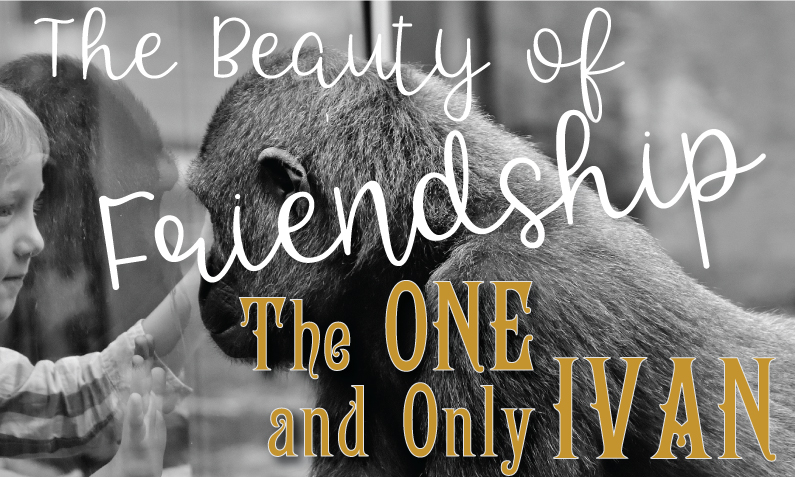
“I am Ivan. I am a gorilla. It’s not as easy as it looks.”
Few stories capture the hearts of upper elementary students quite like Katherine Applegate’s Newbery Medal-winning masterpiece, The One and Only Ivan.
Inspired by the true story of a real shopping mall gorilla named Ivan who spent 27 years in a glass enclosure, this powerful novel explores themes of friendship, empathy, animal welfare, and keeping promises. Written in accessible, poetic verse with short, fast-paced entries, it is one of the most effective ELA anchor texts for 3rd, 4th, 5th, and 6th-grade classrooms.
Whether you are hosting a whole-class read-aloud, running literature circles, or facilitating independent book clubs, here is how you can teach The One and Only Ivan with zero prep time while building critical ELA and cross-curricular reading skills!
We earn a commission if you make a purchase, at no additional cost to you.
🌟 Why The One and Only Ivan Belongs in Your Reading Curriculum
1. Sparks High-Interest Nonfiction Connections
Unlike purely fictional stories, Ivan serves as a perfect launchpad for cross-curricular reading. Students naturally become curious about the real Ivan, gorilla and elephant behavior, and the moral debate surrounding animal captivity vs. wildlife sanctuaries.
2. Teaches Point of View & Literary Devices
Written from Ivan’s first-person perspective, the novel provides a masterclass in voice, sensory details, figurative language, and character development—making deep literary analysis approachable for reluctant readers.
3. Fosters Deep Social-Emotional Learning (SEL)
As Ivan forms an unbreakable bond with Stella the elephant and Ruby the baby elephant, students reflect on empathy, compassion, standing up for others, and what it truly means to be a good friend.
I offer a novel study for The One and Only Ivan that not only incorporates comprehension and vocabulary activities, but also non-fiction aspects for students to learn about Silverback Gorillas, elephants, animals living in captivity vs. the wild, and, of course, the story of the real-life Ivan!
📦 What’s Included in the Complete Ivan Unit (Print + Google Apps™)
Creating chapter questions, vocabulary lists, and assessments for a 300+ page book can take dozens of hours. This all-in-one novel study unit delivers everything you need from start to finish—offered in both printable PDF and interactive Google Drive™ (Google Slides & self-grading Google Forms) formats.
👩🏫 1. Teacher Planning & Management Packet
Detailed Daily Lesson Plans & Pacing Guide: Step-by-step roadmap for your daily reading schedule.
Vocabulary Word Wall Cards: Printable cards and Google Slides to reinforce academic vocabulary.
Proactive Parent Letter: Pre-written communication explaining the themes of the book.
Complete Answer Keys: Hassle-free grading for every student task.
📝 2. Student Practice & Skill Workbooks
Vocabulary Context Practice: Targeted practice covering 59 essential vocabulary words across the book.
Section-by-Section Comprehension Questions: Short-answer questions designed to push students into deeper critical thinking and inferencing.
In-Depth Character Studies: Graphic organizers focusing on Ivan, Stella, Ruby, and Bob.
Book vs. Movie Comparison: Engaging analysis tools comparing the novel to the Disney film adaptation.
★ 4 Exclusive Post-Reading Analysis Tasks: Deep-dive extension projects available only in this complete unit bundle!
Please check out the completed The One and Only Ivan Novel Study that contains both a printable and Google Drive™ compatible format available in my store.
🎁 Download a FREE Sample & Start Teaching Today!
Want to test out the unit before committing? Download a Free Sample that includes all student activities and teacher plans for Chapter 1!
You can purchase this novel study at the following locations:
💬 Join the Conversation!
Have you taught The One and Only Ivan or its companions (The One and Only Bob and The One and Only Ruby) in your classroom?
Join our free teacher community, Book Talk with The Teaching Bank, to share ideas, grab freebies, and connect with upper elementary and middle school educators!
*The Teaching Bank participates in the Amazon Associate Program and earns a fee from qualifying purchases made on the Amazon.com site.
One of my favorite children’s authors is Louis Sachar. I love his quirky sense of humor, and even more, I love sharing this humor with my students and giggling right along with them! I have many “inside jokes” with my students where the humor brings us together as a community. I am a big advocate for humor in children’s literature because it draws out those reluctant readers and shows them how truly enjoyable reading can be. Often this spark gets these students exploring other forms of literature and leads them on a journey of a lifelong love of reading. One of my favorite Louis Sachar books is Sideways Stories From Wayside School. Even though I have read this book, and the two sequels, more times than I can count, I still get a chuckle each and every time. The Wayside School series is great for a class read-aloud or to use as a novel study.
Sideways Stories is told from the point of view of Louis the Yard Teacher, which Louis Sachar based on himself. He spent a college semester working as an aid in an elementary school and spent some of that time as “Louis the Yard Teacher”. Sachar also based most of his characters from the book on students he worked with during that time. Sideways Stories was Louis Sachar’s first book, published in 1978, but it took several years to gain widespread popularity.
Wayside School was an architectural mistake. It was mistakenly built 30 stories tall with only one classroom per story. The story revolves around the class on the 30th story. The book begins by telling us the story of the teacher on the 30th story, Mrs. Gorf. Mrs. Gorf has a special talent that leads to her demise and is replaced by Mrs. Jewls in chapter 2. Mrs. Jewls is a sweet but somewhat naive teacher, which leads to big laughs. A lot of humor comes from Mrs. Jewls’ seeming lack of common sense. The other teacher discussed in the last chapter is Louis the Yard Teacher. All the rest of the chapters (there are 30, of course!) detail a student. Each student is unique in some ironic, humorous way.
I have used this book in several different ways in my classroom. First, I have used it as a read-aloud to spark a sense of community. Reading, discussing, and laughing together brings a class together. I can read this at the beginning of the year and still have kids quoting it or bringing up a joke at the end of the year. I have yet to find a child who did not thoroughly enjoy this book.
Reasons to Use the Wayside School Series for Novel Studies
Engaging storytelling: The Wayside School series is full of humor and unique storytelling that keeps students engaged and entertained.
Relevant themes: The books explore themes such as friendship, perseverance, and individuality that are relatable to students and promote important life lessons.
Easy-to-follow narrative: The books are written in a simple and straightforward style, making them accessible to students of all reading levels.
Diverse characters: The series features a diverse cast of characters, offering students the opportunity to see themselves and others represented in literature.
Cross-curricular connections: The Wayside School series can be used to connect with other subjects, such as history, mathematics, and social studies, making it a versatile tool for teachers.
Try a free sample of the novel study for Sideways Stories from Wayside School
Whether you use these books for the whole class, small group, or individual instruction, you will find your students laughing and truly enjoying reading. Even if you don’t use these units in your class, include them in a class library for your students to read or read as a class read-aloud. Whatever you do, make sure your students have access to these books! They are so much fun and open up the reading world for those reluctant readers!
You can purchase this novel study bundle which contains both a printable and a Google Drive™ format at the following location:
Connect with Fellow Educators!
Are you teaching the Wayside books this school year?
Join our free community, Book Talk with The Teaching Bank, to share ideas, grab freebies, and connect with 3rd–8th grade teachers using novels in the classroom!
*The Teaching Bank participates in the Amazon Associate Program and earns a fee from qualifying purchases made on the Amazon.com site.
“When given the choice between being right or being kind, choose kind.”
Few books leave a lasting mark on upper elementary students quite like Wonder by R.J.Palacio.
The inspiring story follows August “Auggie” Pullman—a 10-year-old born with facial differences—as he transitions from homeschooling to entering a mainstream private school for fifth grade. Told through multiple perspectives, Auggie’s journey gives students a powerful look into empathy, bullying, perspective-taking, and the true meaning of friendship.
Whether you are teaching Wonder as a whole-class read-aloud, running literature circles, setting up independent reading stations, or in homeschool, this novel is one of the most effective ELA anchors for 4th, 5th, and 6th-grade classrooms.
We earn a commission if you make a purchase, at no additional cost to you.
.
Here is how you can teach Wonder with zero prep time while building critical ELA skills and fostering a culture of kindness in your classroom!
🌟 Why Wonder Is an Essential Read for Upper Elementary
1. Drives Social-Emotional Learning (SEL) & Character Building
Wonder is more than a reading unit—it’s a tool for SEL. By examining the story through the eyes of Auggie, Via, Jack Will, and Summer, students learn to appreciate differences, reflect on their own behavior, and embrace the #ChooseKind mindset.
Palacio’s novel alternates between six distinct narrator voices. This unique structure provides a perfect framework for teaching point of view, character motivation, tone, and author’s craft without overwhelming middle-grade readers.
3. Engages Reluctant & Advanced Readers Alike
With short, fast-paced chapters and deeply relatable themes, even your most hesitant readers will stay hooked from chapter one.
I offer a complete novel study to accompany Wonder for use in the classroom or homeschool. The unit includes both a printable format and a Google Drive™ format for use in a paperless classroom or with Google Classroom.
📦 What’s Included in the Wonder Complete Unit (Print + Google Apps™)
Planning a comprehensive novel study shouldn’t require spending your weekends creating worksheets and grading assessments. This all-in-one unit contains everything you need to teach Wonder from start to finish—available in both printable PDF and interactive Google Drive™ (Google Slides & self-grading Google Forms) formats.
1. Teacher Planning & Management Packet
Detailed Daily Lesson Plans & Pacing Guide: Open, print (or click), and teach with confidence.
Vocabulary Word Wall Cards: Printable cards and digital Google Slides formats to build academic vocabulary.
Proactive Parent Letter:Pre-written communication explaining the themes and educational goals of the unit.
Complete Answer Keys: Stress-free grading for every assignment.
2. Student Practice & Skill Workbooks
Vocabulary & Grammar Activities: Direct instruction covering 126 context words across the book.
Chapter-by-Chapter Comprehension Questions: Short-answer questions designed to push students beyond basic retrieval into deeper critical thinking.
In-Depth Character Studies: Analytical writing prompts for each section of the novel.
4 Exclusive Post-Reading Analysis Tasks: Deep-dive extension tasks available only in the complete unit bundle.
3. Cross-Curricular Nonfiction Connections
Build real-world background knowledge with two complete informational reading activity guides:
👂 Hearing Loss Informational Reading & Activity Guide
🐕 Therapy Dogs Reading & Activity Guide
4. Self-Grading Quizzes & Assessments
4 Section Quizzes (Print & Self-Grading Google Forms™): Easily monitor comprehension after Part 1, Part 2, Part 5, and Part 8.
Bonus Activity Packets: Includes a Story Elements Interactive Notebook Packet and End-of-the-Book Projects usable with any book!
Want to test out the unit before committing? Download a Free Sample that includes all student activities and teacher plans for Day 1 of the unit!
You can purchase this novel study at the following locations:
💬 Connect with Fellow Educators!
Are you teaching Wonder this school year? How do you celebrate kindness in your classroom?
Join our free community, Book Talk with The Teaching Bank, to share ideas, grab freebies, and connect with 3rd–8th grade teachers using novels in the classroom!
*The Teaching Bank participates in the Amazon Associate Program and earns a fee from qualifying purchases made on the Amazon.com site.
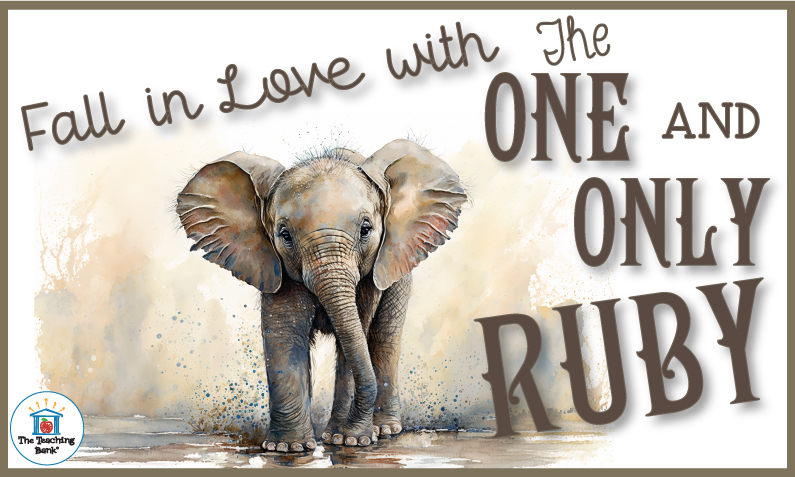
f you’re looking for a high-interest novel that will engage upper elementary readers while providing meaningful opportunities for reading comprehension, discussion, writing, and critical thinking, add The One and Only Ruby by Katherine Applegate to your classroom reading list.
As the final book in the beloved One and Only trilogy, The One and Only Ruby allows students to reconnect with familiar characters while learning more about Ruby, the young elephant whose story began in The One and Only Ivan.
Ruby’s journey is filled with friendship, courage, family, belonging, and resilience. It also gives teachers plenty of opportunities to spark thoughtful conversations and connect literature to real-world topics such as animal welfare, conservation, empathy, and human responsibility.
We earn a commission if you make a purchase, at no additional cost to you.
Why Teach The One and Only Ruby?
Katherine Applegate has created a story that is both accessible to young readers and rich enough to support deeper literary analysis. Students can enjoy Ruby’s story while exploring important themes and practicing essential ELA skills.
Here are just a few reasons The One and Only Ruby makes an excellent classroom novel.
1. It Builds Empathy and Compassion
One of the greatest strengths of The One and Only Ruby is its ability to help students see the world from another perspective.
Ruby’s experiences encourage readers to think about what it means to be separated from home, experience change, form relationships, and find a place where you belong.
These experiences create natural opportunities to discuss empathy, compassion, kindness, and caring for others.
Try asking your students:
How do Ruby’s experiences shape the way she sees the world?
How do other characters demonstrate compassion?
What does it mean to understand someone else’s feelings?
How can we show empathy in our own classroom?
These conversations can extend beyond the novel and help students make meaningful connections to their own lives.
2. The Themes Encourage Meaningful Discussion
The One and Only Ruby is much more than an entertaining animal story. It provides opportunities to explore several universal themes that students can connect to.
Some important themes include:
Friendship
Belonging
Courage
Facing your fears
Family
Growing up
Change
Empathy
Resilience
Finding your place
These themes make the novel especially effective for whole-class novel studies, literature circles, reading groups, and independent reading.
Students can support their ideas with evidence from the text while learning that a story can have multiple meaningful interpretations.
3. It Encourages Critical Thinking
A great novel study should do more than ask students to remember what happened in each chapter.
The One and Only Ruby provides opportunities for students to infer, analyze, predict, explain, compare, and support their thinking with text evidence.
Instead of simply asking, “What happened?” encourage students to ask:
Why did this happen?
How did this event affect the character?
What does this reveal about the character?
What evidence from the text supports your thinking?
How might the story have been different if a character had made a different choice?
These types of questions turn reading into an active process and help students develop stronger comprehension and critical-thinking skills.
4. It Opens the Door to Environmental and Animal Conservation Topics
Because Ruby is an elephant, the novel also provides a natural bridge between fiction and nonfiction learning.
Students can investigate topics such as:
Elephant habitats
African elephants
Animal conservation
Wildlife sanctuaries
Animal behavior
Human impact on wildlife
Captivity versus life in the wild
Protecting endangered animals
This creates an excellent opportunity for cross-curricular learning.
After reading about Ruby’s experiences, students can research a related topic and use information from nonfiction sources to expand their understanding.
You can even have students compare what they learn from informational texts with Ruby’s fictional experiences.
5. It Supports Strong ELA Instruction
One of the biggest advantages of using a high-interest novel in the classroom is that you can teach a wide variety of ELA skills within an authentic reading experience.
The One and Only Ruby novel study can support instruction in:
Reading comprehension
Making inferences
Summarizing
Character analysis
Theme
Story elements
Vocabulary
Grammar
Text evidence
Reading response
Opinion writing
Essay writing
Critical thinking
Nonfiction reading
Literary analysis
Instead of teaching these skills in isolation, students practice them while reading a story they actually care about.
The One and Only Ruby Novel Study Ideas
If you’re planning to teach The One and Only Ruby, consider incorporating a combination of comprehension, vocabulary, writing, and discussion activities.
Character Analysis
Have students track Ruby’s development throughout the story.
Students can identify:
Ruby’s character traits
Challenges she faces
Important decisions she makes
How she changes
Relationships that influence her
Evidence that supports their thinking
A character development chart can be especially useful for helping students see how a character changes over the course of a novel.
Vocabulary Activities
Create a vocabulary list from the novel and have students use context clues to determine word meanings.
Students can then:
Define words in their own words
Identify synonyms and antonyms
Use words in original sentences
Illustrate vocabulary
Find examples of words used in context
Reading Comprehension Questions
Instead of relying only on basic recall questions, include a mixture of literal, inferential, and analytical questions.
For example:
Literal: What happened?
Inferential: Why do you think the character made that choice?
Analytical: How does this event contribute to one of the novel’s themes?
This progression helps students move from understanding the text to thinking deeply about it.
Opinion and Essay Writing
The novel also provides excellent opportunities for text-based writing.
Students can respond to questions related to animals, conservation, friendship, belonging, or decisions made by characters.
Require students to support their opinions with specific evidence from the novel.
This is a great way to combine reading comprehension and writing instruction.
Teaching The One and Only Ruby With a Complete Novel Study
If you don’t want to spend hours creating The One and Only Ruby worksheets, comprehension questions, vocabulary activities, assessments, and writing assignments, a ready-to-use novel study can save you valuable planning time.
What’s Included in the The One and Only Ruby Novel Study?
Chapter-by-chapter comprehension questions
Vocabulary activities
Grammar activities
Reading responses
Writing activities
Nonfiction reading
Opinion writing
Character and story element activities
Assessments
Answer keys
Teacher lesson plans
Common Core standards alignment
Printable PDF resources
Digital Google Slides activities
Digital Google Forms assessments
It’s designed to give you the structure of a complete novel unit without requiring you to create everything from scratch.
Try a Free Sample
Want to see what the novel study looks like before purchasing?
Download the free sample and preview the activities included in the complete unit.
Bring The One and Only Ruby Into Your Classroom
The best classroom novels are the ones that make students want to keep reading while giving teachers opportunities to teach important skills.
The One and Only Ruby does both.
Ruby’s story can lead your students into conversations about empathy, friendship, courage, belonging, conservation, and what it means to find your place in the world.
Pair the novel with thoughtful comprehension questions, vocabulary activities, writing assignments, nonfiction connections, and discussion, and you have the foundation for a rich and engaging upper elementary novel study.
If you’re ready to make teaching The One and Only Ruby easier, check out the complete The One and Only Ruby Novel Study for grades 4–6.
Less prep. More meaningful reading. More opportunities for your students to think, discuss, write, and connect.
Is The One and Only Ruby a Good Book for a Novel Study?
Absolutely!
If your students enjoyed The One and Only Ivan and The One and Only Bob, The One and Only Ruby is a natural addition to your classroom library and novel study plans.
Even students who haven’t read the earlier books can find plenty to appreciate in Ruby’s story. The novel’s themes of friendship, courage, belonging, empathy, and resilience give students opportunities to connect personally with the characters while developing important reading and writing skills.
And because the story connects naturally to animal conservation and nonfiction research, it can become the starting point for much more than a traditional book unit.
Connect with Fellow Educators!
Are you teaching The One and Only Ruby this school year?
Join our free community, Book Talk with The Teaching Bank, to share ideas, grab freebies, and connect with 3rd–8th grade teachers using novels in the classroom!
*The Teaching Bank participates in the Amazon Associate Program and earns a fee from qualifying purchases made on the Amazon.com site.
Looking for a Bunnicula novel study that will keep your students engaged while making your reading instruction easier?
Bunnicula by Deborah and James Howe is a fun, humorous, slightly spooky chapter book that makes a great choice for an upper-elementary novel study. But finding enough meaningful comprehension, vocabulary, writing, and assessment activities to teach an entire book can take a lot of time.
That’s why I created this Bunnicula book unit for grades 3–5.
This complete, no-prep Bunnicula novel unit gives you ready-to-use activities for teaching the book while helping students strengthen reading comprehension, vocabulary, critical thinking, writing, and other essential ELA skills.
Perfect for Fall and Halloween!
Because of its spooky—but not-too-scary—storyline, Bunnicula is especially fun to teach during fall and Halloween.
Students can enjoy the mystery surrounding Bunnicula while practicing important reading skills and discussing questions such as:
Is Bunnicula really a vampire?
Can Chester be trusted?
What clues does the author give us?
How do the characters’ actions affect the story?
What evidence supports different interpretations of events?
It’s a great way to turn a fun seasonal read into a meaningful ELA novel study.
We earn a commission if you make a purchase, at no additional cost to you.
Why Teach Bunnicula as a Novel Study?
Bunnicula introduces students to the Monroe family and their pets, Harold the dog and Chester the cat. When the family brings home a mysterious rabbit named Bunnicula, Chester becomes convinced that the new pet is actually a vampire!
With its combination of humor, mystery, suspense, and memorable characters, Bunnicula is a great choice for an upper-elementary novel study. Students will have plenty to discuss as they make predictions, analyze characters, make inferences, and decide whether Chester’s suspicions might actually be true.
The story also provides plenty of opportunities to work on important reading comprehension, vocabulary, critical-thinking, and writing skills while students are engaged in a book they genuinely enjoy.
A No-Prep Bunnicula Novel Study
If you don’t want to spend your valuable planning time creating activities to go along with every chapter, I’ve done the work for you!
This Bunnicula novel study for grades 3–5 is a complete, ready-to-use ELA unit that can be used for a whole-class novel study, small-group reading, literature circles, independent reading, or a classroom read-aloud.
The activities are designed to help students dig deeper into the novel while giving you everything you need to teach it with minimal preparation.
What’s Included?
This Bunnicula book unit includes:
Detailed lesson plans and pacing guide
Chapter-by-chapter comprehension activities
Vocabulary activities
Writing and extension activities
Assessments and answer keys
Story elements activities
Common Core alignment
Printable and digital resources
The unit is designed to make teaching Bunnicula easy while giving students meaningful opportunities to practice essential ELA skills.
Instead of searching for Bunnicula comprehension questions, vocabulary activities, writing prompts, and assessments, you can have everything ready to go in one resource.
This no-prep Bunnicula novel study lets you spend less time planning and more time enjoying the book with your students.
Try a FREE Sample!
Want to see what’s included before you purchase?
You can try a FREE sample of the Bunnicula novel study to preview the activities and see how the unit will work in your classroom.
Get the Complete Bunnicula Novel Study
Ready to bring Chester, Harold, and Bunnicula into your classroom?
This ready-to-use Bunnicula book unit for grades 3–5 is a fun and easy way to combine a high-interest novel with meaningful ELA instruction.
Connect with Fellow Educators!
Are you teaching Bunnicula this school year?
Join our free community, Book Talk with The Teaching Bank, to share ideas, grab freebies, and connect with 3rd–8th grade teachers using novels in the classroom!
*The Teaching Bank participates in the Amazon Associate Program and earns a fee from qualifying purchases made on the Amazon.com site.







 Connect with Fellow Educators!