If you’re looking for a How to Eat Fried Worms novel study that will keep your students engaged while giving you meaningful reading comprehension, vocabulary, writing, and critical-thinking activities, How to Eat Fried Worms by Thomas Rockwell is a fantastic choice.
The humorous story of Billy and his friends immediately grabs students’ attention, but there’s much more to this classic children’s novel than its unforgettable title. How to Eat Fried Worms gives upper-elementary students opportunities to explore friendship, peer pressure, courage, decision-making, character development, and the consequences of our choices.
We earn a commission if you make a purchase, at no additional cost to you.
And for teachers, it’s a book that can turn into a rich ELA novel unit without requiring hours of preparation.
Why Teach How to Eat Fried Worms?
Some books are difficult to put down once students start reading them. How to Eat Fried Worms is one of those books.
The premise is simple: Billy accepts a bet that he can eat 15 worms in 15 days. What follows is a funny—and sometimes gross—adventure as Billy attempts to keep his promise while dealing with his friends, his fears, and increasingly creative ways of preparing worms.
That ridiculous-sounding premise is exactly what makes the novel so appealing to many upper-elementary readers.
But underneath the humor are some excellent opportunities for classroom discussion and literary analysis.
1. It Gets Reluctant Readers Interested in Reading
Getting students excited about a novel isn’t always easy.
A book about a boy who agrees to eat worms?
That gets their attention.
The humor and outrageous premise of How to Eat Fried Worms can be especially effective for students who aren’t naturally enthusiastic readers. Once students become invested in Billy’s challenge, they have a reason to keep reading to find out what happens next.
That makes this novel a great choice for:
4th grade ELA
5th grade ELA
6th grade ELA
Whole-class novel studies
Small-group reading
Literature circles
Independent reading
Homeschool reading
Reading intervention
2. Explore Friendship and Peer Pressure
One of the strongest themes in How to Eat Fried Worms is peer pressure.
Billy’s decision to accept the worm-eating challenge gives students an authentic way to discuss questions such as:
Why do people sometimes agree to things they don’t really want to do?
How does peer pressure influence our decisions?
What makes someone a good friend?
When should you stand up for yourself?
What are the consequences of making a decision just to prove something?
These questions can lead to meaningful classroom conversations that go far beyond simply asking students what happened in each chapter.
3. Build Reading Comprehension Skills
A strong novel study should do more than make sure students finished the assigned chapters.
How to Eat Fried Worms provides opportunities to practice important reading comprehension skills, including:
Identifying important details
Making inferences
Analyzing characters
Identifying problems and solutions
Determining cause and effect
Making predictions
Understanding themes
Summarizing
Supporting answers with evidence
Thinking critically about characters’ decisions
Using comprehension questions throughout the novel gives students a reason to slow down and think about what they’re reading rather than simply racing to the end of the book.
4. Teach Vocabulary in Context
The novel also provides opportunities to strengthen students’ vocabulary.
Rather than teaching vocabulary as a completely separate activity, students can encounter new words in the context of a story they actually want to read.
Students can practice:
Determining word meaning from context
Using new vocabulary correctly
Identifying synonyms and antonyms
Applying vocabulary in writing
Connecting words to the events and characters in the novel
This makes How to Eat Fried Worms vocabulary activities a natural part of the reading experience.
5. Connect Reading to Writing
A great novel study shouldn’t stop with comprehension questions.
Once students become invested in Billy’s challenge, the story provides plenty of writing opportunities.
Students can respond to characters, events, conflicts, and themes while practicing their ability to explain their thinking using evidence from the text.
Writing activities can help students move from:
“What happened?”
to:
“Why did it happen, and what do I think about it?”
That shift is an important part of developing stronger readers and writers.
A No-Prep How to Eat Fried Worms Novel Study
Of course, knowing that a book has great teaching potential is only half the battle.
The other question is:
How much time will it take to turn the novel into a complete unit?
Creating your own How to Eat Fried Worms worksheets, comprehension questions, vocabulary activities, writing assignments, assessments, and lesson plans can take hours.
Instead of piecing together activities from multiple sources, you can have your entire novel unit organized and ready to teach.
What’s Included in the How to Eat Fried Worms Novel Study?
The complete unit includes both printable and digital Google Drive™ resources, making it flexible enough for traditional classrooms, paperless classrooms, distance learning, small groups, and homeschool settings.
Teacher Resources
The teacher packet includes:
Detailed daily lesson plans
Pacing and Standards Guide
Chapter/Section Guide
Vocabulary Word Wall Cards
Answer keys
Parent letter
Student Activities
Students receive activities that include:
Vocabulary and grammar activities
Vocabulary practice for 36 words
Chapter-by-chapter comprehension questions
Short-answer questions designed to encourage deeper thinking
Extension activities connected to the novel
The extension activities are only included in the complete novel study, making the full unit a particularly valuable option if you want more than basic comprehension worksheets.
Assessments
The assessment packet includes:
After-the-book vocabulary quiz
After-the-book comprehension assessment
Multiple-choice comprehension questions
Short-answer comprehension questions
After-the-book writing assessment
Self-grading Google Drive™ multiple-choice quizzes
Additional Reading Activities
The unit also includes:
End-of-the-Book Activity Packet
Story Elements Interactive Notebook Activity Packet
Common Core Standards alignment for grades 4-6
Everything is designed to work together as a cohesive How to Eat Fried Worms book unit.
Printable or Digital? You Get Both.
Today’s classrooms don’t all look the same.
Some teachers still prefer students to work with printed pages. Others use Google Classroom and want digital resources. Many teachers use a combination of both.
That’s why this How to Eat Fried Worms novel study includes both printable and Google Drive™ formats.
You can print the materials for students who prefer paper or assign the digital version in your paperless classroom.
That flexibility also makes the unit useful for:
Classroom instruction
Google Classroom
Distance learning
Small-group instruction
Independent study
Homeschooling
Make How to Eat Fried Worms More Than Just a Book
The best novel studies help students experience a story while simultaneously developing stronger reading and thinking skills.
How to Eat Fried Worms gives you a particularly fun way to do that.
Students can laugh at Billy’s increasingly outrageous worm-eating challenge while also thinking about friendship, peer pressure, courage, decision-making, character traits, consequences, and personal responsibility.
And you don’t have to spend your weekend creating all of the materials yourself.
Download the FREE preview to see examples of the activities and lesson materials included in the unit.
It’s a great way to see how the novel study can fit into your classroom before you commit.
Ready to Teach How to Eat Fried Worms?
If you’re planning a 4th, 5th, or 6th grade novel study, this complete How to Eat Fried Worms book unit gives you the structure and resources you need to get started quickly.
No complicated preparation. No searching for individual worksheets. No piecing together vocabulary, comprehension, writing, and assessments from different resources.
Just grab your copy of How to Eat Fried Worms, download the unit, and start teaching.
Connect with Fellow Educators!
Are you teaching How to Eat Fried Worms this school year?
Join our free community, Book Talk with The Teaching Bank, to share ideas, grab freebies, and connect with 3rd–8th grade teachers using novels in the classroom!
*The Teaching Bank participates in the Amazon Associate Program and earns a fee from qualifying purchases made on the Amazon.com site.
Looking for an engaging way to teach Insignificant Events in the Life of a Cactus by Dusti Bowling? This Insignificant Events in the Life of a Cactus novel study provides everything you need to guide students through this powerful middle-grade novel while building reading comprehension, vocabulary, writing, and critical-thinking skills.
Designed for grades 4–6, this comprehensive novel unit is perfect for whole-class instruction, small groups, literature circles, independent reading, or homeschool.
And best of all, it’s no prep and ready to teach!
About Insignificant Events in the Life of a Cactus
Insignificant Events in the Life of a Cactus follows Aven Green, a teenager who was born without arms. After moving to Arizona with her family, Aven begins attending a new school and quickly discovers that making friends isn’t always easy.
As Aven navigates a new school, new friendships, and the challenges of being different, students are introduced to themes of friendship, perseverance, acceptance, courage, empathy, and inclusion.
The novel provides plenty of opportunities for meaningful classroom discussions and deeper thinking.
We earn a commission if you make a purchase, at no additional cost to you.
Why Teach This Novel?
This is an excellent novel for helping students look beyond the surface of a story and think critically about characters, challenges, and the way we treat others.
While reading Insignificant Events in the Life of a Cactus, students can explore:
Character development and character traits
Friendship and relationships
Perseverance and overcoming challenges
Empathy and inclusion
Making inferences
Supporting ideas with text evidence
Vocabulary in context
Writing and literary analysis
Reading informational text
The novel also provides a natural opportunity to learn more about Tourette syndrome through a nonfiction research activity connected to the story.
A Complete, No-Prep Novel Study
Planning an entire novel unit can take hours. This Insignificant Events in the Life of a Cactus book study takes the guesswork out of planning by combining comprehension, vocabulary, writing, assessments, and enrichment activities in one ready-to-use resource.
The unit can be used with the entire class or adapted for small groups and independent learners.
It also includes both printable and Google Drive™ formats, making it easy to use whether you’re teaching traditionally, digitally, or a combination of both.
What’s Included
This comprehensive Insignificant Events in the Life of a Cactus novel unit includes:
This novel study is written for 4th–6th grade readers and can be used in a variety of instructional settings.
Use it for:
Whole-class novel studies
Small-group reading instruction
Literature circles
Independent reading
Reading intervention
Homeschool
Digital learning
ELA centers or enrichment
Whether you’re looking for a 5th grade novel study, a meaningful 4th–6th grade reading unit, or a ready-to-use resource for teaching Insignificant Events in the Life of a Cactus, this unit gives you the structure and activities you need.
Save Time With a Ready-to-Use Novel Unit
You shouldn’t have to spend your evenings creating comprehension questions, vocabulary activities, writing prompts, and assessments to go along with every class novel.
This no-prep Insignificant Events in the Life of a Cactus novel study gives you a complete framework for teaching the book while helping students become stronger readers and more thoughtful thinkers.
Print the materials or use the digital version and start teaching!
Try It Before You Buy It
Want to see exactly what you’ll get?
A FREE sample is available so you can preview the first day’s activities before purchasing the complete novel study.
Ready to Teach this novel?
You can purchase this novel study at the following locations:
Connect with Fellow Educators!
Are you teaching Insignificant Events in the Life of a Cactus this school year?
Join our free community, Book Talk with The Teaching Bank, to share ideas, grab freebies, and connect with 3rd–8th grade teachers using novels in the classroom!
*The Teaching Bank participates in the Amazon Associate Program and earns a fee from qualifying purchases made on the Amazon.com site.
Looking for The Indian in the Cupboard novel study that will save you time while giving your students meaningful reading comprehension, vocabulary, writing, and critical-thinking practice?
The Indian in the Cupboard by Lynne Reid Banks is a classic children’s novel that gives students plenty to discuss—from friendship and responsibility to imagination, power, identity, and the consequences of our choices.
If you’re planning to teach The Indian in the Cupboard in your classroom, a structured novel study unit can help you turn the book into a complete ELA experience without spending hours creating worksheets, comprehension questions, vocabulary activities, and assessments yourself.
We earn a commission if you make a purchase, at no additional cost to you.
What Is The Indian in the Cupboard About?
The Indian in the Cupboard follows Omri, a young boy who discovers that a magical cupboard can bring plastic toys to life.
When Omri places a small plastic Native American figure inside the cupboard and turns the key, the figure becomes a living person named Little Bear. What begins as an exciting discovery quickly becomes much more complicated as Omri learns that having the power to bring someone to life also comes with enormous responsibility.
The novel provides opportunities for students to think deeply about friendship, responsibility, power, trust, courage, identity, and the consequences of our actions.
Those themes make The Indian in the Cupboard an engaging choice for an upper-elementary or middle-grade novel study.
Why Teach The Indian in the Cupboard?
There is much more to discuss in this novel than simply what happens in the plot.
Imagination and Creativity
The magical cupboard immediately captures students’ imaginations. The idea of a toy becoming a real person naturally encourages students to think about what they would do if they had the same power.
This can lead to creative writing, prediction activities, and discussions about how imagination can influence the way we see the world.
Friendship and Responsibility
Omri’s relationship with Little Bear allows students to examine what it means to be a friend and what responsibilities come with having power over another person.
Students can consider questions such as:
What makes someone a good friend?
What responsibilities come with having power?
How do our choices affect other people?
Can good intentions still lead to harmful consequences?
These questions make excellent discussion and written-response prompts during a The Indian in the Cupboard book study.
Character Development
Omri changes significantly throughout the novel.
Students can examine how his experiences affect his decisions, attitudes, and relationships. Tracking character development also provides an excellent opportunity to practice identifying character traits, motivations, conflicts, and evidence from the text.
Critical Thinking and Ethical Questions
The magical premise of the novel creates some surprisingly sophisticated questions.
What would you do if you could bring a toy to life?
Should Omri have the power to decide what happens to another person?
What happens when someone has power without fully understanding the consequences?
These questions can take a simple reading assignment and turn it into a meaningful critical-thinking and ELA lesson.
Teaching the Indigenous Stereotypes in the Novel
One important consideration when teaching The Indian in the Cupboard is the way Indigenous people are portrayed in the story.
The portrayal of Little Bear contains stereotypes that provide an important opportunity for classroom discussion. Rather than ignoring these issues, teachers can use them to help students think critically about how books represent different cultures and how historical stereotypes can influence literature.
Students can discuss questions such as:
How is Little Bear portrayed?
Which descriptions are stereotypes?
Why can stereotypes be harmful?
How might Indigenous people feel about these portrayals?
Why is it important to compare fictional representations with accurate historical and cultural information?
This creates an opportunity to teach students that reading critically means thinking about both what an author says and how accurately and fairly people are represented.
Approaching these issues openly can turn a potentially uncomfortable topic into a valuable lesson about stereotypes, representation, history, and respectful understanding.
Use a Complete The Indian in the Cupboard Novel Study
If you don’t want to spend hours creating your own The Indian in the Cupboard worksheets, comprehension questions, vocabulary activities, and assessments, I have done the planning for you.
The resource includes both printable and digital Google Drive™ formats, making it easy to use whether your students are working with paper materials or completing assignments digitally.
The novel study includes:
Chapter-by-chapter reading comprehension
Vocabulary activities
Grammar activities
Spelling activities
Higher-level thinking questions
Writing activities
Story elements activities
Extension activities
Assessments
Answer keys
Teacher lesson plans
Pacing and standards information
Common Core alignment
The activities are designed to help students practice important ELA skills while reading the novel rather than simply answering basic questions about what happened.
Every classroom looks a little different, which is why this The Indian in the Cupboard novel unit includes both printable and digital options.
Use the printable materials for traditional classroom instruction, reading groups, or student packets.
The digital version can be used with Google Drive™ and Google Classroom™ for paperless instruction or digital assignments.
Get the Free Preview
Want to see exactly what is included?
You can download a free preview of The Indian in the Cupboard novel study to see examples of the activities, questions, and resources included in the complete unit.
You can purchase this novel study at the following locations:
Bring More Meaning to Your Novel Study
The Indian in the Cupboard gives students plenty to talk about, but you don’t have to create every lesson and activity from scratch.
With a complete The Indian in the Cupboard novel study, you can spend less time searching for worksheets and more time helping your students think deeply about the characters, themes, conflicts, and ideas in the book.
Ready-to-use ELA activities + reading comprehension + vocabulary + writing + assessments = a complete novel unit with minimal prep.
Connect with Fellow Educators!
Are you teaching The Indian in the Cupboard this school year?
Join our free community, Book Talk with The Teaching Bank, to share ideas, grab freebies, and connect with 3rd–8th grade teachers using novels in the classroom!
*The Teaching Bank participates in the Amazon Associate Program and earns a fee from qualifying purchases made on the Amazon.com site.
What if you woke up one morning and couldn’t remember the person you used to be?
That’s the fascinating premise behind Gordon Korman’s Restart, a high-interest middle-grade novel that gives students an opportunity to think deeply about bullying, identity, second chances, empathy, friendship, choices, and personal growth.
If you’re looking for a Restart novel study, Restart book unit, or ready-to-use ELA activities to accompany the novel, you’ve come to the right place!
My Restart Novel Study is a complete, no-prep unit designed to help students build reading comprehension, vocabulary, writing, grammar, critical-thinking, and literary analysis skills while reading Restart.
It includes printable and Google Drive™ versions, so you can easily use it in a traditional classroom, digital classroom, small reading group, or homeschool setting.
We earn a commission if you make a purchase, at no additional cost to you.
📚 Why Teach Restart by Gordon Korman?
Restart follows Chase Ambrose, a popular athlete who wakes up in the hospital after an accident with no memory of his past.
The problem?
Chase has been told that before the accident, he wasn’t exactly a good person.
In fact, he was known as a bully.
Now Chase has to figure out who he was, who he wants to become, and whether he can truly change.
That makes Restart an especially powerful novel for classroom discussion.
Students aren’t simply reading about a character—they’re constantly being asked to consider questions such as:
Can people really change?
Should someone be forgiven for things they don’t remember doing?
How do our actions affect other people?
Does having a second chance mean we have to take it?
How much of our identity is shaped by the choices we make?
What does it mean to be a good person?
These questions naturally lead to meaningful classroom discussions, writing activities, character analysis, and critical-thinking opportunities.
⭐ Themes to Explore in a Restart Novel Study
One of the reasons Restart works so well as a classroom novel is that it provides plenty of opportunities to explore relevant themes.
Bullying and Its Consequences
Chase’s past behavior gives students an opportunity to examine bullying from multiple perspectives and consider the lasting effects our actions can have on others.
Identity and Personal Growth
After losing his memory, Chase has an unusual opportunity to discover himself again. Students can analyze how his experiences and relationships influence the person he becomes.
Second Chances
The idea of getting a second chance is at the heart of the novel. Students can discuss whether everyone deserves a second chance and what someone must do to earn forgiveness.
Empathy
Because the story gives readers access to different characters and perspectives,
Choices and Consequences
Students can examine how characters’ decisions affect themselves and the people around them—an excellent connection to both character analysis and real-world decision-making.
📖 Use Restart to Build Reading Comprehension
A good novel study should do more than ask students to recall what happened in each chapter.
Restart provides plenty of opportunities for students to practice higher-level reading comprehension and critical thinking.
Students can analyze characters, make inferences, identify important details, examine cause and effect, support their ideas with evidence from the text, and think critically about the choices characters make.
That’s why I created my Restart Novel Study as a complete book unit rather than simply a collection of comprehension questions.
es, Restart provides opportunities for students to consider situations from viewpoints other than their own.
📚 What’s Included?
This complete Restart novel study includes everything you need to teach the book with minimal prep:
Daily lesson plans, pacing guide, and standards alignment
Chapter-by-chapter comprehension questions
Vocabulary and grammar activities
Writing, character analysis, and extension activities
Mid-novel and end-of-novel assessments
Answer keys and teacher resources
Printable + Google Drive™ digital versions
Interactive notebook and end-of-book activities
The complete unit is designed for 4th, 5th, and 6th grade students and can be adapted for whole-class instruction, small groups, independent work, or homeschool.
⏰ Save Time With a No-Prep Restart Novel Unit
Teaching a novel shouldn’t require hours of preparation before you even begin reading.
With this no-prep Restart novel study, the planning is already done for you.
You can simply print the materials or assign the digital version, follow the lesson plans, and begin teaching.
The unit can also be used with students working more independently, making it flexible enough for reading groups, intervention, independent reading, and homeschool.
💻 Printable + Digital Restart Novel Study
Do you prefer paper?
The printable version makes it easy to create student packets and traditional reading assignments.
Going paperless?
The Google Drive™ version makes it easy to use the unit with digital learning and Google Classroom™.
You get both formats in the complete Restart Novel Study, giving you the flexibility to choose what works best for your students.
Not sure if this unit is right for your classroom?
Try the free sample first!
The free Restart novel study sample includes the Chapter 1 activities from the complete unit, so you can see the format and types of activities included before purchasing.
🛒 Get the Complete Restart Novel Study
If you’re teaching Restart by Gordon Korman and want a ready-to-use novel unit with comprehension questions, vocabulary activities, writing activities, assessments, lesson plans, answer keys, and standards alignment, this complete resource is designed to make your life easier.
Use it for:
✔ 4th grade ELA ✔ 5th grade ELA ✔ 6th grade ELA ✔ Reading groups ✔ Literature circles ✔ Whole-class novel studies ✔ Small-group instruction ✔ Independent reading ✔ Homeschool ✔ Digital learning ✔ Reading intervention
Save your planning time and give your students a structured way to dig deeper into Restart.
Connect with Fellow Educators!
Are you teaching Restartthis school year?
Join our free community, Book Talk with The Teaching Bank, to share ideas, grab freebies, and connect with 3rd–8th grade teachers using novels in the classroom!
*The Teaching Bank participates in the Amazon Associate Program and earns a fee from qualifying purchases made on the Amazon.com site.
Looking for an engaging Holes novel study that will keep your students reading, thinking, discussing, and writing? Holes by Louis Sachar is a fantastic choice for a classroom novel, and with the right activities and discussion questions, it can become so much more than just a book your students read.
Filled with mystery, humor, memorable characters, unexpected connections, and important life lessons, Holes gives upper-elementary and middle school students plenty to think about.
We earn a commission if you make a purchase, at no additional cost to you.
If you’re planning a Holes book study for 4th, 5th, or 6th grade, this novel offers countless opportunities to teach reading comprehension, vocabulary, character development, theme, inference, text evidence, writing, and critical thinking.
And the best part? You don’t have to create all of those lessons and activities yourself.
Why Teach Holes by Louis Sachar?
Holes follows Stanley Yelnats as he is sent to Camp Green Lake, a juvenile detention camp where the boys are forced to dig holes every day. What initially appears to be a strange punishment gradually becomes part of a much bigger story involving family history, friendship, justice, perseverance, and the surprising connections between the past and present.
Louis Sachar’s storytelling makes Holes especially effective for a classroom novel study because students have plenty of reasons to keep reading.
The novel’s mystery naturally encourages students to make predictions, ask questions, notice clues, make inferences, and connect seemingly unrelated events.
That makes Holes an excellent book for teaching deeper reading skills—not simply checking whether students remember what happened in each chapter.
6 Reasons Holes Works So Well as a Classroom Novel
1. It Encourages Critical Thinking
One of the greatest strengths of Holes is its complex plot.
Students have to pay attention to details and think about how events connect. As the story unfolds, they can make predictions, draw conclusions, identify clues, and revise their thinking.
This makes Holes an excellent novel for teaching skills such as:
Making inferences
Making predictions
Citing text evidence
Making connections
Analyzing plot
Identifying cause and effect
Summarizing
Drawing conclusions
Instead of simply asking students, “What happened?” you can ask them to think about why it happened and what it means.
2. It Teaches Resilience and Perseverance
Stanley faces difficult circumstances throughout the novel, and students have many opportunities to discuss resilience, perseverance, friendship, courage, and overcoming adversity.
These themes can lead to meaningful classroom conversations about how characters respond when things don’t go according to plan.
Students can examine the choices characters make and consider questions such as:
How do characters respond to challenges?
What makes someone resilient?
How do friendships change the characters?
When should someone stand up for what is right?
How do the characters’ experiences shape who they become?
These discussions can help students connect the events of the novel to their own lives and experiences.
3. The Characters Give Students Plenty to Analyze
From Stanley Yelnats to Zero and the many characters connected to Camp Green Lake, Holes provides excellent opportunities for character analysis.
Students can track how characters change throughout the novel, examine their motivations, and support their ideas with evidence from the text.
Character analysis activities can help students move beyond simply describing a character and begin explaining how and why a character changes.
4. The Themes Encourage Meaningful Discussion
Holes contains several themes that are appropriate for rich classroom discussion, including:
Friendship
Justice and fairness
Perseverance
Family
Fate
Choices and consequences
Racism and prejudice
Social inequality
Redemption
Because these themes develop throughout the novel, students can return to them as they read and consider how their understanding changes.
5. The Unusual Plot Keeps Students Engaged
Let’s be honest: getting students excited about reading a class novel isn’t always easy.
Holes has a built-in advantage.
There are mysteries to solve, questions to answer, characters to understand, and connections between the past and present that gradually become clearer.
Students are often eager to find out what happens next—which makes it much easier to build reading lessons around the novel.
6. It Works Across Multiple ELA Skills
A good novel study should do more than provide chapter questions.
Holes can become the foundation for an entire ELA unit incorporating:
Reading comprehension
Vocabulary
Grammar
Writing
Character analysis
Theme
Plot
Text evidence
Critical thinking
Literary analysis
Discussion
Assessment
That means students are practicing important literacy skills while reading a book they actually want to finish.
Make Teaching Holes Easier with a Complete Novel Study
Of course, there’s one problem with creating a comprehensive Holes unit:
It takes a LOT of time.
You need comprehension questions. Vocabulary activities. Writing prompts. Assessments. Answer keys. Lesson plans. Extension activities.
And if you’re teaching multiple novels during the year, that preparation time adds up quickly.
This ready-to-use resource gives you the materials you need to turn Holes into a meaningful ELA unit without spending hours creating everything from scratch.
What’s Included in the Holes Novel Study?
The Holes novel study includes teacher and student materials designed to support students throughout the entire novel.
You’ll find:
Detailed lesson plans
Reading guides
Chapter-by-chapter comprehension questions
Vocabulary activities
Grammar activities
Writing activities
Critical-thinking questions
Character and literary analysis
Assessments
Answer keys
Interactive notebook activities
End-of-book activities
Common Core ELA standards alignment
There are also printable and digital resources, giving you the flexibility to use the unit in a traditional classroom, paperless classroom, or Google Classroom environment.
A No-Prep Holes Novel Unit
One of my favorite things about using a ready-made novel study is the time it saves.
Instead of searching Pinterest for Holes activities, creating comprehension questions, and putting together your own assessments, you can have the materials ready to go.
Print what you need.
Assign the digital activities when appropriate.
And spend your planning time focusing on your students instead of creating worksheets.
Perfect for:
4th grade ELA
5th grade ELA
6th grade ELA
Whole-class novel studies
Small-group reading
Literature circles
Reading intervention
Independent reading
Homeschool
Digital learning
Paperless classrooms
Help Students Go Beyond Basic Comprehension
One of the biggest goals of a novel study should be helping students become better readers and thinkers.
That’s why the activities in this Holes unit go beyond simple recall questions.
Students are asked to think about characters, themes, vocabulary, plot developments, and the author’s choices.
They practice using evidence from the text to support their ideas and develop written responses that demonstrate actual understanding.
Instead of simply asking:
“What happened?”
students can explore questions such as:
“Why did this happen?”
“What evidence supports your thinking?”
“How has this character changed?”
“What theme is developing?”
“How are the events of the past connected to what is happening in Stanley’s life?”
Those are the kinds of questions that turn reading into meaningful ELA instruction.
Printable + Digital Holes Activities
Teachers need flexibility, especially when classroom needs can change from year to year.
This Holes novel study includes both printable and digital formats, so you can choose what works best for your students.
Use the printable pages for traditional classroom instruction or assign digital activities for students working independently or in a paperless classroom.
You can also mix and match formats throughout the unit.
Not sure if this Holes book study is right for your classroom?
You can download a free sample and see the types of activities included before purchasing the complete unit.
It’s a great way to preview the resource and see how it can fit into your Holes reading unit.
Bring Holes to Life in Your Classroom
Holes by Louis Sachar is much more than an entertaining story about a boy digging holes in the desert.
It’s a novel about friendship, perseverance, family, justice, choices, and the surprising ways stories connect across generations.
Those themes make it an excellent choice for a 4th-6th grade novel study, while the engaging plot keeps students invested in the reading.
With a complete, ready-to-use Holes novel unit, you can spend less time creating materials and more time helping your students become thoughtful, confident readers.
Ready to start your Holes novel study?
[→ SHOP THE HOLES NOVEL STUDY]
Connect with Fellow Educators!
Are you teaching Holes this school year?
Join our free community, Book Talk with The Teaching Bank, to share ideas, grab freebies, and connect with 3rd–8th grade teachers using novels in the classroom!
*The Teaching Bank participates in the Amazon Associate Program and earns a fee from qualifying purchases made on the Amazon.com site.
Looking for an engaging novel for your 3rd, 4th, or 5th grade ELA curriculum? The Chocolate Touch by Patrick Skene Catling is a fun, fast-paced chapter book that can turn reading time into meaningful lessons in reading comprehension, vocabulary, character development, and critical thinking.
In this classic story, John Midas discovers a magical chocolate bar that turns everything he touches into chocolate. What begins as an exciting discovery quickly becomes a problem as John learns that getting everything you want isn’t always as wonderful as it seems.
That combination of humor, fantasy, and an important life lesson makes The Chocolate Touch an excellent choice for an upper-elementary novel study.
We earn a commission if you make a purchase, at no additional cost to you.
Why Teach The Chocolate Touch?
🍫 It’s Highly Engaging
The magical premise immediately gives students something to wonder about. What would happen if everything you touched turned into chocolate?
The fast-moving story and imaginative situations make The Chocolate Touch an easy book to use for a whole-class novel, read-aloud, small-group reading, or independent reading unit.
📚 It Builds Reading Comprehension
The Chocolate Touch novel study provides plenty of opportunities for students to practice comprehension skills while reading an engaging story.
Students can work on:
Identifying important story details
Making predictions and inferences
Summarizing chapters
Identifying the problem and solution
Analyzing characters
Understanding cause and effect
Determining theme
Supporting answers with evidence from the text
Because the story is entertaining, students practice these skills with a book they actually want to keep reading.
✏️ It Provides Vocabulary Practice
The Chocolate Touch is also a great opportunity to introduce students to new vocabulary in context.
Rather than simply memorizing definitions, students can examine how words are used in the story and use context clues to develop their understanding.
Vocabulary instruction can easily become part of your The Chocolate Touch book unit without taking away from the enjoyment of reading.
💭 It Encourages Deeper Thinking
John’s experience with the magical chocolate bar provides natural opportunities to discuss responsibility, greed, consequences, self-control, and moderation.
Students can consider questions such as:
Would you want John’s magical ability? Why or why not?
When does something good become too much of a good thing?
How do John’s choices affect other people?
What does John learn throughout the story?
What is the author trying to teach readers?
These discussions help move students beyond simply remembering what happened in the book and toward higher-level thinking and literary analysis.
📖 It Connects to Other Literature
The Chocolate Touch also provides a fun opportunity to make connections to other stories.
One especially interesting comparison is the Greek myth of King Midas, since both stories involve a character discovering that getting exactly what you want can have unexpected consequences.
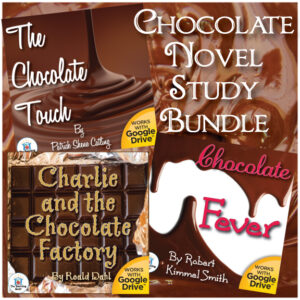
You could also create a fun chocolate-themed reading unit by pairing The Chocolate Touch with books such as Chocolate Fever and Charlie and the Chocolate Factory.
Make Teaching The Chocolate Touch Easier
If you’re looking for The Chocolate Touch activities, comprehension questions, vocabulary, assessments, and writing activities to go along with the book, I’ve created a complete The Chocolate Touch novel study designed to save teachers time.
The resource includes:
Chapter-by-chapter comprehension
Vocabulary activities
Writing and extension activities
Assessments
Teacher lesson plans and answer keys
Printable and digital materials
It’s designed for approximately two weeks of instruction and can be used with 3rd, 4th, or 5th grade students.
A FREE PREVIEW is available so you can see exactly what is included before purchasing.
🍫 Get the Complete The Chocolate Touch Novel Study
Instead of spending your time searching for individual The Chocolate Touch worksheets and activities, you can have a complete novel unit ready to use.
A Sweet Addition to Your ELA Curriculum
The Chocolate Touch is more than just a fun story about chocolate. It gives students opportunities to practice important reading comprehension, vocabulary, writing, character analysis, and critical-thinking skills while exploring themes they can connect to their own lives.
If you’re planning a The Chocolate Touch novel study for grades 3–5, this engaging classic can be a great addition to your upper-elementary reading curriculum.
Try a chocolate theme by incorporating The Chocolate Touch along with Chocolate Fever and Charlie and the Chocolate Factory!
Are you teaching The Chocolate Touch this school year?
Join our free community, Book Talk with The Teaching Bank, to share ideas, grab freebies, and connect with 3rd–8th grade teachers using novels in the classroom!
*The Teaching Bank participates in the Amazon Associate Program and earns a fee from qualifying purchases made on the Amazon.com site.





 Connect with Fellow Educators!