Teaching the Holocaust to middle school students is difficult—but powerful literature can help students understand history in a deeply personal way.
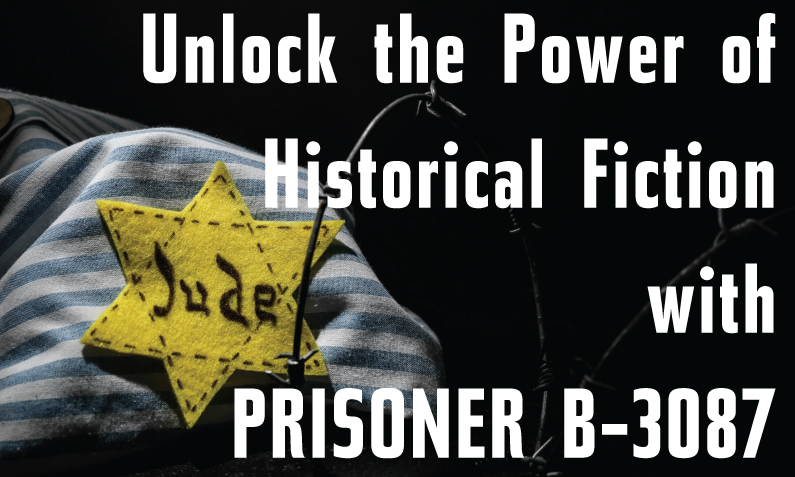
Prisoner B-3087 by Alan Gratz is an especially compelling choice for a 5th–8th grade historical fiction novel study. Based on the true experiences of Holocaust survivor Jack Gruener, the novel follows Yanek, a young Jewish boy in Poland whose life is transformed by the Nazi occupation.
Through Yanek’s story, students encounter history not simply as dates and facts, but through the experiences of a child who faces unimaginable hardship, loss, fear, and uncertainty.
For teachers looking for a Holocaust novel study, World War II literature unit, or meaningful historical fiction book for middle school ELA, Prisoner B-3087 offers rich opportunities for reading comprehension, critical thinking, historical understanding, and discussions about empathy, resilience, and human rights.
Watch a video of Alan Gratz speaking with the real Jack (Yanek) Gruener HERE!
We earn a commission if you make a purchase, at no additional cost to you.
Why Teach Prisoner B-3087 in the Classroom?
Prisoner B-3087 provides much more than an engaging story. It creates opportunities for students to connect literature, history, social studies, and real-world issues while developing important reading and thinking skills.
1. Build Historical Understanding
Students can sometimes struggle to understand the enormity of historical events such as the Holocaust. Textbooks and timelines provide important information, but a novel can help students understand history from an individual perspective.
Following Yanek’s experiences allows students to see how the Holocaust affected an actual child and his family.
Throughout the novel, Yanek is forced to navigate increasingly dangerous circumstances and multiple concentration camps. His experiences help students understand the human impact of the Holocaust and World War II in a way that statistics alone cannot.
This makes Prisoner B-3087 an excellent addition to a World War II or Holocaust unit.
2. Develop Empathy and Compassion
Historical fiction allows students to step into the experiences of someone whose life may be very different from their own.
As students follow Yanek’s journey, they can consider questions such as:
What does it mean to survive when you have almost no control over your circumstances?
How do people maintain hope during unimaginable hardship?
What choices do people make when faced with fear and uncertainty?
How can ordinary people respond when others are being mistreated?
What can we learn from the experiences of Holocaust survivors?
These discussions can lead naturally into lessons about empathy, tolerance, prejudice, discrimination, human rights, and compassion.
3. Encourage Critical Thinking
A strong novel study should do more than ask students to recall what happened in each chapter.
Prisoner B-3087 gives students opportunities to analyze characters, examine themes, interpret events, make inferences, and support their ideas with evidence from the text.
Students can explore themes such as:
Resilience
Perseverance
Hope
Survival
Family
Friendship
Courage
Prejudice
Human dignity
The consequences of hatred
These themes provide excellent opportunities for higher-order thinking, literary analysis, and evidence-based writing.
4. Explore Resilience and Perseverance
One of the most powerful aspects of Yanek’s story is his determination to survive.
Despite losing so much, Yanek continues to persevere.
This creates an authentic opportunity to discuss resilience and perseverance with students—not as abstract character traits, but as qualities demonstrated by a real person in extraordinary circumstances.
Students can analyze the choices Yanek makes and consider what allows him to continue moving forward despite the obstacles he faces.
Connect Literature to Informational Text
One of the most valuable ways to teach historical fiction is to pair the novel with nonfiction reading.
When students learn about the historical events, people, and places referenced in a novel, they develop a deeper understanding of both the story and its historical context.
A Prisoner B-3087 novel study can be paired with informational texts about:
Kraków, Poland, from 1939–1942
Plaszów Concentration Camp
Amon Goeth
The Wieliczka Salt Mine
Trzebinia Concentration Camp
Birkenau
Auschwitz
The Death Marches of 1945
Sachsenhausen
Bergen-Belsen
Buchenwald
Gross-Rosen
Dachau
Post-war Munich
The Orphaned Jewish Visa Program
Oskar Schindler and Schindler’s List
These connections allow students to practice reading informational text while building historical background knowledge.
They also provide an excellent opportunity to compare what students learn from fictionalized storytelling with information presented in nonfiction sources.
Turn Prisoner B-3087 Into a Complete Novel Study
If you’re planning to teach Prisoner B-3087 as a whole-class novel, small-group book study, literature circle, or independent reading assignment, you don’t have to create every activity yourself.
The resource is designed for grades 5–8 and includes both printable PDF materials and digital Google Drive™ resources, making it flexible enough for traditional, paperless, and blended classrooms.
What’s Included in the Prisoner B-3087 Novel Unit?
The complete novel study includes:
Daily lesson plans
Pacing and standards guide
Chapter/section guide
Chapter-by-chapter comprehension questions
Vocabulary activities
Grammar activities
Spelling
Writing activities
Critical-thinking questions
Nonfiction reading passages
Historical background information
Assessments
Digital self-grading quizzes
Answer keys
Vocabulary word wall cards
Parent letter
Common Core ELA alignment
Printable student materials
Digital Google Drive™ materials
Instead of spending hours searching for Prisoner B-3087 comprehension questions, vocabulary activities, writing prompts, nonfiction passages, and assessments, you can have your complete novel unit ready to teach.
Make Your Prisoner B-3087 Unit More Than a Reading Assignment
A powerful novel study should help students do more than finish a book.
It should encourage them to read closely, ask questions, make connections, think critically, understand historical context, and reflect on what they have learned.
Prisoner B-3087 provides an excellent foundation for that kind of learning.
Students can connect ELA skills to social studies while exploring a significant period in history. They can analyze characters and themes while developing empathy. They can practice citing textual evidence while considering complex moral and ethical questions.
Most importantly, Yanek’s story can help students understand that history is made up of real people—with families, hopes, fears, dreams, and lives that were forever changed by the events around them.
Try a free sample of the novel study for Prisoner B-3087
Ready to Teach Prisoner B-3087?
If you’re looking for a no-prep Prisoner B-3087 novel study for grades 5–8, this complete unit is designed to save you planning time while providing meaningful ELA and historical learning opportunities.
Use it for a whole-class novel, small-group instruction, literature circles, reading intervention, homeschool, or independent study.
Connect with Fellow Educators!
Are you teaching Prisoner B-3087 this school year?
Join our free community, Book Talk with The Teaching Bank, to share ideas, grab freebies, and connect with 3rd–8th grade teachers using novels in the classroom!
*The Teaching Bank participates in the Amazon Associate Program and earns a fee from qualifying purchases made on the Amazon.com site.
Number the Stars by Lois Lowry is a powerful historical fiction novel that gives upper-elementary and middle-grade students an opportunity to explore courage, friendship, resistance, empathy, and standing up against injustice.
Set in Denmark during World War II, the novel follows Annemarie Johansen and her family as they help their Jewish friends escape the Nazi occupation. Through Annemarie’s eyes, students encounter a difficult period in history while experiencing a story that is accessible, engaging, and filled with opportunities for meaningful discussion.
If you’re planning a Number the Stars novel study for your 4th, 5th, or 6th grade students, this guide will give you ideas for connecting the novel to reading comprehension, vocabulary, critical thinking, history, and social-emotional learning.
We earn a commission if you make a purchase, at no additional cost to you.
Why Teach Number the Stars?
One of the greatest strengths of Number the Stars is that it allows students to encounter history through the experiences of a child.
Rather than simply reading facts about World War II, students follow Annemarie as she begins to understand what is happening around her. This creates natural opportunities to discuss questions such as:
What does it mean to be courageous?
Why do people sometimes have to make difficult choices?
How can ordinary people respond when others are being treated unfairly?
What makes someone a good friend?
How do fear and courage influence the decisions people make?
Why is it important to learn about difficult moments in history?
These questions can move students beyond simple recall and toward deeper reading comprehension and critical thinking.
Teaching Historical Fiction Through Number the Stars
Number the Stars works particularly well as a historical fiction novel because students can examine both the story and the historical context surrounding it.
As students read, encourage them to distinguish between what is happening in the fictional story and what they can learn about the real historical events that inspired it.
You can explore:
World War II
Nazi-occupied Denmark
The Danish Resistance
The rescue of Danish Jews
The Holocaust
Geography of Denmark and Sweden
Courage and resistance
Friendship and loyalty
Prejudice and discrimination
Human rights
This makes Number the Stars an excellent choice for connecting ELA and social studies.
Number the Stars Reading Comprehension
A novel study shouldn’t turn a great book into a stack of worksheets.
The goal is to help students think more deeply about what they’re reading while still allowing them to become immersed in the story.
When teaching Number the Stars, comprehension questions can focus on:
Character motivations
Making inferences
Cause and effect
Predicting
Making connections
Identifying themes
Using text evidence
Analyzing character development
Understanding historical context
I recommend using a small number of thoughtful questions rather than overwhelming students with questions after every few pages.
The questions should encourage students to explain why they think something happened—not simply identify what happened.
Vocabulary and Grammar in Context
Number the Stars also provides an excellent opportunity to teach vocabulary in context.
Instead of giving students a long list of unrelated vocabulary words, have them encounter words as they appear within the story.
Students can:
Determine meaning from context
Identify parts of speech
Use new words in sentences
Practice spelling
Explore synonyms and related words
Apply vocabulary through writing
This approach allows vocabulary instruction to become part of the reading experience rather than something completely separate from the novel.
The unit can be used with a whole class, small reading group, homeschool student, or independent reader. It includes both printable materials and digital resources for Google Drive.
What’s Included?
The complete Number the Stars Novel Study includes:
Teacher Resources
Detailed daily lesson plans
Pacing and Standards Guide
Chapter/Section Guide
Vocabulary Word Wall Cards
Answer Keys
Parent Letter
Student Resources
Spelling list
Vocabulary activities
Grammar activities
Chapter-by-chapter comprehension questions
Short-answer questions designed to encourage deeper thinking
Book-related extension activities
End-of-book activities
Story Elements Interactive Notebook activities
Assessment Resources
Part 1 assessment covering Chapters 1–6
Part 2 assessment covering Chapters 7–end
Vocabulary questions
Comprehension questions
Essay questions
Digital assessment options
The unit also includes Common Core Standards alignment for grades 4–6.
Print or Digital? You Get Both!
Today’s classrooms aren’t one-size-fits-all, so this novel study includes both printable and Google Drive-compatible formats.
Use the printable version for traditional instruction, or assign the digital activities through your classroom platform.
The digital format can be especially helpful for:
1:1 classrooms
Paperless classrooms
Students working from home
Absent students
Small-group instruction
Independent work
The assessments also include digital options, with multiple-choice Google Forms quizzes available for self-grading.
Save Time With a Ready-to-Teach Novel Unit
Teaching an entire novel is rewarding, but the planning can be time-consuming.
This Number the Stars novel unit was created to give you a complete framework so you don’t have to create every comprehension question, vocabulary activity, lesson plan, and assessment yourself.
It is designed to be low-prep and ready to teach, while still giving you flexibility to adjust the pacing and activities for your students.
You can purchase this novel study at the following locations:
💬 Connect with Fellow Educators!
Are you teaching Number the Stars this school year? How do you celebrate kindness in your classroom?
Join our free community, Book Talk with The Teaching Bank, to share ideas, grab freebies, and connect with 3rd–8th grade teachers using novels in the classroom!
*The Teaching Bank participates in the Amazon Associate Program and earns a fee from qualifying purchases made on the Amazon.com site.
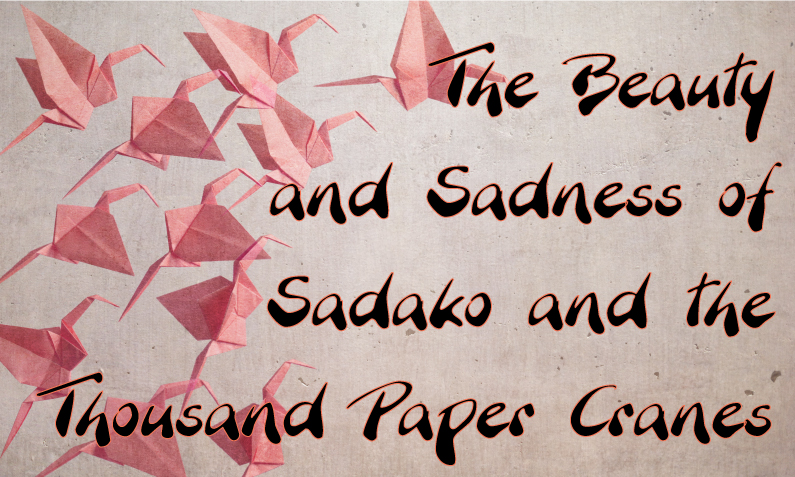
Sadako and the Thousand Paper Cranes by Eleanor Coerr is a book that has been widely used in classrooms around the world. It is a story that teaches children about the horrors of war and the importance of peace.
We earn a commission if you make a purchase, at no additional cost to you.
There are also many reasons you should use Sadako and the Thousand Paper Cranes in your classroom.
Sadako and the Thousand Paper Cranes is a classic: Sadako and the Thousand Paper Cranes was first published in 1977 and has since become a classic children’s book. It has been translated into many languages and has been read by children all over the world. By using this book in your classroom, you are exposing your students to a classic piece of literature that has stood the test of time.
Sadako and the Thousand Paper Cranes help teach important life lessons: Sadako and the Thousand Paper Cranes teach children about the importance of perseverance, determination, and hope. It also shows the devastating effects of war and the importance of peace. These are important life lessons that will stay with your students long after they leave your classroom.
Sadako and the Thousand Paper Cranes promotes creativity: The book is centered around the Japanese tradition of folding paper cranes. By using this book in your classroom, you can encourage your students to be creative and explore different art forms. You can also use it as an opportunity to teach them about Japanese culture.
Using Sadako and the Thousand Paper Cranes is a great way to teach about history: Sadako and the Thousand Paper Cranes takes place in Japan in the aftermath of the atomic bombing of Hiroshima. By using this book in your classroom, you can teach your students about this important event in history and the impact it had on the world.
Sadako and the Thousand Paper Cranes can be used to teach language skills: The book is written in English, but it also includes Japanese words and phrases. This can be a great opportunity to introduce your students to other languages and cultures. You can also use the book to teach them new vocabulary words and grammar concepts.
Try a free sample of the novel study for Sadako and the Thousand Paper Cranes
Sadako and the Thousand Paper Cranes is an inspiring story of friendship, empathy, and perseverance despite facing the greatest odds, and is a great tie to History. Using this novel in your classroom can provide many benefits to your students.
I offer a complete novel study to accompany Sadako and the Thousand Paper Cranes for use in the classroom or homeschool. The unit includes both a printable format and a Google Drive™ format for use in a paperless classroom or with Google Classroom.
You can purchase this novel study at the following locations:
Are you interested in reading about and sharing ideas with other educators on using children’s literature in your classroom? My goal is to bring together teachers and homeschoolers who teach grades 3-8 and use novels with their students. I’d love for you to join me to learn, share, and grow together!
Looking for a historical fiction novel that will grab your students’ attention while giving you plenty of opportunities to teach reading skills and history?
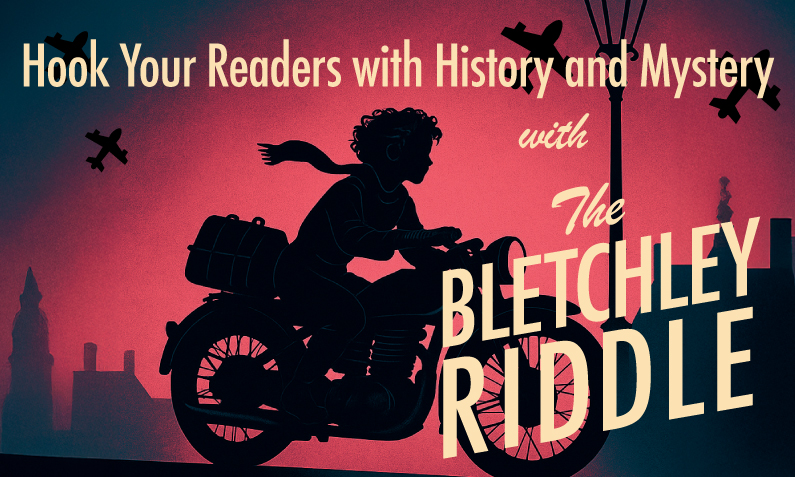
The Bletchley Riddle by Ruta Sepetys and Steve Sheinkin is an excellent choice for a middle school or upper elementary novel study. With mystery, secret codes, World War II history, family secrets, and plenty of suspense, this novel gives students a reason to keep turning the pages.
Even better, The Bletchley Riddle provides natural opportunities to teach reading comprehension, vocabulary, inference, critical thinking, nonfiction reading, writing, and historical connections.
If you’re looking for a book that combines ELA and social studies, this one deserves a place on your reading list!
We earn a commission if you make a purchase, at no additional cost to you.
What Is The Bletchley Riddle About?
The Bletchley Riddle takes readers into the world of Bletchley Park, the top-secret British site where codebreakers worked during World War II to decipher enemy communications.
The story follows siblings Lizzie and Jakob, who become caught up in a mystery involving their family, secrets from the past, and the world of wartime codebreaking.
The combination of historical fiction and mystery makes the novel especially appealing to students who might not automatically reach for a traditional historical novel.
Instead of simply reading about World War II, students get to experience history through a suspenseful story filled with clues, puzzles, secrets, and questions.
And that makes this book particularly useful in the classroom.
Why The Bletchley Riddle Works So Well as a Classroom Novel
1. The Mystery Hooks Readers
One of the biggest challenges when choosing a class novel is finding something that students actually want to read.
The Bletchley Riddle has an advantage right from the beginning: students have questions they want answered.
What is really happening?
Who can be trusted?
What do the clues mean?
How are the characters connected to the secrets of the past?
As students work their way through the story, they are constantly encouraged to make predictions, look for clues, and revise their thinking.
That makes the novel a natural fit for teaching inference, prediction, drawing conclusions, and using textual evidence.
Instead of asking students to read closely simply because the teacher told them to, you can give them a mystery to solve.
2. It Brings World War II History to Life
World War II can sometimes feel distant to young readers.
Dates, battles, political events, and historical figures can be difficult for students to connect with.
The Bletchley Riddle offers a different approach.
Students encounter the secret world of Bletchley Park and the people who worked there to break enemy codes through a fictional story.
This creates opportunities to investigate topics such as:
Bletchley Park
The Enigma code
World War II codebreaking
Alan Turing
The Polish mathematicians who helped lay the groundwork for breaking Enigma
The role of women at Bletchley Park
Intelligence and espionage during WWII
The impact of technology on warfare
These topics can easily become research projects, nonfiction reading lessons, discussion topics, or cross-curricular activities.
Most importantly, students begin to see that history isn’t simply a collection of facts to memorize.
History is made up of real people facing difficult choices and extraordinary circumstances.
3. It’s Perfect for Teaching Inference and Critical Thinking
Mysteries are wonderful vehicles for teaching critical thinking because readers can’t simply wait for someone to explain everything.
They have to figure things out.
As students read The Bletchley Riddle, they can practice:
Making predictions
Drawing inferences
Identifying clues
Using text evidence
Recognizing foreshadowing
Making connections
Drawing conclusions
Analyzing character motivations
Revising predictions when new information is revealed
You can even turn students into codebreakers themselves.
Have students create their own secret messages, investigate simple ciphers, or develop a series of clues for their classmates to solve.
Suddenly, reading comprehension becomes part of a mystery-solving experience.
4. The Historical Connections Create Great Discussion
Another strength of The Bletchley Riddle is the number of topics it can bring into classroom conversations.
Students can explore questions such as:
What does it mean to be brave?
When is it acceptable to break a rule?
Can keeping a secret ever be the right thing to do?
How does the past affect the present?
How much should we trust the information we are given?
What sacrifices were people willing to make during wartime?
These questions encourage students to move beyond simple recall and engage in meaningful discussion about character, choices, courage, loyalty, trust, family, and truth.
5. It Offers Excellent Cross-Curricular Opportunities
Although The Bletchley Riddle works beautifully as an ELA novel study, don’t limit it to reading class.
This novel can connect naturally to several subject areas.
Social Studies
Use the novel as a springboard for studying:
World War II
The British home front
Intelligence operations
Bletchley Park
Women in World War II
The Enigma machine
Codebreaking
STEM and Technology
Students can explore:
Cryptography
Codes and ciphers
Encryption
Early computing
Problem-solving
The development of technology during wartime
Writing
Students can write:
Historical responses
Character analyses
Opinion pieces
Text-based responses
Creative stories
Research reports
Reflections about the novel’s themes
This makes The Bletchley Riddle a great choice for teachers looking for a novel that can support learning across the curriculum.
6. It Can Engage Reluctant Readers
Not every student loves historical fiction.
Some students see a book set during World War II and immediately assume it will be difficult or boring.
The mystery changes that equation.
The combination of adventure, secrets, puzzles, codes, family relationships, and historical events gives students multiple entry points into the story.
Students who enjoy mysteries have the mystery.
Students interested in history have the historical setting.
Students who enjoy puzzles have the codes and clues.
And students who enjoy character-driven stories have the relationships and family connections.
That’s one reason The Bletchley Riddle can work so well with a diverse group of readers.
Make The Bletchley Riddle Easier to Teach
If you’re planning to use The Bletchley Riddle as a class novel, you don’t have to spend hours creating chapter questions, vocabulary activities, writing prompts, nonfiction passages, and assessments.
I’ve created a complete The Bletchley Riddle Novel Study for Grades 5–8 designed to make teaching the novel as easy as possible.
The resource includes 285+ pages of printable materials, along with digital resources for a paperless classroom.
Students can work on:
Chapter-by-chapter reading comprehension
Vocabulary
Grammar
Writing
Critical thinking
Text evidence
Nonfiction reading
Historical connections
End-of-book activities
Story elements
The unit also includes Common Core standards alignment, teacher resources, answer keys, assessments, and digital Google Drive™ materials.
Explore the History Behind the Story
One of my favorite parts of this novel study is the collection of nonfiction reading passages that allow students to dig deeper into the real history behind the novel.
Students learn about:
Black Saturday
The Bletchley Park Code and Cipher School
The Men of Bletchley Park
The Women of Bletchley Park
Tyler Kent
The Polish Codebreakers
These passages give you an easy way to incorporate informational text and historical research into your novel study while helping students understand the real-world events that inspired the story.
A No-Prep Bletchley Riddle Novel Study for Grades 5–8
If you’re ready to bring mystery, history, and codebreaking into your classroom, The Bletchley Riddle is a fantastic novel to consider.
It’s an engaging choice for:
Upper elementary ELA
Middle school ELA
World War II units
Historical fiction units
Literature circles
Whole-class novel studies
Small-group reading
Independent reading
Homeschool
Cross-curricular ELA and social studies instruction
And with a ready-to-use novel study, you can spend less time creating materials and more time helping your students read, question, investigate, and think deeply about the story.
Ready to turn your students into codebreakers?
Try a free sample of the novel study for The Bletchley Riddle
Bring the mystery of Bletchley Park into your classroom and give your students a historical fiction experience they’ll want to keep reading.
You can purchase this novel study at the following locations:
💬 Connect with Fellow Educators!
Are you teaching The Bletchley Riddle this school year? How do you celebrate kindness in your classroom?
Join our free community, Book Talk with The Teaching Bank, to share ideas, grab freebies, and connect with 3rd–8th grade teachers using novels in the classroom!
*The Teaching Bank participates in the Amazon Associate Program and earns a fee from qualifying purchases made on the Amazon.com site.
I’m Shelley from The Teaching Bank. I have taught 3rd, 4th, and 6th grades.
My goal is to provide lessons and units for K-12 that are practical and ready to teach with minimal prep needed.





 Connect with Fellow Educators!