The reality of educational research is this: if you look hard enough, you can find support for almost any teaching strategy. Rarely is there a clear-cut answer about what works best. In most cases, effective teaching comes down to a teacher’s professional judgment, their students’ needs, and the flexibility they are given in the classroom.
Unfortunately, in today’s test-driven educational climate, teachers are often given less freedom than ever before. Rigid curriculum guidelines and scripted programs can make it difficult to adapt instruction, leaving little room for meaningful engagement or enrichment.
My Experience Using Novel Studies in the Classroom
I experienced this challenge firsthand while teaching 4th grade in a high-poverty, low-performing school. Many of my students entered my classroom reading at a 1st–2nd grade level, and very few were on grade level.
The biggest obstacle wasn’t just skill; it was motivation.
Our district relied heavily on a basal reading program that felt unrelatable and uninspiring to students. The stories lacked emotional connection, and students saw reading as a chore rather than something enjoyable or rewarding.
I knew something had to change.
How Read-Alouds Spark a Love of Reading
I started small by implementing a daily read-aloud time. My goal wasn’t rigorous analysis; I simply wanted students to enjoy a story.
This shift made a huge difference.
Upper elementary students are often overlooked when it comes to being read to, yet they benefit tremendously from it. By choosing high-interest, often humorous books, I was able to create a positive reading experience. Soon, read-aloud became one of the most anticipated parts of our day.
Why Novel Studies Work Better Than Basal Readers
Once I saw the impact of read-alouds, I began incorporating novel studies alongside our required curriculum.
Instead of limiting students to short excerpts, I introduced full novels connected to the themes in our basal program. The results were immediate and powerful:
Students reading below grade level began attempting more challenging texts
Engagement and participation increased dramatically
Discussions became deeper and more meaningful
Students started choosing to read independently
It became clear that reading an entire book provides a richer, more rewarding experience than isolated passages.
Improved Critical Thinking Through Deeper Reading
One of the biggest advantages of novel studies is the ability to promote higher-order thinking.
With a full-length text, students can:
Analyze character development
Explore complex themes
Make predictions and connections
Engage in meaningful discussions
Using Bloom’s Taxonomy becomes far more natural when students are immersed in a complete story rather than a short excerpt.
Building Real-World Connections and Empathy
Perhaps the most powerful benefit of novel studies is their ability to build empathy and awareness.
Through literature, students can explore real-world issues in a meaningful and age-appropriate way. For example:
These stories stay with students far longer than any worksheet ever could.
Do Novel Studies Improve Test Scores?
While I didn’t conduct formal research, I can confidently say this: My students’ test scores did not decline, and their love of reading increased significantly.
And that matters.
Because when students enjoy reading, they read more. And when they read more, their skills naturally improve.
Key Benefits of Using Novel Studies in the Classroom
Incorporating novel studies into your curriculum offers numerous advantages:
Improved Reading Skills: Students build comprehension, vocabulary, and fluency through sustained reading.
Increased Student Engagement: Novels capture interest and create emotional investment in learning.
Stronger Critical Thinking Skills: Students analyze, infer, and evaluate as they explore complex texts.
Enhanced Writing and Communication: Discussions and written responses deepen understanding and expression.
Greater Cultural Awareness: Literature exposes students to diverse perspectives and experiences.
Development of Empathy: Students connect with characters and better understand others’ experiences.
Encouragement of Independent Reading: Engaged students are more likely to read on their own.
Final Thoughts: Why Novel Studies Matter
Using novel studies in the classroom is one of the most effective ways to transform reading instruction.
While standardized programs may check boxes, novels create meaningful learning experiences. They engage students, deepen understanding, and foster a lifelong love of reading.
And ultimately, that’s what great teaching is all about.
Are you interested in reading about and sharing ideas with other educators on using children’s literature in your classroom? My goal is to bring together teachers and homeschoolers who teach grades 3-8 and use novels with their students. I’d love for you to join me to learn, share, and grow together!
Looking for a The One and Only Bob novel study that will keep your students engaged while building important reading and ELA skills? Katherine Applegate’s The One and Only Bob is an excellent choice for upper elementary and middle school readers.
A sequel to the beloved The One and Only Ivan, The One and Only Bob gives readers the opportunity to see the story through the eyes of Bob, Ivan’s loyal and hilarious stray-dog friend. While Bob brings plenty of humor to the story, his journey also explores meaningful themes of friendship, courage, empathy, resilience, trust, belonging, and discovering who you are.
Take a look at this book trailer from Katherine Applegate’s YouTube Channel:
That combination of humor and heart makes The One and Only Bob a wonderful choice for a 4th grade, 5th grade, or 6th grade novel study.
And if you’re looking for a ready-to-use The One and Only Bob book unit, I’ve created a comprehensive novel study with printable and digital activities to make teaching the novel easier.
We earn a commission if you make a purchase, at no additional cost to you.
📚 Why Teach The One and Only Bob?
One of the best things about The One and Only Bob is that students can connect with Bob even though he is a dog.
Bob is funny, independent, loyal, and sometimes convinced that he needs to handle everything on his own. As students follow his journey, they are naturally encouraged to think about questions that apply to their own lives:
What does it mean to be brave?
Is asking for help a sign of weakness?
Who can we trust?
Where do we belong?
How do our friendships shape us?
What does it mean to accept ourselves?
How can we show empathy toward others?
What does resilience look like when things go wrong?
These questions make the novel much more than an entertaining story about a dog. They provide opportunities for meaningful reading comprehension, discussion, writing, character analysis, and critical thinking.
🐶 A Sequel to The One and Only Ivan
If your students enjoyed The One and Only Ivan, The One and Only Bob is a natural follow-up.
While Ivan’s story focuses heavily on his experiences and his search for freedom and connection, Bob’s story gives readers another perspective on the characters and world they already know.
Reading the two novels together creates excellent opportunities to compare and contrast:
Character development
Narrators and point of view
Plot and conflict
Themes
Relationships between characters
How different characters respond to challenges
Similarities and differences between Bob and Ivan
You can even use the two books as a paired novel study or literature-circle experience.
❤️ Themes in The One and Only Bob
There are many meaningful themes to explore during a The One and Only Bob novel unit.
Friendship
Bob’s relationships with other characters provide plenty of opportunities to discuss what makes a true friend. Students can examine how characters support one another and how friendships change throughout the story.
Courage and Resilience
Bob encounters difficult situations that require him to be brave. Students can explore the difference between being fearless and being courageous and identify examples of resilience throughout the novel.
Empathy
The story encourages students to consider experiences from perspectives different from their own. This makes The One and Only Bob particularly useful for discussions about empathy, compassion, and understanding others.
Trust
One of the most interesting questions raised by Bob’s journey is whether it is safe to trust others. Students can examine how Bob’s experiences influence his willingness to depend on other characters.
Belonging and Identity
Bob is trying to figure out where he belongs and who he can depend on. These are relatable questions for young readers who are also developing their identities and discovering where they fit within their families, friendships, and communities.
Loss and Personal Growth
The novel also creates opportunities for thoughtful conversations about loss, change, and growing through difficult experiences.
🔎 The One and Only Bob Reading Comprehension Activities
Because the novel contains so many character, plot, and thematic elements, it provides countless opportunities for reading comprehension activities.
Students can practice:
Making inferences
Identifying theme
Determining character traits
Analyzing character development
Summarizing chapters
Identifying conflict
Examining point of view
Using text evidence
Making predictions
Comparing characters
Determining the meaning of vocabulary in context
Responding to literature
Supporting ideas with evidence
Rather than simply asking students to remember what happened, use the novel to encourage them to think deeply about why characters behave the way they do and what they learn from their experiences.
✏️ Vocabulary and Grammar Connections
A novel study is also an excellent way to incorporate vocabulary and grammar instruction into authentic reading.
Students can encounter unfamiliar words within the context of the story and use context clues to determine meaning. Vocabulary instruction can then be connected to writing and discussion activities.
Grammar activities can likewise be connected to the novel instead of taught as isolated skills.
This makes it easier for students to see how the skills they’re learning are actually used by authors and readers.
📝 Writing Activities for The One and Only Bob
The themes in The One and Only Bob lend themselves beautifully to writing.
Consider asking students questions such as:
What makes someone courageous?
Should Bob have tried to handle his problems on his own?
What does Bob learn about friendship?
How does Bob change throughout the story?
What does the novel teach readers about empathy?
Why is belonging important?
Which character demonstrates the greatest resilience? Support your answer with evidence from the text.
These types of questions turn reading into an opportunity for evidence-based writing and literary analysis.
🌎 Cross-Curricular Connections
The One and Only Bob can also extend beyond the ELA classroom.
Science
The animal characters provide opportunities to investigate topics such as animal behavior, animal adaptations, service animals, and the relationships between humans and animals.
Geography
Students can explore the settings in the novel and connect the story to geography activities.
Art
Students can create artwork inspired by the characters, settings, or themes of the novel.
Social-Emotional Learning
The novel’s focus on friendship, empathy, courage, trust, resilience, and belonging creates natural opportunities for social-emotional learning conversations.
⭐ Make Teaching The One and Only Bob Easier With a Complete Novel Study
If you love the idea of teaching The One and Only Bob but don’t have time to create all of the lesson plans, comprehension questions, vocabulary activities, writing activities, grammar practice, and assessments yourself, I’ve done the preparation for you!
With everything organized in one resource, you can spend less time preparing and more time helping your students engage with the novel.
💻 Printable AND Digital Options
Today’s classrooms need flexibility, so this The One and Only Bob novel unit includes both printable and digital formats.
Use the printable materials for traditional classroom instruction, or assign the digital activities through Google Drive for students working independently or learning remotely.
Not sure if this novel study is right for your students?
Try the free preview first! You’ll be able to see sample pages and get a feel for the different components included in the complete resource.
A ready-to-use The One and Only Bob novel study can take a tremendous amount of preparation off your plate while giving your students meaningful opportunities to practice reading and ELA skills.
🐾 Bring Bob’s Story Into Your Classroom
The One and Only Bob is funny, heartwarming, and thought-provoking. Bob’s journey gives students plenty to laugh about while also encouraging them to think about friendship, empathy, resilience, courage, trust, identity, and belonging.
Whether you’re teaching The One and Only Bob as a stand-alone novel or pairing it with The One and Only Ivan, this story offers rich opportunities for reading comprehension, vocabulary, writing, character analysis, discussion, and critical thinking.
And with a complete The One and Only Bob novel study, you don’t have to spend your evenings creating all of those activities yourself.
Make your The One and Only Bob unit easier, more engaging, and ready to teach!
Connect with Fellow Educators!
Are you teaching Wonder this school year? How do you celebrate kindness in your classroom?
Join our free community, Book Talk with The Teaching Bank, to share ideas, grab freebies, and connect with 3rd–8th grade teachers using novels in the classroom!
*The Teaching Bank participates in the Amazon Associate Program and earns a fee from qualifying purchases made on the Amazon.com site.
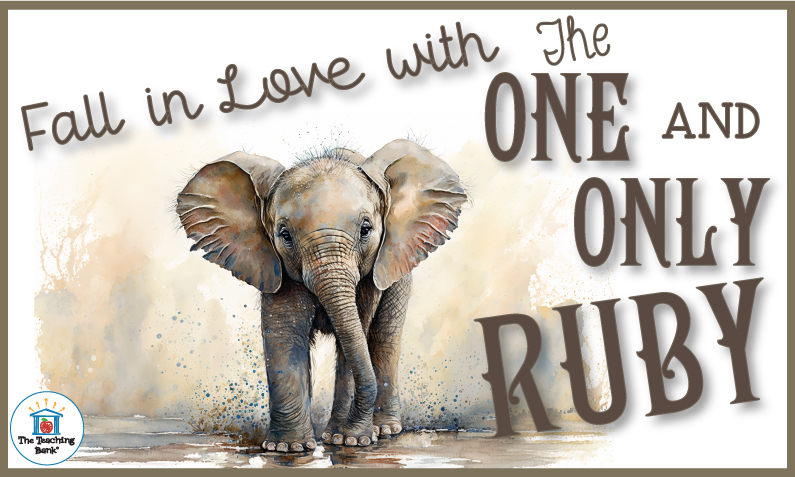
f you’re looking for a high-interest novel that will engage upper elementary readers while providing meaningful opportunities for reading comprehension, discussion, writing, and critical thinking, add The One and Only Ruby by Katherine Applegate to your classroom reading list.
As the final book in the beloved One and Only trilogy, The One and Only Ruby allows students to reconnect with familiar characters while learning more about Ruby, the young elephant whose story began in The One and Only Ivan.
Ruby’s journey is filled with friendship, courage, family, belonging, and resilience. It also gives teachers plenty of opportunities to spark thoughtful conversations and connect literature to real-world topics such as animal welfare, conservation, empathy, and human responsibility.
We earn a commission if you make a purchase, at no additional cost to you.
Why Teach The One and Only Ruby?
Katherine Applegate has created a story that is both accessible to young readers and rich enough to support deeper literary analysis. Students can enjoy Ruby’s story while exploring important themes and practicing essential ELA skills.
Here are just a few reasons The One and Only Ruby makes an excellent classroom novel.
1. It Builds Empathy and Compassion
One of the greatest strengths of The One and Only Ruby is its ability to help students see the world from another perspective.
Ruby’s experiences encourage readers to think about what it means to be separated from home, experience change, form relationships, and find a place where you belong.
These experiences create natural opportunities to discuss empathy, compassion, kindness, and caring for others.
Try asking your students:
How do Ruby’s experiences shape the way she sees the world?
How do other characters demonstrate compassion?
What does it mean to understand someone else’s feelings?
How can we show empathy in our own classroom?
These conversations can extend beyond the novel and help students make meaningful connections to their own lives.
2. The Themes Encourage Meaningful Discussion
The One and Only Ruby is much more than an entertaining animal story. It provides opportunities to explore several universal themes that students can connect to.
Some important themes include:
Friendship
Belonging
Courage
Facing your fears
Family
Growing up
Change
Empathy
Resilience
Finding your place
These themes make the novel especially effective for whole-class novel studies, literature circles, reading groups, and independent reading.
Students can support their ideas with evidence from the text while learning that a story can have multiple meaningful interpretations.
3. It Encourages Critical Thinking
A great novel study should do more than ask students to remember what happened in each chapter.
The One and Only Ruby provides opportunities for students to infer, analyze, predict, explain, compare, and support their thinking with text evidence.
Instead of simply asking, “What happened?” encourage students to ask:
Why did this happen?
How did this event affect the character?
What does this reveal about the character?
What evidence from the text supports your thinking?
How might the story have been different if a character had made a different choice?
These types of questions turn reading into an active process and help students develop stronger comprehension and critical-thinking skills.
4. It Opens the Door to Environmental and Animal Conservation Topics
Because Ruby is an elephant, the novel also provides a natural bridge between fiction and nonfiction learning.
Students can investigate topics such as:
Elephant habitats
African elephants
Animal conservation
Wildlife sanctuaries
Animal behavior
Human impact on wildlife
Captivity versus life in the wild
Protecting endangered animals
This creates an excellent opportunity for cross-curricular learning.
After reading about Ruby’s experiences, students can research a related topic and use information from nonfiction sources to expand their understanding.
You can even have students compare what they learn from informational texts with Ruby’s fictional experiences.
5. It Supports Strong ELA Instruction
One of the biggest advantages of using a high-interest novel in the classroom is that you can teach a wide variety of ELA skills within an authentic reading experience.
The One and Only Ruby novel study can support instruction in:
Reading comprehension
Making inferences
Summarizing
Character analysis
Theme
Story elements
Vocabulary
Grammar
Text evidence
Reading response
Opinion writing
Essay writing
Critical thinking
Nonfiction reading
Literary analysis
Instead of teaching these skills in isolation, students practice them while reading a story they actually care about.
The One and Only Ruby Novel Study Ideas
If you’re planning to teach The One and Only Ruby, consider incorporating a combination of comprehension, vocabulary, writing, and discussion activities.
Character Analysis
Have students track Ruby’s development throughout the story.
Students can identify:
Ruby’s character traits
Challenges she faces
Important decisions she makes
How she changes
Relationships that influence her
Evidence that supports their thinking
A character development chart can be especially useful for helping students see how a character changes over the course of a novel.
Vocabulary Activities
Create a vocabulary list from the novel and have students use context clues to determine word meanings.
Students can then:
Define words in their own words
Identify synonyms and antonyms
Use words in original sentences
Illustrate vocabulary
Find examples of words used in context
Reading Comprehension Questions
Instead of relying only on basic recall questions, include a mixture of literal, inferential, and analytical questions.
For example:
Literal: What happened?
Inferential: Why do you think the character made that choice?
Analytical: How does this event contribute to one of the novel’s themes?
This progression helps students move from understanding the text to thinking deeply about it.
Opinion and Essay Writing
The novel also provides excellent opportunities for text-based writing.
Students can respond to questions related to animals, conservation, friendship, belonging, or decisions made by characters.
Require students to support their opinions with specific evidence from the novel.
This is a great way to combine reading comprehension and writing instruction.
Teaching The One and Only Ruby With a Complete Novel Study
If you don’t want to spend hours creating The One and Only Ruby worksheets, comprehension questions, vocabulary activities, assessments, and writing assignments, a ready-to-use novel study can save you valuable planning time.
What’s Included in the The One and Only Ruby Novel Study?
Chapter-by-chapter comprehension questions
Vocabulary activities
Grammar activities
Reading responses
Writing activities
Nonfiction reading
Opinion writing
Character and story element activities
Assessments
Answer keys
Teacher lesson plans
Common Core standards alignment
Printable PDF resources
Digital Google Slides activities
Digital Google Forms assessments
It’s designed to give you the structure of a complete novel unit without requiring you to create everything from scratch.
Try a Free Sample
Want to see what the novel study looks like before purchasing?
Download the free sample and preview the activities included in the complete unit.
Bring The One and Only Ruby Into Your Classroom
The best classroom novels are the ones that make students want to keep reading while giving teachers opportunities to teach important skills.
The One and Only Ruby does both.
Ruby’s story can lead your students into conversations about empathy, friendship, courage, belonging, conservation, and what it means to find your place in the world.
Pair the novel with thoughtful comprehension questions, vocabulary activities, writing assignments, nonfiction connections, and discussion, and you have the foundation for a rich and engaging upper elementary novel study.
If you’re ready to make teaching The One and Only Ruby easier, check out the complete The One and Only Ruby Novel Study for grades 4–6.
Less prep. More meaningful reading. More opportunities for your students to think, discuss, write, and connect.
Is The One and Only Ruby a Good Book for a Novel Study?
Absolutely!
If your students enjoyed The One and Only Ivan and The One and Only Bob, The One and Only Ruby is a natural addition to your classroom library and novel study plans.
Even students who haven’t read the earlier books can find plenty to appreciate in Ruby’s story. The novel’s themes of friendship, courage, belonging, empathy, and resilience give students opportunities to connect personally with the characters while developing important reading and writing skills.
And because the story connects naturally to animal conservation and nonfiction research, it can become the starting point for much more than a traditional book unit.
Connect with Fellow Educators!
Are you teaching The One and Only Ruby this school year?
Join our free community, Book Talk with The Teaching Bank, to share ideas, grab freebies, and connect with 3rd–8th grade teachers using novels in the classroom!
*The Teaching Bank participates in the Amazon Associate Program and earns a fee from qualifying purchases made on the Amazon.com site.
I’m Shelley from The Teaching Bank. I have taught 3rd, 4th, and 6th grades.
My goal is to provide lessons and units for K-12 that are practical and ready to teach with minimal prep needed.





 Connect with Fellow Educators!