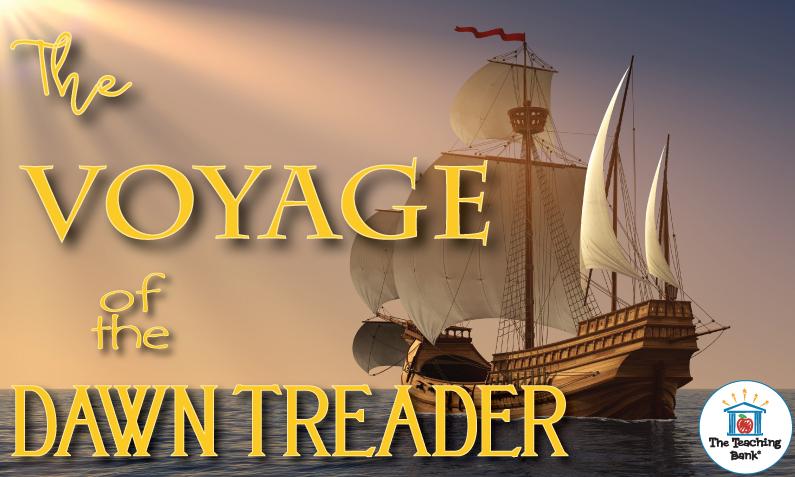
The Chronicles of Narnia series, written by C.S. Lewis, is a classic in the world of literature. The series has been widely acclaimed for its vivid imagery, unique characters, and compelling storyline. The Voyage of the Dawn Treader, which is the fifth book in the series, is no exception.
We earn a commission if you make a purchase, at no additional cost to you.
Benefits of Using The Voyage of the Dawn Treader in Your Classroom:
Enhances creativity and imagination:The Voyage of the Dawn Treader takes readers on an unforgettable journey to the magical land of Narnia. The vivid descriptions of the world and the characters allow students to use their imagination and creativity to visualize the world in their own unique way. This can help foster a love of reading and creativity in students, which can be valuable skills for future success.
Develops critical thinking and analysis skills:The Voyage of the Dawn Treader is full of complex themes and ideas that require critical thinking and analysis to fully understand. By discussing these themes in the classroom, students can develop their analytical skills and learn how to think critically about the world around them. This can be especially useful for developing problem-solving skills and decision-making abilities.
Provides a unique perspective on moral and ethical issues: One of the core themes of The Voyage of the Dawn Treader is the idea of moral and ethical behavior. The characters in the novel are faced with difficult choices and moral dilemmas, which can provide a unique perspective on these issues for students. By discussing these themes in the classroom, students can learn how to make ethical decisions and understand the consequences of their actions.
Encourages empathy and understanding: The characters in The Voyage of the Dawn Treader come from diverse backgrounds and have different experiences. By reading about these characters, students can develop empathy and understanding for people who are different from themselves. This can help foster a sense of community and inclusivity in the classroom, which can be beneficial for all students.
Provides a gateway to other literary works:The Voyage of the Dawn Treader is just one book in a larger series of novels. By introducing students to this novel, teachers can encourage students to read other books in the series or other literary works by C.S. Lewis. This can help develop a love of reading and literature in students, which can have a positive impact on their academic and personal lives.
The Voyage of the Dawn Treader is an excellent novel to use in the classroom. It provides a unique perspective on moral and ethical issues, encourages creativity and imagination, and helps develop critical thinking and analysis skills. By using this novel in the classroom, teachers can help foster a love of reading and literature in their students and provide valuable skills for future success.
I offer a complete novel study to accompany The Voyage of the Dawn Treader for use in the classroom or homeschool. The unit includes both a printable format and a Google Drive™ format for use in a paperless classroom or with Google Classroom.
Are you interested in reading about and sharing ideas with other educators on using children’s literature in your classroom? My goal is to bring together teachers and homeschoolers who teach grades 3-8 and use novels with their students. I’d love for you to join me to learn, share, and grow together!
“Everybody is a genius. But if you judge a fish by its ability to climb a tree, it will live its whole life believing that it is stupid.”
This a great quote that is often mistakingly attributed to Albert Einstein. He didn’t say this, but the quote is powerful, just the same.
This quote is the premise of the book Fish in a Treeby Lynda Mullaly Hunt. The main character is Ally, a sixth grader who hates school because she feels stupid and thinks she will never be successful. Ally has isolated herself and does not take any risks toward academic work or making friends. She feels everything is hopeless until a new teacher, Mr. Daniels, joins her class as a long-term substitute. Mr. Daniels recognizes Ally’s talents as an artist and is impressed by her “out of the box” problem-solving skills. He leads Ally to admit her fears and helps her to take risks that lead to a diagnosis of dyslexia. Mr. Daniels helps Ally build confidence and realize she’s not stupid, she just learns differently, which opens up the world academically and socially for Ally.
We earn a commission if you make a purchase, at no additional cost to you.
Fish in a Tree is a very inspirational book for all students, not just those with dyslexia. It showcases through the many different characters that everyone has talent and value, but sometimes it takes a little more work to discover! Research shows that 80-90% of all students identified as learning disabled have some degree of dyslexia. It is hypothesized that about 20% of the population is afflicted with dyslexia to some degree.
Fish in a Tree by Lynda Mullaly Hunt is a compelling novel that holds the potential to transform the classroom experience for both teachers and students alike.
Explore the numerous benefits of incorporating Fish in a Tree into your classroom:
Promotes Empathy and Understanding: Fish in a Tree delves into the life of Ally Nickerson, a brilliant young girl who struggles with dyslexia, a learning disability that challenges her academic journey. The story beautifully captures Ally’s emotions, challenges, and triumphs, allowing students to connect with her on a personal level. By immersing themselves in Ally’s world, students gain a deeper understanding of the experiences of their peers with learning differences, fostering empathy and compassion in the classroom.
Cultivates a Growth Mindset: The novel’s central theme revolves around the concept of a growth mindset. Ally initially believes she is unintelligent and unworthy due to her difficulties with reading. As the story unfolds, she discovers her strengths and begins to embrace her learning differences as a part of who she is. By following Ally’s transformation, students can grasp the importance of perseverance, determination, and embracing challenges. This growth mindset can inspire students to overcome their own obstacles and cultivate a positive attitude toward learning.
Enhances Language and Literacy Skills: Fish in a Tree is a captivating literary work that captures students’ attention with its engaging narrative and relatable characters. Utilizing this novel in the classroom provides an excellent opportunity to enhance language and literacy skills. Teachers can encourage active reading by facilitating discussions, journaling, and group activities centered around the novel’s themes, vocabulary, and writing techniques. Such activities not only improve comprehension but also encourage critical thinking and communication skills.
Encourages Diversity and Inclusivity: Lynda Mullaly Hunt artfully weaves a diverse set of characters throughout the story, each with their unique backgrounds and experiences. By exposing students to characters from diverse racial, socioeconomic, and family backgrounds, the novel fosters inclusivity and appreciation for individual differences. This exposure promotes a richer understanding of the world and encourages students to embrace diversity, both in the classroom and beyond.
Facilitates Cross-Curricular Learning: Fish in a Tree opens doors to cross-curricular learning opportunities. Teachers can integrate the novel into various subjects, such as history, science, and social studies, to explore relevant themes and historical contexts. For instance, discussions about dyslexia can be linked to lessons about famous individuals with learning differences who have made significant contributions to society, emphasizing that struggles need not define one’s potential.
Incorporating Fish in a Tree by Lynda Mullaly Hunt into the classroom setting enhances the educational experience for both teachers and students. Its powerful themes of empathy, growth mindset, and inclusivity can inspire students to develop a deeper appreciation for their peers and themselves. Through the exploration of language and literacy skills and the promotion of cross-curricular learning, this novel serves as an invaluable tool for educators to create a dynamic and enriching learning environment. Embrace the transformative power of literature and make a lasting impact on our students’ lives using Fish in a Tree.
I offer a complete novel study to accompany Fish in a Tree for use in the classroom or homeschool. The unit includes both a printable format and a Google Drive™ format for use in a paperless classroom or with Google Classroom.
Try a free sample of the novel study for Fish in a Tree
You can purchase this novel study at the following locations:
If you’re looking for a book that is for a little bit younger child dealing with Dyslexia I recommend trying out the Hank Zipzer series by Henry Winkler and Lin Oliver. The first book in the series, Niagara Falls, or Does It? is great for third graders who are struggling with learning challenges to help them know they are not alone and they are full of talent!
Are you interested in reading about and sharing ideas with other educators on using children’s literature in your classroom? My goal is to bring together teachers and homeschoolers who teach grades 3-8 and use novels with their students. I’d love for you to join me to learn, share, and grow together!
Number the Stars by Lois Lowry is a powerful historical fiction novel that gives upper-elementary and middle-grade students an opportunity to explore courage, friendship, resistance, empathy, and standing up against injustice.
Set in Denmark during World War II, the novel follows Annemarie Johansen and her family as they help their Jewish friends escape the Nazi occupation. Through Annemarie’s eyes, students encounter a difficult period in history while experiencing a story that is accessible, engaging, and filled with opportunities for meaningful discussion.
If you’re planning a Number the Stars novel study for your 4th, 5th, or 6th grade students, this guide will give you ideas for connecting the novel to reading comprehension, vocabulary, critical thinking, history, and social-emotional learning.
We earn a commission if you make a purchase, at no additional cost to you.
Why Teach Number the Stars?
One of the greatest strengths of Number the Stars is that it allows students to encounter history through the experiences of a child.
Rather than simply reading facts about World War II, students follow Annemarie as she begins to understand what is happening around her. This creates natural opportunities to discuss questions such as:
What does it mean to be courageous?
Why do people sometimes have to make difficult choices?
How can ordinary people respond when others are being treated unfairly?
What makes someone a good friend?
How do fear and courage influence the decisions people make?
Why is it important to learn about difficult moments in history?
These questions can move students beyond simple recall and toward deeper reading comprehension and critical thinking.
Teaching Historical Fiction Through Number the Stars
Number the Stars works particularly well as a historical fiction novel because students can examine both the story and the historical context surrounding it.
As students read, encourage them to distinguish between what is happening in the fictional story and what they can learn about the real historical events that inspired it.
You can explore:
World War II
Nazi-occupied Denmark
The Danish Resistance
The rescue of Danish Jews
The Holocaust
Geography of Denmark and Sweden
Courage and resistance
Friendship and loyalty
Prejudice and discrimination
Human rights
This makes Number the Stars an excellent choice for connecting ELA and social studies.
Number the Stars Reading Comprehension
A novel study shouldn’t turn a great book into a stack of worksheets.
The goal is to help students think more deeply about what they’re reading while still allowing them to become immersed in the story.
When teaching Number the Stars, comprehension questions can focus on:
Character motivations
Making inferences
Cause and effect
Predicting
Making connections
Identifying themes
Using text evidence
Analyzing character development
Understanding historical context
I recommend using a small number of thoughtful questions rather than overwhelming students with questions after every few pages.
The questions should encourage students to explain why they think something happened—not simply identify what happened.
Vocabulary and Grammar in Context
Number the Stars also provides an excellent opportunity to teach vocabulary in context.
Instead of giving students a long list of unrelated vocabulary words, have them encounter words as they appear within the story.
Students can:
Determine meaning from context
Identify parts of speech
Use new words in sentences
Practice spelling
Explore synonyms and related words
Apply vocabulary through writing
This approach allows vocabulary instruction to become part of the reading experience rather than something completely separate from the novel.
The unit can be used with a whole class, small reading group, homeschool student, or independent reader. It includes both printable materials and digital resources for Google Drive.
What’s Included?
The complete Number the Stars Novel Study includes:
Teacher Resources
Detailed daily lesson plans
Pacing and Standards Guide
Chapter/Section Guide
Vocabulary Word Wall Cards
Answer Keys
Parent Letter
Student Resources
Spelling list
Vocabulary activities
Grammar activities
Chapter-by-chapter comprehension questions
Short-answer questions designed to encourage deeper thinking
Book-related extension activities
End-of-book activities
Story Elements Interactive Notebook activities
Assessment Resources
Part 1 assessment covering Chapters 1–6
Part 2 assessment covering Chapters 7–end
Vocabulary questions
Comprehension questions
Essay questions
Digital assessment options
The unit also includes Common Core Standards alignment for grades 4–6.
Print or Digital? You Get Both!
Today’s classrooms aren’t one-size-fits-all, so this novel study includes both printable and Google Drive-compatible formats.
Use the printable version for traditional instruction, or assign the digital activities through your classroom platform.
The digital format can be especially helpful for:
1:1 classrooms
Paperless classrooms
Students working from home
Absent students
Small-group instruction
Independent work
The assessments also include digital options, with multiple-choice Google Forms quizzes available for self-grading.
Save Time With a Ready-to-Teach Novel Unit
Teaching an entire novel is rewarding, but the planning can be time-consuming.
This Number the Stars novel unit was created to give you a complete framework so you don’t have to create every comprehension question, vocabulary activity, lesson plan, and assessment yourself.
It is designed to be low-prep and ready to teach, while still giving you flexibility to adjust the pacing and activities for your students.
You can purchase this novel study at the following locations:
💬 Connect with Fellow Educators!
Are you teaching Number the Stars this school year? How do you celebrate kindness in your classroom?
Join our free community, Book Talk with The Teaching Bank, to share ideas, grab freebies, and connect with 3rd–8th grade teachers using novels in the classroom!
*The Teaching Bank participates in the Amazon Associate Program and earns a fee from qualifying purchases made on the Amazon.com site.
Genesis Begins Again by Alicia D. Williams, quite deservedly, is the winner of the 2020 Newbery Honor and the 2020 Coretta Scott King/John Steptoe Award for New Talent. This modern novel stands out for its powerful themes and relatable narrative.
We earn a commission if you make a purchase, at no additional cost to you.
Published in 2019, it is written in a modern language that middle schoolers will relate to. It is written by a Black author with a Black female protagonist and is a great way to bring diverse voices into your classroom, not just for representation, but for all students to learn from and relate to. Genesis has been dealt a hard hand in life and with her issues and those of her friends, just about every student will find something to relate to.
Benefits of Using Genesis Begins Again in Your Classroom:
Explores Diversity and Identity: Genesis Begins Again offers a poignant exploration of identity and self-acceptance, making it a valuable tool for promoting diversity and inclusion in the classroom. Through the protagonist Genesis’s journey of grappling with her skin tone and family dynamics, students are exposed to discussions on race, identity, and the impact of societal standards on self-worth.
Fosters Empathy and Understanding: The novel’s narrative intricately weaves themes of empathy and understanding, encouraging students to walk in someone else’s shoes and develop a deeper sense of compassion. By empathizing with Genesis’s challenges and triumphs, students gain valuable insights into the complexities of human emotions and experiences.
Addresses Relevant Social Issues: Genesis Begins Again tackles important social issues such as bullying, colorism, and family dynamics, providing a platform for meaningful classroom discussions on these topics. Through these discussions, students not only enhance their critical thinking skills but also gain a broader perspective on societal issues affecting diverse communities.
Promotes Resilience and Self-Discovery: Genesis’s resilience in the face of adversity serves as an inspiring example for students, encouraging them to navigate their own challenges with courage and determination. The novel’s emphasis on self-discovery and embracing one’s uniqueness empowers students to embrace their individuality and build confidence in their abilities.
Enhances Literacy and Language Skills: Genesis Begins Again is rich in literary elements and language nuances, offering ample opportunities for students to enhance their literacy skills through close reading and analysis. Engaging with the novel’s vivid imagery, symbolism, and character development enables students to sharpen their comprehension, interpretation, and communication skills.
It is vital to use literature in your classroom that is diverse and represents all voices. Students should see themselves in the literature they read, and it’s also a way for other students to learn from and understand people who are different from them. Learning from different cultures enhances our empathy as humans to open minds and hearts.
Genesis Begins Again tackles issues of poverty, being evicted and having to move homes and schools frequently, having an alcoholic and untrustworthy parent, and at the root of Genesis’s hurt is the colorism that she faces from her peers, her father, her grandmother, and most of all herself. The novel shines a light on how our American culture and media have a set image of what “beauty” is and how, all too often, most of us don’t fit that mold. Genesis Begins Again is a relatable tale of how Genesis learns to trust others and love herself for who she is instead of striving for some unattainable image that could never be. This book is worthy of all the accolades that it has received and is a valuable novel for middle school students to use in their classrooms.
I offer a complete novel study to accompany Genesis Begins Again for use in the classroom or homeschool. The unit includes printable and Google Drive™ formats for use in a paperless classroom or with Google Classroom.
Try a free sample of the novel study for Genesis Begins Again
You can purchase this novel study at the following locations:
Are you interested in reading about and sharing ideas with other educators on using children’s literature in your classroom? My goal is to bring together teachers and homeschoolers who teach grades 3-8 and use novels with their students. I’d love for you to join me to learn, share, and grow together!
If you’re looking for a funny, engaging novel to read with your elementary students, Wayside School Beneath the Cloud of Doom by Louis Sachar is a fantastic choice.
After more than forty years, Louis Sachar returned to the wonderfully wacky world of Wayside School—and this newest adventure delivers the same absurd humor, unexpected situations, and laugh-out-loud moments that have made the Wayside School books classroom favorites for generations.
For teachers who love using children’s literature and novel studies to build reading skills, Wayside School Beneath the Cloud of Doom offers plenty of opportunities for reading comprehension, vocabulary development, critical thinking, creativity, discussion, and writing.
And if you’re looking for a Wayside School Beneath the Cloud of Doom novel study to make teaching the book easier, I’ve created a complete, no-prep unit to accompany the novel.
We earn a commission if you make a purchase, at no additional cost to you.
📚 Why Teach Wayside School Beneath the Cloud of Doom?
One of the best things about Louis Sachar’s Wayside School books is how quickly they capture students’ attention.
The world of Wayside School is anything but ordinary. Strange things happen. Characters behave in unexpected ways. Problems don’t always have predictable solutions. And just when students think they understand what’s happening, the story can take another hilarious turn.
That makes Wayside School Beneath the Cloud of Doom an excellent book for getting students excited about reading while also developing important ELA skills.
Here are some of the ways this novel can support learning in your classroom.
😂 1. Encourage a Love of Reading
Let’s face it: getting students excited about reading matters.
When students genuinely enjoy a book, they’re more likely to want to keep reading, participate in discussions, and explore other books.
Wayside School Beneath the Cloud of Doom is filled with humor, unusual characters, and unexpected situations that can keep reluctant readers engaged.
The humor also makes the book especially enjoyable as a class read-aloud.
If you’ve ever read a Wayside School book aloud to a class, you probably already know what happens next: students start laughing, anticipating what might happen, and sharing their reactions with one another.
Those moments can help create something every teacher wants—a classroom community built around books and reading.
💡 2. Spark Creativity and Imagination
The world of Wayside School is wonderfully unpredictable.
Students encounter situations that encourage them to think beyond the ordinary and imagine possibilities that don’t always follow the rules of the real world.
That makes this novel a natural starting point for creative writing and imaginative activities.
After reading, students can:
Create their own unusual Wayside School classroom
Invent a new character
Write a silly story set at Wayside School
Design an unexpected solution to a problem
Predict what might happen next
Compare their ideas with those of their classmates
These types of activities allow students to practice writing and communication skills without making writing feel like a chore.
🧠 3. Build Critical Thinking Skills
Funny doesn’t mean simple.
Wayside School Beneath the Cloud of Doom provides plenty of opportunities for students to think critically about characters, events, problems, and solutions.
As students read, encourage them to make predictions, look for clues, analyze characters, and explain their thinking.
You can ask questions such as:
What do you think will happen next?
Why did the character make that choice?
What clues helped you make that prediction?
How would you have handled the situation?
What makes this situation unusual?
What can we learn from the characters’ actions?
These discussions turn an entertaining story into a valuable reading comprehension and critical-thinking experience.
📖 4. Strengthen Reading Comprehension
A high-interest novel is an excellent vehicle for teaching comprehension skills.
With Wayside School Beneath the Cloud of Doom, students can practice:
Making inferences
Citing evidence from the text
Summarizing
Making predictions
Analyzing characters
Understanding cause and effect
Identifying important details
Making connections
Explaining their thinking
Instead of teaching these skills in isolation, you can teach and practice them using a story students actually want to read.
✏️ 5. Expand Vocabulary and Language Skills
Louis Sachar’s writing also provides opportunities to explore vocabulary and language.
A novel study can help students encounter unfamiliar words in context and practice determining meaning using clues from the surrounding text.
You can also use the novel as a springboard for:
Vocabulary activities
Context-clue practice
Word discussions
Character descriptions
Writing activities
Sentence development
Literary discussions
This allows vocabulary instruction to become part of the reading experience rather than a separate worksheet students complete without context.
🤝 6. Encourage Discussion and Collaboration
A great novel gives students something to talk about.
The unusual situations in Wayside School Beneath the Cloud of Doom make it particularly well suited for partner discussions, small-group conversations, literature circles, and whole-class discussions.
Students can compare their predictions, debate character choices, discuss solutions to problems, and share their reactions to the story.
These conversations give students practice with important communication skills while helping them learn from one another.
❤️ 7. Create Opportunities for Social-Emotional Learning
Although humor is one of the biggest draws of the Wayside School books, the characters and situations can also open the door to meaningful conversations.
Teachers can use the novel to discuss topics such as:
Friendship
Empathy
Problem-solving
Resilience
Cooperation
Communication
Understanding different perspectives
The humor creates an approachable way for students to discuss how characters respond to challenges and interact with one another.
📚 A Complete Wayside School Beneath the Cloud of Doom Novel Study
Want to teach Wayside School Beneath the Cloud of Doom without spending hours creating comprehension questions, vocabulary activities, assessments, and lesson plans?
The no-prep novel study includes both printable and digital resources, so you can use it in a traditional classroom, paperless classroom, Google Classroom, small group, or homeschool setting.
What’s Included?
The Wayside School novel study includes:
Daily lesson plans
Pacing and standards guide
Vocabulary activities
Vocabulary Word Wall Cards
Chapter-by-chapter comprehension questions
Reading comprehension activities
Book-specific extension activities
Spelling list
End-of-book assessment
Vocabulary assessment
Essay question
Digital Google Drive™ assessment
End-of-the-book activity packet
Story Elements Interactive Notebook Activity Packet
Complete answer keys
Common Core Standards alignment for grades 3-5
The resource includes 130+ PDF pages, giving you a complete set of materials for your novel unit.
🖨️ Printable + Digital Formats
You don’t have to choose between paper and digital.
This Wayside School Beneath the Cloud of Doom book study includes both a printable PDF version and a Google Drive™ version.
Use the printable activities for traditional instruction or use the digital resources for a paperless novel study or Google Classroom.
Not sure if this Wayside School Beneath the Cloud of Doom novel study is right for your students?
Download the free preview and take a look at the included activities before you purchase.
It’s an easy way to see exactly what you’ll receive.
⭐ Make Your Wayside School Novel Unit Easier
Wayside School Beneath the Cloud of Doom is the kind of book that can make students laugh, think, discuss, and want to keep reading.
Whether you’re using it as a whole-class read-aloud, literature circle book, small-group novel, or independent reading selection, this Louis Sachar classic can provide a wonderful foundation for meaningful ELA instruction.
And with a ready-to-use Wayside School novel study, you don’t have to spend your evenings creating materials to go along with it.
Save your planning time and spend more time enjoying the book with your students.
👉 Get the Wayside School Beneath the Cloud of Doom Novel Study here.
More Wayside School Resources
If your students love Wayside School Beneath the Cloud of Doom, you can also explore the other books in the Wayside School series and use the Wayside School novel studies to create an engaging series-based reading experience.
💬 Connect with Fellow Educators!
Are you teaching Wayside School this school year? How do you celebrate kindness in your classroom?
Join our free community, Book Talk with The Teaching Bank, to share ideas, grab freebies, and connect with 3rd–8th grade teachers using novels in the classroom!
*The Teaching Bank participates in the Amazon Associate Program and earns a fee from qualifying purchases made on the Amazon.com site.