Teaching the Holocaust to middle school students is difficult—but powerful literature can help students understand history in a deeply personal way.
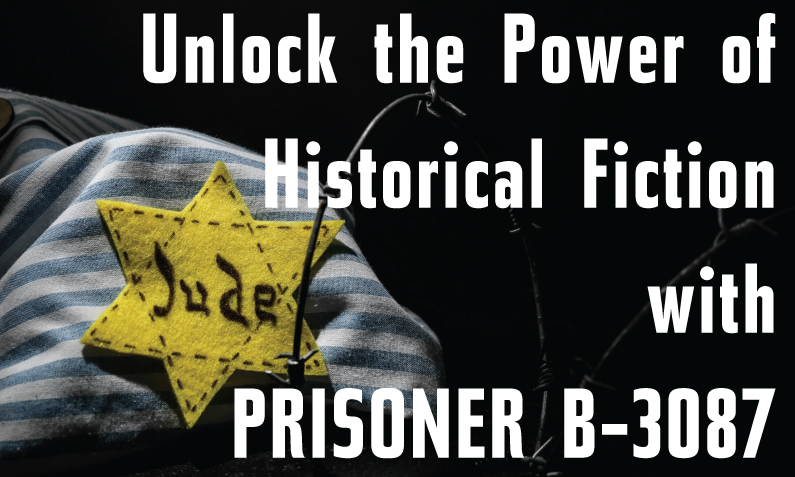
Prisoner B-3087 by Alan Gratz is an especially compelling choice for a 5th–8th grade historical fiction novel study. Based on the true experiences of Holocaust survivor Jack Gruener, the novel follows Yanek, a young Jewish boy in Poland whose life is transformed by the Nazi occupation.
Through Yanek’s story, students encounter history not simply as dates and facts, but through the experiences of a child who faces unimaginable hardship, loss, fear, and uncertainty.
For teachers looking for a Holocaust novel study, World War II literature unit, or meaningful historical fiction book for middle school ELA, Prisoner B-3087 offers rich opportunities for reading comprehension, critical thinking, historical understanding, and discussions about empathy, resilience, and human rights.
Watch a video of Alan Gratz speaking with the real Jack (Yanek) Gruener HERE!
We earn a commission if you make a purchase, at no additional cost to you.
Why Teach Prisoner B-3087 in the Classroom?
Prisoner B-3087 provides much more than an engaging story. It creates opportunities for students to connect literature, history, social studies, and real-world issues while developing important reading and thinking skills.
1. Build Historical Understanding
Students can sometimes struggle to understand the enormity of historical events such as the Holocaust. Textbooks and timelines provide important information, but a novel can help students understand history from an individual perspective.
Following Yanek’s experiences allows students to see how the Holocaust affected an actual child and his family.
Throughout the novel, Yanek is forced to navigate increasingly dangerous circumstances and multiple concentration camps. His experiences help students understand the human impact of the Holocaust and World War II in a way that statistics alone cannot.
This makes Prisoner B-3087 an excellent addition to a World War II or Holocaust unit.
2. Develop Empathy and Compassion
Historical fiction allows students to step into the experiences of someone whose life may be very different from their own.
As students follow Yanek’s journey, they can consider questions such as:
What does it mean to survive when you have almost no control over your circumstances?
How do people maintain hope during unimaginable hardship?
What choices do people make when faced with fear and uncertainty?
How can ordinary people respond when others are being mistreated?
What can we learn from the experiences of Holocaust survivors?
These discussions can lead naturally into lessons about empathy, tolerance, prejudice, discrimination, human rights, and compassion.
3. Encourage Critical Thinking
A strong novel study should do more than ask students to recall what happened in each chapter.
Prisoner B-3087 gives students opportunities to analyze characters, examine themes, interpret events, make inferences, and support their ideas with evidence from the text.
Students can explore themes such as:
Resilience
Perseverance
Hope
Survival
Family
Friendship
Courage
Prejudice
Human dignity
The consequences of hatred
These themes provide excellent opportunities for higher-order thinking, literary analysis, and evidence-based writing.
4. Explore Resilience and Perseverance
One of the most powerful aspects of Yanek’s story is his determination to survive.
Despite losing so much, Yanek continues to persevere.
This creates an authentic opportunity to discuss resilience and perseverance with students—not as abstract character traits, but as qualities demonstrated by a real person in extraordinary circumstances.
Students can analyze the choices Yanek makes and consider what allows him to continue moving forward despite the obstacles he faces.
Connect Literature to Informational Text
One of the most valuable ways to teach historical fiction is to pair the novel with nonfiction reading.
When students learn about the historical events, people, and places referenced in a novel, they develop a deeper understanding of both the story and its historical context.
A Prisoner B-3087 novel study can be paired with informational texts about:
Kraków, Poland, from 1939–1942
Plaszów Concentration Camp
Amon Goeth
The Wieliczka Salt Mine
Trzebinia Concentration Camp
Birkenau
Auschwitz
The Death Marches of 1945
Sachsenhausen
Bergen-Belsen
Buchenwald
Gross-Rosen
Dachau
Post-war Munich
The Orphaned Jewish Visa Program
Oskar Schindler and Schindler’s List
These connections allow students to practice reading informational text while building historical background knowledge.
They also provide an excellent opportunity to compare what students learn from fictionalized storytelling with information presented in nonfiction sources.
Turn Prisoner B-3087 Into a Complete Novel Study
If you’re planning to teach Prisoner B-3087 as a whole-class novel, small-group book study, literature circle, or independent reading assignment, you don’t have to create every activity yourself.
The resource is designed for grades 5–8 and includes both printable PDF materials and digital Google Drive™ resources, making it flexible enough for traditional, paperless, and blended classrooms.
What’s Included in the Prisoner B-3087 Novel Unit?
The complete novel study includes:
Daily lesson plans
Pacing and standards guide
Chapter/section guide
Chapter-by-chapter comprehension questions
Vocabulary activities
Grammar activities
Spelling
Writing activities
Critical-thinking questions
Nonfiction reading passages
Historical background information
Assessments
Digital self-grading quizzes
Answer keys
Vocabulary word wall cards
Parent letter
Common Core ELA alignment
Printable student materials
Digital Google Drive™ materials
Instead of spending hours searching for Prisoner B-3087 comprehension questions, vocabulary activities, writing prompts, nonfiction passages, and assessments, you can have your complete novel unit ready to teach.
Make Your Prisoner B-3087 Unit More Than a Reading Assignment
A powerful novel study should help students do more than finish a book.
It should encourage them to read closely, ask questions, make connections, think critically, understand historical context, and reflect on what they have learned.
Prisoner B-3087 provides an excellent foundation for that kind of learning.
Students can connect ELA skills to social studies while exploring a significant period in history. They can analyze characters and themes while developing empathy. They can practice citing textual evidence while considering complex moral and ethical questions.
Most importantly, Yanek’s story can help students understand that history is made up of real people—with families, hopes, fears, dreams, and lives that were forever changed by the events around them.
Try a free sample of the novel study for Prisoner B-3087
Ready to Teach Prisoner B-3087?
If you’re looking for a no-prep Prisoner B-3087 novel study for grades 5–8, this complete unit is designed to save you planning time while providing meaningful ELA and historical learning opportunities.
Use it for a whole-class novel, small-group instruction, literature circles, reading intervention, homeschool, or independent study.
Connect with Fellow Educators!
Are you teaching Prisoner B-3087 this school year?
Join our free community, Book Talk with The Teaching Bank, to share ideas, grab freebies, and connect with 3rd–8th grade teachers using novels in the classroom!
*The Teaching Bank participates in the Amazon Associate Program and earns a fee from qualifying purchases made on the Amazon.com site.
Looking for an engaging Holes novel study that will keep your students reading, thinking, discussing, and writing? Holes by Louis Sachar is a fantastic choice for a classroom novel, and with the right activities and discussion questions, it can become so much more than just a book your students read.
Filled with mystery, humor, memorable characters, unexpected connections, and important life lessons, Holes gives upper-elementary and middle school students plenty to think about.
We earn a commission if you make a purchase, at no additional cost to you.
If you’re planning a Holes book study for 4th, 5th, or 6th grade, this novel offers countless opportunities to teach reading comprehension, vocabulary, character development, theme, inference, text evidence, writing, and critical thinking.
And the best part? You don’t have to create all of those lessons and activities yourself.
Why Teach Holes by Louis Sachar?
Holes follows Stanley Yelnats as he is sent to Camp Green Lake, a juvenile detention camp where the boys are forced to dig holes every day. What initially appears to be a strange punishment gradually becomes part of a much bigger story involving family history, friendship, justice, perseverance, and the surprising connections between the past and present.
Louis Sachar’s storytelling makes Holes especially effective for a classroom novel study because students have plenty of reasons to keep reading.
The novel’s mystery naturally encourages students to make predictions, ask questions, notice clues, make inferences, and connect seemingly unrelated events.
That makes Holes an excellent book for teaching deeper reading skills—not simply checking whether students remember what happened in each chapter.
6 Reasons Holes Works So Well as a Classroom Novel
1. It Encourages Critical Thinking
One of the greatest strengths of Holes is its complex plot.
Students have to pay attention to details and think about how events connect. As the story unfolds, they can make predictions, draw conclusions, identify clues, and revise their thinking.
This makes Holes an excellent novel for teaching skills such as:
Making inferences
Making predictions
Citing text evidence
Making connections
Analyzing plot
Identifying cause and effect
Summarizing
Drawing conclusions
Instead of simply asking students, “What happened?” you can ask them to think about why it happened and what it means.
2. It Teaches Resilience and Perseverance
Stanley faces difficult circumstances throughout the novel, and students have many opportunities to discuss resilience, perseverance, friendship, courage, and overcoming adversity.
These themes can lead to meaningful classroom conversations about how characters respond when things don’t go according to plan.
Students can examine the choices characters make and consider questions such as:
How do characters respond to challenges?
What makes someone resilient?
How do friendships change the characters?
When should someone stand up for what is right?
How do the characters’ experiences shape who they become?
These discussions can help students connect the events of the novel to their own lives and experiences.
3. The Characters Give Students Plenty to Analyze
From Stanley Yelnats to Zero and the many characters connected to Camp Green Lake, Holes provides excellent opportunities for character analysis.
Students can track how characters change throughout the novel, examine their motivations, and support their ideas with evidence from the text.
Character analysis activities can help students move beyond simply describing a character and begin explaining how and why a character changes.
4. The Themes Encourage Meaningful Discussion
Holes contains several themes that are appropriate for rich classroom discussion, including:
Friendship
Justice and fairness
Perseverance
Family
Fate
Choices and consequences
Racism and prejudice
Social inequality
Redemption
Because these themes develop throughout the novel, students can return to them as they read and consider how their understanding changes.
5. The Unusual Plot Keeps Students Engaged
Let’s be honest: getting students excited about reading a class novel isn’t always easy.
Holes has a built-in advantage.
There are mysteries to solve, questions to answer, characters to understand, and connections between the past and present that gradually become clearer.
Students are often eager to find out what happens next—which makes it much easier to build reading lessons around the novel.
6. It Works Across Multiple ELA Skills
A good novel study should do more than provide chapter questions.
Holes can become the foundation for an entire ELA unit incorporating:
Reading comprehension
Vocabulary
Grammar
Writing
Character analysis
Theme
Plot
Text evidence
Critical thinking
Literary analysis
Discussion
Assessment
That means students are practicing important literacy skills while reading a book they actually want to finish.
Make Teaching Holes Easier with a Complete Novel Study
Of course, there’s one problem with creating a comprehensive Holes unit:
It takes a LOT of time.
You need comprehension questions. Vocabulary activities. Writing prompts. Assessments. Answer keys. Lesson plans. Extension activities.
And if you’re teaching multiple novels during the year, that preparation time adds up quickly.
This ready-to-use resource gives you the materials you need to turn Holes into a meaningful ELA unit without spending hours creating everything from scratch.
What’s Included in the Holes Novel Study?
The Holes novel study includes teacher and student materials designed to support students throughout the entire novel.
You’ll find:
Detailed lesson plans
Reading guides
Chapter-by-chapter comprehension questions
Vocabulary activities
Grammar activities
Writing activities
Critical-thinking questions
Character and literary analysis
Assessments
Answer keys
Interactive notebook activities
End-of-book activities
Common Core ELA standards alignment
There are also printable and digital resources, giving you the flexibility to use the unit in a traditional classroom, paperless classroom, or Google Classroom environment.
A No-Prep Holes Novel Unit
One of my favorite things about using a ready-made novel study is the time it saves.
Instead of searching Pinterest for Holes activities, creating comprehension questions, and putting together your own assessments, you can have the materials ready to go.
Print what you need.
Assign the digital activities when appropriate.
And spend your planning time focusing on your students instead of creating worksheets.
Perfect for:
4th grade ELA
5th grade ELA
6th grade ELA
Whole-class novel studies
Small-group reading
Literature circles
Reading intervention
Independent reading
Homeschool
Digital learning
Paperless classrooms
Help Students Go Beyond Basic Comprehension
One of the biggest goals of a novel study should be helping students become better readers and thinkers.
That’s why the activities in this Holes unit go beyond simple recall questions.
Students are asked to think about characters, themes, vocabulary, plot developments, and the author’s choices.
They practice using evidence from the text to support their ideas and develop written responses that demonstrate actual understanding.
Instead of simply asking:
“What happened?”
students can explore questions such as:
“Why did this happen?”
“What evidence supports your thinking?”
“How has this character changed?”
“What theme is developing?”
“How are the events of the past connected to what is happening in Stanley’s life?”
Those are the kinds of questions that turn reading into meaningful ELA instruction.
Printable + Digital Holes Activities
Teachers need flexibility, especially when classroom needs can change from year to year.
This Holes novel study includes both printable and digital formats, so you can choose what works best for your students.
Use the printable pages for traditional classroom instruction or assign digital activities for students working independently or in a paperless classroom.
You can also mix and match formats throughout the unit.
Not sure if this Holes book study is right for your classroom?
You can download a free sample and see the types of activities included before purchasing the complete unit.
It’s a great way to preview the resource and see how it can fit into your Holes reading unit.
Bring Holes to Life in Your Classroom
Holes by Louis Sachar is much more than an entertaining story about a boy digging holes in the desert.
It’s a novel about friendship, perseverance, family, justice, choices, and the surprising ways stories connect across generations.
Those themes make it an excellent choice for a 4th-6th grade novel study, while the engaging plot keeps students invested in the reading.
With a complete, ready-to-use Holes novel unit, you can spend less time creating materials and more time helping your students become thoughtful, confident readers.
Ready to start your Holes novel study?
[→ SHOP THE HOLES NOVEL STUDY]
Connect with Fellow Educators!
Are you teaching Holes this school year?
Join our free community, Book Talk with The Teaching Bank, to share ideas, grab freebies, and connect with 3rd–8th grade teachers using novels in the classroom!
*The Teaching Bank participates in the Amazon Associate Program and earns a fee from qualifying purchases made on the Amazon.com site.
Looking for a high-interest novel that will engage your 5th–8th grade readers while giving you plenty to teach?Ghost by Jason Reynolds is an excellent choice for an upper elementary or middle school ELA novel study.
This fast-paced, relatable novel gives students opportunities to explore character development, theme, perseverance, identity, family, friendship, decision-making, and personal growth while strengthening essential reading comprehension and critical-thinking skills.
Even better, Ghost has the potential to hook students who don’t always consider themselves “readers.”
We earn a commission if you make a purchase, at no additional cost to you.
📚 Why Teach Ghost by Jason Reynolds?
Choosing the right novel for a whole-class or small-group novel study can make a huge difference in student engagement. Students need characters and situations they can connect with—and Ghost delivers.
The story follows Castle Cranshaw, nicknamed Ghost, a talented young athlete who is dealing with difficult circumstances while discovering that his choices can have lasting consequences.
That combination of sports, family, friendship, conflict, humor, and personal growth gives teachers countless opportunities for meaningful classroom conversations.
Here are just a few reasons Ghost works so well as a classroom novel.
⭐ 1. Students Can Connect With the Characters
One of the greatest strengths of Ghost is its relatable main character.
Castle isn’t perfect. He makes mistakes, struggles with his emotions, and sometimes makes impulsive decisions. At the same time, he is talented, determined, funny, and capable of tremendous growth.
These characteristics make Castle an excellent character for teaching students how to:
Analyze character traits
Identify internal and external conflicts
Examine character motivation
Track character development
Make inferences
Support ideas with text evidence
Analyze how experiences influence a character’s choices
Students can also consider an important question throughout the novel:
How do our experiences shape the people we become?
🏃 2. Ghost Explores Perseverance and Personal Growth
Perseverance is a powerful theme throughout Ghost.
Castle has experienced difficult circumstances, but he doesn’t allow those experiences to completely define him. His journey gives students an opportunity to examine what it means to keep moving forward even when life isn’t easy.
The novel can lead to meaningful discussions about:
Overcoming obstacles
Making better choices
Taking responsibility
Learning from mistakes
Setting goals
Handling disappointment
Building confidence
Persevering through challenges
These are conversations that extend far beyond the pages of the book.
👥 3. Explore Friendship, Family, and Relationships
Ghost also provides rich opportunities to examine relationships.
Students can analyze the influence that family members, coaches, friends, and other adults have on Castle’s development.
Ask students questions such as:
Who has the greatest influence on Castle?
How do the adults in Castle’s life respond to his mistakes?
What makes someone a good friend or mentor?
How can the people around us influence our choices?
These questions naturally encourage students to support their opinions with text evidence.
💭 4. Encourage Critical Thinking and Meaningful Discussion
A strong novel study shouldn’t be just a series of comprehension questions.
Ghost gives students opportunities to think beyond “What happened?” and move toward “Why did it happen?” and “What does it mean?”
Students can analyze:
Character motivation
Cause and effect
Conflict
Theme
Point of view
Author’s craft
Important events
Character relationships
Choices and consequences
The novel’s accessible writing style makes it an especially useful text for helping students develop these deeper reading skills.
✏️ 5. Strengthen Reading and Writing Skills
Using Ghost as part of a structured novel study allows you to combine reading and writing instruction.
Students can practice:
Reading comprehension
Making inferences
Finding text evidence
Determining theme
Character analysis
Summarizing
Vocabulary
Grammar
Written responses
Critical thinking
Extended writing
Literary analysis
Instead of teaching these skills in isolation, you can teach and practice them within a story students are already invested in.
📖 Ghost Can Hook Reluctant Readers
Finding books that appeal to reluctant readers can be challenging.
The sports connection is an obvious draw for many students, but students don’t have to be athletes to connect with Castle’s story.
The novel’s fast-paced plot, relatable characters, humor, conflict, and emotional depth give students plenty of reasons to keep reading.
And once students become invested in Castle’s story, you’ve created an opportunity to help them discover that reading can be enjoyable—not just another assignment.
🎯 Looking for a Ghost Novel Study?
If you’re planning to teach Ghost by Jason Reynolds, you don’t have to spend hours creating your own lesson plans, comprehension questions, vocabulary activities, writing assignments, and assessments.
I’ve created a complete Ghost Novel Study for grades 5–8 with both printable and digital resources.
What’s Included in the Ghost Novel Study?
The resource includes ready-to-use materials for:
Reading comprehension
Vocabulary
Spelling
Grammar
Writing
Critical thinking
Literary analysis
Nonfiction connections
Assessments
Story elements
Interactive notebook activities
Common Core ELA standards
You’ll also receive teacher lesson plans, student activities, answer keys, assessments, and digital Google Drive™ resources.
🖨️ Printable + 💻 Digital Options
Whether you prefer paper-based instruction or digital learning, this Ghost book unit gives you both options.
Use the printable materials for:
Whole-class instruction
Small groups
Reading intervention
Literature circles
Independent reading
Traditional classroom instruction
Or use the digital resources for:
Paperless classrooms
Digital assignments
Distance learning
Independent student work
Google Classroom™ activities
That means less time creating materials and more time teaching.
🎁 Try the FREE Sample
You can check out the FREE sample before purchasing to see the types of activities included in the complete resource.
🛒 Get the Complete Ghost Novel Study
Ready to make teaching Ghost by Jason Reynolds easier?
The complete Ghost Novel Study | No-Prep Printable & Digital Book Unit for Grades 5–8 is available in my store.
Give your students a compelling story to read—and give yourself a ready-to-teach ELA unit that saves hours of preparation.
❤️ Final Thoughts
Ghost by Jason Reynolds is much more than a story about running.
It’s a story about choices, challenges, relationships, perseverance, and discovering who you want to become.
Those themes make it an excellent choice for a 5th–8th grade novel study, particularly when you want a book that can generate authentic discussion while strengthening students’ reading and writing skills.
If you’re looking for a high-interest middle school novel with meaningful themes and plenty of opportunities for ELA instruction, Ghost is a book worth adding to your classroom library and curriculum.
💬 Connect with Fellow Educators!
Are you teaching Ghost this school year? How do you celebrate kindness in your classroom?
Join our free community, Book Talk with The Teaching Bank, to share ideas, grab freebies, and connect with 3rd–8th grade teachers using novels in the classroom!
*The Teaching Bank participates in the Amazon Associate Program and earns a fee from qualifying purchases made on the Amazon.com site.
I’m Shelley from The Teaching Bank. I have taught 3rd, 4th, and 6th grades.
My goal is to provide lessons and units for K-12 that are practical and ready to teach with minimal prep needed.





 Connect with Fellow Educators!


