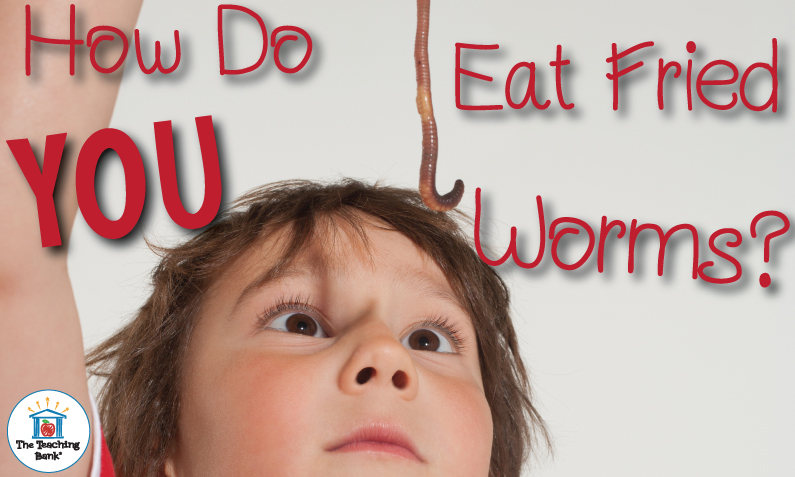
If you’re looking for a How to Eat Fried Worms novel study that will keep your students engaged while giving you meaningful reading comprehension, vocabulary, writing, and critical-thinking activities, How to Eat Fried Worms by Thomas Rockwell is a fantastic choice.
The humorous story of Billy and his friends immediately grabs students’ attention, but there’s much more to this classic children’s novel than its unforgettable title. How to Eat Fried Worms gives upper-elementary students opportunities to explore friendship, peer pressure, courage, decision-making, character development, and the consequences of our choices.
We earn a commission if you make a purchase, at no additional cost to you.
And for teachers, it’s a book that can turn into a rich ELA novel unit without requiring hours of preparation.
Why Teach How to Eat Fried Worms?
Some books are difficult to put down once students start reading them. How to Eat Fried Worms is one of those books.
The premise is simple: Billy accepts a bet that he can eat 15 worms in 15 days. What follows is a funny—and sometimes gross—adventure as Billy attempts to keep his promise while dealing with his friends, his fears, and increasingly creative ways of preparing worms.
That ridiculous-sounding premise is exactly what makes the novel so appealing to many upper-elementary readers.
But underneath the humor are some excellent opportunities for classroom discussion and literary analysis.
1. It Gets Reluctant Readers Interested in Reading
Getting students excited about a novel isn’t always easy.
A book about a boy who agrees to eat worms?
That gets their attention.
The humor and outrageous premise of How to Eat Fried Worms can be especially effective for students who aren’t naturally enthusiastic readers. Once students become invested in Billy’s challenge, they have a reason to keep reading to find out what happens next.
That makes this novel a great choice for:
4th grade ELA
5th grade ELA
6th grade ELA
Whole-class novel studies
Small-group reading
Literature circles
Independent reading
Homeschool reading
Reading intervention
2. Explore Friendship and Peer Pressure
One of the strongest themes in How to Eat Fried Worms is peer pressure.
Billy’s decision to accept the worm-eating challenge gives students an authentic way to discuss questions such as:
Why do people sometimes agree to things they don’t really want to do?
How does peer pressure influence our decisions?
What makes someone a good friend?
When should you stand up for yourself?
What are the consequences of making a decision just to prove something?
These questions can lead to meaningful classroom conversations that go far beyond simply asking students what happened in each chapter.
3. Build Reading Comprehension Skills
A strong novel study should do more than make sure students finished the assigned chapters.
How to Eat Fried Worms provides opportunities to practice important reading comprehension skills, including:
Identifying important details
Making inferences
Analyzing characters
Identifying problems and solutions
Determining cause and effect
Making predictions
Understanding themes
Summarizing
Supporting answers with evidence
Thinking critically about characters’ decisions
Using comprehension questions throughout the novel gives students a reason to slow down and think about what they’re reading rather than simply racing to the end of the book.
4. Teach Vocabulary in Context
The novel also provides opportunities to strengthen students’ vocabulary.
Rather than teaching vocabulary as a completely separate activity, students can encounter new words in the context of a story they actually want to read.
Students can practice:
Determining word meaning from context
Using new vocabulary correctly
Identifying synonyms and antonyms
Applying vocabulary in writing
Connecting words to the events and characters in the novel
This makes How to Eat Fried Worms vocabulary activities a natural part of the reading experience.
5. Connect Reading to Writing
A great novel study shouldn’t stop with comprehension questions.
Once students become invested in Billy’s challenge, the story provides plenty of writing opportunities.
Students can respond to characters, events, conflicts, and themes while practicing their ability to explain their thinking using evidence from the text.
Writing activities can help students move from:
“What happened?”
to:
“Why did it happen, and what do I think about it?”
That shift is an important part of developing stronger readers and writers.
A No-Prep How to Eat Fried Worms Novel Study
Of course, knowing that a book has great teaching potential is only half the battle.
The other question is:
How much time will it take to turn the novel into a complete unit?
Creating your own How to Eat Fried Worms worksheets, comprehension questions, vocabulary activities, writing assignments, assessments, and lesson plans can take hours.
Instead of piecing together activities from multiple sources, you can have your entire novel unit organized and ready to teach.
What’s Included in the How to Eat Fried Worms Novel Study?
The complete unit includes both printable and digital Google Drive™ resources, making it flexible enough for traditional classrooms, paperless classrooms, distance learning, small groups, and homeschool settings.
Teacher Resources
The teacher packet includes:
Detailed daily lesson plans
Pacing and Standards Guide
Chapter/Section Guide
Vocabulary Word Wall Cards
Answer keys
Parent letter
Student Activities
Students receive activities that include:
Vocabulary and grammar activities
Vocabulary practice for 36 words
Chapter-by-chapter comprehension questions
Short-answer questions designed to encourage deeper thinking
Extension activities connected to the novel
The extension activities are only included in the complete novel study, making the full unit a particularly valuable option if you want more than basic comprehension worksheets.
Assessments
The assessment packet includes:
After-the-book vocabulary quiz
After-the-book comprehension assessment
Multiple-choice comprehension questions
Short-answer comprehension questions
After-the-book writing assessment
Self-grading Google Drive™ multiple-choice quizzes
Additional Reading Activities
The unit also includes:
End-of-the-Book Activity Packet
Story Elements Interactive Notebook Activity Packet
Common Core Standards alignment for grades 4-6
Everything is designed to work together as a cohesive How to Eat Fried Worms book unit.
Printable or Digital? You Get Both.
Today’s classrooms don’t all look the same.
Some teachers still prefer students to work with printed pages. Others use Google Classroom and want digital resources. Many teachers use a combination of both.
That’s why this How to Eat Fried Worms novel study includes both printable and Google Drive™ formats.
You can print the materials for students who prefer paper or assign the digital version in your paperless classroom.
That flexibility also makes the unit useful for:
Classroom instruction
Google Classroom
Distance learning
Small-group instruction
Independent study
Homeschooling
Make How to Eat Fried Worms More Than Just a Book
The best novel studies help students experience a story while simultaneously developing stronger reading and thinking skills.
How to Eat Fried Worms gives you a particularly fun way to do that.
Students can laugh at Billy’s increasingly outrageous worm-eating challenge while also thinking about friendship, peer pressure, courage, decision-making, character traits, consequences, and personal responsibility.
And you don’t have to spend your weekend creating all of the materials yourself.
Download the FREE preview to see examples of the activities and lesson materials included in the unit.
It’s a great way to see how the novel study can fit into your classroom before you commit.
Ready to Teach How to Eat Fried Worms?
If you’re planning a 4th, 5th, or 6th grade novel study, this complete How to Eat Fried Worms book unit gives you the structure and resources you need to get started quickly.
No complicated preparation. No searching for individual worksheets. No piecing together vocabulary, comprehension, writing, and assessments from different resources.
Just grab your copy of How to Eat Fried Worms, download the unit, and start teaching.
Connect with Fellow Educators!
Are you teaching How to Eat Fried Worms this school year?
Join our free community, Book Talk with The Teaching Bank, to share ideas, grab freebies, and connect with 3rd–8th grade teachers using novels in the classroom!
*The Teaching Bank participates in the Amazon Associate Program and earns a fee from qualifying purchases made on the Amazon.com site.
Looking for an engaging Holes novel study that will keep your students reading, thinking, discussing, and writing? Holes by Louis Sachar is a fantastic choice for a classroom novel, and with the right activities and discussion questions, it can become so much more than just a book your students read.
Filled with mystery, humor, memorable characters, unexpected connections, and important life lessons, Holes gives upper-elementary and middle school students plenty to think about.
We earn a commission if you make a purchase, at no additional cost to you.
If you’re planning a Holes book study for 4th, 5th, or 6th grade, this novel offers countless opportunities to teach reading comprehension, vocabulary, character development, theme, inference, text evidence, writing, and critical thinking.
And the best part? You don’t have to create all of those lessons and activities yourself.
Why Teach Holes by Louis Sachar?
Holes follows Stanley Yelnats as he is sent to Camp Green Lake, a juvenile detention camp where the boys are forced to dig holes every day. What initially appears to be a strange punishment gradually becomes part of a much bigger story involving family history, friendship, justice, perseverance, and the surprising connections between the past and present.
Louis Sachar’s storytelling makes Holes especially effective for a classroom novel study because students have plenty of reasons to keep reading.
The novel’s mystery naturally encourages students to make predictions, ask questions, notice clues, make inferences, and connect seemingly unrelated events.
That makes Holes an excellent book for teaching deeper reading skills—not simply checking whether students remember what happened in each chapter.
6 Reasons Holes Works So Well as a Classroom Novel
1. It Encourages Critical Thinking
One of the greatest strengths of Holes is its complex plot.
Students have to pay attention to details and think about how events connect. As the story unfolds, they can make predictions, draw conclusions, identify clues, and revise their thinking.
This makes Holes an excellent novel for teaching skills such as:
Making inferences
Making predictions
Citing text evidence
Making connections
Analyzing plot
Identifying cause and effect
Summarizing
Drawing conclusions
Instead of simply asking students, “What happened?” you can ask them to think about why it happened and what it means.
2. It Teaches Resilience and Perseverance
Stanley faces difficult circumstances throughout the novel, and students have many opportunities to discuss resilience, perseverance, friendship, courage, and overcoming adversity.
These themes can lead to meaningful classroom conversations about how characters respond when things don’t go according to plan.
Students can examine the choices characters make and consider questions such as:
How do characters respond to challenges?
What makes someone resilient?
How do friendships change the characters?
When should someone stand up for what is right?
How do the characters’ experiences shape who they become?
These discussions can help students connect the events of the novel to their own lives and experiences.
3. The Characters Give Students Plenty to Analyze
From Stanley Yelnats to Zero and the many characters connected to Camp Green Lake, Holes provides excellent opportunities for character analysis.
Students can track how characters change throughout the novel, examine their motivations, and support their ideas with evidence from the text.
Character analysis activities can help students move beyond simply describing a character and begin explaining how and why a character changes.
4. The Themes Encourage Meaningful Discussion
Holes contains several themes that are appropriate for rich classroom discussion, including:
Friendship
Justice and fairness
Perseverance
Family
Fate
Choices and consequences
Racism and prejudice
Social inequality
Redemption
Because these themes develop throughout the novel, students can return to them as they read and consider how their understanding changes.
5. The Unusual Plot Keeps Students Engaged
Let’s be honest: getting students excited about reading a class novel isn’t always easy.
Holes has a built-in advantage.
There are mysteries to solve, questions to answer, characters to understand, and connections between the past and present that gradually become clearer.
Students are often eager to find out what happens next—which makes it much easier to build reading lessons around the novel.
6. It Works Across Multiple ELA Skills
A good novel study should do more than provide chapter questions.
Holes can become the foundation for an entire ELA unit incorporating:
Reading comprehension
Vocabulary
Grammar
Writing
Character analysis
Theme
Plot
Text evidence
Critical thinking
Literary analysis
Discussion
Assessment
That means students are practicing important literacy skills while reading a book they actually want to finish.
Make Teaching Holes Easier with a Complete Novel Study
Of course, there’s one problem with creating a comprehensive Holes unit:
It takes a LOT of time.
You need comprehension questions. Vocabulary activities. Writing prompts. Assessments. Answer keys. Lesson plans. Extension activities.
And if you’re teaching multiple novels during the year, that preparation time adds up quickly.
This ready-to-use resource gives you the materials you need to turn Holes into a meaningful ELA unit without spending hours creating everything from scratch.
What’s Included in the Holes Novel Study?
The Holes novel study includes teacher and student materials designed to support students throughout the entire novel.
You’ll find:
Detailed lesson plans
Reading guides
Chapter-by-chapter comprehension questions
Vocabulary activities
Grammar activities
Writing activities
Critical-thinking questions
Character and literary analysis
Assessments
Answer keys
Interactive notebook activities
End-of-book activities
Common Core ELA standards alignment
There are also printable and digital resources, giving you the flexibility to use the unit in a traditional classroom, paperless classroom, or Google Classroom environment.
A No-Prep Holes Novel Unit
One of my favorite things about using a ready-made novel study is the time it saves.
Instead of searching Pinterest for Holes activities, creating comprehension questions, and putting together your own assessments, you can have the materials ready to go.
Print what you need.
Assign the digital activities when appropriate.
And spend your planning time focusing on your students instead of creating worksheets.
Perfect for:
4th grade ELA
5th grade ELA
6th grade ELA
Whole-class novel studies
Small-group reading
Literature circles
Reading intervention
Independent reading
Homeschool
Digital learning
Paperless classrooms
Help Students Go Beyond Basic Comprehension
One of the biggest goals of a novel study should be helping students become better readers and thinkers.
That’s why the activities in this Holes unit go beyond simple recall questions.
Students are asked to think about characters, themes, vocabulary, plot developments, and the author’s choices.
They practice using evidence from the text to support their ideas and develop written responses that demonstrate actual understanding.
Instead of simply asking:
“What happened?”
students can explore questions such as:
“Why did this happen?”
“What evidence supports your thinking?”
“How has this character changed?”
“What theme is developing?”
“How are the events of the past connected to what is happening in Stanley’s life?”
Those are the kinds of questions that turn reading into meaningful ELA instruction.
Printable + Digital Holes Activities
Teachers need flexibility, especially when classroom needs can change from year to year.
This Holes novel study includes both printable and digital formats, so you can choose what works best for your students.
Use the printable pages for traditional classroom instruction or assign digital activities for students working independently or in a paperless classroom.
You can also mix and match formats throughout the unit.
Not sure if this Holes book study is right for your classroom?
You can download a free sample and see the types of activities included before purchasing the complete unit.
It’s a great way to preview the resource and see how it can fit into your Holes reading unit.
Bring Holes to Life in Your Classroom
Holes by Louis Sachar is much more than an entertaining story about a boy digging holes in the desert.
It’s a novel about friendship, perseverance, family, justice, choices, and the surprising ways stories connect across generations.
Those themes make it an excellent choice for a 4th-6th grade novel study, while the engaging plot keeps students invested in the reading.
With a complete, ready-to-use Holes novel unit, you can spend less time creating materials and more time helping your students become thoughtful, confident readers.
Ready to start your Holes novel study?
[→ SHOP THE HOLES NOVEL STUDY]
Connect with Fellow Educators!
Are you teaching Holes this school year?
Join our free community, Book Talk with The Teaching Bank, to share ideas, grab freebies, and connect with 3rd–8th grade teachers using novels in the classroom!
*The Teaching Bank participates in the Amazon Associate Program and earns a fee from qualifying purchases made on the Amazon.com site.
Looking for a high-interest novel that encourages reading comprehension, critical thinking, creativity, and meaningful classroom discussion? The Magician’s Nephew by C. S. Lewis is an excellent choice for upper elementary and middle school readers.
Although The Lion, the Witch and the Wardrobe is the best-known book in the Chronicles of Narnia, The Magician’s Nephew offers teachers a wonderful opportunity to introduce students to fantasy literature while exploring complex themes, character development, symbolism, and the consequences of choices.
With its imaginative settings, memorable characters, and thought-provoking themes, this classic novel can become much more than a reading assignment. It can serve as the foundation for a rich ELA novel study that develops important reading and writing skills.
We earn a commission if you make a purchase, at no additional cost to you.
Why Teach The Magician’s Nephew in the Classroom?
1. Introduces Students to Fantasy Literature
Fantasy is a natural way to capture students’ imaginations, and The Magician’s Nephew provides plenty of opportunities to explore the genre.
Students encounter:
Magical worlds
Otherworldly settings
Mythical creatures
Magic and supernatural elements
Larger-than-life characters
Good versus evil
Heroes and villains
Extraordinary events
As students read, they can identify the characteristics of fantasy fiction and compare them with other books they have read.
This makes The Magician’s Nephew an especially useful choice when teaching students how genre influences a story’s setting, characters, conflicts, and plot.
2. Builds Reading Comprehension Skills
A great novel gives students something worth thinking about—and The Magician’s Nephew provides plenty of opportunities for deeper reading.
Rather than simply asking students to recall what happened in each chapter, teachers can use the novel to help students:
Make inferences
Determine important ideas
Summarize chapters
Analyze characters
Identify themes
Examine cause and effect
Make predictions
Support answers with text evidence
Analyze how events affect the plot
Connect ideas across the novel
These skills are essential components of strong reading comprehension instruction.
A structured novel study can make these skills easier to teach because students practice them repeatedly as they move through the book.
3. Encourages Critical Thinking
One of the biggest strengths of The Magician’s Nephew is that it gives students plenty to discuss.
The novel explores ideas about good and evil, temptation, responsibility, friendship, courage, choices, and consequences.
These themes naturally lead to questions that have more than one obvious answer.
For example:
Why do characters make the choices they make?
What happens when characters act without thinking about the consequences?
What makes someone courageous?
How do our choices affect other people?
What can we learn from characters who make mistakes?
How does a character change throughout the story?
Questions like these move students beyond basic comprehension and into analysis, evaluation, and critical thinking.
4. Inspires Creativity and Imagination
Students are naturally drawn to stories that allow them to imagine places and possibilities beyond their everyday experiences.
The Magician’s Nephew provides countless opportunities for creative thinking.
Students can imagine their own magical worlds, create characters, explore alternate outcomes, write from different characters’ perspectives, or develop their own fantasy stories.
These activities can easily become opportunities for creative writing, narrative writing, descriptive writing, and reading-to-writing connections.
5. Provides Opportunities to Discuss Character Development
The characters in The Magician’s Nephew give students plenty to analyze.
Instead of simply identifying the protagonist and antagonist, students can examine:
Character traits
Character motivations
Character relationships
Character choices
Internal and external conflicts
Character growth and change
How characters respond to challenges
Students can support their ideas with evidence from the text, helping them develop the habit of making claims and supporting those claims with evidence.
6. Opens the Door to Meaningful Discussions About Choices and Consequences
One of the most valuable aspects of teaching a classic novel is the opportunity to connect the events of the story to ideas students encounter in their own lives.
The Magician’s Nephew provides many opportunities to discuss decision-making, responsibility, temptation, consequences, friendship, and doing what is right.
These conversations can encourage students to think beyond the literal events of the story and consider the larger messages an author may be communicating.
That makes the novel especially useful for classroom discussions, writing prompts, opinion writing, and text-to-self connections.
Make Teaching The Magician’s Nephew Easier
A great novel is only part of a successful novel unit. The challenge for many teachers is finding the time to create meaningful questions, vocabulary activities, assessments, writing assignments, and extension activities to accompany the book.
My The Magician’s Nephew Novel Study is designed for grades 4–6 and gives teachers a complete collection of materials to guide students through the book.
What’s Included in the Novel Study?
The resource includes:
Daily lesson plans
A pacing and standards guide
Common Core standards alignment
Chapter-by-chapter comprehension questions
Critical-thinking questions
Vocabulary activities
Grammar activities
Spelling activities
Writing activities
Extension activities
Story elements activities
Vocabulary assessment
Comprehension assessments
Writing assessment
Answer keys
Vocabulary word wall cards
Parent letter
End-of-book activities
Interactive notebook activities
Digital Google Drive resources
The resource includes 170+ pages of printable materials, along with digital resources that can be used with students.
Printable AND Digital Resources
Need flexibility in your classroom?
This The Magician’s Nephew novel unit includes both printable PDF resources and digital Google Drive materials.
You can print the activities for traditional classroom use, assign digital activities, or combine the two formats based on your students’ needs.
That makes this novel study useful for whole-class instruction, small groups, literature circles, independent work, homeschool instruction, and blended learning.
Save Time While Teaching a Rich Literary Experience
Teaching a novel shouldn’t require spending hours creating materials before you can begin.
A complete novel study gives you the structure and resources you need to keep students engaged while helping them develop important ELA skills.
Instead of creating chapter questions, vocabulary activities, assessments, writing assignments, and extension activities from scratch, you can focus your time on teaching, discussing, and enjoying the novel with your students.
Try a Free Sample!
Want to see whether this The Magician’s Nephew novel study is a good fit for your students?
Try the free sample before purchasing!
It will give you a look at the format, types of questions, and activities included in the complete resource.
📚 Ready to Teach The Magician’s Nephew?
If you’re looking for a no-prep The Magician’s Nephew novel study for grades 4–6, this resource provides a complete collection of printable and digital materials to help you teach the novel while developing reading comprehension, vocabulary, critical thinking, writing, and literary analysis skills.
Make your next novel unit easier to plan—and give your students a meaningful way to explore the magical world of Narnia!
Are you teaching The Magician’s Nephew this school year?
Join our free community, Book Talk with The Teaching Bank, to share ideas, grab freebies, and connect with 3rd–8th grade teachers using novels in the classroom!
*The Teaching Bank participates in the Amazon Associate Program and earns a fee from qualifying purchases made on the Amazon.com site.
Looking for an engaging novel to use in your 4th, 5th, or 6th grade ELA classroom? Frindle by Andrew Clements is an excellent choice for a novel study or book unit because it gives students an entertaining story while opening the door to meaningful conversations about language, creativity, individuality, and the power of words.
And if you’re looking for Frindle activities, comprehension questions, vocabulary work, writing activities, and assessments, I’ve created a complete Frindle Novel Study that makes teaching the book easy!
We earn a commission if you make a purchase, at no additional cost to you.
Why Teach Frindle by Andrew Clements?
Frindle is the story of Nick Allen, a creative and curious student who decides to invent a new word for “pen.” His new word—”frindle”—quickly spreads beyond his classroom and creates consequences that Nick never expected.
What begins as a seemingly simple idea turns into a much bigger lesson about language, creativity, persistence, authority, and the way words can influence people.
That makes Frindle much more than just an entertaining read. It gives students plenty to think about, discuss, and write about.
1. It Gets Students Thinking About Language
One of the most engaging aspects of Frindle is the way it gets students thinking about where words come from and how language changes.
Students can explore questions such as:
Who decides what words mean?
How do new words become part of a language?
Can one person really change the way people communicate?
Why do some new words catch on while others disappear?
These questions make the novel a natural springboard for vocabulary and language activities.
2. It Encourages Creativity
Nick doesn’t simply accept things the way they are. He looks for ways to question the status quo and come up with his own ideas.
This allows students to consider creative thinking, innovation, problem-solving, and thinking outside the box while they read.
It’s also a great reminder that students’ ideas can have an impact—even when those ideas initially seem small.
3. It Provides Great Opportunities for Discussion
Frindle offers plenty of topics for classroom discussion.
Students can examine Nick’s motivations, consider the actions of the adults around him, make predictions about what might happen next, and think about whether characters’ decisions were helpful or harmful.
The story naturally lends itself to conversations about character, conflict, cause and effect, theme, author’s message, and point of view.
4. It Encourages Critical Thinking
Rather than simply asking students to recall what happened in each chapter, Frindle gives teachers opportunities to ask students to explain, analyze, infer, and support their ideas with evidence from the text.
That makes it a great fit for a standards-based upper elementary or middle school novel unit.
5. It’s a Great Book for Reluctant Readers
The premise of Frindle is immediately appealing to many students: What if you invented a new word and everyone started using it?
The humorous storyline and relatable school setting can help keep students engaged while they’re practicing important reading skills.
Frindle Novel Study for Grades 4–6
If you want to teach Frindle without spending hours creating materials, my Frindle Novel Study provides a complete, ready-to-use book unit.
It’s designed for students reading at approximately the 4th–6th grade level and can be used with an entire class, small reading group, independent learners, or homeschool students.
The unit is designed to be no-prep, so you can spend less time creating worksheets and lesson plans and more time teaching.
Even better, the complete version includes both printable and Google Drive™ formats, making it easy to use whether your students are working with paper materials or digitally.
What’s Included?
The complete Frindle novel study includes:
Teacher lesson plans, pacing guide, standards alignment, and answer keys
Vocabulary, grammar, and chapter-by-chapter comprehension activities
Writing and extension activities
Vocabulary and comprehension assessments
Printable and digital resources
Story elements and end-of-book activities
The complete unit combines multiple resources into one convenient package, including additional activities and teacher materials that aren’t included in the individual components.
Teaching a novel doesn’t have to mean spending your evenings searching for Frindle worksheets, comprehension questions, vocabulary activities, and assessments.
This Frindle novel study gives you a structured plan and ready-to-use materials so you can begin teaching the book right away.
It’s a great option for:
4th grade ELA
5th grade ELA
6th grade ELA
Whole-class novel studies
Small-group instruction
Literature circles
Independent reading
Homeschool
Reading intervention
Whether you’re planning a Frindle book study, an ELA novel unit, or a focused reading unit, this resource can help you turn an engaging children’s novel into a meaningful, standards-aligned learning experience.
Try a FREE Frindle Novel Study Sample
Not sure if the resource is right for your students?
You can try a free sample of the Frindle novel study before purchasing. The sample includes the activities for Chapter 1 so you can see the format and approach for yourself.
Ready to Teach Frindle?
Frindle is a fun, thought-provoking novel that gives students plenty to discuss while strengthening important reading and language arts skills.
If you’re looking for a Frindle novel study with no-prep lesson plans, comprehension questions, vocabulary activities, writing, assessments, and printable and digital options, this complete unit is ready to help you get started!
Connect with Fellow Educators!
Are you teaching Frindle this school year?
Join our free community, Book Talk with The Teaching Bank, to share ideas, grab freebies, and connect with 3rd–8th grade teachers using novels in the classroom!
*The Teaching Bank participates in the Amazon Associate Program and earns a fee from qualifying purchases made on the Amazon.com site.
Would you choose to live forever if you had the option?
That intriguing question is at the heart of Tuck Everlasting by Natalie Babbitt, a thought-provoking novel that gives students far more to discuss than a simple fantasy story about immortality.
For teachers, Tuck Everlasting is an excellent choice for a 5th-8th grade novel study because it provides meaningful opportunities to teach reading comprehension, vocabulary, character development, theme, symbolism, literary analysis, critical thinking, writing, and discussion—all while encouraging students to wrestle with questions that have no easy answers.
If you’re looking for a Tuck Everlasting novel study or complete novel unit that goes beyond chapter questions, this classic children’s novel offers an ideal foundation for deeper ELA instruction.
We earn a commission if you make a purchase, at no additional cost to you.
Why Teach Tuck Everlasting in the Classroom?
Tuck Everlasting follows Winnie Foster, a young girl who discovers the Tuck family and their extraordinary secret: they have become immortal after drinking from a mysterious spring.
But immortality isn’t presented as the simple gift students might initially imagine.
Instead, Babbitt uses the story to explore questions about life, death, time, nature, choice, consequences, and what it means to truly live.
These themes make Tuck Everlasting particularly valuable for classroom discussion because students can approach the story from many different perspectives.
1. Explore the Meaning of Immortality
One of the most obvious—and most engaging—questions raised by the novel is:
Would you want to live forever?
At first, many students may think immortality sounds wonderful. No aging. No death. Unlimited time.
But as students learn more about the Tucks, they begin to see the potential consequences of living forever.
This creates an excellent opportunity for students to consider both sides of an argument and support their thinking with evidence from the text.
You might ask:
Would you want to live forever? Why or why not?
Is immortality a gift or a curse?
What makes a life meaningful?
Would living forever change the way you make decisions?
Is death an important part of life?
These questions naturally encourage critical thinking, text-based discussion, and written responses.
2. Analyze Winnie Foster’s Character Development
Winnie begins the story as a sheltered young girl living under the strict expectations of her family.
Her encounter with the Tucks changes her understanding of the world.
As students follow Winnie’s journey, they can examine how her experiences influence her decisions and how she develops throughout the novel.
Students can analyze:
Winnie’s motivations
Her relationship with her family
Her relationship with the Tuck family
The choices she makes
How she responds to difficult situations
How her perspective changes
The role of independence in her development
Character development activities provide an excellent way to move students beyond simply identifying what a character does and toward analyzing why a character makes particular choices.
3. Examine the Novel’s Major Themes
One of the greatest strengths of Tuck Everlasting is the number of meaningful themes embedded in the story.
Students can explore themes such as:
The circle of life
Mortality and immortality
The importance of change
Choices and consequences
Freedom and responsibility
The relationship between humans and nature
Growing up and independence
What makes life meaningful
These themes are especially useful for teaching students how to identify a theme and then explain how the author develops that theme throughout a text.
Rather than simply asking students to name a theme, challenge them to prove their interpretation using details from the novel.
4. Teach Symbolism and Literary Devices
Natalie Babbitt’s writing provides opportunities for students to examine how authors use literary techniques to communicate ideas.
The spring, for example, can become a powerful symbol for students to analyze.
The novel’s descriptions of nature also provide opportunities to explore imagery, symbolism, figurative language, and the author’s craft.
Ask students questions such as:
Why is the spring so important to the story?
What might the spring symbolize?
How does Babbitt use nature throughout the novel?
How do descriptions of the setting contribute to the story’s themes?
Which literary devices make particular scenes more memorable?
These activities help students recognize that authors make deliberate choices about language and description.
5. Encourage Deeper Reading Comprehension
Tuck Everlasting is a wonderful book for teaching students that reading comprehension is about more than remembering what happened.
Students can practice:
Making predictions
Making inferences
Identifying important details
Analyzing characters
Determining theme
Making connections
Using text evidence
Summarizing
Drawing conclusions
Analyzing cause and effect
Chapter-by-chapter Tuck Everlasting comprehension questions can help teachers monitor understanding while giving students regular opportunities to stop, think, and respond to what they’re reading.
6. Build Vocabulary Through Context
The novel also provides opportunities for meaningful vocabulary instruction.
Instead of treating vocabulary as a separate activity unrelated to reading, teachers can have students examine unfamiliar words in the context of the story.
Students can:
Determine meaning using context clues
Examine word parts
Use new vocabulary in sentences
Identify synonyms and antonyms
Discuss how word choice affects meaning
This approach helps students see vocabulary as part of authentic reading rather than simply another list to memorize.
7. Connect Reading to Writing
One of the best ways to determine whether students truly understand a novel is to have them write about it.
Tuck Everlasting lends itself particularly well to writing because the novel raises so many philosophical and ethical questions.
Students can respond to prompts such as:
Would you drink from the spring if you discovered it? Explain your decision using evidence from the novel.
Or:
Is living forever truly better than living a normal human life?
Or:
What does Tuck Everlasting suggest about the relationship between life and death?
These types of questions require students to formulate an opinion, support their ideas, and use evidence from the text.
8. Compare the Book and Movie
If you use the film adaptation of Tuck Everlasting with your students, the book provides an excellent opportunity for compare-and-contrast analysis.
Students can examine:
Characters
Setting
Plot events
Character relationships
Important scenes
Themes
Details that were added or removed
Differences in how ideas are presented
A book-versus-movie comparison also gives students an authentic opportunity to analyze how the same story can change when it moves from one medium to another.
Make Teaching Tuck Everlasting Easier with a Complete Novel Study
While Tuck Everlasting offers wonderful opportunities for instruction, creating an entire novel unit from scratch can take hours.
You need comprehension questions.
Vocabulary activities.
Writing prompts.
Assessments.
Lesson plans.
Answer keys.
Standards alignment.
And activities that actually encourage students to think about the novel.
That’s why I created a complete Tuck Everlasting Novel Study for teachers and homeschool educators.
The unit is designed for approximately 5th-8th grade and can be used with a whole class, small group, literature circle, or independent learner. It can also work well for homeschooling.
What’s Included in the Tuck Everlasting Novel Study?
This complete Tuck Everlasting novel unit includes everything you need to teach the novel while saving hours of preparation time.
💻 Printable PDF and digital Google Drive™ resources
🎁 Bonus end-of-book and interactive notebook activities
With 225+ pages of ready-to-use materials, you can easily use this resource for whole-class instruction, small groups, literature circles, independent reading, or homeschool ELA.
Teaching looks different from classroom to classroom, so flexibility matters.
This Tuck Everlasting novel study includes both printable materials and Google Drive-compatible resources, making it useful for traditional classrooms as well as paperless or digital learning environments.
Use the resources for:
Whole-class novel studies
Small-group instruction
Guided reading
Literature circles
Independent reading
Homeschool instruction
Homework
Digital learning
Reading intervention or enrichment
A No-Prep Tuck Everlasting Novel Unit
If you’re already juggling lesson planning, grading, classroom management, and everything else that comes with teaching, creating an entire novel unit from scratch isn’t the best use of your time.
This no-prep Tuck Everlasting novel study is designed to help you begin teaching right away.
Instead of spending your evenings creating chapter questions, vocabulary worksheets, writing assignments, and assessments, you can have a complete collection of resources organized and ready to use.
Want to Try It Before You Buy?
You can try a free sample of the Tuck Everlasting novel study before purchasing. The sample includes the activities for Day 1 so you can see how the unit works with your students.
Ready to Teach Tuck Everlasting?
Save planning time with a complete Tuck Everlasting Novel Study and Novel Unit that combines reading comprehension, vocabulary, grammar, writing, literary analysis, assessments, lesson plans, and more.
Get the Tuck Everlasting Novel Study from The Teaching Bank and turn this timeless story into a meaningful, standards-aligned ELA experience for your students.
Turn Tuck Everlasting Into a Deeper ELA Experience
Tuck Everlasting is much more than a story about a family that never grows old.
It’s a novel that asks students to think about what it means to be alive, whether death gives life meaning, how our choices affect others, and whether having unlimited time would really make life better.
Those are big questions—and that’s exactly what makes this novel such a valuable addition to an upper elementary or middle school ELA classroom.
With the right Tuck Everlasting novel study activities, students can move beyond simply reading the story and begin analyzing its characters, themes, symbolism, vocabulary, and deeper meaning.
And perhaps the best part?
There isn’t necessarily one “correct” answer to many of the questions Babbitt raises.
Your students may surprise you with what they think.
Connect with Fellow Educators!
Are you teaching Tuck Everlasting this school year?
Join our free community, Book Talk with The Teaching Bank, to share ideas, grab freebies, and connect with 3rd–8th grade teachers using novels in the classroom!
*The Teaching Bank participates in the Amazon Associate Program and earns a fee from qualifying purchases made on the Amazon.com site.





 Connect with Fellow Educators!


