Missing May by Cynthia Rylant is a poignant story to analyze the stages of grief a family goes through after losing a loved one. It is a great book to use in your classroom or homeschool for a whole class novel study, small book groups, or individual book studies. Missing May by Cynthia Rylant is a captivating novel that offers valuable lessons and insights for students of all ages.
We earn a commission if you make a purchase, at no additional cost to you.
Benefits of Using Missing May in Your Classroom:
Offers Engaging Storytelling: Missing May tells the story of a young girl named Summer who copes with the loss of her beloved aunt May. The novel’s rich narrative and well-developed characters engage students and draw them into the emotional journey of dealing with loss and finding hope.
Provides Themes of Resilience and Healing: Through Summer’s experiences, students can explore themes of resilience, healing, and the importance of human connections. These themes are highly relevant and can foster meaningful discussions about emotions and coping mechanisms.
Encourages Cultural Exploration: The novel also offers a glimpse into Appalachian culture and traditions, providing students with opportunities to learn about different lifestyles and perspectives. This cultural exploration can broaden their understanding of diversity and empathy.
Gives Opportunities for Literary Analysis and Critical Thinking: Missing May is rich in literary elements such as symbolism, imagery, and character development. Analyzing these elements encourages critical thinking skills and helps students deepen their comprehension of the text.
Promotes Empathy and Compassion: Through the characters’ experiences, students can develop empathy and compassion towards others who are dealing with loss or facing challenges in life. These lessons in empathy are essential for fostering a supportive and understanding classroom environment.
Strengthens Writing and Creative Expression: The novel inspires creative writing activities such as journal entries from different characters’ perspectives, alternative endings, or exploring themes through poetry. These activities enhance students’ writing skills and encourage creative expression.
Presents Cross-Curricular Connections: Missing May can be integrated into various subjects, including English Language Arts, Social Studies, and Art. This interdisciplinary approach promotes holistic learning and reinforces connections between different areas of study.
Incorporates Real-World Relevance: The themes and lessons in Missing May resonate with real-life experiences, making the novel relatable and impactful for students. It encourages them to reflect on their own emotions, experiences, and relationships.
Incorporating Missing May by Cynthia Rylant into your classroom curriculum can enrich students’ learning experiences and foster valuable skills and insights. Its engaging storytelling, themes of resilience and empathy, cultural exploration, and opportunities for creative expression make it a valuable addition to any educator’s toolkit. By using this novel, teachers can inspire meaningful discussions, promote empathy and understanding, and empower students to connect literature with their own lives.
I offer a complete novel study to accompany Missing Mayfor use in the classroom or homeschool. The unit includes both a printable format and a Google Drive™ format for use in a paperless classroom or with Google Classroom.
Try a free sample of the novel study for Missing May
You can purchase this novel study at the following locations:
Are you interested in reading about and sharing ideas with other educators on using children’s literature in your classroom? My goal is to bring together teachers and homeschoolers who teach grades 3-8 and use novels with their students. I’d love for you to join me to learn, share, and grow together!
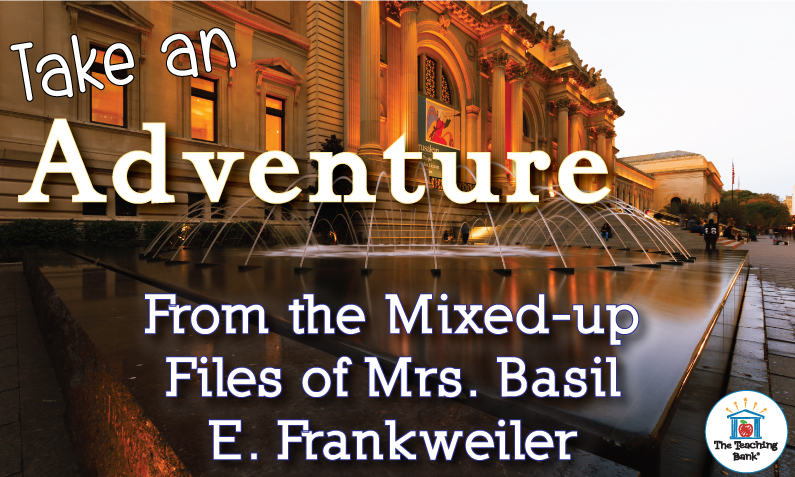
About From the Mixed-Up Files of Mrs. Basil E. Frankweiler
From the Mixed-Up Files of Mrs. Basil E. Frankweiler by E. L. Konigsburg is a wonderful choice for a middle school or upper elementary novel study.
The story follows Claudia Kincaid and her younger brother Jamie as they decide to run away from home—but not just anywhere. They choose the Metropolitan Museum of Art in New York City as their temporary home.
Claudia carefully plans their escape, while Jamie focuses on saving money. Once they arrive at the museum, however, their adventure becomes much more complicated when they discover a mysterious statue that may have been created by the famous artist Michelangelo.
As students follow Claudia and Jamie’s adventure, they encounter themes of independence, family, identity, money, mystery, responsibility, and belonging.
These themes provide excellent opportunities for meaningful classroom discussions and deeper literary analysis.
We earn a commission if you make a purchase, at no additional cost to you.
Looking for a From the Mixed-Up Files of Mrs. Basil E. Frankweiler novel study that makes teaching this classic E. L. Konigsburg novel easier?
This complete From the Mixed-Up Files of Mrs. Basil E. Frankweiler book unit provides everything you need to guide students through the novel while building reading comprehension, vocabulary, writing, grammar, literary analysis, and critical-thinking skills.
Designed for grades 5–8, this no-prep novel study is perfect for whole-class instruction, small groups, literature circles, independent reading, or homeschool ELA.
And because both printable and Google Drive™ formats are included, you can use the resource in whatever format works best for your students.
Why Teach From the Mixed-Up Files of Mrs. Basil E. Frankweiler?
This classic children’s novel offers much more than an entertaining story.
Students can explore:
Character development
Setting
Plot and conflict
Theme
Point of view
Making inferences
Drawing conclusions
Supporting ideas with text evidence
Vocabulary in context
Author’s craft
Critical thinking
Written responses
The novel also lends itself naturally to discussions about independence and family relationships, making it a great way to connect reading skills with deeper conversations.
A Complete From the Mixed-Up Files Novel Study
If you don’t want to spend hours searching for individual worksheets, comprehension questions, vocabulary activities, writing prompts, and assessments, a complete novel unit can save you significant planning time.
Instead of piecing together separate activities, you have a ready-to-use collection of resources designed to take students from the beginning of the novel through assessment and written reflection.
What’s Included?
This complete novel study includes:
Teacher lesson plans and pacing support
Chapter-by-chapter comprehension activities
Vocabulary and grammar activities
Writing activities
Assessments
Answer keys
Additional reading and writing activities
Common Core standards alignment
Printable student resources
Google Drive™ versions for digital learning
The unit is designed to give you the flexibility to use the entire resource or select the activities that best fit your students and your schedule.
One of the biggest challenges of teaching a novel is finding the time to create meaningful activities to go along with it.
This no-prep novel study is designed to take much of that work off your plate.
Use the included resources for:
Whole-Class Novel Studies Guide your entire class through the novel with structured reading activities, comprehension questions, vocabulary, writing, and assessments.
Small-Group Instruction Use selected activities to support students who need additional reading practice or targeted instruction.
Literature Circles & Book Clubs Give students meaningful questions and activities to guide discussion and encourage deeper thinking about the novel.
Independent Reading Students can work through comprehension, vocabulary, and writing activities as they read independently.
Homeschool ELA The complete unit provides a convenient framework for teaching the novel at home without having to create every activity yourself.
Printable + Digital Novel Study
Today’s classrooms often require flexibility, which is why this From the Mixed-Up Files novel unit includes both printable and Google Drive™ formats.
Use the printable materials for traditional classroom instruction, or assign the digital resources through your preferred online learning platform.
Having both formats gives you the flexibility to adapt the unit to your classroom, students, and teaching style.
Build More Than Reading Comprehension
A strong novel study should do more than ask students what happened in each chapter.
This unit gives students opportunities to practice a variety of ELA and reading skills while engaging with the novel.
Students work on:
Reading comprehension
Vocabulary development
Grammar
Character analysis
Literary elements
Written response
Critical thinking
Text-based analysis
Writing skills
The goal is to help students become more thoughtful readers while giving you practical, ready-to-use teaching materials.
Looking for a From the Mixed-Up Files Novel Study?
If you’re planning to teach From the Mixed-Up Files of Mrs. Basil E. Frankweiler and want a complete resource that saves you planning time, this novel study is designed to give you everything you need in one place.
Whether you’re teaching 5th, 6th, 7th, or 8th grade, this flexible ELA unit can be adapted for whole-class reading, small groups, literature circles, independent work, or homeschool.
Try a free sample of the novel study for From the Mixed-Up Files of Mrs. Basil E. Frankweiler
Get the Complete From the Mixed-Up Files Novel Unit
Ready to make your next novel study easier?
This From the Mixed-Up Files of Mrs. Basil E. Frankweiler Novel Study Book Unit includes printable and digital resources covering comprehension, vocabulary, writing, grammar, assessment, and more.
Save time planning and spend more time helping your students become stronger, more thoughtful readers.
Connect with Fellow Educators!
Are you teaching From the Mixed-Up Files of Mrs. Basil E. Frankweiler this school year?
Join our free community, Book Talk with The Teaching Bank, to share ideas, grab freebies, and connect with 3rd–8th grade teachers using novels in the classroom!
*The Teaching Bank participates in the Amazon Associate Program and earns a fee from qualifying purchases made on the Amazon.com site.
Looking for a meaningful way to combine ELA and social studies while teaching Blood on the River by Elisa Carbone?
This historical fiction novel gives students an opportunity to step into the world of Jamestown in 1607 while developing important reading, writing, vocabulary, and critical-thinking skills.
If you’re planning a Blood on the River novel study for 4th, 5th, or 6th grade, this guide will give you ideas for using the novel to bring early American history to life—and show you how a complete novel study can save you hours of planning.
We earn a commission if you make a purchase, at no additional cost to you.
Historical fiction has the ability to transport students to a different time and place, immersing them in the world of the past. Blood on the River tells the real-life story of Samuel Collier who voyages to the New World along with Captain John Smith to colonize Jamestown in 1607, during the early years of the Jamestown settlement in Virginia. By reading this novel, students can step into the shoes of the young characters and experience the challenges and adventures of that era.
Why Teach Blood on the River?
Historical fiction can make history feel much more immediate to students.
Instead of simply reading facts about Jamestown, students experience the story through the perspective of Samuel Collier, a young page who travels with Captain John Smith to the New World.
As students read, they encounter the challenges of establishing the Jamestown settlement and are introduced to the people, places, conflicts, and decisions that shaped this important period in American history.
That makes Blood on the River an excellent choice for connecting literature and history.
Students can explore:
The founding of Jamestown
The Virginia Colony
Early English colonization
The journey from England to the New World
The Powhatan people
Relationships between Indigenous Peoples and English settlers
Survival and leadership
Historical perspective
Character development
Conflict and cooperation
Decision-making
Historical fiction versus historical fact
Blood on the River and Jamestown History
One of the biggest advantages of using Blood on the River in the classroom is the opportunity to connect the novel directly to your Jamestown and Colonial America curriculum.
As students read, they can investigate questions such as:
Why did the English establish Jamestown?
What challenges did the colonists face?
How did geography affect the settlement?
What role did leadership play in the survival of the colony?
How did the English settlers interact with the Powhatan people?
How might historical events look different from different perspectives?
How does the novel compare with what we know about the historical Jamestown?
These questions encourage students to think about history as more than a collection of dates and facts.
They begin to see history as a series of experiences, decisions, relationships, and consequences.
Use Historical Fiction to Build Empathy
Blood on the River also provides opportunities for students to think about history from multiple perspectives.
The characters encounter fear, uncertainty, conflict, cultural differences, and difficult decisions. Students can consider what it might have been like to experience these events as a young person living during this period.
This creates opportunities to discuss:
Empathy
Perspective
Cultural differences
Cooperation
Conflict
Leadership
Fairness
Survival
The impact of colonization
These conversations can help students recognize that historical events affected real people with different experiences and perspectives.
Blood on the River Reading Comprehension
Of course, reading a historical fiction novel isn’t just about learning history.
It is also an excellent opportunity to strengthen students’ reading comprehension and literary analysis skills.
Throughout a Blood on the River novel study, students can practice:
Making inferences
Finding text evidence
Summarizing
Making predictions
Identifying character traits
Analyzing character development
Identifying conflict
Determining theme
Understanding cause and effect
Comparing perspectives
Making connections
Determining meaning from context
Supporting written responses with evidence
The best comprehension questions encourage students to explain their thinking rather than simply recall what happened.
For example: How does Samuel’s perspective change as he experiences life in Jamestown?
Or: What evidence from the novel shows how difficult life was for the settlers?
Questions like these allow students to practice reading skills while staying connected to the historical content.
A Complete Blood on the River Novel Study
If you’re looking for a ready-to-use Blood on the River novel unit, I’ve created a comprehensive resource designed for approximately one month of instruction for Grades 4–6.
The complete unit combines reading comprehension, vocabulary, grammar, writing, critical thinking, assessments, historical activities, and digital resources.
It can be used for:
Whole-class instruction
Small-group reading
Literature circles
Independent reading
Homeschool
ELA
Social studies
Cross-curricular instruction
What’s Included?
The complete Blood on the River Novel Study includes 259 printable PDF pages plus Google Drive Slides and Forms.
Teacher Resources
You’ll receive:
Detailed daily lesson plans
Pacing and Standards Guide
Vocabulary Word Wall Cards
Answer keys
Parent letter
Printable and digital teacher resources
Student Resources
The unit includes:
Spelling list
Vocabulary and grammar activities for 81 words
Chapter-by-chapter comprehension questions
Short-answer questions
Critical-thinking activities
Writing activities
Story elements activities
End-of-book activities
Mapping activity following the colonists’ journey from England to the New World
The mapping activity is a particularly useful way to connect the novel to geography and the historical journey to Jamestown.
Assessments for Blood on the River
You don’t have to create your own assessments, either.
The complete novel study includes:
Assessment after Chapter 9
Assessment after Chapter 18
End-of-book assessment
Vocabulary questions
Reading comprehension questions
Critical-thinking writing questions
Multiple-choice assessments
Digital Google Forms assessments
This gives you multiple opportunities to check students’ understanding throughout the unit.
Connect ELA and Social Studies
This is where Blood on the River really shines.
Instead of teaching your reading and social studies lessons completely separately, you can use the novel as a bridge between the two subjects.
Before purchasing the complete unit, take a look at the FREE Blood on the River Novel Study sample.
You can purchase this novel study at the following locations:
Looking for More Jamestown Resources?
If you’re building a larger unit around early American history, explore the related Eastern Woodlands, Powhatan Empire, and Virginia Colonies/Jamestown resources from The Teaching Bank.
Pairing social studies lessons with historical fiction can give students multiple ways to understand the people, places, and events they’re studying—and make history much more memorable.
Blood on the River can be so much more than a novel students read for ELA.
It can become a bridge between literature, history, geography, culture, critical thinking, and empathy.
Let your students step into the world of Jamestown—and discover history through the power of a story.
💬 Connect with Fellow Educators!
Are you teaching Blood on the River this school year? How do you celebrate kindness in your classroom?
Join our free community, Book Talk with The Teaching Bank, to share ideas, grab freebies, and connect with 3rd–8th grade teachers using novels in the classroom!
*The Teaching Bank participates in the Amazon Associate Program and earns a fee from qualifying purchases made on the Amazon.com site.
Looking for an engaging novel that will get your students excited about reading? A Hatchet novel study may be exactly what you need.
Gary Paulsen’s Hatchet has been a classroom favorite for years—and for good reason. This gripping survival story gives students an exciting reason to keep turning the pages while providing teachers with countless opportunities to teach reading comprehension, vocabulary, critical thinking, character development, writing, and literary analysis.
And sometimes, the best way to get a reluctant reader interested in books is to give them a story they simply can’t put down.
We earn a commission if you make a purchase, at no additional cost to you.
How Hatchet Hooked a Reluctant Reader
One of my biggest frustrations as a parent was watching my oldest son struggle to find enjoyment in reading.
He could read. He did well in school. But reading for pleasure? That was another story.
When he was assigned Hatchet by Gary Paulsen, something completely changed.
He came home from school talking about the book.
He wanted to know what was going to happen next.
He was disappointed when he had to stop reading for the day.
And, most surprising of all, he actually wanted to keep reading.
Every day, he would come home and tell me about the latest chapter. He wasn’t simply completing a reading assignment—he was genuinely invested in Brian’s story.
That experience reminded me of something important:
The right book can completely change a student’s attitude toward reading.
That’s one reason Hatchet is such a powerful choice for an upper-elementary or middle school novel study.
Why Teach Hatchet in the Classroom?
Hatchet follows Brian Robeson, a young boy who finds himself alone in the Canadian wilderness after a plane crash. With nothing but a hatchet, Brian must figure out how to survive.
The survival premise immediately gives students something to think about:
What would you do if you were completely on your own?
As Brian faces one challenge after another, students have opportunities to examine much more than survival.
1. Hatchet Encourages Critical Thinking and Problem-Solving
Brian doesn’t have an adult telling him what to do.
He has to observe his surroundings, make decisions, try different strategies, learn from mistakes, and figure out how to solve problems.
That makes Hatchet an excellent book for teaching critical thinking and problem-solving skills.
Students can discuss questions such as:
What choices did Brian make?
Which decisions helped him survive?
Which decisions made his situation more difficult?
What could Brian have done differently?
How does Brian respond when his first plan fails?
These types of questions move students beyond simply recalling what happened in the story and encourage them to think deeply about the text.
2. Hatchet Is Perfect for Teaching Perseverance
One of the most valuable themes in Hatchet is perseverance.
Brian experiences fear, loneliness, hunger, frustration, and failure. Yet he continues trying.
When something doesn’t work, he learns from the experience and tries again.
That creates natural opportunities to discuss resilience, determination, perseverance, and overcoming obstacles.
Students can connect Brian’s experiences to challenges in their own lives, making the novel much more meaningful than a simple survival story.
3. Hatchet Builds Reading Comprehension
Because Brian’s survival depends on his ability to observe, remember, and make decisions, Hatchet provides excellent opportunities for reading comprehension instruction.
Students can analyze:
Character
Setting
Plot
Conflict
Cause and effect
Character development
Theme
Problem and solution
Point of view
Text evidence
Chapter-by-chapter Hatchet comprehension questions can help students slow down and think about what they are reading rather than rushing through the novel simply to finish it.
This is especially useful when teaching students how to support their answers with evidence from the text.
4. Hatchet Provides Rich Vocabulary Opportunities
Gary Paulsen’s descriptive writing gives students plenty of opportunities to encounter meaningful vocabulary in context.
A Hatchet novel study can turn those unfamiliar words into an opportunity to build vocabulary rather than allowing students to simply skip over them.
Students can examine words in context, determine meaning, and use new vocabulary in their own writing.
Vocabulary instruction is even more effective when students encounter the words repeatedly while reading the novel.
5. Hatchet Makes Writing More Meaningful
One of the advantages of using a novel for ELA instruction is that students have a shared experience to write about.
Instead of assigning disconnected writing prompts, teachers can ask students to respond to situations, characters, conflicts, and themes they already understand.
Hatchet naturally lends itself to:
Personal response writing
Character analysis
Opinion writing
Text-based responses
Critical-thinking questions
Creative writing
Theme analysis
Problem-and-solution writing
The survival setting also makes it easy to create engaging writing prompts that students actually want to answer.
6. Hatchet Can Hook Reluctant Readers
This may be my favorite reason to teach Hatchet.
A student who doesn’t consider himself or herself a “reader” may be much more willing to pick up a book when the premise immediately grabs their attention.
A plane crash.
A wilderness.
A young boy alone.
A hatchet.
Survival.
That’s a pretty compelling setup.
And once students become invested in Brian’s survival, reading comprehension activities and ELA skills become much less of a chore.
The story becomes the vehicle for learning.
Make Teaching Hatchet Easier with a Complete Novel Study
Of course, finding a great novel is only the beginning.
Teachers still have to figure out:
What am I going to teach with this book?
What comprehension questions should I ask?
What vocabulary should I focus on?
How will I assess whether my students understand the novel?
Instead of spending hours creating worksheets, comprehension questions, vocabulary activities, writing assignments, assessments, and lesson plans, you can have an entire unit ready to use.
What’s Included in the Hatchet Novel Study?
The complete unit includes resources for both teachers and students.
Teacher Resources
The teacher packet includes:
Detailed daily lesson plans
Pacing and standards guide
Vocabulary word wall cards
Answer keys
Parent letter
Student Activities
Students receive:
Vocabulary and grammar activities for 60 vocabulary words
Activities that encourage deeper thinking about the novel
The extended writing activities are only included in the complete novel study, making the full unit an especially valuable option.
Assessments
The assessment packet includes quizzes covering both sections of the novel:
Part 1: Chapters 1–9 Part 2: Chapter 10 through the end of the novel
The assessments include vocabulary, reading comprehension, and essay questions, along with answer keys.
Additional ELA Activities
The unit also includes:
End-of-the-book activities
Story Elements Interactive Notebook activities
Common Core State Standards alignment for Grades 5–8
The unit is designed for approximately a 5th–8th grade reading level and can be adapted for whole-class instruction, small groups, one-on-one instruction, independent study, or homeschool use.
The complete Hatchet Novel Study is available in both printable and Google Drive™ formats, making it flexible enough for traditional classrooms, Google Classroom, distance learning, and homeschool environments. The digital version also includes self-grading Google Drive quizzes in multiple-choice format.
Prefer paper?
A printable-only version is also available.
Try the FREE Hatchet Novel Study Sample
Not sure whether this Hatchet book study will work for your students?
Try it before you buy it!
A free sample is available so you can see exactly what the novel study looks like and try the activities with your students. The sample includes one day of activities from the complete unit.
Ready to Turn Hatchet into an Engaging ELA Unit?
Hatchet is much more than a story about a boy trying to survive in the wilderness.
It’s a book about perseverance, problem-solving, resilience, courage, decision-making, and personal growth.
It gives students something exciting to read while giving teachers a natural way to teach important ELA skills.
And when a book can make a reluctant reader come home excited to tell you what happened in the latest chapter?
That’s a book worth teaching.
Connect with Fellow Educators!
Are you teaching Hatchet this school year?
Join our free community, Book Talk with The Teaching Bank, to share ideas, grab freebies, and connect with 3rd–8th grade teachers using novels in the classroom!
*The Teaching Bank participates in the Amazon Associate Program and earns a fee from qualifying purchases made on the Amazon.com site.
“I am Ivan. I am a gorilla. It’s not as easy as it looks.”
Few stories capture the hearts of upper elementary students quite like Katherine Applegate’s Newbery Medal-winning masterpiece, The One and Only Ivan.
Inspired by the true story of a real shopping mall gorilla named Ivan who spent 27 years in a glass enclosure, this powerful novel explores themes of friendship, empathy, animal welfare, and keeping promises. Written in accessible, poetic verse with short, fast-paced entries, it is one of the most effective ELA anchor texts for 3rd, 4th, 5th, and 6th-grade classrooms.
Whether you are hosting a whole-class read-aloud, running literature circles, or facilitating independent book clubs, here is how you can teach The One and Only Ivan with zero prep time while building critical ELA and cross-curricular reading skills!
We earn a commission if you make a purchase, at no additional cost to you.
🌟 Why The One and Only Ivan Belongs in Your Reading Curriculum
1. Sparks High-Interest Nonfiction Connections
Unlike purely fictional stories, Ivan serves as a perfect launchpad for cross-curricular reading. Students naturally become curious about the real Ivan, gorilla and elephant behavior, and the moral debate surrounding animal captivity vs. wildlife sanctuaries.
2. Teaches Point of View & Literary Devices
Written from Ivan’s first-person perspective, the novel provides a masterclass in voice, sensory details, figurative language, and character development—making deep literary analysis approachable for reluctant readers.
3. Fosters Deep Social-Emotional Learning (SEL)
As Ivan forms an unbreakable bond with Stella the elephant and Ruby the baby elephant, students reflect on empathy, compassion, standing up for others, and what it truly means to be a good friend.
I offer a novel study for The One and Only Ivan that not only incorporates comprehension and vocabulary activities, but also non-fiction aspects for students to learn about Silverback Gorillas, elephants, animals living in captivity vs. the wild, and, of course, the story of the real-life Ivan!
📦 What’s Included in the Complete Ivan Unit (Print + Google Apps™)
Creating chapter questions, vocabulary lists, and assessments for a 300+ page book can take dozens of hours. This all-in-one novel study unit delivers everything you need from start to finish—offered in both printable PDF and interactive Google Drive™ (Google Slides & self-grading Google Forms) formats.
👩🏫 1. Teacher Planning & Management Packet
Detailed Daily Lesson Plans & Pacing Guide: Step-by-step roadmap for your daily reading schedule.
Vocabulary Word Wall Cards: Printable cards and Google Slides to reinforce academic vocabulary.
Proactive Parent Letter: Pre-written communication explaining the themes of the book.
Complete Answer Keys: Hassle-free grading for every student task.
📝 2. Student Practice & Skill Workbooks
Vocabulary Context Practice: Targeted practice covering 59 essential vocabulary words across the book.
Section-by-Section Comprehension Questions: Short-answer questions designed to push students into deeper critical thinking and inferencing.
In-Depth Character Studies: Graphic organizers focusing on Ivan, Stella, Ruby, and Bob.
Book vs. Movie Comparison: Engaging analysis tools comparing the novel to the Disney film adaptation.
★ 4 Exclusive Post-Reading Analysis Tasks: Deep-dive extension projects available only in this complete unit bundle!
Please check out the completed The One and Only Ivan Novel Study that contains both a printable and Google Drive™ compatible format available in my store.
🎁 Download a FREE Sample & Start Teaching Today!
Want to test out the unit before committing? Download a Free Sample that includes all student activities and teacher plans for Chapter 1!
You can purchase this novel study at the following locations:
💬 Join the Conversation!
Have you taught The One and Only Ivan or its companions (The One and Only Bob and The One and Only Ruby) in your classroom?
Join our free teacher community, Book Talk with The Teaching Bank, to share ideas, grab freebies, and connect with upper elementary and middle school educators!
*The Teaching Bank participates in the Amazon Associate Program and earns a fee from qualifying purchases made on the Amazon.com site.







 Connect with Fellow Educators!


