Looking for an engaging World War II novel for middle school students? Projekt 1065 by Alan Gratz is a fast-paced historical fiction novel that combines action, suspense, history, and important lessons about courage, loyalty, propaganda, and standing up for what is right.
And if you’re looking for Projekt 1065 lesson plans or a ready-to-use novel study, I’ve created a complete Projekt 1065 novel study and book unit that can save you hours of planning and preparation.
Why Teach Projekt 1065 by Alan Gratz?
Projekt 1065 is an especially engaging choice for students who enjoy action, adventure, espionage, and historical fiction.
The story takes place in Nazi Germany during World War II and follows Michael, a young Irish-German boy who is a member of the Hitler Youth. Although he appears to support the Nazi regime, Michael is secretly loyal to the Allies and becomes involved in a dangerous mission as a British spy.
The combination of suspense and historical events makes this novel difficult for many students to put down.
More importantly, Projekt 1065 gives teachers plenty of opportunities to move beyond basic reading comprehension and have students think deeply about the history and ideas presented in the novel.
We earn a commission if you make a purchase, at no additional cost to you.
5 Reasons to Use Projekt 1065 in Your Classroom
1. It Engages Reluctant Readers
One of the biggest challenges teachers face is finding a novel that will hold the attention of every student.
Projekt 1065 is packed with action, suspense, danger, and unexpected twists. The fast-moving plot can help motivate students who may not normally be excited about reading historical fiction.
Michael’s experiences also give students a character they can connect with while exploring difficult questions about identity, loyalty, courage, and morality.
2. It Brings World War II History to Life
Rather than simply reading facts about World War II from a textbook, students experience the historical period through the eyes of a fictional character.
The novel provides opportunities to discuss:
Nazi Germany
The Hitler Youth
Propaganda
The Gestapo
Kristallnacht
The Holocaust
World War II
Resistance to Nazi Germany
The role of science and technology during the war
This makes Projekt 1065 an excellent companion to a World War II or Holocaust history unit.
Students can read the novel while researching the real historical events and organizations referenced throughout the story.
3. It Encourages Critical Thinking
Projekt 1065 gives students plenty to think about.
Michael is forced to make difficult decisions throughout the novel. Students can analyze his choices and consider questions such as:
What does it mean to be loyal?
When is it right to disobey authority?
How does propaganda influence people?
What would you do if standing up for what is right put you in danger?
How can fear be used to control people?
What makes someone courageous?
These questions can lead to meaningful classroom discussions, writing assignments, and text-based analysis.
4. It Opens the Door to Cross-Curricular Learning
One of the best things about using historical fiction in the classroom is the opportunity to connect reading with other subjects.
Projekt 1065 can be used alongside:
Social Studies: Explore World War II, Nazi Germany, the Holocaust, and resistance movements.
Science: Investigate the scientific and technological developments connected to the story.
Technology: Research the development and use of technology during World War II.
ELA: Analyze characterization, setting, theme, conflict, symbolism, point of view, and historical fiction.
Writing: Have students support their ideas with evidence from the novel and respond to ethical and historical questions.
5. It Teaches Lessons That Still Matter Today
Although Projekt 1065 takes place during World War II, many of its themes remain relevant.
Students can explore the dangers of propaganda, misinformation, prejudice, fear, and abuse of power while discussing the importance of courage, empathy, critical thinking, and standing up against injustice.
These conversations can help students connect the historical events in the novel to the world around them.
Make Teaching Projekt 1065 Easy With a Complete Novel Study
If you want to teach Projekt 1065 but don’t want to spend hours creating chapter questions, vocabulary activities, assessments, writing prompts, and supplemental activities, I’ve done the work for you.
It includes both printable resources and digital Google Drive™ resources, making it easy to use in a traditional classroom, paperless classroom, Google Classroom, homeschool setting, or distance-learning environment.
The Projekt 1065 Novel Study Includes:
Daily lesson plans
Pacing and standards guide
Chapter-by-chapter comprehension questions
Vocabulary and grammar activities
Activities for 92 vocabulary words
Vocabulary word wall cards
Multiple assessments
Critical-thinking writing questions
Answer keys
Common Core standards alignment
End-of-book activities
Story elements activities
Printable PDF resources
Google Drive™ resources
Self-grading Google Forms quizzes
Go Beyond the Novel With WWII WebQuests
The unit also includes informational WebQuests that allow students to research important historical topics connected to the novel.
Students investigate:
The Sturmabteilung (SA)
The Gestapo
Kristallnacht
Operation Paperclip
The Manhattan Project
These activities provide an excellent way to connect ELA and social studies while helping students understand the historical context behind the story.
Perfect for 5th-8th Grade ELA
This Projekt 1065 novel study works especially well for:
5th grade ELA
6th grade ELA
7th grade ELA
8th grade ELA
Middle school reading
Historical fiction units
World War II units
Holocaust studies
Literature circles
Independent reading
Small-group instruction
Homeschool
Google Classroom
Paperless classrooms
Whether you’re looking for a complete Projekt 1065 book unit, supplemental activities for a WWII unit, or ready-to-use reading comprehension resources, this novel study gives you a flexible way to teach the book without starting from scratch.
Save Time With a Ready-to-Teach Projekt 1065 Unit
Teaching a novel shouldn’t require you to spend your evenings creating worksheets and assessments.
This Projekt 1065 novel study gives you a complete collection of resources so you can focus on what matters most—helping your students become stronger readers, thinkers, and writers.
Try a free sample of the novel study for Projekt 1065
You can purchase this novel study at the following locations:
Have you ever had a student ask why Projekt is spelled with a K?
It’s actually intentional!
In the novel, “Projekt” is the German spelling of “project.” Alan Gratz has explained that Projekt 1065 was the real code name for the Messerschmitt Me 262, the world’s first operational jet-powered fighter aircraft.
That little detail can even become a fun opportunity to discuss how authors incorporate real historical details into historical fiction.
Final Thoughts
Projekt 1065 by Alan Gratz is more than an exciting WWII adventure. It is a novel that gives students opportunities to explore history, courage, loyalty, propaganda, ethical decision-making, critical thinking, and the power of standing up for what is right.
For teachers, it provides an engaging way to combine ELA and social studies while keeping students invested in the story.
And with a complete Projekt 1065 novel study and lesson plan unit, you don’t have to spend hours creating everything yourself.
Grab the novel, download the unit, and you’re ready to teach!
Connect with Fellow Educators!
Are you teaching Projekt 1065 this school year?
Join our free community, Book Talk with The Teaching Bank, to share ideas, grab freebies, and connect with 3rd–8th grade teachers using novels in the classroom!
*The Teaching Bank participates in the Amazon Associate Program and earns a fee from qualifying purchases made on the Amazon.com site.
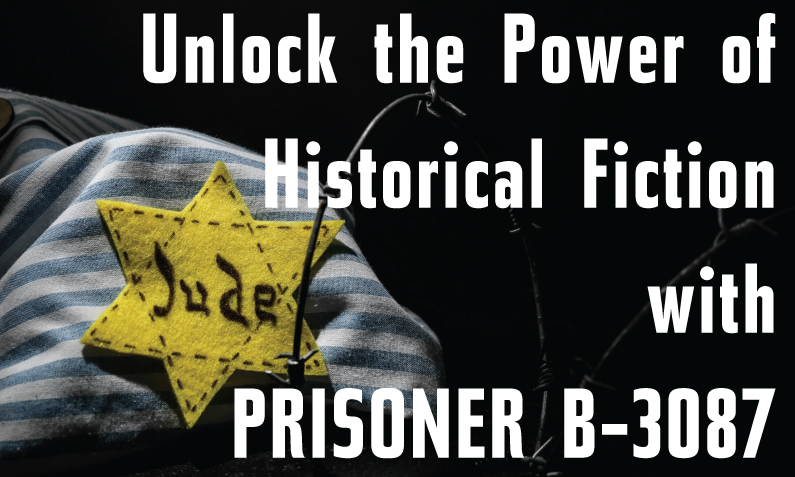
Teaching the Holocaust to middle school students is difficult—but powerful literature can help students understand history in a deeply personal way.
Prisoner B-3087 by Alan Gratz is an especially compelling choice for a 5th–8th grade historical fiction novel study. Based on the true experiences of Holocaust survivor Jack Gruener, the novel follows Yanek, a young Jewish boy in Poland whose life is transformed by the Nazi occupation.
Through Yanek’s story, students encounter history not simply as dates and facts, but through the experiences of a child who faces unimaginable hardship, loss, fear, and uncertainty.
For teachers looking for a Holocaust novel study, World War II literature unit, or meaningful historical fiction book for middle school ELA, Prisoner B-3087 offers rich opportunities for reading comprehension, critical thinking, historical understanding, and discussions about empathy, resilience, and human rights.
Watch a video of Alan Gratz speaking with the real Jack (Yanek) Gruener HERE!
We earn a commission if you make a purchase, at no additional cost to you.
Why Teach Prisoner B-3087 in the Classroom?
Prisoner B-3087 provides much more than an engaging story. It creates opportunities for students to connect literature, history, social studies, and real-world issues while developing important reading and thinking skills.
1. Build Historical Understanding
Students can sometimes struggle to understand the enormity of historical events such as the Holocaust. Textbooks and timelines provide important information, but a novel can help students understand history from an individual perspective.
Following Yanek’s experiences allows students to see how the Holocaust affected an actual child and his family.
Throughout the novel, Yanek is forced to navigate increasingly dangerous circumstances and multiple concentration camps. His experiences help students understand the human impact of the Holocaust and World War II in a way that statistics alone cannot.
This makes Prisoner B-3087 an excellent addition to a World War II or Holocaust unit.
2. Develop Empathy and Compassion
Historical fiction allows students to step into the experiences of someone whose life may be very different from their own.
As students follow Yanek’s journey, they can consider questions such as:
What does it mean to survive when you have almost no control over your circumstances?
How do people maintain hope during unimaginable hardship?
What choices do people make when faced with fear and uncertainty?
How can ordinary people respond when others are being mistreated?
What can we learn from the experiences of Holocaust survivors?
These discussions can lead naturally into lessons about empathy, tolerance, prejudice, discrimination, human rights, and compassion.
3. Encourage Critical Thinking
A strong novel study should do more than ask students to recall what happened in each chapter.
Prisoner B-3087 gives students opportunities to analyze characters, examine themes, interpret events, make inferences, and support their ideas with evidence from the text.
Students can explore themes such as:
Resilience
Perseverance
Hope
Survival
Family
Friendship
Courage
Prejudice
Human dignity
The consequences of hatred
These themes provide excellent opportunities for higher-order thinking, literary analysis, and evidence-based writing.
4. Explore Resilience and Perseverance
One of the most powerful aspects of Yanek’s story is his determination to survive.
Despite losing so much, Yanek continues to persevere.
This creates an authentic opportunity to discuss resilience and perseverance with students—not as abstract character traits, but as qualities demonstrated by a real person in extraordinary circumstances.
Students can analyze the choices Yanek makes and consider what allows him to continue moving forward despite the obstacles he faces.
Connect Literature to Informational Text
One of the most valuable ways to teach historical fiction is to pair the novel with nonfiction reading.
When students learn about the historical events, people, and places referenced in a novel, they develop a deeper understanding of both the story and its historical context.
A Prisoner B-3087 novel study can be paired with informational texts about:
Kraków, Poland, from 1939–1942
Plaszów Concentration Camp
Amon Goeth
The Wieliczka Salt Mine
Trzebinia Concentration Camp
Birkenau
Auschwitz
The Death Marches of 1945
Sachsenhausen
Bergen-Belsen
Buchenwald
Gross-Rosen
Dachau
Post-war Munich
The Orphaned Jewish Visa Program
Oskar Schindler and Schindler’s List
These connections allow students to practice reading informational text while building historical background knowledge.
They also provide an excellent opportunity to compare what students learn from fictionalized storytelling with information presented in nonfiction sources.
Turn Prisoner B-3087 Into a Complete Novel Study
If you’re planning to teach Prisoner B-3087 as a whole-class novel, small-group book study, literature circle, or independent reading assignment, you don’t have to create every activity yourself.
The resource is designed for grades 5–8 and includes both printable PDF materials and digital Google Drive™ resources, making it flexible enough for traditional, paperless, and blended classrooms.
What’s Included in the Prisoner B-3087 Novel Unit?
The complete novel study includes:
Daily lesson plans
Pacing and standards guide
Chapter/section guide
Chapter-by-chapter comprehension questions
Vocabulary activities
Grammar activities
Spelling
Writing activities
Critical-thinking questions
Nonfiction reading passages
Historical background information
Assessments
Digital self-grading quizzes
Answer keys
Vocabulary word wall cards
Parent letter
Common Core ELA alignment
Printable student materials
Digital Google Drive™ materials
Instead of spending hours searching for Prisoner B-3087 comprehension questions, vocabulary activities, writing prompts, nonfiction passages, and assessments, you can have your complete novel unit ready to teach.
Make Your Prisoner B-3087 Unit More Than a Reading Assignment
A powerful novel study should help students do more than finish a book.
It should encourage them to read closely, ask questions, make connections, think critically, understand historical context, and reflect on what they have learned.
Prisoner B-3087 provides an excellent foundation for that kind of learning.
Students can connect ELA skills to social studies while exploring a significant period in history. They can analyze characters and themes while developing empathy. They can practice citing textual evidence while considering complex moral and ethical questions.
Most importantly, Yanek’s story can help students understand that history is made up of real people—with families, hopes, fears, dreams, and lives that were forever changed by the events around them.
Try a free sample of the novel study for Prisoner B-3087
Ready to Teach Prisoner B-3087?
If you’re looking for a no-prep Prisoner B-3087 novel study for grades 5–8, this complete unit is designed to save you planning time while providing meaningful ELA and historical learning opportunities.
Use it for a whole-class novel, small-group instruction, literature circles, reading intervention, homeschool, or independent study.
Connect with Fellow Educators!
Are you teaching Prisoner B-3087 this school year?
Join our free community, Book Talk with The Teaching Bank, to share ideas, grab freebies, and connect with 3rd–8th grade teachers using novels in the classroom!
*The Teaching Bank participates in the Amazon Associate Program and earns a fee from qualifying purchases made on the Amazon.com site.
Looking for a Bud, Not Buddy novel study that will save you hours of planning while giving your students meaningful opportunities to practice reading comprehension, vocabulary, writing, and critical thinking?
Bud, Not Buddy by Christopher Paul Curtis is an engaging historical fiction novel that gives upper-elementary and middle school students plenty to discuss. Through Bud Caldwell’s journey during the Great Depression, students explore important ideas about family, belonging, perseverance, identity, racism, economic hardship, community, and trust.
We earn a commission if you make a purchase, at no additional cost to you.
If you’re planning to teach Bud, Not Buddy in your 4th, 5th, or 6th grade classroom, a well-designed Bud, Not Buddy book unit can help you turn those rich discussions into focused ELA instruction.
And if you don’t want to spend your evenings creating comprehension questions, vocabulary activities, writing assignments, and assessments, I’ve got you covered!
Why Teach Bud, Not Buddy?
Bud, Not Buddy follows ten-year-old Bud Caldwell, an orphan living in Michigan during the Great Depression. After another difficult experience in foster care, Bud sets out on his own in search of Herman E. Calloway, a man he believes may be his father.
What begins as a search for a father becomes a much bigger journey.
As Bud travels from Flint toward Grand Rapids, he encounters people who challenge his assumptions about adults, family, friendship, and what it means to belong. Along the way, students get a glimpse into life during the Great Depression, including poverty, homelessness, racial inequality, and the ways communities supported one another during difficult times.
The novel also provides plenty of opportunities to examine Bud’s growth. At the beginning of the story, Bud relies heavily on his own rules and instincts because adults have repeatedly disappointed him. As the story progresses, he begins to discover that accepting help and trusting others doesn’t make him weak.
These themes make Bud, Not Buddy an especially valuable choice for a middle-grade novel study.
Bud, Not Buddy Themes Students Can Explore
One of the biggest strengths of this novel is the number of meaningful themes students can discuss and support with evidence from the text.
Family and Belonging
Bud spends much of the novel searching for the family he has lost and wondering where he belongs.
This creates excellent opportunities for students to consider questions such as:
What makes someone a family?
Can people who aren’t related by blood become family?
Why is belonging so important to Bud?
How does Bud’s idea of family change throughout the novel?
The novel ultimately challenges students to think about family as something that can be created through love, trust, support, and community.
Perseverance and Resilience
Bud experiences disappointment after disappointment, but he continues moving forward.
Students can analyze the ways Bud responds to obstacles and identify moments when he demonstrates:
perseverance
resourcefulness
courage
independence
determination
Bud isn’t simply a character who experiences problems. He continually makes choices in response to those problems, making his journey especially useful for character analysis.
Identity
Even the title Bud, Not Buddy introduces the importance of identity.
Bud is determined to be called by the name he believes is his. Throughout the novel, he also tries to understand who he is, where he came from, and where he belongs.
This makes the novel a natural springboard for conversations about identity, family history, names, and self-discovery.
Racism and Inequality
Because the novel takes place in 1936, students encounter the realities of racial discrimination and inequality during the Great Depression.
Curtis incorporates these issues into Bud’s journey without making the novel solely about racism. Instead, students see how race affects Bud’s experiences as he travels through Michigan.
This provides an opportunity to connect literature and social studies while helping students examine how historical context influences a character’s experiences.
The Great Depression
The historical setting is another reason Bud, Not Buddy works so well as a classroom novel.
The story takes place during the Great Depression, when unemployment, poverty, homelessness, and economic hardship affected millions of Americans. Students encounter this history through Bud’s experiences rather than simply reading about it in a textbook.
The novel’s setting can lead to meaningful discussions about:
the Great Depression
unemployment
poverty
homelessness
Hoovervilles
migration
economic inequality
community support
The historical setting is an important part of the story, with the novel taking place in Michigan in 1936.
Bud, Not Buddy Is Perfect for Character Analysis
Bud is an especially interesting character for students to analyze because he changes significantly throughout the story.
At first, Bud believes he has to depend primarily on himself. His collection of rules helps him navigate a world where he doesn’t always trust the adults around him.
As students follow Bud’s journey, they can examine how his experiences affect his:
thoughts
feelings
actions
relationships
beliefs
understanding of family
understanding of himself
Students can also analyze how secondary characters influence Bud’s development.
Characters such as Miss Thomas, Herman E. Calloway, Lefty Lewis, Bugs, Deza Malone, and the Amos family all contribute to Bud’s journey in different ways.
This makes Bud, Not Buddy an excellent choice for teaching character traits, character development, relationships, and textual evidence.
Bud Caldwell’s Rules Make Great Classroom Discussions
One of the most memorable features of the novel is Bud’s collection of rules for surviving the world around him.
His rules are funny, clever, and sometimes surprisingly insightful. They also reveal a great deal about Bud’s experiences and his understanding of adults.
Instead of simply asking students to identify character traits, you can have them analyze what Bud’s rules reveal about his character.
For example:
What does a particular rule tell us about Bud?
What experience may have caused Bud to create the rule?
Is the rule helpful or harmful?
Does Bud continue to believe the rule later in the story?
What does the rule reveal about his relationships with adults?
These questions push students beyond simple recall and toward deeper character analysis.
Reading Comprehension Skills to Teach with Bud, Not Buddy
A Bud, Not Buddy novel study is an excellent way to incorporate reading comprehension instruction into authentic literature.
As students read, you can target skills such as:
Character Analysis
Students examine Bud’s traits, motivations, relationships, and development.
Making Inferences
Students use clues from the text to draw conclusions about characters, events, and relationships.
Textual Evidence
Students support their thinking with specific evidence from the novel.
Theme
Students identify themes and explain how those themes develop throughout the story.
Summarizing
Students distinguish important events from minor details and summarize sections of the novel.
Point of View
Students examine how experiencing the story through Bud’s perspective affects the reader’s understanding.
Vocabulary in Context
Students determine the meaning of unfamiliar words using context clues and then apply those words in meaningful activities.
Critical Thinking
Students analyze decisions, relationships, conflicts, and historical circumstances rather than simply recalling what happened.
Add Vocabulary Instruction to Your Bud, Not Buddy Unit
Bud, Not Buddy provides plenty of opportunities for vocabulary instruction.
Instead of handing students a list of definitions, use vocabulary activities that require students to interact with the words in multiple ways.
Students can:
determine definitions using context clues
use words in original sentences
explore parts of speech
complete grammar activities
practice spelling
solve vocabulary puzzles
participate in word searches
use vocabulary word walls
revisit important words throughout the novel
Repeated exposure helps students move vocabulary from simply recognizing a word to actually understanding and using it.
Use Bud, Not Buddy to Teach Writing
A strong novel study shouldn’t stop when students answer comprehension questions.
Bud, Not Buddy provides numerous opportunities for reading response and writing instruction.
Students can write about:
Bud’s character development
the importance of family
perseverance and resilience
historical context
Bud’s relationships with other characters
important decisions Bud makes
themes in the novel
how Bud changes throughout the story
connections between the novel and their own lives
evidence from the text to support an argument
These activities allow students to practice writing while remaining connected to a book they are already reading and discussing.
Connect Bud, Not Buddy to Social Studies
One of the best features of teaching historical fiction is the opportunity to combine ELA and social studies.
Because Bud, Not Buddy takes place during the Great Depression, students can investigate the historical context surrounding the novel.
Consider pairing the novel with lessons about:
the Great Depression
the stock market crash
unemployment
Hoovervilles
segregation
racial discrimination
migration
African American history
jazz during the 1930s
Students can then return to the novel and consider how the historical setting affects Bud’s experiences.
This creates a much richer reading experience than treating the novel as a stand-alone story.
A No-Prep Bud, Not Buddy Novel Study for Grades 4–6
If you’re looking for Bud, Not Buddy worksheets, comprehension questions, vocabulary activities, writing prompts, assessments, and lesson plans, creating everything from scratch can quickly become overwhelming.
That’s why I created a complete Bud, Not Buddy Novel Study Book Unit designed to make teaching the novel easier.
This resource is designed for 4th, 5th, and 6th grade ELA classrooms and includes both printable and digital resources.
What’s Included in the Bud, Not Buddy Novel Study?
The complete unit includes everything you need to teach Bud, Not Buddy from beginning to end.
Teacher Resources
You’ll receive:
detailed lesson plans
a pacing guide
standards alignment
answer keys
vocabulary resources
a parent letter
reading guides
teacher planning materials
Student Activities
Students will have access to:
chapter-by-chapter comprehension questions
vocabulary activities
grammar activities
spelling activities
writing prompts
reading responses
story elements activities
extension activities
printable worksheets
Assessment Resources
The unit also includes assessments to help you evaluate student learning throughout the novel.
Students can demonstrate their understanding through:
reading comprehension questions
vocabulary questions
short-answer responses
essay questions
quizzes
Printable AND Digital Resources
You don’t have to choose between paper and digital learning.
This Bud, Not Buddy novel study includes printable PDF resources as well as Google Drive™ digital activities, giving you the flexibility to use the materials in the way that works best for your classroom.
Use the printable version for traditional novel study activities or assign the digital resources for paperless learning, centers, homework, or independent work.
Why Teachers Love a Complete Novel Study
Teaching a novel shouldn’t require you to spend hours searching for separate resources.
When your comprehension questions, vocabulary activities, writing assignments, assessments, lesson plans, and answer keys are all in one place, you can spend less time planning and more time teaching.
A complete novel study also helps provide consistency.
Instead of jumping between unrelated worksheets, students work through activities that are intentionally connected to the novel and the skills you’re teaching.
Not sure if this Bud, Not Buddy book study is right for your classroom?
You can download a free sample and see the types of activities included before purchasing the complete unit.
It’s a great way to preview the resource and see how it can fit into your Bud, Not Buddy reading unit.
Ready to Teach Bud, Not Buddy?
If Bud, Not Buddy is on your reading list this year, you don’t have to create your entire novel unit from scratch.
This Bud, Not Buddy Novel Study Book Unit gives you a ready-to-use collection of ELA activities designed to help students understand the novel while strengthening their reading, vocabulary, writing, and critical-thinking skills.
It’s no prep, printable, and digital—and designed specifically for grades 4–6.
You’ll have everything you need to turn Bud, Not Buddy into a meaningful, engaging, and manageable ELA novel study.
Connect with Fellow Educators!
Are you teaching Bud, Not Buddy this school year?
Join our free community, Book Talk with The Teaching Bank, to share ideas, grab freebies, and connect with 3rd–8th grade teachers using novels in the classroom!
*The Teaching Bank participates in the Amazon Associate Program and earns a fee from qualifying purchases made on the Amazon.com site.
Looking for a meaningful way to combine ELA and social studies while teaching Blood on the River by Elisa Carbone?
This historical fiction novel gives students an opportunity to step into the world of Jamestown in 1607 while developing important reading, writing, vocabulary, and critical-thinking skills.
If you’re planning a Blood on the River novel study for 4th, 5th, or 6th grade, this guide will give you ideas for using the novel to bring early American history to life—and show you how a complete novel study can save you hours of planning.
We earn a commission if you make a purchase, at no additional cost to you.
Historical fiction has the ability to transport students to a different time and place, immersing them in the world of the past. Blood on the River tells the real-life story of Samuel Collier who voyages to the New World along with Captain John Smith to colonize Jamestown in 1607, during the early years of the Jamestown settlement in Virginia. By reading this novel, students can step into the shoes of the young characters and experience the challenges and adventures of that era.
Why Teach Blood on the River?
Historical fiction can make history feel much more immediate to students.
Instead of simply reading facts about Jamestown, students experience the story through the perspective of Samuel Collier, a young page who travels with Captain John Smith to the New World.
As students read, they encounter the challenges of establishing the Jamestown settlement and are introduced to the people, places, conflicts, and decisions that shaped this important period in American history.
That makes Blood on the River an excellent choice for connecting literature and history.
Students can explore:
The founding of Jamestown
The Virginia Colony
Early English colonization
The journey from England to the New World
The Powhatan people
Relationships between Indigenous Peoples and English settlers
Survival and leadership
Historical perspective
Character development
Conflict and cooperation
Decision-making
Historical fiction versus historical fact
Blood on the River and Jamestown History
One of the biggest advantages of using Blood on the River in the classroom is the opportunity to connect the novel directly to your Jamestown and Colonial America curriculum.
As students read, they can investigate questions such as:
Why did the English establish Jamestown?
What challenges did the colonists face?
How did geography affect the settlement?
What role did leadership play in the survival of the colony?
How did the English settlers interact with the Powhatan people?
How might historical events look different from different perspectives?
How does the novel compare with what we know about the historical Jamestown?
These questions encourage students to think about history as more than a collection of dates and facts.
They begin to see history as a series of experiences, decisions, relationships, and consequences.
Use Historical Fiction to Build Empathy
Blood on the River also provides opportunities for students to think about history from multiple perspectives.
The characters encounter fear, uncertainty, conflict, cultural differences, and difficult decisions. Students can consider what it might have been like to experience these events as a young person living during this period.
This creates opportunities to discuss:
Empathy
Perspective
Cultural differences
Cooperation
Conflict
Leadership
Fairness
Survival
The impact of colonization
These conversations can help students recognize that historical events affected real people with different experiences and perspectives.
Blood on the River Reading Comprehension
Of course, reading a historical fiction novel isn’t just about learning history.
It is also an excellent opportunity to strengthen students’ reading comprehension and literary analysis skills.
Throughout a Blood on the River novel study, students can practice:
Making inferences
Finding text evidence
Summarizing
Making predictions
Identifying character traits
Analyzing character development
Identifying conflict
Determining theme
Understanding cause and effect
Comparing perspectives
Making connections
Determining meaning from context
Supporting written responses with evidence
The best comprehension questions encourage students to explain their thinking rather than simply recall what happened.
For example: How does Samuel’s perspective change as he experiences life in Jamestown?
Or: What evidence from the novel shows how difficult life was for the settlers?
Questions like these allow students to practice reading skills while staying connected to the historical content.
A Complete Blood on the River Novel Study
If you’re looking for a ready-to-use Blood on the River novel unit, I’ve created a comprehensive resource designed for approximately one month of instruction for Grades 4–6.
The complete unit combines reading comprehension, vocabulary, grammar, writing, critical thinking, assessments, historical activities, and digital resources.
It can be used for:
Whole-class instruction
Small-group reading
Literature circles
Independent reading
Homeschool
ELA
Social studies
Cross-curricular instruction
What’s Included?
The complete Blood on the River Novel Study includes 259 printable PDF pages plus Google Drive Slides and Forms.
Teacher Resources
You’ll receive:
Detailed daily lesson plans
Pacing and Standards Guide
Vocabulary Word Wall Cards
Answer keys
Parent letter
Printable and digital teacher resources
Student Resources
The unit includes:
Spelling list
Vocabulary and grammar activities for 81 words
Chapter-by-chapter comprehension questions
Short-answer questions
Critical-thinking activities
Writing activities
Story elements activities
End-of-book activities
Mapping activity following the colonists’ journey from England to the New World
The mapping activity is a particularly useful way to connect the novel to geography and the historical journey to Jamestown.
Assessments for Blood on the River
You don’t have to create your own assessments, either.
The complete novel study includes:
Assessment after Chapter 9
Assessment after Chapter 18
End-of-book assessment
Vocabulary questions
Reading comprehension questions
Critical-thinking writing questions
Multiple-choice assessments
Digital Google Forms assessments
This gives you multiple opportunities to check students’ understanding throughout the unit.
Connect ELA and Social Studies
This is where Blood on the River really shines.
Instead of teaching your reading and social studies lessons completely separately, you can use the novel as a bridge between the two subjects.
Before purchasing the complete unit, take a look at the FREE Blood on the River Novel Study sample.
You can purchase this novel study at the following locations:
Looking for More Jamestown Resources?
If you’re building a larger unit around early American history, explore the related Eastern Woodlands, Powhatan Empire, and Virginia Colonies/Jamestown resources from The Teaching Bank.
Pairing social studies lessons with historical fiction can give students multiple ways to understand the people, places, and events they’re studying—and make history much more memorable.
Blood on the River can be so much more than a novel students read for ELA.
It can become a bridge between literature, history, geography, culture, critical thinking, and empathy.
Let your students step into the world of Jamestown—and discover history through the power of a story.
💬 Connect with Fellow Educators!
Are you teaching Blood on the River this school year? How do you celebrate kindness in your classroom?
Join our free community, Book Talk with The Teaching Bank, to share ideas, grab freebies, and connect with 3rd–8th grade teachers using novels in the classroom!
*The Teaching Bank participates in the Amazon Associate Program and earns a fee from qualifying purchases made on the Amazon.com site.
Looking for a powerful middle school novel that builds empathy, encourages critical thinking, and connects literature to real-world history? Refugee by Alan Gratz is an excellent choice for grades 5-8.
This compelling historical fiction novel follows three young people from three different time periods and countries as they flee dangerous circumstances in search of safety. Through the stories of Josef, Isabel, and Mahmoud, students encounter themes of refugees, immigration, displacement, courage, resilience, family, freedom, and hope.
For teachers, Refugee offers far more than an engaging story. It provides countless opportunities for reading comprehension, character analysis, historical research, writing, discussion, geography, and perspective-taking.
We earn a commission if you make a purchase, at no additional cost to you.
Why Teach Refugee by Alan Gratz?
One of the greatest strengths of Refugee is the way Alan Gratz helps young readers understand an enormous global issue through the experiences of individual children.
Rather than simply learning about refugees from a textbook or article, students follow Josef, Isabel, and Mahmoud as they experience fear, uncertainty, loss, and hope firsthand.
That makes Refugee an especially effective empathy-building novel for middle school students.
1. Refugee Encourages Empathy and Perspective-Taking
The novel allows students to see the world from perspectives that may be very different from their own.
Josef is a Jewish boy fleeing Nazi Germany in 1939. Isabel is a Cuban girl whose family attempts to escape Cuba in 1994. Mahmoud is a Syrian boy forced to flee his home during the Syrian Civil War in 2015.
Although their circumstances are different, the three stories share universal themes of family, fear, courage, survival, and the search for a safe place to call home.
As students read, they can consider questions such as:
How would you feel if you had to leave your home?
What would you be willing to risk to protect your family?
How does fear influence the characters’ decisions?
What does it mean to be brave?
How can our experiences influence the way we understand other people?
These discussions can help students develop empathy while also strengthening their ability to analyze character motivations and perspectives.
2. Refugee Connects ELA and Social Studies
One of the biggest advantages of using Refugee as a classroom novel is its cross-curricular potential.
Each of the three storylines gives students an opportunity to explore a different historical and geographical setting.
Josef – Nazi Germany
Josef’s story introduces students to the persecution of Jewish people during Nazi Germany and provides opportunities to explore topics such as Hitler Youth, the Sturmabteilung (SA), Kristallnacht, and the MS St. Louis.
Isabel – Cuba
Isabel’s story takes place during the Cuban refugee crisis and allows students to learn more about Fidel Castro, Cuba, and the political and economic circumstances that led families to leave the country.
Mahmoud – Syria
Mahmoud’s story introduces students to the Syrian Civil War and the refugee crisis of the 21st century.
These historical connections make Refugee an excellent choice for an ELA and social studies cross-curricular unit.
Students aren’t simply reading a story—they’re examining the historical circumstances that shaped the characters’ lives.
3. Refugee Provides Excellent Reading Comprehension Practice
Because the novel switches between three protagonists and three different time periods, students must pay close attention to the details.
A Refugee novel study can help students practice:
Reading comprehension
Making inferences
Identifying themes
Analyzing character development
Comparing and contrasting characters
Determining cause and effect
Summarizing
Analyzing setting
Examining conflict
Supporting ideas with text evidence
Making connections between historical events and literature
The structure of the novel also gives teachers an opportunity to have students compare the experiences of Josef, Isabel, and Mahmoud and identify the similarities and differences among their journeys.
Few topics generate more thoughtful discussion than questions about what people are willing to do to protect themselves and their families.
As students read Refugee, they can discuss topics such as:
What does it mean to be a refugee?
Why do people leave their homes?
What makes someone courageous?
How do governments and historical events affect individuals?
What responsibilities do countries have toward refugees?
How does perspective affect the way we understand an event?
What similarities exist between the three protagonists?
How does the author use three different stories to communicate a larger message?
These conversations provide natural opportunities for speaking and listening practice, argumentative writing, evidence-based responses, and critical thinking.
5. Refugee Makes History Personal
History can sometimes feel distant to students.
Reading dates, names, and events in a textbook is one thing. Experiencing those events through the eyes of a young person is something entirely different.
Refugee brings history to life by allowing students to experience major historical events through the perspectives of children and families.
Students can connect literature with historical research as they learn about:
Nazi Germany
Kristallnacht
Hitler Youth
The MS St. Louis
Cuba under Fidel Castro
The Cuban refugee experience
The Syrian Civil War
The modern refugee crisis
This makes Refugee an excellent historical fiction novel for middle school ELA and social studies instruction.
6. The Novel Encourages Strong Writing
Refugee also provides numerous opportunities for meaningful writing assignments.
Students can write about:
Character development
Theme
Conflict
Historical context
Personal reactions
Perspective
Courage and resilience
Similarities and differences among the protagonists
The choices characters make throughout the novel
The novel’s complex themes make it particularly useful for moving students beyond simple recall questions and toward text-based analysis and deeper written responses.
Looking for Refugee Novel Study Activities and Lesson Plans?
While Refugee is an incredibly powerful novel, creating an entire unit from scratch can take hours.
That’s why I created a complete Refugee Novel Study for grades 5-8.
This ready-to-use resource provides the materials you need to teach the novel while incorporating reading comprehension, vocabulary, grammar, character analysis, writing, historical research, and assessment.
What’s Included in the Refugee Novel Study?
The complete unit includes:
Detailed lesson plans
Pacing and standards guide
Chapter-by-chapter comprehension questions
Vocabulary and grammar activities
65 vocabulary words
Character analysis activities
Mapping activities for all three stories
Writing activities
End-of-book activities
Story elements activities
Three-part assessments
Answer keys
Common Core alignment for grades 5-8
Historical nonfiction research WebQuests
Printable student materials
Google Drive digital materials
The included WebQuests allow students to dig deeper into the historical background of the novel, including the Sturmabteilung (SA), Kristallnacht, Hitler Youth, the MS St. Louis, Fidel Castro and Cuba, and the Syrian Civil War.
The resource is available in both printable and digital Google Drive formats, making it flexible for traditional classrooms, paperless classrooms, Google Classroom, small groups, or homeschool instruction.
Help Students Read Refugee With Greater Understanding
Refugee by Alan Gratz is more than a compelling middle school novel. It is an opportunity to help students explore history, empathy, resilience, perspective, courage, and the experiences of people forced to leave their homes.
By combining the novel with thoughtful discussion, historical research, reading comprehension activities, and writing assignments, teachers can create a meaningful learning experience that extends far beyond the pages of the book.
If you’re planning a Refugee novel unit for grades 5-8, having your lesson plans, activities, comprehension questions, vocabulary work, assessments, and historical research activities ready to go can save you hours of preparation.
Try a Free Sample
Want to see what’s included before you buy? Download the free sample of the Refugee novel study and take a look at the activities, lesson materials, and student resources.
Are you teaching Refugee this school year? How do you celebrate kindness in your classroom?
Join our free community, Book Talk with The Teaching Bank, to share ideas, grab freebies, and connect with 3rd–8th grade teachers using novels in the classroom!
*The Teaching Bank participates in the Amazon Associate Program and earns a fee from qualifying purchases made on the Amazon.com site.
I’m Shelley from The Teaching Bank. I have taught 3rd, 4th, and 6th grades.
My goal is to provide lessons and units for K-12 that are practical and ready to teach with minimal prep needed.





 Connect with Fellow Educators!