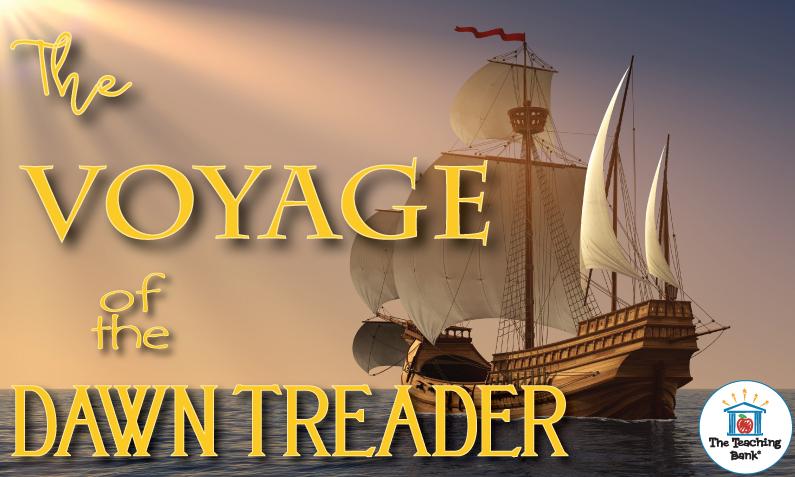
The Chronicles of Narnia series, written by C.S. Lewis, is a classic in the world of literature. The series has been widely acclaimed for its vivid imagery, unique characters, and compelling storyline. The Voyage of the Dawn Treader, which is the fifth book in the series, is no exception.
We earn a commission if you make a purchase, at no additional cost to you.
Benefits of Using The Voyage of the Dawn Treader in Your Classroom:
Enhances creativity and imagination:The Voyage of the Dawn Treader takes readers on an unforgettable journey to the magical land of Narnia. The vivid descriptions of the world and the characters allow students to use their imagination and creativity to visualize the world in their own unique way. This can help foster a love of reading and creativity in students, which can be valuable skills for future success.
Develops critical thinking and analysis skills:The Voyage of the Dawn Treader is full of complex themes and ideas that require critical thinking and analysis to fully understand. By discussing these themes in the classroom, students can develop their analytical skills and learn how to think critically about the world around them. This can be especially useful for developing problem-solving skills and decision-making abilities.
Provides a unique perspective on moral and ethical issues: One of the core themes of The Voyage of the Dawn Treader is the idea of moral and ethical behavior. The characters in the novel are faced with difficult choices and moral dilemmas, which can provide a unique perspective on these issues for students. By discussing these themes in the classroom, students can learn how to make ethical decisions and understand the consequences of their actions.
Encourages empathy and understanding: The characters in The Voyage of the Dawn Treader come from diverse backgrounds and have different experiences. By reading about these characters, students can develop empathy and understanding for people who are different from themselves. This can help foster a sense of community and inclusivity in the classroom, which can be beneficial for all students.
Provides a gateway to other literary works:The Voyage of the Dawn Treader is just one book in a larger series of novels. By introducing students to this novel, teachers can encourage students to read other books in the series or other literary works by C.S. Lewis. This can help develop a love of reading and literature in students, which can have a positive impact on their academic and personal lives.
The Voyage of the Dawn Treader is an excellent novel to use in the classroom. It provides a unique perspective on moral and ethical issues, encourages creativity and imagination, and helps develop critical thinking and analysis skills. By using this novel in the classroom, teachers can help foster a love of reading and literature in their students and provide valuable skills for future success.
I offer a complete novel study to accompany The Voyage of the Dawn Treader for use in the classroom or homeschool. The unit includes both a printable format and a Google Drive™ format for use in a paperless classroom or with Google Classroom.
Are you interested in reading about and sharing ideas with other educators on using children’s literature in your classroom? My goal is to bring together teachers and homeschoolers who teach grades 3-8 and use novels with their students. I’d love for you to join me to learn, share, and grow together!
Number the Stars by Lois Lowry is a powerful historical fiction novel that gives upper-elementary and middle-grade students an opportunity to explore courage, friendship, resistance, empathy, and standing up against injustice.
Set in Denmark during World War II, the novel follows Annemarie Johansen and her family as they help their Jewish friends escape the Nazi occupation. Through Annemarie’s eyes, students encounter a difficult period in history while experiencing a story that is accessible, engaging, and filled with opportunities for meaningful discussion.
If you’re planning a Number the Stars novel study for your 4th, 5th, or 6th grade students, this guide will give you ideas for connecting the novel to reading comprehension, vocabulary, critical thinking, history, and social-emotional learning.
We earn a commission if you make a purchase, at no additional cost to you.
Why Teach Number the Stars?
One of the greatest strengths of Number the Stars is that it allows students to encounter history through the experiences of a child.
Rather than simply reading facts about World War II, students follow Annemarie as she begins to understand what is happening around her. This creates natural opportunities to discuss questions such as:
What does it mean to be courageous?
Why do people sometimes have to make difficult choices?
How can ordinary people respond when others are being treated unfairly?
What makes someone a good friend?
How do fear and courage influence the decisions people make?
Why is it important to learn about difficult moments in history?
These questions can move students beyond simple recall and toward deeper reading comprehension and critical thinking.
Teaching Historical Fiction Through Number the Stars
Number the Stars works particularly well as a historical fiction novel because students can examine both the story and the historical context surrounding it.
As students read, encourage them to distinguish between what is happening in the fictional story and what they can learn about the real historical events that inspired it.
You can explore:
World War II
Nazi-occupied Denmark
The Danish Resistance
The rescue of Danish Jews
The Holocaust
Geography of Denmark and Sweden
Courage and resistance
Friendship and loyalty
Prejudice and discrimination
Human rights
This makes Number the Stars an excellent choice for connecting ELA and social studies.
Number the Stars Reading Comprehension
A novel study shouldn’t turn a great book into a stack of worksheets.
The goal is to help students think more deeply about what they’re reading while still allowing them to become immersed in the story.
When teaching Number the Stars, comprehension questions can focus on:
Character motivations
Making inferences
Cause and effect
Predicting
Making connections
Identifying themes
Using text evidence
Analyzing character development
Understanding historical context
I recommend using a small number of thoughtful questions rather than overwhelming students with questions after every few pages.
The questions should encourage students to explain why they think something happened—not simply identify what happened.
Vocabulary and Grammar in Context
Number the Stars also provides an excellent opportunity to teach vocabulary in context.
Instead of giving students a long list of unrelated vocabulary words, have them encounter words as they appear within the story.
Students can:
Determine meaning from context
Identify parts of speech
Use new words in sentences
Practice spelling
Explore synonyms and related words
Apply vocabulary through writing
This approach allows vocabulary instruction to become part of the reading experience rather than something completely separate from the novel.
The unit can be used with a whole class, small reading group, homeschool student, or independent reader. It includes both printable materials and digital resources for Google Drive.
What’s Included?
The complete Number the Stars Novel Study includes:
Teacher Resources
Detailed daily lesson plans
Pacing and Standards Guide
Chapter/Section Guide
Vocabulary Word Wall Cards
Answer Keys
Parent Letter
Student Resources
Spelling list
Vocabulary activities
Grammar activities
Chapter-by-chapter comprehension questions
Short-answer questions designed to encourage deeper thinking
Book-related extension activities
End-of-book activities
Story Elements Interactive Notebook activities
Assessment Resources
Part 1 assessment covering Chapters 1–6
Part 2 assessment covering Chapters 7–end
Vocabulary questions
Comprehension questions
Essay questions
Digital assessment options
The unit also includes Common Core Standards alignment for grades 4–6.
Print or Digital? You Get Both!
Today’s classrooms aren’t one-size-fits-all, so this novel study includes both printable and Google Drive-compatible formats.
Use the printable version for traditional instruction, or assign the digital activities through your classroom platform.
The digital format can be especially helpful for:
1:1 classrooms
Paperless classrooms
Students working from home
Absent students
Small-group instruction
Independent work
The assessments also include digital options, with multiple-choice Google Forms quizzes available for self-grading.
Save Time With a Ready-to-Teach Novel Unit
Teaching an entire novel is rewarding, but the planning can be time-consuming.
This Number the Stars novel unit was created to give you a complete framework so you don’t have to create every comprehension question, vocabulary activity, lesson plan, and assessment yourself.
It is designed to be low-prep and ready to teach, while still giving you flexibility to adjust the pacing and activities for your students.
You can purchase this novel study at the following locations:
💬 Connect with Fellow Educators!
Are you teaching Number the Stars this school year? How do you celebrate kindness in your classroom?
Join our free community, Book Talk with The Teaching Bank, to share ideas, grab freebies, and connect with 3rd–8th grade teachers using novels in the classroom!
*The Teaching Bank participates in the Amazon Associate Program and earns a fee from qualifying purchases made on the Amazon.com site.
If you’re looking for a funny, engaging novel to read with your elementary students, Wayside School Beneath the Cloud of Doom by Louis Sachar is a fantastic choice.
After more than forty years, Louis Sachar returned to the wonderfully wacky world of Wayside School—and this newest adventure delivers the same absurd humor, unexpected situations, and laugh-out-loud moments that have made the Wayside School books classroom favorites for generations.
For teachers who love using children’s literature and novel studies to build reading skills, Wayside School Beneath the Cloud of Doom offers plenty of opportunities for reading comprehension, vocabulary development, critical thinking, creativity, discussion, and writing.
And if you’re looking for a Wayside School Beneath the Cloud of Doom novel study to make teaching the book easier, I’ve created a complete, no-prep unit to accompany the novel.
We earn a commission if you make a purchase, at no additional cost to you.
📚 Why Teach Wayside School Beneath the Cloud of Doom?
One of the best things about Louis Sachar’s Wayside School books is how quickly they capture students’ attention.
The world of Wayside School is anything but ordinary. Strange things happen. Characters behave in unexpected ways. Problems don’t always have predictable solutions. And just when students think they understand what’s happening, the story can take another hilarious turn.
That makes Wayside School Beneath the Cloud of Doom an excellent book for getting students excited about reading while also developing important ELA skills.
Here are some of the ways this novel can support learning in your classroom.
😂 1. Encourage a Love of Reading
Let’s face it: getting students excited about reading matters.
When students genuinely enjoy a book, they’re more likely to want to keep reading, participate in discussions, and explore other books.
Wayside School Beneath the Cloud of Doom is filled with humor, unusual characters, and unexpected situations that can keep reluctant readers engaged.
The humor also makes the book especially enjoyable as a class read-aloud.
If you’ve ever read a Wayside School book aloud to a class, you probably already know what happens next: students start laughing, anticipating what might happen, and sharing their reactions with one another.
Those moments can help create something every teacher wants—a classroom community built around books and reading.
💡 2. Spark Creativity and Imagination
The world of Wayside School is wonderfully unpredictable.
Students encounter situations that encourage them to think beyond the ordinary and imagine possibilities that don’t always follow the rules of the real world.
That makes this novel a natural starting point for creative writing and imaginative activities.
After reading, students can:
Create their own unusual Wayside School classroom
Invent a new character
Write a silly story set at Wayside School
Design an unexpected solution to a problem
Predict what might happen next
Compare their ideas with those of their classmates
These types of activities allow students to practice writing and communication skills without making writing feel like a chore.
🧠 3. Build Critical Thinking Skills
Funny doesn’t mean simple.
Wayside School Beneath the Cloud of Doom provides plenty of opportunities for students to think critically about characters, events, problems, and solutions.
As students read, encourage them to make predictions, look for clues, analyze characters, and explain their thinking.
You can ask questions such as:
What do you think will happen next?
Why did the character make that choice?
What clues helped you make that prediction?
How would you have handled the situation?
What makes this situation unusual?
What can we learn from the characters’ actions?
These discussions turn an entertaining story into a valuable reading comprehension and critical-thinking experience.
📖 4. Strengthen Reading Comprehension
A high-interest novel is an excellent vehicle for teaching comprehension skills.
With Wayside School Beneath the Cloud of Doom, students can practice:
Making inferences
Citing evidence from the text
Summarizing
Making predictions
Analyzing characters
Understanding cause and effect
Identifying important details
Making connections
Explaining their thinking
Instead of teaching these skills in isolation, you can teach and practice them using a story students actually want to read.
✏️ 5. Expand Vocabulary and Language Skills
Louis Sachar’s writing also provides opportunities to explore vocabulary and language.
A novel study can help students encounter unfamiliar words in context and practice determining meaning using clues from the surrounding text.
You can also use the novel as a springboard for:
Vocabulary activities
Context-clue practice
Word discussions
Character descriptions
Writing activities
Sentence development
Literary discussions
This allows vocabulary instruction to become part of the reading experience rather than a separate worksheet students complete without context.
🤝 6. Encourage Discussion and Collaboration
A great novel gives students something to talk about.
The unusual situations in Wayside School Beneath the Cloud of Doom make it particularly well suited for partner discussions, small-group conversations, literature circles, and whole-class discussions.
Students can compare their predictions, debate character choices, discuss solutions to problems, and share their reactions to the story.
These conversations give students practice with important communication skills while helping them learn from one another.
❤️ 7. Create Opportunities for Social-Emotional Learning
Although humor is one of the biggest draws of the Wayside School books, the characters and situations can also open the door to meaningful conversations.
Teachers can use the novel to discuss topics such as:
Friendship
Empathy
Problem-solving
Resilience
Cooperation
Communication
Understanding different perspectives
The humor creates an approachable way for students to discuss how characters respond to challenges and interact with one another.
📚 A Complete Wayside School Beneath the Cloud of Doom Novel Study
Want to teach Wayside School Beneath the Cloud of Doom without spending hours creating comprehension questions, vocabulary activities, assessments, and lesson plans?
The no-prep novel study includes both printable and digital resources, so you can use it in a traditional classroom, paperless classroom, Google Classroom, small group, or homeschool setting.
What’s Included?
The Wayside School novel study includes:
Daily lesson plans
Pacing and standards guide
Vocabulary activities
Vocabulary Word Wall Cards
Chapter-by-chapter comprehension questions
Reading comprehension activities
Book-specific extension activities
Spelling list
End-of-book assessment
Vocabulary assessment
Essay question
Digital Google Drive™ assessment
End-of-the-book activity packet
Story Elements Interactive Notebook Activity Packet
Complete answer keys
Common Core Standards alignment for grades 3-5
The resource includes 130+ PDF pages, giving you a complete set of materials for your novel unit.
🖨️ Printable + Digital Formats
You don’t have to choose between paper and digital.
This Wayside School Beneath the Cloud of Doom book study includes both a printable PDF version and a Google Drive™ version.
Use the printable activities for traditional instruction or use the digital resources for a paperless novel study or Google Classroom.
Not sure if this Wayside School Beneath the Cloud of Doom novel study is right for your students?
Download the free preview and take a look at the included activities before you purchase.
It’s an easy way to see exactly what you’ll receive.
⭐ Make Your Wayside School Novel Unit Easier
Wayside School Beneath the Cloud of Doom is the kind of book that can make students laugh, think, discuss, and want to keep reading.
Whether you’re using it as a whole-class read-aloud, literature circle book, small-group novel, or independent reading selection, this Louis Sachar classic can provide a wonderful foundation for meaningful ELA instruction.
And with a ready-to-use Wayside School novel study, you don’t have to spend your evenings creating materials to go along with it.
Save your planning time and spend more time enjoying the book with your students.
👉 Get the Wayside School Beneath the Cloud of Doom Novel Study here.
More Wayside School Resources
If your students love Wayside School Beneath the Cloud of Doom, you can also explore the other books in the Wayside School series and use the Wayside School novel studies to create an engaging series-based reading experience.
💬 Connect with Fellow Educators!
Are you teaching Wayside School this school year? How do you celebrate kindness in your classroom?
Join our free community, Book Talk with The Teaching Bank, to share ideas, grab freebies, and connect with 3rd–8th grade teachers using novels in the classroom!
*The Teaching Bank participates in the Amazon Associate Program and earns a fee from qualifying purchases made on the Amazon.com site.
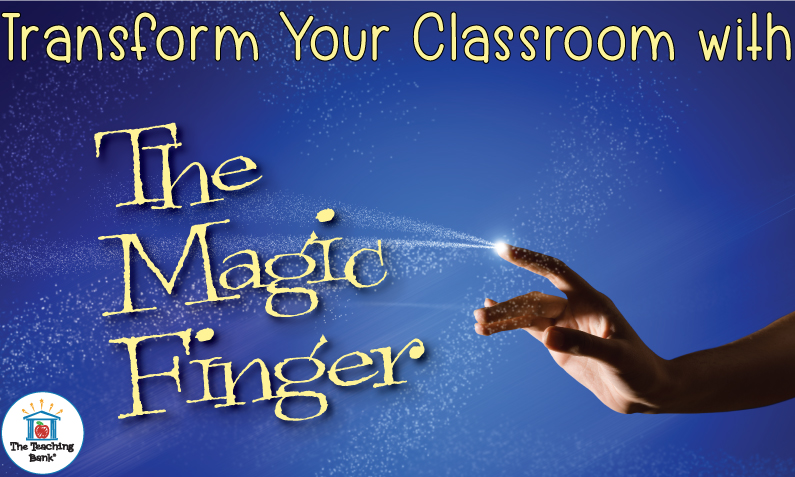
As a teacher, you are constantly searching for new and exciting ways to engage your students and make learning more enjoyable. One way to achieve this is by incorporating literature into your curriculum. And what better author to turn to than Roald Dahl? His works are not only entertaining but also packed with valuable lessons that can be applied in real life. The Magic Finger is a clever and creative novel by Roald Dahl. True to the Roald Dahl style, it is quirky, funny, and absolutely absurd. Students will be left thinking of all the things they might do if they too had the Magic Finger! It is a great book to use in your classroom or homeschool for a whole class novel study, small book groups, or individual book studies.
We earn a commission if you make a purchase, at no additional cost to you.
The Magic Finger by Roald Dahl is a classic children’s book that can be an excellent addition to any classroom. This book is not only entertaining but also has several educational benefits.
Why you should use The Magic Finger by Roald Dahl in your classroom and how it can benefit your students.
Engaging Storyline: The Magic Finger has a captivating plot that will keep your students engaged and interested in the story. The book is filled with exciting events, unexpected twists, and valuable lessons that your students can learn from.
Develops Reading and Comprehension Skills: The Magic Finger by Roald Dahl is an easy-to-read book that can help develop your students’ reading skills. It has short chapters and simple language that can be easily understood by young readers. Additionally, the book has a unique and captivating storyline that can keep your students engaged while improving their comprehension skills.
Promotes Empathy and Understanding: The Magic Finger by Roald Dahl teaches valuable lessons about empathy, understanding, and acceptance. The story revolves around a young girl who possesses a magical ability to make people smaller or larger. Through the book, students can learn the importance of treating others with kindness, even those who are different from us.
Sparks Imagination and Creativity: The Magic Finger by Roald Dahl is a book that ignites the imagination and creativity of young readers. The magical aspect of the story can inspire students to think beyond the ordinary and dream up new possibilities. Encouraging students to explore their creativity can help them develop problem-solving and critical-thinking skills.
Supports Social and Emotional Learning: The Magic Finger by Roald Dahl is an excellent resource for social and emotional learning (SEL). The book’s themes of empathy, acceptance, and understanding can help students develop their social and emotional intelligence. By discussing the story and its characters, students can develop their communication and social skills.
Provides Opportunities for Cross-Curricular Learning: The Magic Finger by Roald Dahl can be used to teach various subjects across the curriculum. For example, you can use the book to teach science by exploring the magical powers of the main character. You can also use it to teach history by discussing the book’s themes of discrimination and acceptance.
Try a free sample of the novel study for The Magic Finger
The Magic Finger by Roald Dahl is a fantastic book that can offer numerous benefits to your classroom. It is an easy-to-read book that can improve your students’ reading and comprehension skills. The book also teaches valuable lessons about empathy, understanding, and acceptance, promoting social and emotional learning. Additionally, it sparks creativity and imagination and provides opportunities for cross-curricular learning. As an educator, adding The Magic Finger by Roald Dahl to your classroom library can be an excellent investment in your students’ education.
I offer a complete novel study to accompany The Magic Finger for use in the classroom or homeschool. The unit includes both a printable format and a Google Drive™ format for use in a paperless classroom or with Google Classroom.
You can purchase this novel study at the following locations:
Are you interested in reading about and sharing ideas with other educators on using children’s literature in your classroom? My goal is to bring together teachers and homeschoolers who teach grades 3-8 and use novels with their students. I’d love for you to join me to learn, share, and grow together!
In the book Flat Stanley, Stanley was mailed to California instead of going by train or plane to save money. This idea seems hilarious, crazy, and a wild stretch of the author’s imagination, but did you know that back in 1913-1914, it was legal to send children through the mail? There are cases of “real-life Flat Stanleys” in the United States Postal history.
In 1913, the U.S. Post Office introduced a Parcel Post service for Americans to send larger packages through the Post Office. Before this time, all you could send was a letter. This new service was beneficial for businesses and farmers, but a few people took advantage of it to ship their children! On January 26, 1913, the New York Times reported that a mail carrier in Batavia, Ohio, delivered a baby “mailed” by his parents to his grandmother, who lived about a mile away:
“Vernon O. Lytle, mail carrier on rural route No. 5, is the first man to accept and deliver under parcel post conditions a live baby. The baby, a boy weighing 10-3/4 pounds, just within the 11-pound weight limit, is the child of Mr. and Mrs. Jesse Beagle of Glen Este. The boy was well-wrapped and ready for “mailing” when the carrier received him today. Mr. Lytle delivered the boy safely at the address on the card attached, that of the boy’s grandmother, Mrs. Louis Beagle, who lives about a mile distant. The postage was fifteen cents and the parcel was insured for $50.” *From The New York Times. “Baby Boy by Parcel Post.” 26 January 1913
Learn more about this unbelievable but true story in Flat Stanley novel Study, “Could you Be a Real-Life Flat Stanley?”. It is included with the full Flat Stanley Novel Study, or available alone. It includes a reading informational article detailing the longer, complete version of this interesting factoid of our postal history, as well as a math and writing follow-up activity where the student will work to determine the cost to deliver themselves to a travel destination via mail, car, train, or plane! Crazy, fun, and educational all in one!
</p>
Flat Stanley by Jeff Brown, is a fun book that is wonderful to use in the classroom.
We earn a commission if you make a purchase, at no additional cost to you.
This book can spark numerous activities across the curriculum. The book asks the reader to suspend reality and go along for the ride. Students really have a fun time reading Flat Stanley and participating in the extension activities.
Try a free sample of the novel study for Flat Stanley
Completing the Flat Stanley project with your class can be a fun learning experience. Each student will create their own personalized flat character (usually named after themselves). They will ask a relative or friend that lives in a different place to take their character on an adventure and report back. Most helpers get into the fun and make it enjoyable for students to share their results. All three of my kids have sent their flat selves with Grandpa on golf vacations. Grandpa had so much fun with his Flat Grandkids and posed for numerous pictures. My kids were able to share their Flat adventures with their class.
You can purchase this novel study at the following locations:
Are you interested in reading about and sharing ideas with other educators on using children’s literature in your classroom? My goal is to bring together teachers and homeschoolers who teach grades 3-8 and use novels with their students. I’d love for you to join me to learn, share, and grow together!







 “Vernon O. Lytle, mail carrier on rural route No. 5, is the first man to accept and deliver under parcel post conditions a live baby. The baby, a boy weighing 10-3/4 pounds, just within the 11-pound weight limit, is the child of Mr. and Mrs. Jesse Beagle of Glen Este. The boy was well-wrapped and ready for “mailing” when the carrier received him today. Mr. Lytle delivered the boy safely at the address on the card attached, that of the boy’s grandmother, Mrs. Louis Beagle, who lives about a mile distant. The postage was fifteen cents and the parcel was insured for $50.”


