Looking for an engaging Holes novel study that will keep your students reading, thinking, discussing, and writing? Holes by Louis Sachar is a fantastic choice for a classroom novel, and with the right activities and discussion questions, it can become so much more than just a book your students read.
Filled with mystery, humor, memorable characters, unexpected connections, and important life lessons, Holes gives upper-elementary and middle school students plenty to think about.
We earn a commission if you make a purchase, at no additional cost to you.
If you’re planning a Holes book study for 4th, 5th, or 6th grade, this novel offers countless opportunities to teach reading comprehension, vocabulary, character development, theme, inference, text evidence, writing, and critical thinking.
And the best part? You don’t have to create all of those lessons and activities yourself.
Why Teach Holes by Louis Sachar?
Holes follows Stanley Yelnats as he is sent to Camp Green Lake, a juvenile detention camp where the boys are forced to dig holes every day. What initially appears to be a strange punishment gradually becomes part of a much bigger story involving family history, friendship, justice, perseverance, and the surprising connections between the past and present.
Louis Sachar’s storytelling makes Holes especially effective for a classroom novel study because students have plenty of reasons to keep reading.
The novel’s mystery naturally encourages students to make predictions, ask questions, notice clues, make inferences, and connect seemingly unrelated events.
That makes Holes an excellent book for teaching deeper reading skills—not simply checking whether students remember what happened in each chapter.
6 Reasons Holes Works So Well as a Classroom Novel
1. It Encourages Critical Thinking
One of the greatest strengths of Holes is its complex plot.
Students have to pay attention to details and think about how events connect. As the story unfolds, they can make predictions, draw conclusions, identify clues, and revise their thinking.
This makes Holes an excellent novel for teaching skills such as:
Making inferences
Making predictions
Citing text evidence
Making connections
Analyzing plot
Identifying cause and effect
Summarizing
Drawing conclusions
Instead of simply asking students, “What happened?” you can ask them to think about why it happened and what it means.
2. It Teaches Resilience and Perseverance
Stanley faces difficult circumstances throughout the novel, and students have many opportunities to discuss resilience, perseverance, friendship, courage, and overcoming adversity.
These themes can lead to meaningful classroom conversations about how characters respond when things don’t go according to plan.
Students can examine the choices characters make and consider questions such as:
How do characters respond to challenges?
What makes someone resilient?
How do friendships change the characters?
When should someone stand up for what is right?
How do the characters’ experiences shape who they become?
These discussions can help students connect the events of the novel to their own lives and experiences.
3. The Characters Give Students Plenty to Analyze
From Stanley Yelnats to Zero and the many characters connected to Camp Green Lake, Holes provides excellent opportunities for character analysis.
Students can track how characters change throughout the novel, examine their motivations, and support their ideas with evidence from the text.
Character analysis activities can help students move beyond simply describing a character and begin explaining how and why a character changes.
4. The Themes Encourage Meaningful Discussion
Holes contains several themes that are appropriate for rich classroom discussion, including:
Friendship
Justice and fairness
Perseverance
Family
Fate
Choices and consequences
Racism and prejudice
Social inequality
Redemption
Because these themes develop throughout the novel, students can return to them as they read and consider how their understanding changes.
5. The Unusual Plot Keeps Students Engaged
Let’s be honest: getting students excited about reading a class novel isn’t always easy.
Holes has a built-in advantage.
There are mysteries to solve, questions to answer, characters to understand, and connections between the past and present that gradually become clearer.
Students are often eager to find out what happens next—which makes it much easier to build reading lessons around the novel.
6. It Works Across Multiple ELA Skills
A good novel study should do more than provide chapter questions.
Holes can become the foundation for an entire ELA unit incorporating:
Reading comprehension
Vocabulary
Grammar
Writing
Character analysis
Theme
Plot
Text evidence
Critical thinking
Literary analysis
Discussion
Assessment
That means students are practicing important literacy skills while reading a book they actually want to finish.
Make Teaching Holes Easier with a Complete Novel Study
Of course, there’s one problem with creating a comprehensive Holes unit:
It takes a LOT of time.
You need comprehension questions. Vocabulary activities. Writing prompts. Assessments. Answer keys. Lesson plans. Extension activities.
And if you’re teaching multiple novels during the year, that preparation time adds up quickly.
This ready-to-use resource gives you the materials you need to turn Holes into a meaningful ELA unit without spending hours creating everything from scratch.
What’s Included in the Holes Novel Study?
The Holes novel study includes teacher and student materials designed to support students throughout the entire novel.
You’ll find:
Detailed lesson plans
Reading guides
Chapter-by-chapter comprehension questions
Vocabulary activities
Grammar activities
Writing activities
Critical-thinking questions
Character and literary analysis
Assessments
Answer keys
Interactive notebook activities
End-of-book activities
Common Core ELA standards alignment
There are also printable and digital resources, giving you the flexibility to use the unit in a traditional classroom, paperless classroom, or Google Classroom environment.
A No-Prep Holes Novel Unit
One of my favorite things about using a ready-made novel study is the time it saves.
Instead of searching Pinterest for Holes activities, creating comprehension questions, and putting together your own assessments, you can have the materials ready to go.
Print what you need.
Assign the digital activities when appropriate.
And spend your planning time focusing on your students instead of creating worksheets.
Perfect for:
4th grade ELA
5th grade ELA
6th grade ELA
Whole-class novel studies
Small-group reading
Literature circles
Reading intervention
Independent reading
Homeschool
Digital learning
Paperless classrooms
Help Students Go Beyond Basic Comprehension
One of the biggest goals of a novel study should be helping students become better readers and thinkers.
That’s why the activities in this Holes unit go beyond simple recall questions.
Students are asked to think about characters, themes, vocabulary, plot developments, and the author’s choices.
They practice using evidence from the text to support their ideas and develop written responses that demonstrate actual understanding.
Instead of simply asking:
“What happened?”
students can explore questions such as:
“Why did this happen?”
“What evidence supports your thinking?”
“How has this character changed?”
“What theme is developing?”
“How are the events of the past connected to what is happening in Stanley’s life?”
Those are the kinds of questions that turn reading into meaningful ELA instruction.
Printable + Digital Holes Activities
Teachers need flexibility, especially when classroom needs can change from year to year.
This Holes novel study includes both printable and digital formats, so you can choose what works best for your students.
Use the printable pages for traditional classroom instruction or assign digital activities for students working independently or in a paperless classroom.
You can also mix and match formats throughout the unit.
Not sure if this Holes book study is right for your classroom?
You can download a free sample and see the types of activities included before purchasing the complete unit.
It’s a great way to preview the resource and see how it can fit into your Holes reading unit.
Bring Holes to Life in Your Classroom
Holes by Louis Sachar is much more than an entertaining story about a boy digging holes in the desert.
It’s a novel about friendship, perseverance, family, justice, choices, and the surprising ways stories connect across generations.
Those themes make it an excellent choice for a 4th-6th grade novel study, while the engaging plot keeps students invested in the reading.
With a complete, ready-to-use Holes novel unit, you can spend less time creating materials and more time helping your students become thoughtful, confident readers.
Ready to start your Holes novel study?
[→ SHOP THE HOLES NOVEL STUDY]
Connect with Fellow Educators!
Are you teaching Holes this school year?
Join our free community, Book Talk with The Teaching Bank, to share ideas, grab freebies, and connect with 3rd–8th grade teachers using novels in the classroom!
*The Teaching Bank participates in the Amazon Associate Program and earns a fee from qualifying purchases made on the Amazon.com site.
The Chocolate Touch by Patrick Skene Catling is a classic children’s novel that has been beloved by readers for decades. It tells the story of a young boy named John who discovers a magical chocolate bar that turns everything he touches into chocolate. This delightful tale is not only entertaining but also provides valuable lessons about responsibility, greed, and the importance of moderation.
We earn a commission if you make a purchase, at no additional cost to you.
Why you should consider using The Chocolate Touch in your classroom.
Engaging and Entertaining: One of the primary reasons why you should use The Chocolate Touch in your classroom is that it is a highly engaging and entertaining story. The book has a fast-paced plot, engaging characters, and a touch of magic that will capture your students’ imaginations. The story is perfect for children in grades 3-6 and is an excellent choice for a read-aloud or independent reading assignment.
Teaches Important Life Lessons: The Chocolate Touch is not just a fun story; it also teaches important life lessons that are relevant to children’s lives. The main character, John, learns about the dangers of excess and the importance of moderation. He discovers that too much of a good thing can be harmful and learns to be responsible for his actions. The book provides an excellent opportunity for classroom discussions on the topics of greed, responsibility, and the consequences of our actions.
Builds Vocabulary and Literacy Skills: Reading The Chocolate Touch is an excellent way to help your students build their vocabulary and literacy skills. The book is full of descriptive language and rich imagery that will help your students develop their vocabulary and comprehension skills. Additionally, the story is an excellent opportunity to teach literary devices such as foreshadowing, symbolism, and character development. A great activity is to compare the novel to the story of King Midas.
Provides Cross-Curricular Opportunities: Using The Chocolate Touch in your classroom provides cross-curricular opportunities that can be integrated into multiple subject areas. For example, you can use the story to teach math concepts such as measurement and fractions by having students calculate how much chocolate John creates. Additionally, the story can be used to teach science concepts such as states of matter and chemical reactions by having students explore how chocolate changes from a solid to a liquid.
Timeless Classic: The Chocolate Touch is a timeless classic that has stood the test of time. The book was first published in 1952 and has been enjoyed by generations of children. Using a classic book like The Chocolate Touch in your classroom is an excellent way to introduce your students to the joys of reading and help them develop a love for literature that will last a lifetime.
The Chocolate Touch is a delightful and engaging story that provides valuable life lessons, builds vocabulary and literacy skills, provides cross-curricular opportunities, and is a timeless classic. By using this book in your classroom, you can help your students develop a love for reading and provide them with an enjoyable learning experience.
I offer a complete novel study to accompany The Chocolate Touch for use in the classroom or homeschool. The unit includes both a printable format and a Google Drive™ format for use in a paperless classroom or with Google Classroom.
Try a free sample of the novel study for The Chocolate Touch
You can purchase this novel study at the following locations:
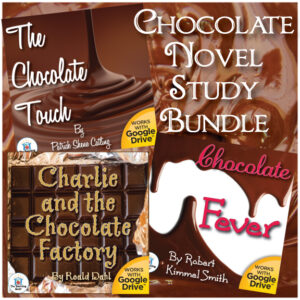
Try a chocolate theme by incorporating reading The Chocolate Touch along with Chocolate Fever and Charlie and the Chocolate Factory!
Are you interested in reading about and sharing ideas with other educators on using children’s literature in your classroom? My goal is to bring together teachers and homeschoolers who teach grades 3-8 and use novels with their students. I’d love for you to join me to learn, share, and grow together!
Lunch Money by Andrew Clements is a captivating book offering a wealth of educational benefits for students while keeping them entertained from cover to cover.
We earn a commission if you make a purchase, at no additional cost to you.
Benefits of Using Lunch Money in Your Classroom:
Relevance to Real-life Issues: Lunch Money delves into the world of entrepreneurship and innovation, themes that are highly relevant in today’s society. Through the protagonist Greg’s journey of starting his own mini-comic book business, students are exposed to valuable lessons about creativity, problem-solving, and perseverance. The novel provides a platform for discussions on entrepreneurship, economics, and ethical decision-making, making it a valuable resource for teaching real-life skills.
Promotes Literacy and Reading Comprehension: As educators, fostering a love for reading is paramount. Lunch Money is written in a clear and accessible style, making it suitable for a wide range of reading levels. Its engaging plot and relatable characters captivate students’ attention, encouraging them to become active readers. By analyzing character motivations, plot development, and literary techniques, students can enhance their reading comprehension skills while enjoying a captivating story.
Sparks Creativity and Critical Thinking: The entrepreneurial endeavors of the protagonist in Lunch Money provide ample opportunities for students to flex their creative muscles. From designing comic books to marketing strategies, students can explore their own ideas for starting a business while honing their critical thinking skills. The novel encourages students to think outside the box, problem-solve, and consider the consequences of their actions – all essential skills for success in the 21st century.
Cultivates Financial Literacy: In today’s increasingly complex financial landscape, teaching students about money management is more important than ever. Lunch Money offers a practical introduction to financial literacy as students follow Greg’s journey of budgeting, pricing, and managing his business expenses. Through discussions about profit margins, investment, and risk-taking, students gain valuable insights into the fundamentals of finance in a relatable context.
Fosters Empathy and Social Awareness: Beyond its entrepreneurial themes, Lunch Money also explores broader issues such as friendship, competition, and social dynamics. By examining the interactions between characters and the consequences of their actions, students develop empathy and social awareness. Discussions about fairness, justice, and integrity prompt students to reflect on their own values and behavior, fostering a deeper understanding of themselves and others.
Lunch Money by Andrew Clements is a valuable addition to any classroom library. Its engaging narrative, relevant themes, and educational content make it an ideal choice for teachers looking to inspire and educate their students. By incorporating this novel into your curriculum, you can ignite a passion for reading, foster critical thinking skills, and empower students to navigate the complexities of the world around them.
I offer a complete novel study to accompany Lunch Money for use in the classroom or homeschool. The unit includes both a printable format and a Google Drive™ format for use in a paperless classroom or with Google Classroom.
Try a free sample of the novel study for Lunch Money
You can purchase this novel study at the following locations:
Are you interested in reading about and sharing ideas with other educators on using children’s literature in your classroom? My goal is to bring together teachers and homeschoolers who teach grades 3-8 and use novels with their students. I’d love for you to join me to learn, share, and grow together!
Mrs. Frisby and the Rats of NIMH by Robert C. O’Brien is a timeless novel that offers rich opportunities for learning and engagement in the classroom. This classic story, which won the Newbery Medal in 1972, continues to captivate students with its compelling narrative and complex characters.
We earn a commission if you make a purchase, at no additional cost to you.
Benefits of Using Mrs. Frisby and the Rats of NIMH in Your Classroom:
Hooks with an Engaging Storyline: At the heart of Mrs. Frisby and the Rats of NIMH is an exciting and emotional tale that grabs the attention of young readers. The story follows Mrs. Frisby, a widowed field mouse, as she seeks the help of a group of intelligent rats to save her home and family. The suspenseful plot and well-developed characters ensure that students remain engaged from start to finish. Engaged students are more likely to participate in discussions and activities, making the classroom experience more dynamic and effective.
Contains Themes of Courage and Perseverance: One of the novel’s core themes is the courage and perseverance displayed by Mrs. Frisby. Her determination to save her family despite numerous obstacles provides an excellent opportunity for teachers to discuss the importance of these values. Lessons on courage and perseverance are crucial for students’ personal development and can be linked to real-life situations, helping them understand the relevance of these traits in their own lives.
Analyzes Ethical and Moral Dilemmas: Mrs. Frisby and the Rats of NIMH presents numerous ethical and moral dilemmas, making it an ideal text for critical thinking and ethical discussions. The rats, who were once ordinary creatures, gained intelligence through scientific experiments conducted by humans. This aspect of the story raises questions about the ethics of animal testing and the consequences of scientific advancements. Teachers can use these dilemmas to encourage students to think deeply about ethical issues and form their own opinions.
Offers Rich Vocabulary and Literary Devices: Robert C. O’Brien’s novel is replete with rich vocabulary and literary devices, providing a valuable resource for language arts instruction. Teachers can use the text to teach new vocabulary words in context, helping students expand their language skills. Additionally, the novel’s use of literary devices such as foreshadowing, symbolism, and metaphor can be analyzed to enhance students’ understanding of these concepts. This not only improves their reading comprehension but also prepares them for more advanced literary analysis in future studies.
Provides Opportunities for Cross-Curricular Connections: Mrs. Frisby and the Rats of NIMH offers numerous opportunities for cross-curricular connections. The novel’s exploration of scientific experiments and the rats’ advanced society can be tied to lessons in science and social studies. Teachers can discuss the real-life scientific concepts that inspired the story, such as genetics and animal behavior, making the novel a springboard for interdisciplinary learning. This approach helps students see the interconnectedness of different subjects and promotes a more holistic understanding of knowledge.
Encourages Empathy and Compassion: Reading about the struggles of Mrs. Frisby and the rats can foster empathy and compassion in students. By identifying with the characters and their plights, students can develop a greater understanding of and sensitivity to the experiences of others. This emotional engagement is crucial for building a compassionate classroom community where students support and respect one another.
Incorporating Mrs. Frisby and the Rats of NIMH into the classroom offers numerous educational benefits. Its engaging storyline, themes of courage and perseverance, ethical dilemmas, rich vocabulary, cross-curricular connections, and capacity to foster empathy make it a valuable addition to any curriculum. By teaching this novel, educators can provide students with a multifaceted learning experience that extends beyond the pages of the book.
I offer a complete novel study to accompany Mrs. Frisby and the Rats of NIMHfor use in the classroom or homeschool. The unit includes both a printable format and a Google Drive™ format for use in a paperless classroom or with Google Classroom.
Try a free sample of the novel study for Mrs. Frisby and the Rats of NIMH
You can purchase this novel study at the following locations:
Are you interested in reading about and sharing ideas with other educators on using children’s literature in your classroom? My goal is to bring together teachers and homeschoolers who teach grades 3-8 and use novels with their students. I’d love for you to join me to learn, share, and grow together!
The Bad Beginning is the first book in Lemony Snicket’s, A Series of Unfortunate Events. This series is a quirky tale that many students will be drawn to. It is a great book to use in your classroom or homeschool for a whole class novel study, small book groups, or individual book studies.
We earn a commission if you make a purchase, at no additional cost to you.
The Bad Beginning was first published in 1999 and has since been made into a film and a Netflix series. The book is narrated by Lemony Snicket who tells the tale of Violet, Klaus, and Sunny Baudelaire, three orphans who have some really bad luck! Lemony Snicket starts the tale by warning his reader to not read the book:
What better way to make students want to read more than by telling them not to!
Benefits of Using The Bad Beginning in Your Classroom:
Fosters Critical Thinking: The Bad Beginning encourages students to think critically as they navigate the complex and mysterious world crafted by Lemony Snicket. The story is riddled with enigmas and challenges that prompt students to analyze situations, make predictions, and draw connections between events. This fosters a deepened sense of analytical thinking and problem-solving skills.
Enriches Vocabulary: Lemony Snicket’s writing style is both unique and eloquent, introducing students to a diverse range of vocabulary. Integrating this novel into the curriculum provides an opportunity for students to expand their lexicon and develop a love for language. Teachers can leverage the rich vocabulary present in the book to enhance language arts lessons and encourage students to use more sophisticated language in their own writing.
Explores Morality and Ethics: The Bad Beginning delves into themes of morality and ethics, presenting characters faced with difficult choices and moral dilemmas. This allows for meaningful discussions in the classroom about the consequences of one’s actions, the importance of empathy, and the gray areas between right and wrong. Such discussions contribute to the development of students’ moral compass and ethical reasoning.
Opportunities for Multidisciplinary Learning: The novel’s multifaceted narrative opens the door to interdisciplinary learning experiences. Teachers can seamlessly integrate lessons in science, history, and even mathematics, using the storyline as a springboard for exploration. This multidisciplinary approach not only enriches students’ understanding but also makes learning more interconnected and meaningful.
Promotes of Resilience: The series’ protagonists, the Baudelaire orphans, face numerous challenges and setbacks. Their ability to persevere and adapt in the face of adversity serves as an inspirational model for students. The Bad Beginning teaches resilience, emphasizing the importance of tenacity and a positive mindset in overcoming life’s obstacles.
Incorporating Lemony Snicket’s A Series of Unfortunate Events: The Bad Beginning into the classroom offers a multitude of benefits. From fostering critical thinking to enriching vocabulary and promoting resilience, this novel provides a unique and immersive learning experience for students. As educators, it’s essential to recognize the value of unconventional yet impactful literature that can shape young minds and instill a lifelong love for learning.
I offer a complete novel study to accompany The Bad Beginning for use in the classroom or homeschool. The unit includes both a printable format and a Google Drive™ format for use in a paperless classroom or with Google Classroom.
Try a free sample of the novel study for The Bad Beginning
You can purchase this novel study at the following locations:
Are you interested in reading about and sharing ideas with other educators on using children’s literature in your classroom? My goal is to bring together teachers and homeschoolers who teach grades 3-8 and use novels with their students. I’d love for you to join me to learn, share, and grow together!





 Connect with Fellow Educators!