Some of my most vivid childhood memories of school were the novel studies I read for various subjects. It was my favorite way to learn skills, history, and any topic! I love books, and being allowed to read an entire book from cover to cover as a school assignment put me in heaven! I am sure this is a major reason why, as a teacher, my passion is to create and teach novel studies! I love introducing new books to my class, and as a community, being immersed in the book together. I love it when a student pulls us off the schedule with a question or comment from something they read and leads the class into a lively discussion. That’s where the real memorable learning takes place, after all!
I create novel studies more than any other product line simply because I like to focus on what I love. I want to work with my passion! I often get questions from readers asking how I would set up novel studies in my classroom. I decided to write a small series explaining my methods. For the most part, my novel studies include comprehension questions, vocabulary/grammar skill work, extension activities, and assessments.
Today’s post, part 5, is the conclusion of the series dealing with the assessment aspect of using novel studies. You can read Part 1, Part 2, Part 3, and Part 4 here.
Novel Studies Part 5: Assessment
Assessment of a novel study can be a tricky thing to handle. My main objective, in addition to hitting skills, is to hook the student on the enjoyment of reading a good book. Too much assessment can kill that joy, but we need some way to assess that the skills are met. It’s a delicate balance.
I often get questions from potential buyers asking if there are assessments after every chapter of my novel studies. I kind of cringe when I get these questions because I can only imagine the dread the students must have if they are tested after every chapter! Testing is not the only way to assess if a student has read and understood. In my experience, class discussions and the writing in the comprehension answers are more than sufficient evidence of learning and understanding by the student. It is imperative when using novel studies not to lose focus and kill the joy of reading for your students! Your goal is for them to voluntarily pick up another book to read when a novel study is over, not run as far as they can from books!
I understand that assessments are helpful and necessary, but they should be appropriate and not overwhelming. For many of my novel studies, I have split the book into logical sections and have an assessment after each section. For example, you’ll find my Wonder,Projekt 1065, and Tuck Everlastingnovel studies in this format.
For some, I only offer assessments after completion of the book for comprehension, vocabulary, and longer paragraph-writing essay questions. The end-of-the-novel comprehension quiz includes both a multiple-choice and a short answer format for differentiation. A multiple-choice quiz for vocabulary and a paragraph-writing assessment is included with each novel study. You can see an example of this from my Turtle in Paradise Novel Study.
All of my novel studies offer a Google Drive™ format, in addition to the printable format, shown above, to use with your students. This allows you to use novel studies in a 1:1 classroom, save paper, and easily engage students who are absent. The assessments are included as multiple-choice questions in a Google Forms™ format so that they are self-grading. Here’s an example page from the Google Drive™ format of my A Wrinkle in Time Novel Study.
The key, in my opinion, is not to overdo the testing. You need to be able to assess the students’ understanding of what they are reading, which can be done in many different ways that aren’t paper and pencil testing. Don’t kill the love the student is developing for the book you are reading!
I hope this series has been helpful to you in planning to use novels in your classroom. I promise you will not be sorry, you may just be the spark that takes your student on a lifetime love of reading!
Are you interested in reading about and sharing ideas with other educators on using children’s literature in your classroom? My goal is to bring together teachers and homeschoolers who teach grades 3-8 and use novels with their students. I’d love for you to join me to learn, share, and grow together!
Some of my most vivid childhood memories of school were the novel studies I read for various subjects. It was my favorite way to learn skills, history, and any topic! I love books, and being allowed to read an entire book from cover to cover as a school assignment put me in heaven! I am sure this is a major reason why, as a teacher, my passion is to create and teach novel studies! I love introducing new books to my class, and as a community, being immersed in the book together. I love it when a student pulls us off the schedule with a question or comment from something they read and leads the class into a lively discussion. That’s where the real memorable learning takes place, after all!
I create novel studies more than any other product line simply because I like to focus on what I love. I want to work with my passion! I often get questions from readers asking how I would set up novel studies in my classroom. I decided to write a small series explaining my methods. For the most part, my novel studies include comprehension questions, vocabulary/grammar skill work, extension activities, and assessments.
Today’s post, Part 4, deals with the extras added to the novel studies, from writing activities to non-fiction research activities. You can read Part 1, Part 2, and Part 3 here.
Novel Studies Part 4: The Extras!
Of course, when using novel studies in the classroom, you must hit the basics of comprehension and vocabulary. One of the wonderful bonuses of using novel studies is the opportunity to pull other areas of the curriculum into a larger thematic unit. The various topics of the different books can lead to a plethora of inquiry and learning.
As I create a novel study, I open my mind to all the places the story is taking me. Some books are easier to explore outside the reading domain than others. Some take me down the rabbit hole of investigation with a deep-thought question that allows for longer writing passages that can lead to some really inspiring class debates!
With The One and Only Ivan Novel Study, students can research gorillas and elephants. They can learn about and compare life for these animals in the wild vs. captivity. The most interesting to me was the true story of the Shopping Mall Gorilla that inspired the story!
A book like Mrs. Frisby and the Rats of NIMH leads to some deep-thought questions regarding animal testing that can be debated and discussed in-depth in the classroom.
All of my novel studies offer a Google Drive™ format, in addition to the printable format, shown above, to use with your students. This allows you to use novel studies in a 1:1 classroom, save paper, and easily engage students who are absent. The “extras” of the novel study are included in the Google Drive™ format as well. Here’s an example page from the Google Drive™ format of my The Lightning Thief Novel Study.
I love how you can combine the theme from a full novel throughout different curriculum areas in a way that you just can’t do with short passage reading instruction. This allows for even deeper learning by using novel studies!
Join me for the conclusion of my series to learn how I handle the assessments to end my novel studies.
Are you interested in reading about and sharing ideas with other educators on using children’s literature in your classroom? My goal is to bring together teachers and homeschoolers who teach grades 3-8 and use novels with their students. I’d love for you to join me to learn, share, and grow together!
Looking for an engaging novel study for upper elementary students? Charlie and the Chocolate Factory by Roald Dahl is a fantastic choice for bringing reading comprehension, vocabulary, critical thinking, and meaningful discussion together in one unforgettable story.
With its imaginative setting, memorable characters, outrageous situations, and plenty of opportunities for discussion, Charlie and the Chocolate Factory can quickly become a favorite 3rd, 4th, or 5th grade novel.
But the real magic happens when you turn students’ enjoyment of the story into deeper learning.
We earn a commission if you make a purchase, at no additional cost to you.
Why Teach Charlie and the Chocolate Factory?
Charlie and the Chocolate Factory follows Charlie Bucket, a kind and impoverished boy who wins one of five Golden Tickets to visit Willy Wonka’s mysterious chocolate factory. As Charlie and the other children explore the factory, students encounter larger-than-life characters, fantastical inventions, and plenty of surprises.
The story is entertaining enough to keep students turning the pages while providing plenty of opportunities to develop important ELA skills.
1. Build Reading Comprehension Skills
A chapter-by-chapter Charlie and the Chocolate Factory novel study gives students opportunities to practice comprehension while reading an engaging, familiar story.
Students can examine important events, make predictions, identify key details, and think about how characters’ choices affect the story.
Instead of simply asking, “What happened?” students can dig deeper into why events happened and what they reveal about the characters.
2. Explore Character Traits and Choices
The characters in Charlie and the Chocolate Factory provide endless opportunities for discussing character traits, motivation, behavior, and consequences.
Charlie, Grandpa Joe, Willy Wonka, and the other children all make very different choices throughout the story.
Why does Charlie behave differently from the other children? What motivates the other characters? What can readers learn from the consequences of their choices?
These questions can lead to meaningful classroom conversations about kindness, honesty, greed, selfishness, perseverance, and personal responsibility.
3. Expand Vocabulary
Roald Dahl’s imaginative writing makes Charlie and the Chocolate Factory an excellent book for vocabulary instruction.
A novel study allows students to encounter vocabulary in context rather than learning isolated words from a list. Students can explore unfamiliar words, consider their meanings, and use context clues to strengthen their understanding.
This makes vocabulary instruction feel like a natural part of reading rather than a separate activity.
4. Encourage Critical Thinking
Willy Wonka’s chocolate factory is full of unusual situations that encourage students to think beyond the literal events of the story.
Students can analyze characters’ decisions, consider cause and effect, make predictions, compare characters, and support their ideas with evidence from the text.
These activities help turn an entertaining children’s book into a meaningful critical-thinking and reading-comprehension experience.
5. Encourage a Love of Reading
Perhaps the best reason to teach Charlie and the Chocolate Factory is simple: it’s fun!
The fantastical chocolate factory, quirky characters, humor, and suspense make this a highly engaging choice for elementary readers.
For reluctant readers especially, a book that makes students eager to find out what happens next can be a powerful way to build confidence and enthusiasm for reading.
Make Teaching Charlie and the Chocolate Factory Easier
An engaging novel is wonderful—but finding the time to create comprehension questions, vocabulary activities, assessments, and extension activities can make teaching a novel feel like a lot of work.
I created a complete novel study to accompany Roald Dahl’s Charlie and the Chocolate Factory, giving you ready-to-use resources for guiding students through the book without having to create everything yourself.
What’s Included?
This Charlie and the Chocolate Factory novel unit includes:
Chapter-by-chapter comprehension activities
Vocabulary activities
Writing and extension activities
Assessments and answer keys
Teacher resources and lesson plans
Printable PDF materials
Google Drive™ resources for digital learning
The flexible format makes this resource useful for whole-class instruction, small groups, literature circles, independent reading, or homeschool.
Try the free sample to preview the activities and see how the resource can fit into your classroom.
Get the Charlie and the Chocolate Factory Novel Study
If you’re planning a Charlie and the Chocolate Factory unit for 3rd, 4th, or 5th grade, this ready-to-use novel study can save you valuable planning time while giving students meaningful opportunities to practice reading, vocabulary, writing, and critical-thinking skills.
Create a Chocolate-Themed Novel Unit
Want to take the fun even further?
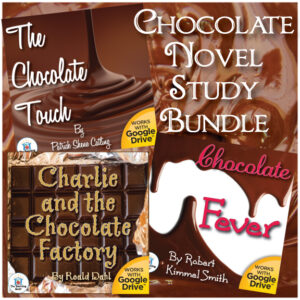
Pair Charlie and the Chocolate Factory with other chocolate-themed children’s novels such as Chocolate Fever and The Chocolate Touch.
Reading multiple books around a common theme gives students opportunities to compare characters, settings, plots, themes, and authors’ approaches while keeping the reading experience engaging.
You can also save when you purchase all three chocolate-themed novel studies together as a bundle.
Whether you’re planning a complete novel unit or simply looking for an engaging book to add to your elementary ELA curriculum, Charlie and the Chocolate Factory offers a delicious combination of reading enjoyment and meaningful learning.
Are you teaching Charlie and the Chocolate Factory this school year?
Join our free community, Book Talk with The Teaching Bank, to share ideas, grab freebies, and connect with 3rd–8th grade teachers using novels in the classroom!
*The Teaching Bank participates in the Amazon Associate Program and earns a fee from qualifying purchases made on the Amazon.com site.
Some of my most vivid childhood memories of school were the novel studies I read for various subjects. It was my favorite way to learn skills, history, and any topic! I love books, and being allowed to read an entire book from cover to cover as a school assignment put me in heaven! I am sure this is a major reason why, as a teacher, my passion is to create and teach novel studies! I love introducing new books to my class, and as a community, being immersed in the book together. I love it when a student pulls us off the schedule with a question or comment from something they read and leads the class into a lively discussion. That’s where the real memorable learning takes place, after all!
I create novel studies more than any other product line simply because I like to focus on what I love. I want to work with my passion! I often get questions from readers asking how I would set up novel studies in my classroom. I decided to write a small series explaining my methods. For the most part, my novel studies include comprehension questions, vocabulary/grammar skill work, extension activities, and assessments.
Today’s post, part 3, deals with pacing the novel study. You can read part 1 and part 2 here.
Novel Studies Part 3: Pacing
One of the challenges of using novel studies in the classroom is finding the time. It’s a balance between not moving too fast and not letting the unit drag on for too long because we all know you have a million other things to squeeze into your curriculum!
Each of my complete novel studies includes detailed daily teacher lesson plans that include the objective and directions for the day. You can see how this is designed fo my Freak the Mighty Novel Study.
I also create a pacing guide for each novel study that helps you map out your long-range plan. You can see an example here from my Crenshaw Novel Study.
It’s a delicate balance to set the pacing. I generally try to aim for approximately 20 pages to read per day. This will be altered based on the chapter sizes. I don’t schedule split chapters as I feel this disrupts the reader. I know I hate to stop reading mid-chapter. That’s just mean!
All of my novel studies offer a Google Drive™ format, in addition to the printable format, shown above, to use with your students. This allows you to use novel studies in a 1:1 classroom, save paper, and easily engage students that are absent. Here’s an example page from the Google Drive™ format of my Wishtree Novel Study. The same pacing would apply for the Google™ version as you would use for the printable version.
This pacing is a suggestion as it has worked for me, but it is very adaptable, so you can work to fit it into the schedule that you are working with. The planning pages are written for a whole class novel study, but can be easily adapted to fit small book groups or individual novel studies. How much teacher interaction you want to have during the course of the study is up to you and can be worked in with the suggested pacing.
Join me for part 4 of my series to learn how I add extra experiences to my novel studies for deeper learning and growth.
Are you interested in reading about and sharing ideas with other educators on using children’s literature in your classroom? My goal is to bring together teachers and homeschoolers who teach grades 3-8 and use novels with their students. I’d love for you to join me to learn, share, and grow together!
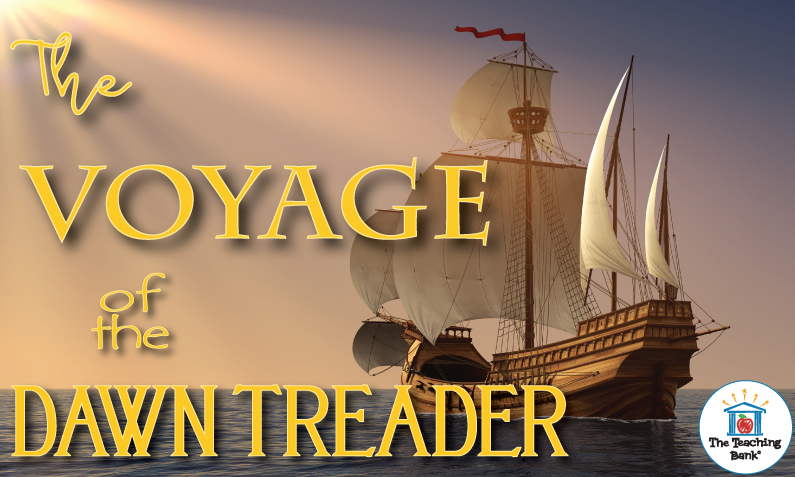
Looking for an engaging novel study for The Voyage of the Dawn Treader that will get your students thinking, discussing, and making meaningful connections?
The Voyage of the Dawn Treader by C. S. Lewis is a wonderful choice for an upper elementary or middle school ELA classroom. As part of The Chronicles of Narnia, this classic fantasy novel takes students on an unforgettable journey across the sea while providing plenty of opportunities to explore character development, plot, vocabulary, themes, comprehension, and critical thinking.
We earn a commission if you make a purchase, at no additional cost to you.
Why Teach The Voyage of the Dawn Treader?
Few novels give students the opportunity to combine adventure and imagination with meaningful literary discussions quite like The Voyage of the Dawn Treader.
As students follow Edmund, Lucy, Eustace, and Caspian aboard the Dawn Treader, they encounter strange islands, unexpected challenges, and characters who must make difficult choices. These experiences create natural opportunities for classroom conversations and deeper reading comprehension.
Encourage Imagination and Creativity
C. S. Lewis’s vivid descriptions of Narnia and the journey aboard the Dawn Treader give students plenty to visualize. Encourage students to imagine the settings, creatures, and adventures they encounter throughout the novel.
This makes The Voyage of the Dawn Treader an excellent book for helping students connect descriptive language with visualization and creative thinking.
Develop Reading Comprehension and Critical Thinking
A good novel study should do more than ask students what happened in each chapter.
The Voyage of the Dawn Treader provides opportunities for students to think about why characters behave the way they do, how their choices affect the story, and how events contribute to the development of the plot.
Chapter-by-chapter comprehension questions can help students practice finding evidence in the text while moving beyond simple recall.
Explore Character Development
Eustace’s transformation is one of the most interesting character arcs in the novel.
Students can examine how his experiences affect him, how his relationships with the other characters change, and how challenges throughout the story contribute to his development.
These types of discussions make character development a natural focus for an ELA novel unit.
Discuss Themes and Life Lessons
The Voyage of the Dawn Treader offers many opportunities to discuss themes such as courage, selfishness, friendship, temptation, responsibility, and personal growth.
Rather than simply identifying a theme, students can explore how the author’s characters and events help develop those ideas throughout the story.
Build a Love of Reading
Perhaps one of the greatest benefits of teaching a classic novel like The Voyage of the Dawn Treader is the opportunity to introduce students to a larger world of literature.
Students who enjoy this adventure may want to continue reading The Chronicles of Narnia or explore other works by C. S. Lewis.
Make Your Voyage of the Dawn Treader Unit Easy to Teach
If you’re looking for a ready-to-use The Voyage of the Dawn Treader novel study, I’ve created a complete resource to help you teach the novel without spending hours creating worksheets, comprehension questions, assessments, and activities.
The Voyage of the Dawn Treader Novel Study includes both printable and digital Google Drive™ resources, making it flexible for traditional, paperless, and blended classrooms.
What’s Included?
This comprehensive novel study includes:
Teacher lesson plans and pacing guidance
Chapter-by-chapter comprehension questions
Vocabulary and grammar activities
Writing and extension activities
Assessments and answer keys
Literary analysis and story elements activities
Common Core standards alignment
Printable and Google Drive™ formats
Whether you use it for a whole-class novel study, small-group reading, literature circles, independent reading, or homeschool instruction, the ready-to-use activities make it easy to incorporate this classic into your ELA curriculum.
Try a free sample of the novel study for The Voyage of the Dawn Treader
If you’d like to see what teachers and students can do with these resources, be sure to download the free sample before you begin!
Ready to Set Sail?
Bring The Voyage of the Dawn Treader to life with engaging activities that encourage students to read closely, think critically, discuss literature, and make meaningful connections.
You can also explore my collection of Chronicles of Narnia novel studies if you’re looking for resources to accompany more of C. S. Lewis’s beloved books.
Connect with Fellow Educators!
Are you teaching The Voyage of the Dawn Treader this school year?
Join our free community, Book Talk with The Teaching Bank, to share ideas, grab freebies, and connect with 3rd–8th grade teachers using novels in the classroom!
*The Teaching Bank participates in the Amazon Associate Program and earns a fee from qualifying purchases made on the Amazon.com site.


 Novel Studies Part 5: Assessment
 I often get questions from potential buyers asking if there are assessments after every chapter of my novel studies. I kind of cringe when I get these questions because I can only imagine the dread the students must have if they are tested after every chapter! Testing is not the only way to assess if a student has read and understood. In my experience, class discussions and the writing in the comprehension answers are more than sufficient evidence of learning and understanding by the student. It is imperative when using novel studies not to lose focus and kill the joy of reading for your students! Your goal is for them to voluntarily pick up another book to read when a novel study is over, not run as far as they can from books!


 Novel Studies Part 4: The Extras!


 All of my novel studies offer a Google Drive™ format, in addition to the printable format, shown above, to use with your students. This allows you to use novel studies in a 1:1 classroom, save paper, and easily engage students who are absent. The “extras” of the novel study are included in the Google Drive™ format as well. Here’s an example page from the Google Drive™ format of my


 Connect with Fellow Educators!

 Novel Studies Part 3: Pacing


 All of my novel studies offer a Google Drive™ format, in addition to the printable format, shown above, to use with your students. This allows you to use novel studies in a 1:1 classroom, save paper, and easily engage students that are absent. Here’s an example page from the Google Drive™ format of my