Sounder by William H. Armstrong is a powerful and thought-provoking novel that captivates readers. Whether you are a student, a teacher, or simply an avid reader, this classic work of literature is an excellent choice for a novel study.
We earn a commission if you make a purchase, at no additional cost to you.
Sounder was published in 1969 and went on to be awarded the Newbery Medal in 1970. It has also been made into a feature film that earned several Academy Award nominations in 1972.
Sounder is a great choice for a novel study
Relevant and Timeless Themes: Sounder is a novel that explores timeless themes such as poverty, racism, and family relationships. These themes are still relevant today, making it an excellent choice for a novel study that will engage and challenge your students.
Inspiring Characters: The characters in Sounder are complex and relatable, making them ideal for students to study and analyze. The protagonist, a young African-American boy named David, is especially inspiring as he learns to overcome adversity and grow into a strong and compassionate person.
Beautifully Written: William H. Armstrong’s writing style is simple, yet beautiful and evocative. The prose is easy to understand and will engage students, making it an ideal choice for middle school students.
Engaging Plot: The plot of Sounder is both engaging and thought-provoking. It tells the story of a young boy and his family who must struggle to survive in the face of poverty and racism. This powerful story will keep students engaged and invested in the novel.
Cultural Significance: Sounder is a historically important novel that offers valuable insights into the lives of African Americans during the 19th century. It will broaden students’ understanding of American history and culture.
Supports Critical Thinking and Analysis: Reading Sounder will encourage students to think critically and analyze the themes, characters, and events which will help them to develop essential skills such as close reading, analysis, and interpretation.
This book takes a quiet look at the life of a poor, black sharecropping family in the South. It gives students an eye into the turmoil and adversity many families such as this faced at that time. Using literature in this way can help students empathize with the issues and gain an understanding of the history of those who came before us here in America. It is a tale worth using in your classroom.
I offer a complete novel study to accompany Sounder for use in the classroom or homeschool. The unit includes both a printable format and a Google Drive™ format for use in a paperless classroom or with Google Classroom.
You can purchase this novel study at the following locations:
Are you interested in reading about and sharing ideas with other educators on using children’s literature in your classroom? My goal is to bring together teachers and homeschoolers who teach grades 3-8 and use novels with their students. I’d love for you to join me to learn, share, and grow together!
What happens when an entire grade level of energetic fifth graders decides to stop talking for 48 hours straight? Pure classroom magic!
No Talking by Andrew Clements is a hilarious, thought-provoking novel that explores the weight of unspoken words, the damage of words spoken in anger, and—most importantly—the transformative power of words spoken in kindness. Written with Clements’ signature wit and relatable middle-grade humor, it is a literary gem that instantly hooks 4th, 5th, and 6th graders while sparking meaningful conversations about communication, self-control, and community.
We earn a commission if you make a purchase, at no additional cost to you.
5 Powerful Reasons to Teach No Talking in Grades 4–6
1. 📖 Boosts Core Literacy & Textual Analysis
Through Clements’ vivid storytelling and rich character development, students do more than just read—they engage critically with the text. The novel provides endless opportunities to analyze character motivations, identify literary devices, track plot progression, and make real-world personal connections.
2. 💡 Fosters Critical Thinking & Communication Skills
At its core, No Talking challenges students to reflect on how and why we communicate. By watching Dave, Lynsey, and their classmates navigate a 48-hour silent contest, students are prompted to think deeply about the impact of their own words, the consequences of speaking without thinking, and alternative strategies for resolving everyday conflicts.
3. 🗣️ Sparks Dynamic Classroom Discussions
This book is an incredible catalyst for whole-class conversations! It raises natural, age-appropriate questions about gender stereotypes (boys vs. girls), peer pressure, social dynamics, and respect for authority. Teachers can easily guide these discussions to build a safe, inclusive environment where students feel empowered to voice their perspectives.
4. ❤️ Supports Social and Emotional Learning (SEL)
Navigating upper elementary friendships isn’t easy. As the characters grapple with self-expression, compromise, and empathy, students gain valuable SEL insights. Empathizing with the characters’ journey helps young readers develop greater self-awareness, emotional control, and stronger interpersonal skills.
With fast-paced dialogue and a clever plot, No Talking is pure fun! Teachers can leverage student enthusiasm to launch creative extension tasks—from opinion writing prompts and debate activities to role-playing exercises inspired by Mahatma Gandhi’s historical influence featured in the book.
Take Your No Talking Unit Further (Zero Prep Required!)
Want to teach No Talking without spending your weekends creating worksheets, vocabulary lists, and quizzes?
I’ve created a complete 130-Page No-Prep Novel Study & Activity Bundle designed specifically for Grades 4–6. Whether you teach in a traditional classroom, run small guided reading groups, or homeschool, this unit provides everything you need for a seamless, standards-aligned book study.
Try a free sample of the novel study for No Talking
Ready to Transform Your ELA Planning?
You can purchase this novel study at the following locations:
💬 Join Our Teacher Community!
Are you looking for fresh children’s literature ideas, novel study tips, and resources for Grades 3–8? We’d love to have you in our growing community of passionate educators and homeschoolers!
Looking for a Stuart Little novel study that will help your students dig deeper into E.B. White’s classic novel while practicing essential reading and ELA skills? Stuart Little is a wonderful choice for an upper-elementary novel unit, book study, or reading group, and the right activities can turn this beloved story into a meaningful learning experience.
Written by E.B. White, author of Charlotte’s Web and The Trumpet of the Swan, Stuart Little follows the adventures of a tiny mouse who lives in New York City and sets out to experience the world around him.
Although the story is filled with humor, adventure, and imagination, it also gives students plenty to think about as they explore character, setting, plot, vocabulary, problem-solving, perseverance, belonging, and perspective.
We earn a commission if you make a purchase, at no additional cost to you.
Why Teach Stuart Little?
Stuart Little is more than an entertaining children’s book. E.B. White’s imaginative story gives students opportunities to discuss characters who don’t always fit neatly into their surroundings, make predictions about what will happen next, and examine how characters respond to challenges.
The unusual perspective of a tiny mouse living in a human world can also encourage students to think about how the world looks from someone else’s point of view.
As students follow Stuart’s adventures, they can practice important reading skills while discussing larger ideas such as:
Character traits and character development
Setting
Plot and major events
Problem and solution
Making predictions and inferences
Using evidence from the text
Vocabulary in context
Point of view and perspective
Perseverance and problem-solving
Belonging and acceptance
These discussions make Stuart Little an excellent choice for a 3rd, 4th, or 5th grade novel study.
Stuart Little Novel Study for Grades 3–5
If you’re planning to teach Stuart Little as a class novel, you’ll want more than a few comprehension questions.
A complete Stuart Little book study can help you guide students through the novel while providing consistent opportunities for reading comprehension, vocabulary practice, written responses, and assessment.
My Stuart Little Novel Study was created specifically for this purpose.
The resource provides a structured way to teach the novel from beginning to end without requiring you to create all of the questions, activities, vocabulary work, and assessments yourself.
It is designed for grades 3–5 and can be used for:
Whole-class novel studies
Small reading groups
Guided reading
Independent reading
Literacy centers
Homeschool ELA
Reading intervention and practice
Digital or paper-based instruction
What’s Included in the Stuart Little Novel Study?
This Stuart Little ELA unit includes materials for reading comprehension, vocabulary, writing, assessment, and additional activities.
Students work with the novel through chapter-by-chapter comprehension questions and vocabulary activities, giving them regular opportunities to demonstrate that they understand what they are reading.
The unit also includes teacher materials, answer keys, assessments, writing activities, and extension activities.
The resource is available in both printable PDF and digital Google Drive formats, so you can choose the format that works best for your classroom.
Printable Stuart Little Activities
Prefer paper-and-pencil activities?
The printable version makes it easy to print the pages you need and use them alongside your classroom copies of Stuart Little.
Digital Stuart Little Activities
Need a paperless option?
The digital version can be used with Google Drive and Google Classroom, making it a convenient choice for classrooms incorporating digital learning.
One of the benefits of teaching a novel as a complete unit is that students have repeated opportunities to interact with the text.
Instead of simply reading the story and moving on, students can stop to think about what is happening, respond to characters and events, learn new vocabulary, and demonstrate their understanding.
A Stuart Little novel study can also give you a natural framework for classroom discussions and written responses.
Students can consider questions such as:
How does Stuart respond when he encounters a problem?
What can we learn about a character from his or her actions?
How does the setting affect the story?
What motivates Stuart’s decisions?
What predictions can we make based on the events in the story?
How do the characters change throughout the novel?
What evidence from the text supports our ideas?
These types of questions move students beyond simply recalling what happened and encourage them to think more deeply about the text.
A Ready-to-Use ELA Unit for Stuart Little
If you are looking for Stuart Little worksheets, reading comprehension questions, vocabulary activities, assessments, and novel study activities, this complete unit puts those resources together in one place.
Rather than spending hours creating a separate activity for every chapter, you can use the materials in this ready-to-use Stuart Little book unit to guide your students through the novel.
The unit is designed to take approximately three weeks, depending on your classroom schedule and how you choose to use the activities.
Try a Free Sample
Want to see what’s included before purchasing?
Download the free sample of the Stuart Little novel study to preview the resource and see the types of activities your students will complete.
Get the Complete Stuart Little Novel Study
Ready to turn Stuart Little into a complete ELA reading unit?
Get the Stuart Little Novel Study from The Teaching Bank.
:
Connect with Fellow Educators!
Are you teaching Stuart Little this school year?
Join our free community, Book Talk with The Teaching Bank, to share ideas, grab freebies, and connect with 3rd–8th grade teachers using novels in the classroom!
*The Teaching Bank participates in the Amazon Associate Program and earns a fee from qualifying purchases made on the Amazon.com site.
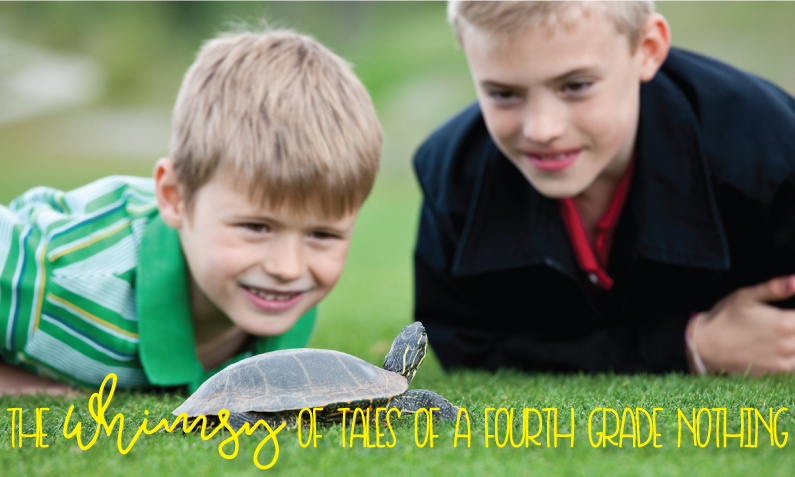
Looking for Tales of a Fourth Grade Nothing novel study activities for your elementary ELA classroom? Judy Blume’s Tales of a Fourth Grade Nothing is a funny, relatable, high-interest novel that makes an excellent choice for a 3rd, 4th, or 5th grade novel study.
The story follows Peter Hatcher as he tries to navigate life with his attention-grabbing little brother, Fudge. Fudge’s hilarious antics keep students engaged, while Peter’s frustrations provide plenty of opportunities to discuss character traits, conflict, point of view, making inferences, vocabulary, and text evidence.
I used Tales of a Fourth Grade Nothing as the first novel of my 4th grade school year, and it was always a student favorite. The short chapters and humorous storyline make it an especially easy book to use when introducing students to the expectations and routines of a classroom novel study.
We earn a commission if you make a purchase, at no additional cost to you.
Why Teach Tales of a Fourth Grade Nothing?
This Judy Blume classic offers plenty of opportunities for meaningful reading instruction while keeping students interested in the story.
Students can practice:
Identifying character traits and motivations
Making predictions and inferences
Identifying conflict
Using text evidence
Determining cause and effect
Summarizing chapters
Learning vocabulary in context
Making connections to characters and events
Responding to literature through writing
The relatable sibling relationship also gives students plenty to discuss. Peter’s frustration with Fudge can lead to great conversations about family relationships, fairness, responsibility, and how different characters view the same situation.
Tales of a Fourth Grade Nothing Activities
Want to get more out of the novel? Try incorporating activities that encourage students to think beyond simply recalling what happened.
Character Traits
Have students identify character traits for Peter, Fudge, and other important characters. Ask them to support each trait with evidence from the text.
Predictions
Fudge is unpredictable, which makes the novel perfect for prediction activities. Have students predict what might happen next and revisit their predictions after reading.
Text Evidence
Ask students questions that require them to return to the novel and support their answers with specific details. This is an easy way to strengthen reading comprehension and evidence-based responses.
Writing
Use the novel as a springboard for writing. Students can write from a character’s point of view, respond to a conflict, make a personal connection, or imagine how a character might react to a different situation.
Vocabulary
Choose interesting words from each chapter and have students use context clues to determine their meanings. This provides vocabulary practice without taking students away from the story.
A Complete Tales of a Fourth Grade Nothing Novel Study
If you don’t want to spend hours creating Tales of a Fourth Grade Nothing comprehension questions, vocabulary activities, writing assignments, and assessments, I’ve done the work for you!
My Tales of a Fourth Grade Nothing Novel Study is a complete, no-prep ELA unit designed for grades 3–5. It includes both printable and digital resources, so you can use it in the classroom, for small groups, literature circles, independent reading, or homeschool.
What’s Included?
The complete novel study includes:
Teacher lesson plans and pacing guide
Vocabulary activities
Chapter-by-chapter comprehension questions
Writing and extension activities
Assessments
Answer keys
Story elements activities
Vocabulary word wall cards
Common Core standards alignment
Printable and digital resources
Everything is ready to use, so you can spend less time planning and more time helping your students become stronger readers.
Be sure to check out the FREE PREVIEW to see samples of the activities and materials included!
Get the Tales of a Fourth Grade Nothing Novel Study
Ready to teach Tales of a Fourth Grade Nothing without creating everything yourself?
Connect with Fellow Educators!
Are you teaching Tales of a Fourth Grade Nothingthis school year?
Join our free community, Book Talk with The Teaching Bank, to share ideas, grab freebies, and connect with 3rd–8th grade teachers using novels in the classroom!
*The Teaching Bank participates in the Amazon Associate Program and earns a fee from qualifying purchases made on the Amazon.com site.
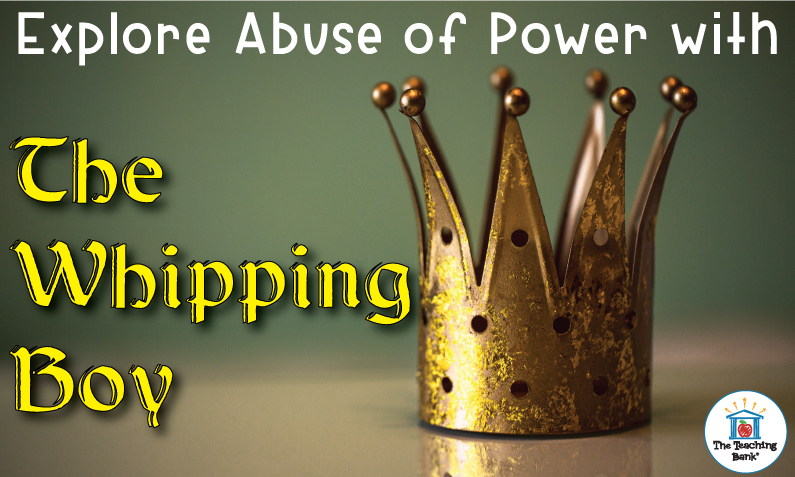
Looking for an engaging novel study for The Whipping Boy by Sid Fleischman? This classic Newbery Medal-winning novel offers plenty of opportunities for elementary and middle-grade students to explore character development, friendship, empathy, courage, responsibility, and the consequences of abusing power.
The Whipping Boy is an especially useful choice for a 3rd-, 4th-, or 5th-grade novel study because its fast-moving adventure keeps students engaged while offering plenty to discuss and analyze.
Whether you are planning a whole-class novel unit, literature circle, small-group reading unit, or independent book study, The Whipping Boy can provide a strong foundation for meaningful ELA instruction.
We earn a commission if you make a purchase, at no additional cost to you.
About The Whipping Boy by Sid Fleischman
The Whipping Boy follows Prince Brat, a spoiled young prince who regularly gets into trouble. Because royal punishment cannot be inflicted on the prince himself, Jemmy, a boy assigned to serve as his whipping boy, is punished in his place.
When Prince Brat and Jemmy run away together, their relationship—and their understanding of each other—begins to change.
The adventure that follows gives students opportunities to examine character traits, relationships, conflict, setting, plot, theme, and character growth while also considering larger ideas about fairness, privilege, responsibility, and empathy.
Why Use The Whipping Boy for a Novel Study?
1. Explore Character Development
Prince Brat and Jemmy are very different characters, making them ideal for comparing and contrasting.
Students can examine:
Character traits
Character motivations
Character relationships
How characters respond to challenges
How characters change throughout the story
How events influence character development
As students follow Jemmy and Prince Brat through their adventure, they can see how experiences can challenge characters’ assumptions and change their relationships.
2. Discuss Friendship and Empathy
The relationship between Jemmy and Prince Brat provides an excellent opportunity to discuss friendship, empathy, perspective, and understanding others.
Students can consider questions such as:
How do Jemmy and Prince Brat see each other?
What causes their relationship to change?
How does experiencing life from another person’s perspective affect a character?
What does the novel teach us about empathy?
These conversations can lead to meaningful reading response and classroom discussion.
3. Examine Abuse of Power
One of the most interesting themes to explore in The Whipping Boy is abuse of power.
Prince Brat has enormous privileges because of his position, while Jemmy is forced to suffer the consequences of the prince’s behavior.
This creates opportunities for students to think critically about:
Power and responsibility
Fairness and unfairness
Privilege
Consequences
Rules and authority
Treating others with respect
These themes can make The Whipping Boy more than simply an adventure story. Students can use the novel to connect literature to larger ideas about how people treat one another.
4. Study Plot, Conflict, and Setting
The medieval setting and adventurous plot make The Whipping Boy an engaging way to practice essential ELA reading skills.
Students can identify and analyze:
Setting
Characters
Conflict
Plot structure
Cause and effect
Problem and solution
Theme
Character traits
Character development
The novel’s action-packed storyline also gives students plenty of opportunities to make predictions and support their thinking with evidence from the text.
The Whipping Boy Novel Study Activities
A good novel study should do more than ask students to answer a few questions after each chapter. It should provide opportunities for students to think deeply about what they are reading while practicing important reading and language arts skills.
The Whipping Boy Novel Study includes a complete collection of activities designed to accompany the novel, including reading comprehension questions, vocabulary activities, spelling, writing, assessments, and extension activities.
The resource is designed for Grades 3–5 and can be used for whole-class instruction, small groups, literature circles, independent reading, or homeschool.
Try the free sample of The Whipping Boy novel study to preview the types of activities included in the complete resource.
Get the Complete The Whipping Boy Novel Study
If you’re planning a The Whipping Boy novel unit for 3rd, 4th, or 5th grade, this ready-to-use resource can save you time while giving your students structured opportunities to practice reading comprehension, vocabulary, writing, and critical thinking.
Connect with Fellow Educators!
Are you teaching The Whipping Boy this school year?
Join our free community, Book Talk with The Teaching Bank, to share ideas, grab freebies, and connect with 3rd–8th grade teachers using novels in the classroom!
*The Teaching Bank participates in the Amazon Associate Program and earns a fee from qualifying purchases made on the Amazon.com site.
Are you looking for a fantasy novel that will capture your students’ imaginations while providing rich opportunities for reading comprehension, discussion, and critical thinking? C. S. Lewis’s The Silver Chair is an excellent choice for upper elementary and middle school readers.
As the sixth book in The Chronicles of Narnia series, The Silver Chair takes readers on an unforgettable journey into Narnia, where Jill Pole and Eustace Scrubb are given an important mission: find a missing prince and bring him home.
With its magical setting, memorable characters, suspenseful adventure, and deeper themes, The Silver Chair gives teachers plenty to explore with students beyond simply reading the story.
We earn a commission if you make a purchase, at no additional cost to you.
📚 Why Teach The Silver Chair?
The Silver Chair is much more than an exciting fantasy adventure. The novel provides opportunities for students to think deeply about character, perseverance, friendship, courage, identity, choices, and the consequences of following—or ignoring—good advice.
As students follow Jill and Eustace through their journey, they encounter challenges that require them to make decisions, solve problems, and learn from their mistakes.
These experiences create natural opportunities for classroom conversations and written responses.
Encourage Reading Comprehension
A novel as rich as The Silver Chair gives students plenty of opportunities to practice important comprehension skills.
Students can:
Identify important story events
Make inferences about characters
Determine character traits
Analyze character development
Identify problems and solutions
Make predictions
Summarize important events
Determine the meaning of unfamiliar words using context
Support their ideas with evidence from the text
Using chapter-by-chapter questions can help ensure that students are actively thinking about what they read rather than simply moving through the pages.
Explore Character Development
Jill, Eustace, Puddleglum, and the other characters provide plenty of material for character analysis.
Students can examine how characters respond to difficult situations and how their experiences affect their choices throughout the story.
Questions about character motivation and development can lead to meaningful discussions such as:
Why does a character make a particular choice?
What can we learn from a character’s mistakes?
How does a character change throughout the story?
Which character traits help the characters overcome challenges?
How do the characters’ relationships affect their decisions?
These types of questions move students beyond basic recall and encourage them to think critically about the text.
🌟 A Fantasy Adventure That Sparks Imagination
One of the greatest strengths of The Silver Chair is its imaginative world.
Narnia is filled with unusual creatures, mysterious places, adventure, and danger. Students can visualize the settings, imagine the characters, and become invested in the journey as the story unfolds.
Fantasy novels like The Silver Chair can also provide wonderful opportunities for students to compare the fictional world of the novel with the real world.
Ask students to consider:
What makes a fictional world believable?
How does the setting affect the story?
What makes a character memorable?
Why do readers enjoy stories involving magic and adventure?
How does the author create suspense?
These discussions can lead naturally into writing activities, creative projects, and literary analysis.
✏️ Build Vocabulary and Language Skills
The Silver Chair also provides an excellent opportunity to strengthen vocabulary.
Students encounter words and expressions that may be unfamiliar to them as they read. Instead of simply providing definitions, teachers can encourage students to use context clues, word relationships, and the surrounding text to determine meaning.
Connecting vocabulary instruction directly to a novel gives students a meaningful context for learning new words.
The book also provides opportunities to incorporate grammar and writing skills into your ELA instruction without pulling students away from the story they are enjoying.
💭 Encourage Critical Thinking
Perhaps one of the biggest advantages of using a novel study is the opportunity to ask questions that don’t have simple one-word answers.
The Silver Chair gives students plenty to think about.
Encourage students to consider the decisions characters make, the challenges they face, and the lessons they learn throughout their journey.
Students can support their ideas with evidence from the text, compare different characters’ perspectives, and explain how particular events affect the direction of the story.
This makes The Silver Chair a natural fit for
teaching critical thinking, written response, and text evidence alongside reading comprehension.
📖 Use The Silver Chair as a Complete Novel Study
If you want to teach The Silver Chair without spending hours creating chapter questions, vocabulary activities, assessments, and writing assignments, a ready-to-use The Silver Chair novel study can make your planning much easier.
The Silver Chair Novel Study is designed for grades 4–6 and can be used for whole-class instruction, small groups, literature circles, independent reading, or homeschool.
The unit is designed to help students actively engage with the novel while practicing important ELA skills.
Vocabulary, comprehension, and writing assessments
Digital self-grading quizzes
End-of-book activities
Story elements interactive notebook activities
Printable PDF and Google Drive™ formats
Everything is organized so you can spend less time creating materials and more time teaching, discussing, and enjoying the novel with your students.
💻 Printable and Digital Options
Every classroom looks different, so this The Silver Chair novel study includes both printable and digital formats.
Use the printable materials for traditional classroom instruction, or use the Google Drive™ version for a paperless classroom, distance learning, independent work, or Google Classroom.
Having both options also gives you flexibility when your teaching needs change.
Try a free sample of the novel study for The Silver Chair
Download the free preview to see what’s included and get a closer look at the activities, questions, and assessments.
📚 Bring The Silver Chair to Life
C. S. Lewis’s The Silver Chair offers students an exciting fantasy adventure while giving teachers countless opportunities to work on reading comprehension, vocabulary, grammar, writing, character analysis, critical thinking, and literary elements.
A well-planned novel study can turn a great book into a complete ELA learning experience.
If you’re ready to explore Narnia with your students, The Silver Chair Novel Study provides the ready-to-use materials you need to make the most of this classic C. S. Lewis adventure.
Are you teaching The Silver Chair this school year?
Join our free community, Book Talk with The Teaching Bank, to share ideas, grab freebies, and connect with 3rd–8th grade teachers using novels in the classroom!
*The Teaching Bank participates in the Amazon Associate Program and earns a fee from qualifying purchases made on the Amazon.com site.











 Connect with Fellow Educators!